Daniel 3
Paipel · Tap a verse to see its cross-references.
Chienen Taniel resap kar me lon ewe ekkei
1Iwe, ewe king Nepukatnesar a föri eu uluulun aramas seni kolt, tekian ükükün tiwe fiit, nge öün tiwu fiit. Iwe, a anomu lon ewe maasiesin Tura lon ewe sop itan Papilon. 2Mürin, ewe king a körifengeni ekewe kepina me sounemenem, ekewe nöüwis tekia me souemwen, ekewe chon tümwünü moni me souapwüng, ekewe samol me nöüwisen ekewe sop meinisin. Iwe, a titiir pwe repwe eti mwichen afinünen ewe uluulun aramas i ewe king Nepukatnesar a aüetä. 3Iwe, ekei nöüwis meinisin ra chufengen fän iten efinünen ewe uluulun aramas ewe king Nepukatnesar a föri. Iwe, ra ütä me mwan. 4Iwe, ewe chon arong a kökkö fän leüömong, “Ämi aramasen fanü me mwü meinisin, pwal aramas mi eäni sokopaten fos, iei än ewe king allük ngenikemi. 5Lupwen oupwe rong tikin rappwa, aangün, kitar, keseng, faiolin me sokun pisekin ettik, oupwe chapetiu o fel ngeni ewe uluulun aramas mi för seni kolt ewe king Nepukatnesar a aüetä. 6Nge iö esap chapetiu o fel ngeni, epwe koturulong lon ewe lenien ekkei mi fokun sarara lon ewe chök otun.” 7Iwe, lupwen ekewe aramasen fanü me mwü pwal aramas mi eäni sokopaten fos ra rong tikin ekewe sokopaten pisekin ettik, ra chapetiu o fel ngeni ewe uluulun aramas mi för seni kolt, ewe king Nepukatnesar a aüetä.
8Iwe, lon ewe fansoun ekoch chon Papilon ra etto o aturu ekewe chon Juta. 9Ra üreni ewe king Nepukatnesar, “Amwo ewe king epwe manau tori feilfeilachök. 10Äm king, ka föri ewe allük pwe aramas meinisin mi rong tikin ekewe sokopaten pisekin ettik repwe chapetiu o fel ngeni ewe uluulun aramas mi för seni kolt. 11Ka pwal allük pwe iö esap chapetiu o fel ngeni, epwe koturulong lon ewe lenien ekkei mi fokun sarara. 12Iwe, mi wor ekoch chon Juta iter Satrak, Mesak me Apetneko, ka seikiretä pwe repwe nöüwisen ewe sop itan Papilon. Ätekei ra aleasolapa alom pwe resap angang ngeni om kewe kot, resap pwal fel ngeni om we uluulun aramas ka aüetä.”
13Mürin, Nepukatnesar a fokun lingeringer o allük pwe repwe emwenato Satrak, Mesak me Apetneko. Iwe, ra emwenireto fän mesen ewe king. 14Nge Nepukatnesar a kapas ngeniir, “Ifa usumi Satrak, Mesak me Apetneko, a pwüng pwe ousap mochen fel ngeni ai kewe kot ika chapetiu ngeni ai we uluulun aramas mi för seni kolt üa aüetä. 15Iwe, are oupwe rong tikin rappwa, aangün, kitar, keseng, faiolin me sokun pisekin ettik o chapetiu pwe oupwe fel ngeni ai we uluulun aramas mi för seni kolt, meinisin epwe mürina ngenikemi. Nge are ousap fel ngeni, oupwe koturulong lon ewe lenien ekkei mi fokun sarara lon ewe chök otun. Ifa usun, epwe wor eman kot mi tongeni amanauakemi seni lepei?”
16Iwe, Satrak, Mesak me Apetneko ra üreni ewe king, “Äm king Nepukatnesar, esap wor och mine aipwe pälüeni ngonuk pwe epwe penikem won ei mettoch. 17Nge are epwe fis ngenikem pwe aipwe koturulong lon ewe lenien ekkei mi fokun sarara, äm we Kot aia angang ngeni epwe tongeni amanauakem seni. Ewer, i epwe angasakem seni lepoum en äm king. 18Nge are esap amanauakem, en äm king kopwe silei pwe äm aisap fel ngeni om kewe kot, aisap pwal chapetiu ngeni om we uluulun aramas mi för seni kolt ka aüetä.”
19Mürin, Nepukatnesar a fokun lingeringeriti Satrak, Mesak me Apetneko, pwe a wowongau ngeniir. Iwe, a allük pwe repwe sonisefäli ewe ekkei, pwe pwichikaran epwe tori fän fisu seni me mwan. 20Iwe, a körato ekoch sounfiu mi pöchökül seni an mwichen sounfiu pwe repwe föti Satrak, Mesak me Apetneko o atururolong lon ewe lenien ekkei mi fokun sarara. 21Iwe, ra föti ätekei fän üfer owokot me imwer akau pwal sokun üf ra üföüf, o atururolong lon ewe lenien ekkei mi fokun sarara. 22Iwe, ewe lenien ekkei a fokun sarara pokiten ar achocho le apwönüetä än ewe king allük mi fokun pöchökül. Iei mine pulopulen ewe ekkei a ngetewu o niela ätekewe mi aturalong Satrak, Mesak me Apetneko. 23Iwe, ekei ülüman mwän Satrak, Mesak me Apetneko ra turulong lukalapen ewe lenien ekkei fän fööföör. 24Nge lupwen ewe king Nepukatnesar a nenela lon ewe ekkei, a weitifengeni o müttir ütä. Iwe, a aisini nöün kewe souemwen, “Ifa usun, sisap föti ülüman mwän o atururolong lon ei ekkei?” Nge ra pälüeni, “Ewer, äm king.” 25Iwe, ewe king a apasa, “Nge pwota üa küna föman mwän resap fööfö, ra fetal lukalapen ewe ekkei, nge resap feiengau. Iwe, lapalapen ewe afömanün a usun chök eman nöün ekewe kot?”
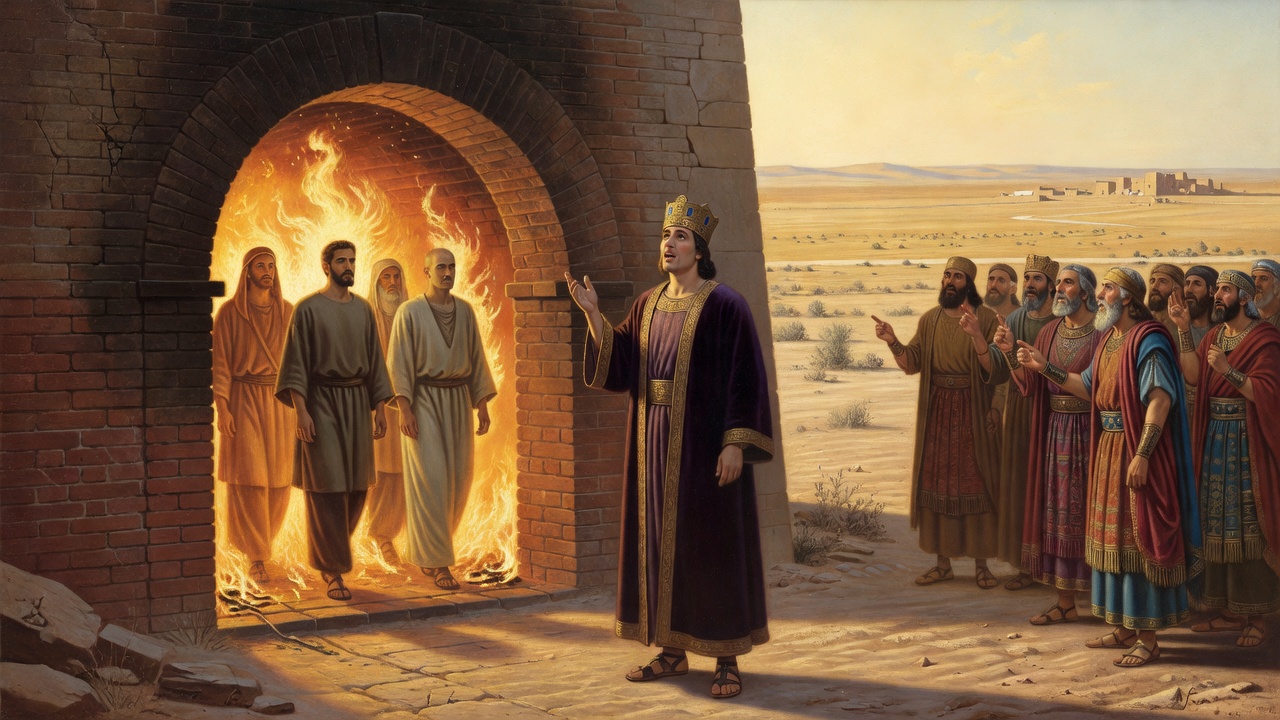
26Mürin, Nepukatnesar a feila ren asamen ewe lenien ekkei mi fokun sarara o kökkö, “Satrak, Mesak me Apetneko, ämi chon angang ngeni ewe Kot mi Fokun Tekia, oupwe towu o feito rei.” Iwe, ra towu seni lon ewe ekkei. 27Iwe, ekewe kepina me sounemenem, ekewe nöüwis tekia me nöün ewe king souemwen ra mwicheto ren ekewe ülüman mwän o küna pwe inisir esap kar ren ewe ekkei, meten mökürer esap pwoiwi, üfer owokot resap kar, nge esap pwal wor pwoaraarütten ekkei wor. 28Iwe, Nepukatnesar a apasa, “Üpwe mwareiti än Satrak, Mesak me Apetneko we Kot. A tinato nöün chon läng pwe epwe angasa nöün chon angang mi lükü i. Iwe, ra purätiu ai kewe allük o fangela inisir, pun resap mochen chapetiu o fel ngeni eman kot lükün ar we Kot. 29Iei mine ngang üa föri eu allük, pwe ika eman aramasen eu fanü me mwü, ika eman aramas mi eäni sokopaten fos epwe eäni kapasen turunufas ngeni än Satrak, Mesak me Apetneko we Kot, pöün me pechen repwe üttüwu seni inisin, nge imwan epwe tala. Pun esap wor eman kot a tongeni amanaua aramas usun ar we Kot.” 30Mürin, ewe king a seikätä Satrak Mesak me Apetneko o awiseer ngeni wis tekia lon ewe sop itan Papilon.
Did you know?
The Golden Statue and the Fiery Furnace
- The plain of Dura, a name meaning "the circle", was located near Babylon where King Nebuchadnezzar erected a golden statue sixty cubits high and six cubits wide. On one of the mounds in this area, archaeologists later discovered the pedestal of a colossal statue, often identified as the probable base of this golden image.Sources: Dura · the Bible text itself
- Shadrach and Meshach were Babylonian names given to the captive Hebrew youths Hananiah and Mishael, who had been trained in Babylon and appointed over the affairs of the province. Despite their official rank, they and their companion Abednego chose execution in a blazing furnace over worshiping the king's golden idol.Sources: Shadrach · Meshach · the Bible text itself
- King Nebuchadnezzar, whose Babylonian name means "Nebo, protect the crown!", was the powerful ruler who succeeded his father Nabopolassar. In his royal inscriptions, he called himself "Nebo's favourite", reflecting the polytheistic Babylonian religion against which the three Hebrews took their stand.Sources: Nebuchadnezzar · the Bible text itself
Notes written with AI assistance from open sources (Theographic Bible Metadata, CC BY-SA 4.0; Easton’s Bible Dictionary, public domain) and reviewed before publishing.
Places in this chapter
Only places identified with high confidence are shown (90% or more according to the scholarly sources compiled by OpenBible). Period map: DARE (Digital Atlas of the Roman Empire), CC BY 4.0; modern map: © OpenStreetMap contributors; places: OpenBible.info (CC BY 4.0).
Credits and license for this translation
Paipel
The Holy Bible in the Chuukese language of the Federated States of Micronesia
copyright © 1984, 1989, 1991, 2001 Liebenzel Mission
Language: Chuukese
Translation by: Liebenzell Mission
Old Testament © 1989, 2001 Liebenzel Mission
New Testament © 1984, 1991 Liebenzel Mission
This translation is made available to you under the terms of the
Creative Commons Attribution-No Derivatives license 4.0.
You may share and redistribute this Bible translation or extracts from it in any format, provided that:
You include the above copyright and source information.
You do not make any derivative works that change any of the actual words or punctuation of the Scriptures.
Pictures included with Scriptures and other documents on this site are licensed just for use with those Scriptures and documents.
For other uses, please contact the respective copyright owners.
2024-01-24
Source: http://ebible.org/chk/ · eBible.org