Amos 9
Paipel · Tap a verse to see its cross-references.
Aramas resap tongeni sü seni än Kot apwüng
1Iwe, üa küna ewe Samol a ütä arun ewe rongen asor, nge a üra, “Kopwe wichi letonen üren ewe imwenfel fän pöchökül, pwe longolongun we epwe chechech. Kopwe atatakisiretiu o atururetiu won möküren ekewe aramas meinisin. Nge ekewe mi chüen manau üpwe nirela lon maun. Esap fokun wor eman leir epwe tongeni süla, esap fokun wor eman epwe tongeni tiwewu.
2Inamwo are ra püsin tuetiu aler ngeni ewe lenien sotup, pei epwe turufiir me ikenan. Inamwo are ra feitä läng, üpwe uweeretiu seni ikenan. 3Inamwo are ra püsin op won ungen ewe chuk Karmel, üpwe kütteer ikenan o turufiir. Inamwo are ra opola seniei fänilolun matau, üpwe allük ngeni eman mönün leset mi fokun watte pwe epwe küür me ikenan. 4Inamwo are ra oola ren chon oputeer, üpwe allük pwe repwe ninniila. Üa fen apwüngala pwe üpwe aroserela, nge üsap achikeer.”
5Lupwen Kot ewe Samol mi Unusen Manaman a atapa fanüfan,
a chech,
nge meinisin mi nonom won ra letipeta.
Unusen fanüfan a pwotä o morotiu usun kolukun ewe chanpupu Nil lon Isip.
6Ewe Samol mi Lapalap a aüetä imwan won ekewe läng
o föri pwe läng pwölüpwölün fanüfan.
A angei kolukun lematau
o ninätiu won fanüfan.
Itan ewe Samol mi Lapalap.
7Iwe, ewe Samol mi Lapalap a apasa, “Ämi chon Israel, oua wewefengen me ekewe chon Itiopia me rei. Üa emwenawu ekewe chon Filistia seni Kaftor me ekewe chon Siria seni Kir usun chök üa emwenikemiiwu seni ewe fanü Isip. 8Nengeni, ngang Kot ewe Samol mi Lapalap üa nenengeni ewe mwün Israel mi uren tipis. Iwe, üpwe ataala seni won fanüfan, nge üsap chök unusen arosala mwirimwirin Jakop. 9Ngang üpwe allük ngeni chon oputen Israel, pwe repwe morei ekewe chon Israel. Ngang üpwe moreer me lein chon ekewe mwü meinisin usun eman a morei föün wiich lon eu moromor, nge esap wor eföü kükün föün epwe morotiu lepwül. 10Nge ekewe chon tipis meinisin me lein nei aramas repwe mäla lon maun, ir chokewe mi apasa, ‘Esap wor och feiengau epwe torikich.’”
Kot epwe aüsefälietä Israel
11Iwe, ewe Samol mi Lapalap a apasa, “Epwe war ewe fansoun lupwen üpwe aüsefälietä ewe mwün Tafit mi wewe ngeni eu imw mi turula. Üpwe apinasa pwangan o försefäli mine a ta me won. Üpwe försefäli pwe epwe usun chök lon fansoun lom. 12Iwe, ekewe aramasen Israel repwe nemenisefäli ekewe lusun fanü me lon Etom, pwal ekewe mwü meinisin mi föü itei wor me lom.” Iei usun alon ewe Samol mi Lapalap, ewe epwe föri ekei föför.
13Iwe, ewe Samol mi Lapalap a apasa,
“Epwe war ewe fansoun
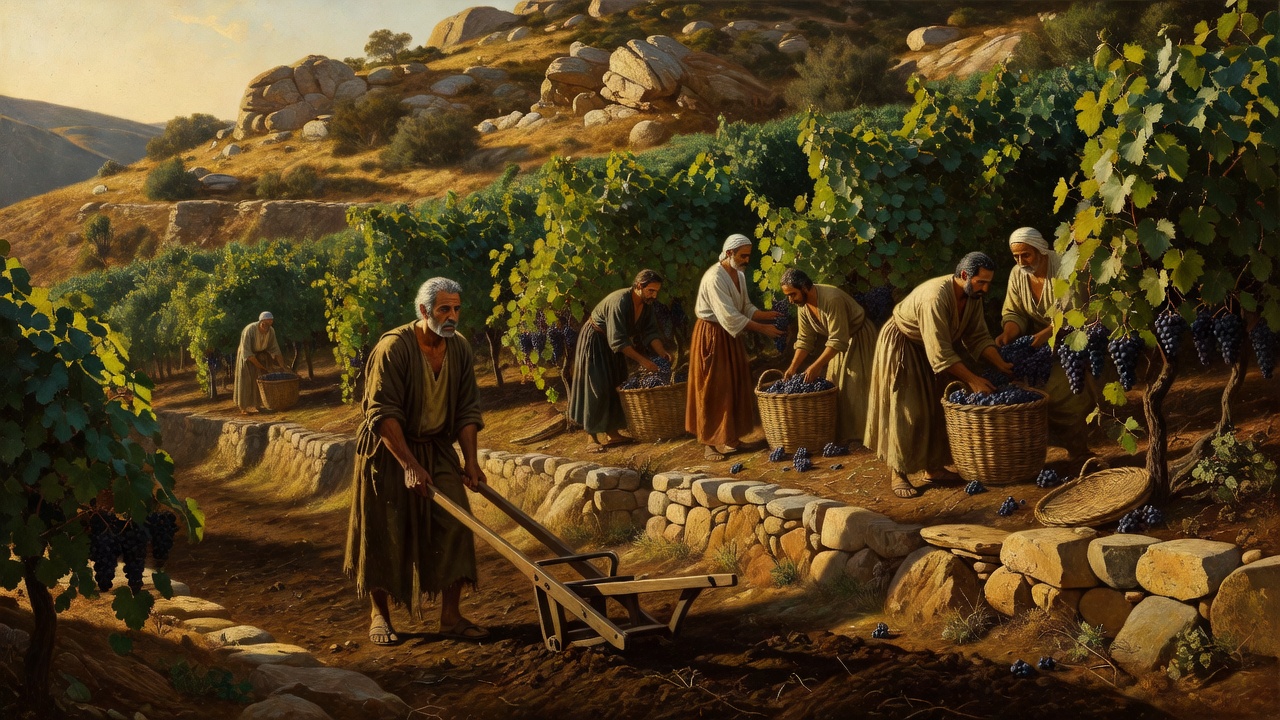
pwe ewe chon tu pwül ekärän wes le tu,
nge ewe chon kinikin a popuetä le kinikin.
Nge ewe chon puri föün irän wain ekärän wes le pupu,
nge ewe chon fofot a popuetä le fofot.
Wain mi arar epwe suputiu seni ekewe chuk
o pu seni ekewe chukutekison meinisin.
14Üpwe aliwinisefäli nei aramasen Israel ngeni fanüer,
nge ir repwe aüsefälietä ekewe telinimw mi tala o nonom lor.
Repwe fotuki tanipin wain o ün wain seniir,
repwe tanipi o mongö uan.
15Üpwe fotuki nei aramas lon fanüer,
nge esap wor eman epwe üttisefäliretä seni ewe fanü üa ngeniir.”
Iei usun ewe Samol mi Lapalap ämi we Kot a apasa.
Did you know?
Judgment and Future Restoration
- Amos 9:7 compares Israel's exodus from Egypt to God guiding the origins and movements of other peoples, mentioning the Philistines from Caphtor and the Arameans from Kir. Many scholars identify Caphtor with Crete, while Kir was a known destination of Aramean exile.Sources: the Bible text itself · Caphtor · Kir
- The prophecy in Amos 9:11-12 speaks of restoring the fallen shelter or tent of David and possessing the remnant of Edom. Edom, the rugged, mountainous land associated with Jacob's brother Esau, had a long history of conflict with Israel.Sources: the Bible text itself · Esau (Edom) · Edom
- The chapter concludes with a vision of extraordinary agricultural abundance, where the plowman overtakes the reaper and hills drip with sweet wine. This imagery depicts a restored remnant rebuilding ruined cities, replanting vineyards, and living securely in their land.Sources: the Bible text itself
Notes written with AI assistance from open sources (Theographic Bible Metadata, CC BY-SA 4.0; Easton’s Bible Dictionary, public domain) and reviewed before publishing.
Places in this chapter
- Mount Carmel · 32.672, 35.023 · verse 3
- Egypt · 30.129, 31.308 · verses 5, 7
- Nile · Today: Nile River · 31.465, 30.367 · verse 5
- Ethiopia · 16.935, 33.751 · verse 7
- Edom · 30.746, 35.604 · verse 12
Only places identified with high confidence are shown (90% or more according to the scholarly sources compiled by OpenBible). Period map: DARE (Digital Atlas of the Roman Empire), CC BY 4.0; modern map: © OpenStreetMap contributors; places: OpenBible.info (CC BY 4.0).
Credits and license for this translation
Paipel
The Holy Bible in the Chuukese language of the Federated States of Micronesia
copyright © 1984, 1989, 1991, 2001 Liebenzel Mission
Language: Chuukese
Translation by: Liebenzell Mission
Old Testament © 1989, 2001 Liebenzel Mission
New Testament © 1984, 1991 Liebenzel Mission
This translation is made available to you under the terms of the
Creative Commons Attribution-No Derivatives license 4.0.
You may share and redistribute this Bible translation or extracts from it in any format, provided that:
You include the above copyright and source information.
You do not make any derivative works that change any of the actual words or punctuation of the Scriptures.
Pictures included with Scriptures and other documents on this site are licensed just for use with those Scriptures and documents.
For other uses, please contact the respective copyright owners.
2024-01-24
Source: http://ebible.org/chk/ · eBible.org