2 Samuel 11
Paipel · Tap a verse to see its cross-references.
Tafit me Patsipa
1Iwe, eu ier mürin, lepoputän fansoun leräs, lupwen ekewe king ra feila maun, Tafit a tinala Joap fiti nöün kewe meilap me ekewe sounfiun Israel meinisin. Ra akufu ekewe chon Amon o pwelifeili Rapa fän pisekin maun. Nge Tafit a chök nonom lon Jerusalem.
2Iwe, a fis lon eu olopalan, lupwen Tafit a pwätä seni an lenien asösö o fetal won imwan imwen king, a küna seni won imwan eman fefin mi tütü. Nge ewe fefin a fokun liöch. 3Mürin, Tafit a tini eman pwe epwe ais usun ewe fefin. Iwe, eman a üreni, “Pwota, nge Patsipa nöün Eliam we fefin pwülüen Uria ewe re Hit.” 4Iei mine Tafit a tinala chon künö pwe repwe angei Patsipa. Iwe, neminewe a feito ren Tafit, nge Tafit a kon ren. Lon ewe otun neminewe a kärän wes seni an limelim seni an samaun fefin. Mürin, a liwiniti imwan. 5Iwe, Patsipa a mefi pwe a pwopwo. A tinala pworaus ren Tafit o üreni, “Ngang üa pwopwo.”
6Mürin, Tafit a tinala pworaus ren Joap o üra, “Kopwe tinato rei Uria ewe re Hit.” Iei mine Joap a tinala Uria ewe re Hit ren Tafit. 7Iwe, lupwen Uria a feito ren, Tafit a aisini usun Joap pwal usun ekewe sounfiu, ika ra nonomöch, a pwal ais usun lapalapen ewe maun. 8Mürin, Tafit a üreni Uria, “Kopwe feila lon imwom o asösö mwo ekis.” Nge lupwen Uria a towu seni ewe imwen king, Tafit a atapwala mürin eu lifang. 9Nge Uria esap feila lon imwan, pwe a chök annut leasamalapen ewe imwen king fiti nöün ewe king kewe chon angang meinisin. 10Lupwen ra üreni Tafit pwe Uria esap feila lon imwan, Tafit a aisini Uria, “Ifa usun, kosap liwinto seni eu leni mi toau? Pwota kosap feila lon imwom?” 11Iwe, Uria a üreni Tafit, “Ewe pworofel pwal chon Israel me chon Juta ra nom lon imw mangaku lon wirasen maun, nge ai samol Joap me noum kewe meilap ra nom lon eu leni mi äsewewetä. Ifa usun ai üpwe feila lon imwei pwe üpwe mongö o ün pwal kon ren pwülüei? Mwo manauom, üsap föri iei usun.” 12Mürin, Tafit a üreni Uria, “Kopwe nomotiu ikei ikenai, nge lesor üpwe tinukela.” Iei mine Uria a nom lon Jerusalem lon ewe rän tori sorotan. 13Iwe, Tafit a körato pwe epwe mongö ren o ün, a pwal asakaua. Nge lon ewe kuniolun Uria esap pwal feila lon imwan, pwe a kon lon kian fiti nöün ewe king kewe chon angang.
14Nge sorotän ewe rän Tafit a makei echö toropwe ngeni Joap o tini ngeni Uria. 15Iwe, lon ewe toropwe a makei, “Kopwe akomwa Uria me mwen ewe ia ewe maun a kon pöchökül ie. Mürin kopwe kul seni pwe ekewe chon oputemi repwe niela.” 16Lupwen Joap a pwelifeili ewe telinimw fän pisekin maun, a anomu Uria lon eu leni a silei pwe ekewe ätepwora ra nom ie. 17Iwe, sounfiun ewe telinimw ra towu o maun ngeni Joap me nöün kewe sounfiu. Nge ekoch me lein nöün Tafit kewe sounfiu ra mäla, pwal Uria ewe re Hit a mäla. 18Mürin, Joap a tinala eman chon künö ren Tafit pwe epwe apworausa ngeni meinisin usun mine a fis lon ewe maun. 19Iwe, a aöüröüra ewe chon künö o apasa, “Lupwen kopwe wes le apworausa ngeni ewe king ekewe pworaus meinisin usun ewe maun, 20mürin are a song o aisininuk, ‘Pwota oua kan ngeni ewe telinimw le maun? Ousap silei pwe repwe likapichitiu me won ewe tit? 21Iö a niela Apimelek nöün Kition we mwän? Ifa usun, sap eman fefin a aturätiu eu nif seni fau me won ewe tit pwe a mäla lon Tepes? Pwota oua fokun kan ngeni ewe tit?’ Are epwe aisinuk lon ei ititin, kopwe apasa: Noum chon angang Uria ewe re Hit a pwal mäla.”
22Iwe, ewe chon künö a feila o apworausa ngeni Tafit meinisin mine Joap a tini ngeni pwe epwe üra. 23A üreni Tafit, “Ekewe chon oputem ra pöchökül senikem, ra towu pwe repwe maun ngenikem lon ewe mälämäl, nge äm aia tapweriir pwe ra süsefäliti asamalapen ewe telinimw. 24Mürin, ekewe chon likapich ra likapichikem me won ewe tit. Iwe, ekoch lein noum kewe sounfiu ra mäla, pwal noum chon angang Uria ewe re Hit a mäla.” 25Iwe, Tafit a üreni ewe chon künö, “Kopwe üreni Joap pwe esap aweiresi won ei mettoch, pun mäla a tongeni küw eman ika pwal eman lon maun. Oupwe chök apöchöküla ewe maun ngeni ewe telinimw o liapeni. Iei usun mine kopwe apöchöküla ngeni leluken Joap.”
26Iwe, lupwen Patsipa a rong pwe pwülüan a mäla, a kechüeiti pwülüan we fän ngüngüres. 27Nge lupwen ekewe ränin kechü ra wes, Tafit a titi neminewe o emwenato lon imwan. Iwe, Tafit a pwülüeni, nge Patsipa a nöüni eman ät me won. Nge ewe Samol mi Lapalap a oput ewe föför Tafit a föri.
Did you know?
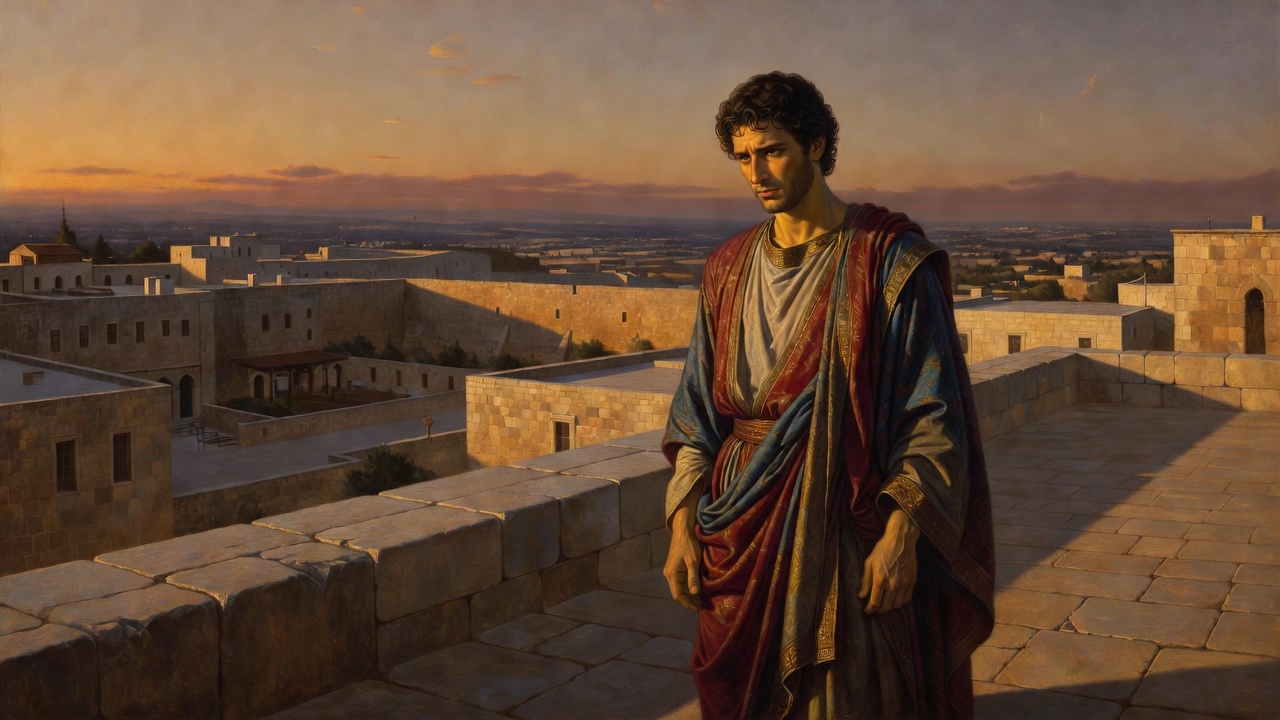
David, Bathsheba, and Uriah
- Uriah is identified as a Hittite and was counted among David's elite warriors, the "mighty men." When recalled to Jerusalem from the front line, he refused to enjoy the comfort of his home out of solidarity with his fellow soldiers and the Ark of the Covenant, which were dwelling in tents in the open field.Sources: the Bible text itself · Uriah
- The siege of Rabbah, the chief city of the Ammonites east of the Jordan River, provides the background for this chapter. While spring was the customary time for kings to march out to battle, David remained behind in Jerusalem and entrusted the military campaign to his commander Joab.Sources: the Bible text itself · Rabbah · Joab
- When instructing his messenger about casualties near the city walls, Joab cited the tactical precedent of Abimelech's death at Thebez, where a woman killed him by dropping a millstone from a tower wall. The biblical narrative refers to Abimelech's father Gideon by the name Jerubbesheth.Sources: the Bible text itself · Jerubbesheth · Thebez
Notes written with AI assistance from open sources (Theographic Bible Metadata, CC BY-SA 4.0; Easton’s Bible Dictionary, public domain) and reviewed before publishing.
Places in this chapter
- Ammon · 31.955, 35.934 · verse 1
- Jerusalem · 31.777, 35.234 · verses 1, 12, 22
- Rabbah · Today: Amman · 31.955, 35.934 · verse 1
Only places identified with high confidence are shown (90% or more according to the scholarly sources compiled by OpenBible). Period map: DARE (Digital Atlas of the Roman Empire), CC BY 4.0; modern map: © OpenStreetMap contributors; places: OpenBible.info (CC BY 4.0).
Credits and license for this translation
Paipel
The Holy Bible in the Chuukese language of the Federated States of Micronesia
copyright © 1984, 1989, 1991, 2001 Liebenzel Mission
Language: Chuukese
Translation by: Liebenzell Mission
Old Testament © 1989, 2001 Liebenzel Mission
New Testament © 1984, 1991 Liebenzel Mission
This translation is made available to you under the terms of the
Creative Commons Attribution-No Derivatives license 4.0.
You may share and redistribute this Bible translation or extracts from it in any format, provided that:
You include the above copyright and source information.
You do not make any derivative works that change any of the actual words or punctuation of the Scriptures.
Pictures included with Scriptures and other documents on this site are licensed just for use with those Scriptures and documents.
For other uses, please contact the respective copyright owners.
2024-01-24
Source: http://ebible.org/chk/ · eBible.org