2 Chronicles 31
Paipel · Tap a verse to see its cross-references.
1Iwe, wesin ar we chulap ekewe chon Israel mi eti ra feila lon ekewe telinimwen Juta, ra atatakisi ekewe ür o pöküetiu ekewe uluulun ewe anüfefin Asera. Ra pwal ataetiu ekewe rongen asor me ekewe lenien fel won ekewe leni tekia lemenen Juta me Peniamin meinisin, pwal lon Efraim me Manasa. Mürin ar atarala meinisin ekewe aramasen Israel meinisin ra liwiniti en me an telinimw lon en me fanüan.
Än Hiskia tümwün ngeni ekewe souasor me chon ewe ainangen Lefi
2Iwe, Hiskia a awisa ekewe souasor me ekewe mwän seni ewe ainangen Lefi lon ar kewe mwich, eu me eu mwich lon tettelin en me an angang, usun akoten wiser. Repwe eäni ekewe asoren kek me asoren kinamwe o angang lon imwen ewe Samol mi Lapalap, repwe pwal kilisou ngeni o kölün mwareiti i. 3Iwe, ewe king a fangala mönün asor seni nöün pwiin man fän iten ekewe asoren kek mi fifis iteiten lesosor me lekuniol, ekewe asoren kek mi fis lon ekewe ränin sapat, lepopun maram, pwal lupwen ekewe ränin chulap mi kefilitä, usun a fen mak lon än ewe Samol mi Lapalap puken allük. 4Hiskia a pwal allük ngeni ekewe aramas mi imweimw lon Jerusalem, pwe repwe uwala ekewe asor ngeni ekewe souasor me ekewe mwän seni ewe ainangen Lefi, pun iei wiser, pwe ir repwe tongeni fangala fansoun manauer ngeni ewe angang, ewe Samol mi Lapalap a fen allük usun. 5Lon ewe otun ewe allük a chöfetal, ekewe aramasen Israel ra fangala fokun chomong mwen uän wiich, wain, apüra seni föün olif, chönün chunen me sokopaten uän irän lemäl meinisin. Ra pwal uwato eu leengolun mettochur meinisin. 6Iwe, ekewe aramasen Israel me Juta mi imweimw lon ekewe telinimwen Juta ra pwal uwato eu leengolun nöür kewe pwiin kow me sip, pwal ekewe mettoch ra apini fän iten ewe Samol mi Lapalap ar we Kot. Iwe, ra uwato ekei mettoch o achukuchukuretä. 7Lon ewe aülüngatin maram ra popuetä le uwato ekewe mettoch ra apini o achukuchukuretä, nge lon ewe afisuen maram ra awesala. 8Lupwen Hiskia me nöün kewe nöüwis ra küna ekewe mettoch mi chukuchukutä, ra mwareiti ewe Samol mi Lapalap me nöün kewe aramasen Israel. 9Iwe, Hiskia a kapas ais ngeni ekewe souasor me ekewe mwän seni ewe ainangen Lefi fän iten ekewe mettoch mi chukuchukutä. 10Nge ewe souasor mi lap Asaria, eman mwirimwirin Satok, a pälüeni, “Seni ewe fansoun ekewe aramas ra popuetä le uwato ekewe lifang lon imwen ewe Samol mi Lapalap, äm aia mongö o mötüla, a pwal wor chomong lusun. Pun ewe Samol mi Lapalap a afeiöchü nöün aramas, pwe a wor ei lusun mi watte a chüen nom rem.”
11Mürin, Hiskia a allük, pwe repwe amolätä ekoch rum me lon imwen ewe Samol mi Lapalap. Iwe, ra amoleretä. 12Mürin, ekewe aramas ra uwato fän allükülük ekewe lifang, ekewe leengol me ekewe mettoch ra apini. Iwe, Konania, eman mwän seni ewe ainangen Lefi, i ewe meilapen chon tümwünü ekei mettoch, nge kisin fan pwin we itan Simei. 13Iwe, Jehiel, Asasia, Nahat, Asael, Jerimot, Josapat, Eliel, Ismakia, Mahat me Penaia ra wisen angang fän Konania me Simei pwin we. Ir meinisin ra kefilitä seni ewe king Hiskia me ewe souasor mi lap Asaria. 14Nge Kore nöün Imna we mwän seni ewe ainangen Lefi mi mamasa ewe asamalap mi nom ötiu, a wisen tümwünü ekewe asor aramas ra uwato ngeni Kot seni mochenin letiper, a pwal wisen ineti ekewe lifang ra uwato ngeni ewe Samol mi Lapalap me ekewe asor mi unusen pin. 15Iwe, Eten, Miniamin, Jesua, Semaia, Amaria me Sekania ra alisi fän allükülük me lon ekewe telinimwen souasor. Ra aineti ekewe lifang mi pin ngeni chiener kewe lon en me an mwich, nge inetin ekewe chinlap a usun chök inetin ekewe alüal. 16Ra pwal ineti ngeni ätekewe mi ierini ülüngat feitä mi makelong iter lon tettelin uruwor. Ra ineti ngeni meinisin mi tolong lon imwen ewe Samol mi Lapalap, lupwen ra föri ar angang lon en me wisan, pwal lon en me an mwich. 17Iwe, ra pwal aineti ngeni ekewe souasor mi makelong iteiter lon tettelin uruwon ar kewe cho. Pwal ina usun chon ewe ainangen Lefi mi ierini rüe feitä a makelong iteiter lon tettelin wiser lon en me an mwich. 18Ir meinisin a makelong iter lon ewe iteit fiti nöür semirit, pwülüer, nöür mwän me nöür fefin, pun ra allükülük lon wiser o püsin apiniir. 19Nge me lein ekewe souasor ir mwirimwirin Aaron mi nom lon ar kewe telinimw ika lon ekewe fanü ünükür a wor mwän mi mak iter, ra wisen ineti ewe mongö ngeni iteiten eman me eman ekewe souasor, pwal ngeni iteiten eman me eman chon ewe ainangen Lefi mi makelong lon ewe iteit.
20Iei usun mine Hiskia a föri lon unusen ewe fanü Juta. A föri mine a mürina o pwüng o allükülük me fän mesen ewe Samol mi Lapalap an we Kot. 21Iwe, Hiskia a fefeitä, pun meinisin mine a föri lon an angang ngeni ewe imwenfel, pwal lon an aleasochis ngeni pwüngün ekewe allük me an kütta öüröüran me ren an we Kot, a föri seni unusen lelukan.
Did you know?
Hezekiah Organizes the Priests and Offerings
- Following the celebration, the Israelites destroyed idolatrous shrines across Judah, Benjamin, Ephraim, and Manasseh. King Hezekiah then reorganized the priests and Levites into their divisions, contributed from his personal wealth for the regular burnt offerings, and instructed the people to provide tithes so the ministers could devote themselves to the Law of the LORD.Sources: the Bible text itself · Hezekiah
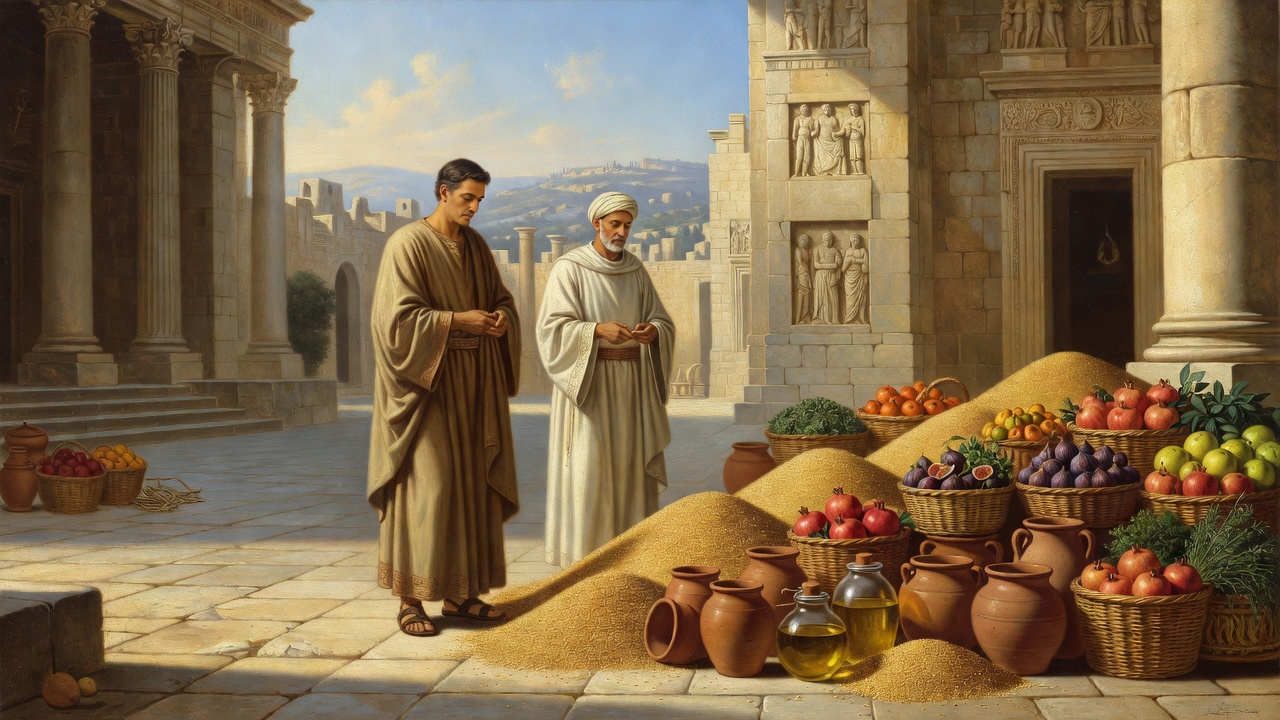
- The people brought such generous tithes and firstfruits of grain, new wine, oil, honey, and livestock that massive heaps accumulated between the third and seventh months. Azariah, the chief priest from the household of Zadok, reported that there was an abundance left over, prompting Hezekiah to order the preparation of storerooms in the temple.Sources: the Bible text itself · Azariah · Zadok
- Officials including the Levites Conaniah, his brother Shimei, and Kore, the keeper of the East Gate, were appointed to manage and distribute the contributions faithfully. Portions were supplied not only to the temple ministers in Jerusalem, but also to priests, Levites, and their families in surrounding cities according to their registered genealogies.Sources: the Bible text itself · Cononiah · Shimei
Notes written with AI assistance from open sources (Theographic Bible Metadata, CC BY-SA 4.0; Easton’s Bible Dictionary, public domain) and reviewed before publishing.
Places in this chapter
Only places identified with high confidence are shown (90% or more according to the scholarly sources compiled by OpenBible). Period map: DARE (Digital Atlas of the Roman Empire), CC BY 4.0; modern map: © OpenStreetMap contributors; places: OpenBible.info (CC BY 4.0).
Credits and license for this translation
Paipel
The Holy Bible in the Chuukese language of the Federated States of Micronesia
copyright © 1984, 1989, 1991, 2001 Liebenzel Mission
Language: Chuukese
Translation by: Liebenzell Mission
Old Testament © 1989, 2001 Liebenzel Mission
New Testament © 1984, 1991 Liebenzel Mission
This translation is made available to you under the terms of the
Creative Commons Attribution-No Derivatives license 4.0.
You may share and redistribute this Bible translation or extracts from it in any format, provided that:
You include the above copyright and source information.
You do not make any derivative works that change any of the actual words or punctuation of the Scriptures.
Pictures included with Scriptures and other documents on this site are licensed just for use with those Scriptures and documents.
For other uses, please contact the respective copyright owners.
2024-01-24
Source: http://ebible.org/chk/ · eBible.org