2 Chronicles 26
Paipel · Tap a verse to see its cross-references.
Usun än Usia nemenem
1Iwe, ekewe aramasen Juta meinisin ra seikätä Usia, pwe epwe siwili Amasia saman we lon wisan wisen king. Usia a ierini engol me wonu, lupwen a seikitä. 2Mürin än ewe king Amasia mäla, Usia a liapenisefäli Elat o aüsefälietä.
3Iwe, Usia a ierini engol me wonu, lupwen a tolong lon wisan wisen king. A nom lon Jerusalem o nemenem lon ükükün lime me ruu ier. Iten inan we Jekolia seni Jerusalem. 4Iwe, Usia a föri mine a pwüng me fän mesen ewe Samol mi Lapalap, usun chök Amasia saman we a föri. 5A angang ngeni Kot fän allükülük lon ränin manauen Sekaraia mi aiti ngeni usun an epwe niuokusiti Kot. Iwe, ewe Samol mi Lapalap a afeiöchü lon ükükün fansoun an angang ngeni.
6Iwe, Usia a feila o maun ngeni ekewe chon Filistia. A ataetiu tittin ekewe telinimw Kat, Japne me Astot o aüetä telinimw arun Astot, pwal ekis meinisin lein ekewe chon Filistia. 7Kot a alisi Usia le maun ngeni ekewe chon Filistia, ekewe chon Arapia mi nom lon Kurpaal, pwal ekewe chon Meun. 8Iwe, ekewe chon Amon ra takises ngeni Usia. A pwal pöchökülela pwe an iteüöch a chöüla tori lekiännin Isip. 9Usia a pwal aüetä o apöchöküla imw tekia lon Jerusalem arun ewe Asamalapen Lepwokuku, arun ewe Asamalapen Lemol me arun ewe Pwokukun ewe tit. 10Iwe, a aüetä imw tekia lon ewe fanüapö o tuw chomong chönüttu, pun a wor chomong nöün pwiin man fäsonun ekewe chuk, pwal lon ekewe maasies. A pwal wor nöün chon tümwünü irän wain won ewe fanü mi chukuchukutä, pwal nöün chon tanipi won ewe fanü mi pwülüöch, pun a aücheani ewe pwül. 11A pwal wor nöün Usia mwichen sounfiu mi molotä ngeni maun. Ra kinikin lon mwich mi alealong won ewe iteit Jeiel ewe seketeri me Maseia ewe meilap ra angei. Ätekei ra nom fän emwenien Hanania, eman me lein nöün ewe king nöüwis. 12Iwe, iteiten ekewe meilapen sounfiu ükükün rüengeröü wonopükü mwän. 13Eu mwichen sounfiu ükükün ülüpükü fisungeröü limepükü mwän mi tongeni maun fän pöchökül ra nom fän nemenier. Ir repwe alisi ewe king le maun ngeni chon oputan. 14Iwe, Usia a amolätä tittin maun, siles, akkaw, sakit seni mächä, esefich me föün aülül fän iten unusen ewe mwichen sounfiu. 15Lon Jerusalem a wor nöün chon angang mi sipeöch le ekiekietä minefön pisek. Iwe, ewe king a awisa ngeniir pwe repwe förätä mwesiin, repwe nom won ekewe imw tekia, pwal won ekewe pwokukun ewe tit, pwe repwe eppichi föün esefich me fau watte. Än Usia iteüöch a chöfetal ekis meinisin, pun Kot a alisi pwe a fokun pöchökül.
16Nge lupwen Usia a pöchökülela, a lamalamtekia pwe a tolong lon feiengau. Iwe, a tipis ngeni ewe Samol mi Lapalap an we Kot o tolong lon imwenfelin ewe Samol mi Lapalap, pwe epwe keni apach mi pwokus me won ewe rongen asoren ötüöt. 17Nge ewe souasor Asaria a tapwela mürin fiti walik nöün ewe Samol mi Lapalap souasor, ir mwän mi pworacho. 18Ra ü ngeni ewe king Usia o üreni, “Esap wisom Usia, pwe kopwe keni apach mi pwokus ngeni ewe Samol mi Lapalap, nge wisen chök ekewe souasor ir mwirimwirin Aaron kewe mi apinipinila pwe repwe keni apach mi pwokus. Kopwe towu seni ei imw mi pin, pun ka föri mine a ngau. Ei lapalap esap atoto womw iteüöch seni Kot ewe Samol mi Lapalap.” 19Mürin, Usia a fokun song ren ekewe souasor. Lon ewe chök otun a amwöchü lepöün eu sepien asoren ötüöt, pwe epwe keni apach mi pwokus. Nge lupwen a song, rupun pwötür a pwüküwu won chamwan. Ei a fis me fän mesen ekewe souasor lon imwen ewe Samol mi Lapalap me arun ewe rongen asoren ötüöt. 20Lupwen ewe souasor mi lap Asaria me ekewe souasor meinisin ra nenengeni, ra küna pwe a rupun pwötür won chamwan. Iei mine ra müttir asüela lükün, pwal püsin i a müttir le towu, pun ewe Samol mi Lapalap a afeiengaua. 21Iwe, ewe king Usia a rupun pwötür tori an mäla. Nge pokiten a rupun pwötür, a imwüla lon pwal eu imw, esap pwal tongeni tosefälilong lon imwen ewe Samol mi Lapalap. Iwe, Jotam nöün we mwän a tümwünü chon leimwen ewe king o nemeni aramasen ewe fanü.
22Nge lusun pworausen än Usia kewe föför seni lepoputan tori lesopolan an nemenem ewe soufos Aisea nöün Amos we mwän a makelong lon eu puk. 23Iwe, Usia a mäla, nge ra peiaseni ren peiasen ekewe king, nge sap lon peiasen ekewe king, pun Usia a rupun pwötür. Nge Jotam nöün we mwän a siwili lon wisan wisen king.
Did you know?
The Rise, Pride, and Fall of King Uzziah
- Uzziah fortified Jerusalem with towers and equipped an army of over 300,000 men with specialized weaponry. He also commissioned skilled inventors to design engines mounted on the city walls capable of shooting arrows and launching large stones against besiegers.Sources: the Bible text itself · Uzziah
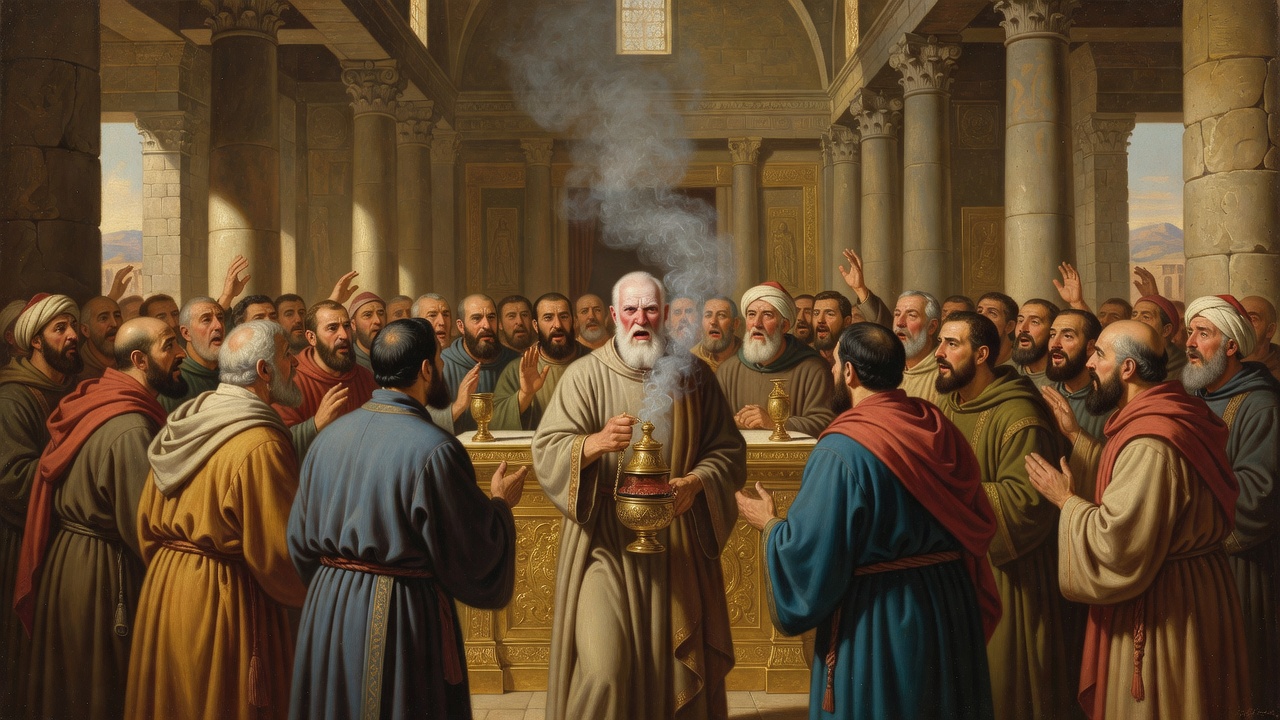
- When Uzziah grew powerful, he arrogantly attempted to burn incense in the temple sanctuary. High Priest Azariah and eighty brave priests confronted the king, explaining that only consecrated descendants of Aaron held the right to offer incense.Sources: the Bible text itself · Azariah
- After being afflicted with leprosy inside the temple, Uzziah lived in quarantine for the rest of his life and was excluded from the Lord's house. Because the king was in isolation, his son Jotham took charge of the royal palace and governed the people of Judah.Sources: the Bible text itself · Jotham · Uzziah
Notes written with AI assistance from open sources (Theographic Bible Metadata, CC BY-SA 4.0; Easton’s Bible Dictionary, public domain) and reviewed before publishing.
Places in this chapter
- Jerusalem · 31.777, 35.234 · verses 3, 9, 15
- Ashdod · Today: Tel Ashdod · 31.757, 34.658 · verse 6
- Philistia · 31.664, 34.546 · verse 6
- Egypt · 30.129, 31.308 · verse 8
- Angle · Today: in Jerusalem · 31.777, 35.234 · verse 9
- Corner Gate · Today: in Jerusalem · 31.777, 35.234 · verse 9
- Shephelah · 31.692, 34.875 · verse 10
Only places identified with high confidence are shown (90% or more according to the scholarly sources compiled by OpenBible). Period map: DARE (Digital Atlas of the Roman Empire), CC BY 4.0; modern map: © OpenStreetMap contributors; places: OpenBible.info (CC BY 4.0).
Credits and license for this translation
Paipel
The Holy Bible in the Chuukese language of the Federated States of Micronesia
copyright © 1984, 1989, 1991, 2001 Liebenzel Mission
Language: Chuukese
Translation by: Liebenzell Mission
Old Testament © 1989, 2001 Liebenzel Mission
New Testament © 1984, 1991 Liebenzel Mission
This translation is made available to you under the terms of the
Creative Commons Attribution-No Derivatives license 4.0.
You may share and redistribute this Bible translation or extracts from it in any format, provided that:
You include the above copyright and source information.
You do not make any derivative works that change any of the actual words or punctuation of the Scriptures.
Pictures included with Scriptures and other documents on this site are licensed just for use with those Scriptures and documents.
For other uses, please contact the respective copyright owners.
2024-01-24
Source: http://ebible.org/chk/ · eBible.org