1 Timothy 4
Paipel · Tap a verse to see its cross-references.
Ekewe chon afalafal chofona
1Iwe, ewe Ngünmifel a afata, pwe lon ekewe fansoun mürin ekoch aramas repwe pöütala ar lükülük, repwe rongorong ngeni ekewe ngün mi chofona o aleasochis ngeni aitien ekewe anün rochopwak. 2Ekei sokun kapasen kait ra chöüfeil ren ekewe chon chofona mi atuputup, mwelien letiper a mä, ra usun itä nge ra kar ren efoch mächä mi fokun sarara. 3Ekei sokun aramas ra afalafala pwe a ngau pwüpwülü, ra pwal apini ekoch sokun mongö. Nge Kot a awora ekei sokun mongö pwe sipwe mongö. Iwe, kich mi lükü o silei ewe let sipwe eni ewe mongö fän ach iotekin kilisou. 4Pun meinisin mine Kot a föri a mürina. Esap wor och sipwe oput are sipwe angei fän ach iotekin kilisou, 5pun än Kot kapas me ewe iotek ra afisätä pwe epwe mürina me ren Kot.
Eman chon angangen Kraist Jesus mi mürina
6Iwe, are kopwe aiti ngeni pwiüm kewe souläng ekei kapasen öüröür, kopwe eman chon angangen Kraist Jesus mi mürina. Kopwe püsin amongöni ngünum ekewe kapasen lükülük, pwal ekewe kapasen kait ka fen aleasochisi tori ikenai. 7Kopwe afäluk ren ekewe tutulap mi ü ngeni ewe kapasen Kot, esap wor lomoten ach sipwe apworausa, nge kopwe chök achocho le asipok lon om souläng. 8Pun ach achocho le asipa inisich a atoto ekis chök feiöch, nge ach achocho le asipakich lon ach souläng a atoto rech feiöch meinisin, pun a pwon ngenikich manau lon ei fansoun ikenai pwal lon ekewe fansoun repwe feito. 9A allükülük ei kapas pwe aramas repwe fokun etiwa o lükü. 10Iei popun sia achocho le angang weires, pun sia anomu ach apilükülük won ewe Kot mi manau, i ewe Chon Amanau fän iten aramas meinisin, nge lapalan fän iten chokewe mi lükü ewe kapasen Kot.
11Kopwe afalafala o aiti ngeni ekewe souläng ekei kapasen öüröür me ekei kapasen kait. 12Kopwe tümwünuk, pwe esap wor eman epwe urumwoteek pokiten om alüal, nge kopwe eu lenien apirü ngeni ekewe chon lükü lon om kapas, lon om föför, lon om chen, lon om lükülük, pwal lon om limöch. 13Tori ai üpwe war, kopwe likitü lon om aleani ekewe Toropwe mi Pin ngeni ekewe souläng, kopwe afalafaleer usun o asukula ngeniir. 14Kosap tümwününgau ngeni ewe lifang seni ewe Ngünmifel, a toruk ren än ekewe soufos kapas, lupwen ekewe souakom ra iseis pöür womw. 15Kopwe föri pwüngün ekei mettoch o fokun achocho ngeni om kopwe apwönüretä, pwe aramas meinisin repwe küna om fefeitä lon om souläng. 16Kopwe püsin tümwünuk, kopwe pwal tümwünü mine ka afalafal won. Kopwe likitü le föri ekei mettoch, pun are kopwe föri iei usun, kopwe püsin amanauok me chokewe mi aüselingok.
Did you know?
False Teaching and Godly Training
- The chapter says the Spirit expressly states that in later times some will abandon the faith to follow deceitful spirits and the teachings of demons. They are influenced by the hypocrisy of liars whose consciences are seared with a hot iron, and they will prohibit marriage and require abstinence from certain foods.Sources: the Bible text itself
- The letter answers those demands by saying God created such foods to be received with thanksgiving by those who believe and know the truth. Every creation of God is good, and nothing received with thanksgiving should be rejected, because it is sanctified by the word of God and prayer.Sources: the Bible text itself
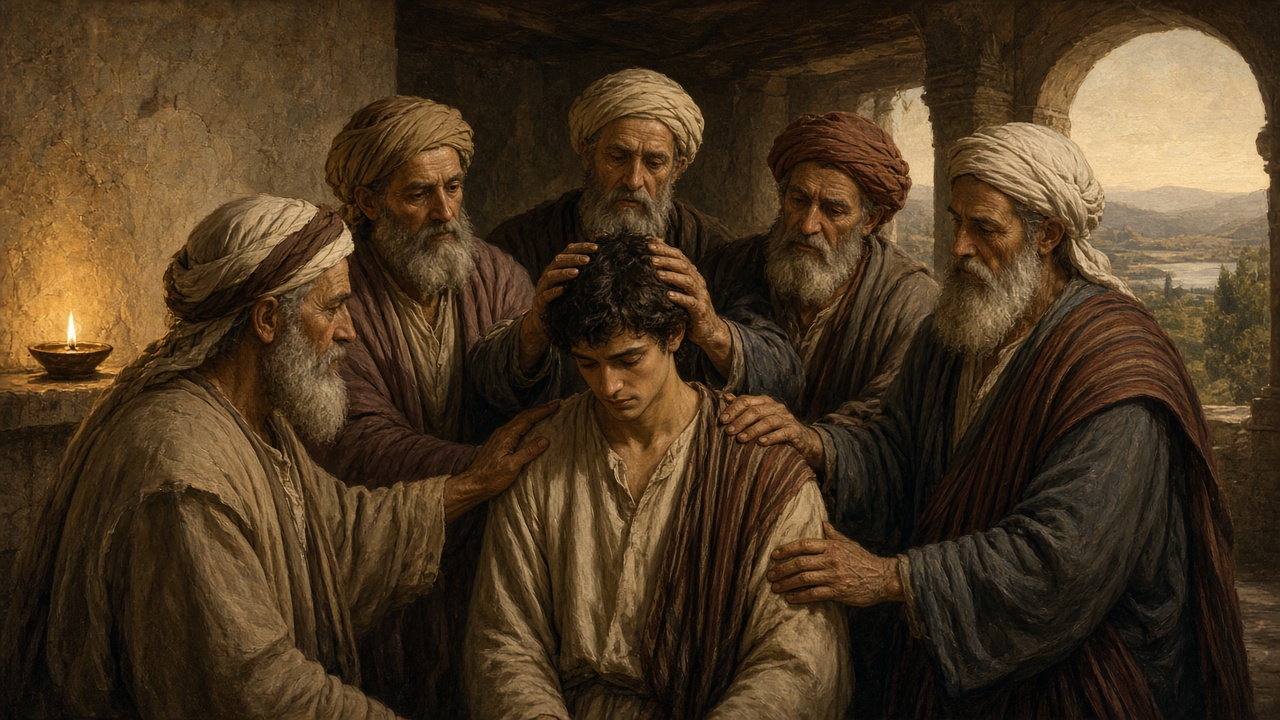
- The writer urges the young person he addresses not to let anyone despise his youth, but to set an example in speech, conduct, love, faith, and purity. Until the writer comes, he is to devote himself to the public reading of Scripture, to exhortation, and to teaching, and not neglect the gift given through prophecy when the elders laid hands on him. Physical exercise, the letter adds, is of limited value, while godliness is valuable in every way, holding promise for the present life and the life to come, a saying the letter calls trustworthy and worthy of full acceptance.Sources: the Bible text itself
Notes written with AI assistance from open sources (Theographic Bible Metadata, CC BY-SA 4.0; Easton’s Bible Dictionary, public domain) and reviewed before publishing.
Credits and license for this translation
Paipel
The Holy Bible in the Chuukese language of the Federated States of Micronesia
copyright © 1984, 1989, 1991, 2001 Liebenzel Mission
Language: Chuukese
Translation by: Liebenzell Mission
Old Testament © 1989, 2001 Liebenzel Mission
New Testament © 1984, 1991 Liebenzel Mission
This translation is made available to you under the terms of the
Creative Commons Attribution-No Derivatives license 4.0.
You may share and redistribute this Bible translation or extracts from it in any format, provided that:
You include the above copyright and source information.
You do not make any derivative works that change any of the actual words or punctuation of the Scriptures.
Pictures included with Scriptures and other documents on this site are licensed just for use with those Scriptures and documents.
For other uses, please contact the respective copyright owners.
2024-01-24
Source: http://ebible.org/chk/ · eBible.org