1 Samuel 6
Paipel · Tap a verse to see its cross-references.
Ekewe chon Filistia ra aliwini ewe pworofel
1Iwe, än ewe Samol mi Lapalap we pworofel a nom lon fanüen chon Filistia lon ükükün fisu maram. 2Mürin, ekewe chon Filistia ra titi ekewe souasor me ekewe soupwe o aisiniir, “Met aipwe föri ngeni än ewe Samol mi Lapalap ei pworofel? Oupwe ürenikem met epwe fiti, lupwen aipwe aliwini ngeni lenian.” 3Nge ra üreniir, “Are oupwe tinala än ewe Koten Israel ei pworofel, ousap tinala fän pön, nge oupwe aliwinala ren fiti eu asoren tipis. Mürin oupwe pöchökülsefäl, oupwe pwal silei pwota esap ükütiu le afeiengauakemi.” 4Mürin, ra aisiniir, “Met sokun ewe asoren tipis aipwe tinala ren?” Ra pälüeni, “Oupwe tinala limeföü uluulun pwoo seni kolt, pwal limman uluulun nakich seni kolt ükükün iteiten samolun chon Filistia. Pun eu chök mätter a ürikemi meinisin, pwal nöümi kewe samol. 5Oupwe föri uluulun pwoomi me uluulun ekewe nakich mi ataela ewe fanü. Iwe, oupwe meniniti ewe Koten Israel, eli epwe ükütiu le afeiengauakemi, pwal ämi kewe kot me fanüemi. 6Pwota oupwe aföreai letipemi usun chon Isip me Farao ra aföreai letiper? Ifa usun, mürin än Kot awarato feiengau wor, resap mwüt ngeni ekewe aramas pwe repwe feila? 7Iei oupwe amolätä efoch woken minefö me ruoman kow mi nöünöü, esamwo wor efoch waas a nom won üer. Oupwe ämwäralong won üer efoch waas o fötiir ngeni ewe woken. Nge apanen ekewe kow oupwe angei seniir o aliwinirela ngeni lenier. 8Iwe, oupwe angei än ewe Samol mi Lapalap we pworofel o uwätä won ewe woken. Oupwe pwal iseis lon eu pwor ekewe uluulun pwo me nakich seni kolt o anomu ünükün pwe oupwe tinala ren, pwe ämi asoren tipis. Mürin oupwe tinala ewe woken, pwe epwe püsin feila lon alan. 9Oupwe mamasa. Are epwe feitä ngeni püsin fanüan won ewe al ngeni Pet-semes, mürin sipwe silei pwe ewe Koten Israel a awarato ngenikich ei feiengau mi lapalap. Nge are esap feitä, sipwe pwal silei pwe esap afeiengauakich, pwe a chök püsin fis ngenikich.”
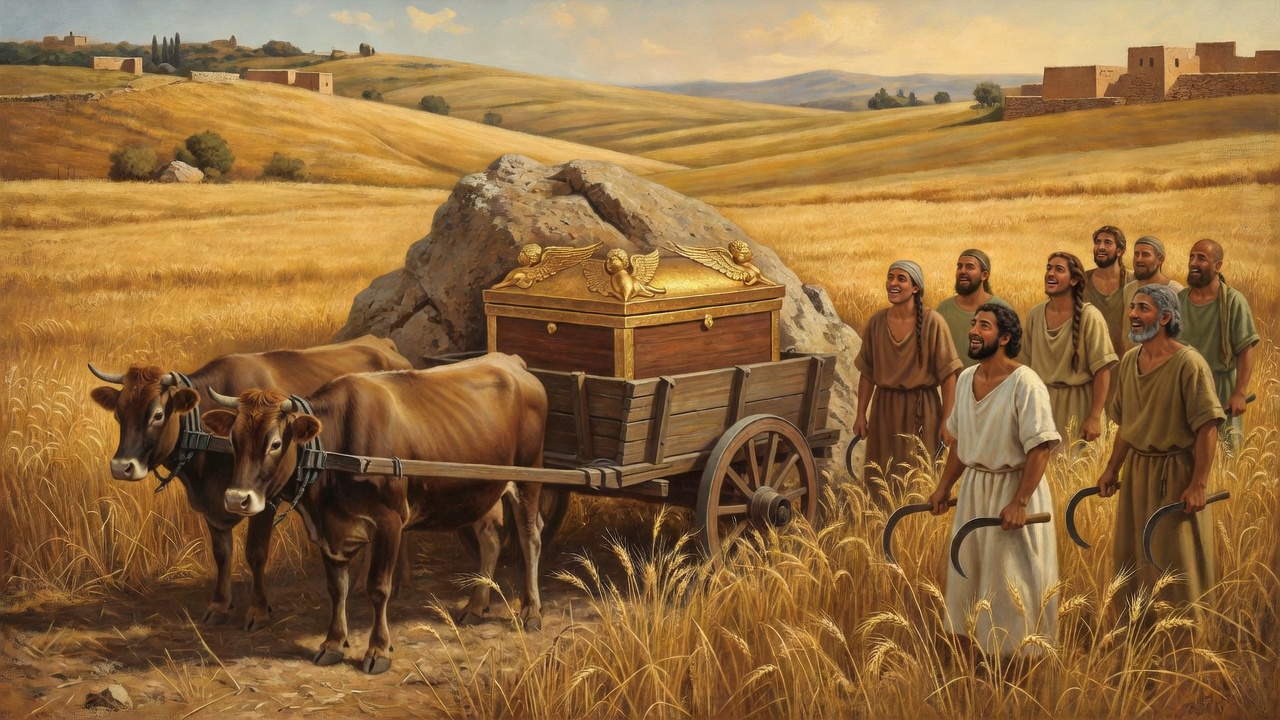
10Iwe, ekewe mwän ra föri iei usun. Ra angei ruoman kow mi nöünöü, ra ämwäralong won üer efoch waas o fötiir ngeni ewe woken, nge apaner kewe ra likitiir lon lenier. 11Mürin ra iseis än ewe Samol mi Lapalap we pworofel won ewe woken, pwal ewe pwor, ekewe uluulun nakich me uluulun pwo seni kolt ra nom lon. 12Iwe, ekewe kow ra fetal wenewen ngeni Pet-semes won ewe alelap. Ra fetal nge puchör, nge resap rik ngeni pelifich ika ngeni pelimöng. Ekewe samolun chon Filistia ra tapwela mürin tori kiännin Pet-semes. 13Lon ewe otun ekewe aramasen Pet-semes ra kini fotar wiich lon ewe mälämäl. Iwe, lupwen ra netä o küna ewe pworofel, ra fokun pwapwa. 14Ewe woken a tori tanipin Josua seni Pet-semes o kaüla ikenan, ia a nom ie eföü fau mi föümong. Iwe, ekewe aramas ra ässätta mwüchün ewe woken o eäni asoren kek ekewe ruoman kow ngeni ewe Samol mi Lapalap. 15Iwe, ekewe mwän seni ewe ainangen Lefi ra uwätiu än ewe Samol mi Lapalap we pworofel, pwal ewe pwor mi nom ünükün, ia ekewe uluulun nakich me pwo seni kolt ra nom ie, o iseniir won ewe fau mi föümong. Lon ewe ränin ekewe re Pet-semes ra eäni asoren kek me sokun asor ngeni ewe Samol mi Lapalap. 16Iwe, ekewe limman samolun chon Filistia ra nengeni mine ekewe aramas ra föri, mürin ra liwinla Ekron lon ewe chök ränin.
17Iwe, ekewe uluulun pwo seni kolt ekewe chon Filistia ra tinala pwe ar asoren tipis ngeni ewe Samol mi Lapalap: eföü fän iten Astot, eföü fän iten Kasa, eföü fän iten Askelon, eföü fän iten Kat, me eföü fän iten Ekron. 18Mi pwal wor uluulun nakich seni kolt ükükün iteiten ekewe telinimwen chon Filistia meinisin mi nom fän nemenien ekewe limman samol, ekewe telinimw mi tit me ekewe sop resap tit. Iwe, tori ikenai ewe fau mi föümong, ewe ia ra isetä ie än ewe Samol mi Lapalap we pworofel, a eföü föün pwärätä mi nom lon tanipin Josua seni Pet-semes.
19Iwe, ewe Samol mi Lapalap a niela ükükün fik mwän me lein ekewe re Pet-semes, pun ra nennelong lon ewe pworofel. Iwe, ekewe aramas ra letipeta, pun ewe Samol mi Lapalap a niela chomong me leir. 20Mürin, ekewe re Pet-semes ra üra, “Iö a tongeni ütä fän mesen ewe Samol mi Lapalap, ewe Kot mi pin? Iö sipwe tinala ren ei pworofel, pwe Kot epwe toau senikich?” 21Iei mine ra tinala chon künö ren ekewe chon Kiriat-jearim pwe repwe üreniir, “Ekewe chon Filistia ra aliwini än ewe Samol mi Lapalap we pworofel. Oupwe feito o angei ngenikemi.”
Did you know?
The Return of the Ark
- The Philistine leaders represented a confederation of five major cities: Ashdod, Gaza, Ashkelon, Gath, and Ekron. To seek relief from the plagues that struck their people, their priests and diviners advised sending a guilt offering of five gold tumors and gold rats corresponding to the five rulers and their territories.Sources: the Bible text itself · Ashdod · Gaza · Ashkelon
- Beth-shemesh was a sacerdotal (priestly) town on the northern border of Judah. This priestly status explains the presence of Levites who could properly take down the Ark and set it on the large stone in the field during the wheat harvest.Sources: the Bible text itself · Beth-shemesh
- To test whether their troubles were genuinely from Israel's God or simply happened by chance, the Philistines hitched two nursing cows that had never been yoked to the cart and penned up their calves. Contrary to natural maternal instinct, the cows went straight along the road to Beth-shemesh without turning aside.Sources: the Bible text itself
Notes written with AI assistance from open sources (Theographic Bible Metadata, CC BY-SA 4.0; Easton’s Bible Dictionary, public domain) and reviewed before publishing.
Places in this chapter
- Ekron · Today: Tel Miqne · 31.777, 34.852 · verses 16, 17
- Ashdod · Today: Tel Ashdod · 31.757, 34.658 · verse 17
- Ashkelon · Today: Tel Ashkelon · 31.664, 34.546 · verse 17
- Gaza · Today: Tell Harube · 31.504, 34.464 · verse 17
- Kiriath-jearim · Today: Deir el Azar · 31.809, 35.104 · verse 21
Only places identified with high confidence are shown (90% or more according to the scholarly sources compiled by OpenBible). Period map: DARE (Digital Atlas of the Roman Empire), CC BY 4.0; modern map: © OpenStreetMap contributors; places: OpenBible.info (CC BY 4.0).
Credits and license for this translation
Paipel
The Holy Bible in the Chuukese language of the Federated States of Micronesia
copyright © 1984, 1989, 1991, 2001 Liebenzel Mission
Language: Chuukese
Translation by: Liebenzell Mission
Old Testament © 1989, 2001 Liebenzel Mission
New Testament © 1984, 1991 Liebenzel Mission
This translation is made available to you under the terms of the
Creative Commons Attribution-No Derivatives license 4.0.
You may share and redistribute this Bible translation or extracts from it in any format, provided that:
You include the above copyright and source information.
You do not make any derivative works that change any of the actual words or punctuation of the Scriptures.
Pictures included with Scriptures and other documents on this site are licensed just for use with those Scriptures and documents.
For other uses, please contact the respective copyright owners.
2024-01-24
Source: http://ebible.org/chk/ · eBible.org