1 Samuel 19
Paipel · Tap a verse to see its cross-references.
Saul a anenna Tafit pwe epwe niela
1Iwe, Saul a kapas ngeni Jonatan nöün we mwän, pwal ngeni nöün kewe chon angang meinisin, pwe repwe niela Tafit. Nge Jonatan nöün we mwän a fokun tongei Tafit. 2Iei mine a üreni Tafit, “Saul semei we a anennok pwe epwe niik. Kopwe afäluk lesosorun lesor, kopwe nom lon eu leni mi monomon o op. 3Nge ngang üpwe feila o ütä ünükün semei lon ewe mälämäl, ia en ka op ie. Üpwe kapas ngeni semei usum, nge are üa silei och, üpwe asile ngonuk.” 4Iwe, Jonatan a kapasöch usun Tafit ngeni Saul saman we o üreni, “Ai king, kosap tipis ngeni noum chon angang Tafit, pun i esap tipis ngonuk, nge an föför a fen öch ngonuk. 5Pun a fangala manauan, lupwen a niela Koliat, nge ewe Samol mi Lapalap a afisi eu win mi lapalap fän iten chon Israel meinisin. En ka küna o fokun pwapwa ren. Pwota ka mochen tipis ngeni Tafit, eman mwän esap wor an tipis, ren om ekiekin niela, nge esap wor popun?” 6Iwe, Saul a aüselinga alon Jonatan o pwon fän akapel, “Mwo manauen ewe Samol mi Lapalap, Tafit esap ninnila.” 7Iei mine Jonatan a kökköri Tafit o pwäri ngeni ekei pworaus meinisin. Mürin, a emwenala Tafit ren Saul pwe a angang ngeni usun me mwan.
8Iwe, a pwal fisisefäl maun. Nge Tafit a feila maun ngeni ekewe chon Filistia o fokun akufuur, pwe ra sü me mwan. 9Lon eu rän eman ngün mi afeiengau seni ewe Samol mi Lapalap a feitiu won Saul, lupwen a mot lon imwan o amwöchü wokun siles lepöün. Nge Tafit a ettiki ewe kitar. 10Iwe, Saul a angei wokun siles o ekiekin apwera Tafit ngeni ewe etiip. Nge Tafit a müttir olu wokun Saul we, pwe a chök küw ewe etiip. Iwe, Tafit a süla seni Saul.
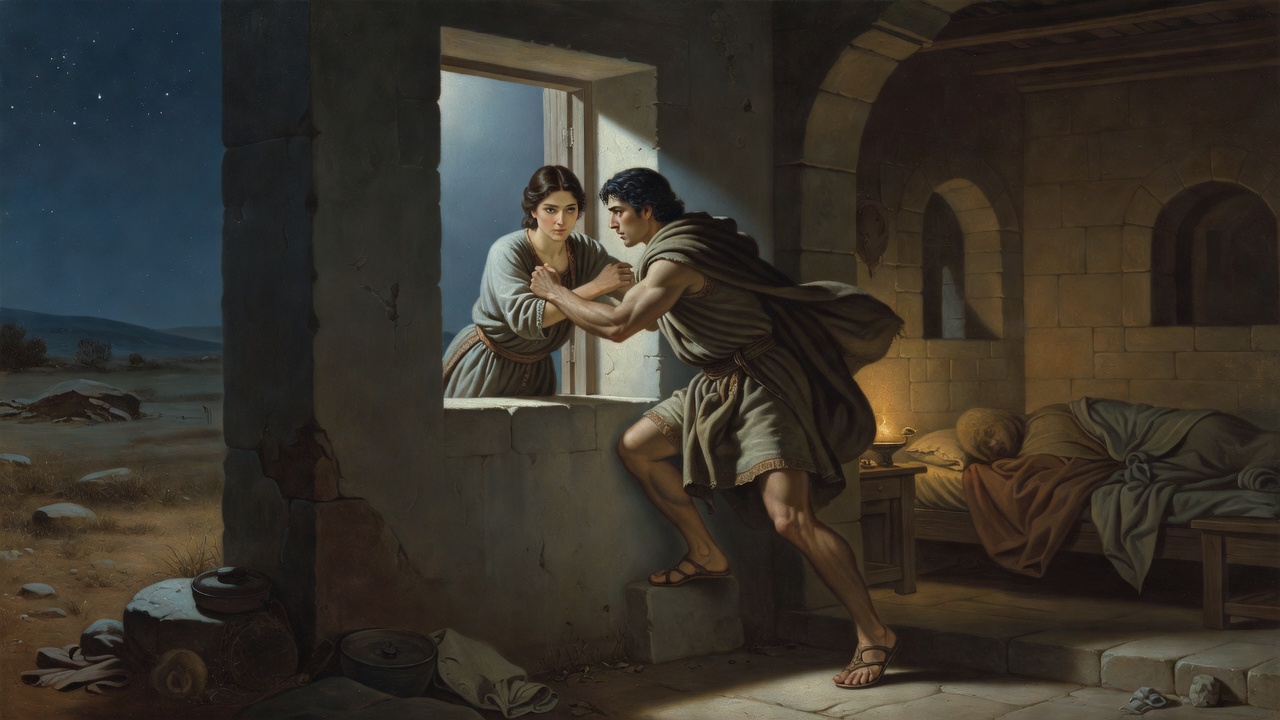
11Lon ewe pwinin Saul a tinala chon künö ren imwen Tafit pwe repwe aköürü Tafit, pun a ekiekin niela Tafit lon ewe sorotän. Nge Mikal pwülüen Tafit a üreni, “Are kosap kütta manauom lon ei pwinin, lesor kopwe ninnila.” 12Iei mine Mikal a aürätiu Tafit me lon eu asamwacho. Iwe, Tafit a süla. 13Mürin, Mikal a angei eu uluulun anün leimw o akonala won ewe peet, a anomu eu mangaku seni ülöülen kuuch won möküran o pwölüela fän echö chenikam. 14Lupwen Saul a tinala ekewe chon künö pwe repwe angei Tafit, Mikal a apasa, “Tafit a samau.” 15Nge Saul a tinsefälila ekewe chon künö pwe repwe püsin nenengeni Tafit o üreniir, “Oupwe ekieto rei Tafit won an peet pwe üpwe niela.” 16Nge lupwen ekewe chon künö ra tolong lon ewe imw, ra küna pwe eu uluulun anün leimw a nom won ewe peet, nge eu mangaku seni ülöülen kuuch a nom won möküran. 17Saul a aisini Mikal, “Pwota ka atupuei o mwüt ngeni ewe chon oputaei pwe a sü seniei?” Nge Mikal a pälüeni, “A üreniei pwe epwe nieila, are üsap mwüt ngeni pwe epwe sü.”
18Iwe, Tafit a süla o sü ngeni Samuel lon Rama. A apworausa ngeni meinisin mine Saul a föri ngeni. Mürin, ir me Samuel ra feila o nom lon Naiot. 19Iwe, a wor eman a asile ngeni Saul pwe Tafit a nom Naiot lon Rama. 20Mürin, Saul a tinala chon künö pwe repwe turufi Tafit. Iwe, lupwen ra küna ewe mwichen soufos pwe ra osuni, nge Samuel a akom mwer, Ngünün Kot a feitiu won nöün Saul kewe chon künö pwe ra pwal osuni. 21Lupwen ei pworaus a tori Saul, a pwal tinala eu mwichen chon künö, nge ir ra pwal osuni. Mürin, Saul a tinala chon künö fän aülüngatin, nge ir ra pwal osuni. 22Mürin, püsin i a feila Rama o tori ewe chönüttu mi watte lon Seku. Iwe, a ais, “Ia Samuel me Tafit ra nom ie?” Eman a üra pwe ra nom Naiot lon Rama. 23Iei mine Saul a feila ngeni Naiot lon Rama. Nge Ngünün Kot a pwal feitiu won Saul, pwe lupwen an fetal a osuni tori a tori Naiot.
24Iwe, Saul a pwal pwilitala üfan, a pwal osuni me fän mesen Samuel o kon fän üfan üföüfen lon lon unusen ewe rän me lon unusen ewe pwin. Iei mine a fis ewe kapas, “Ifa usun, Saul a pwal eman lein ekewe soufos?”
Did you know?
David's Escapes from Saul
- When Saul sent messengers to kill David at home, David's wife Michal helped him escape through a window. She then disguised a household idol in his bed with goat hair and clothing to delay the messengers and buy David time to flee.Sources: the Bible text itself · Michal
- David fled to the prophet Samuel at Ramah and went with him to Naioth. The name Naioth means dwellings and refers to a settlement near Ramah where a community of prophets lived under Samuel's leadership.Sources: the Bible text itself · Naioth · Samuel
- While pursuing David toward Ramah, Saul stopped to ask for information at the large cistern of Secu, a place located on a hill between Gibeah and Ramah.Sources: the Bible text itself · Secu
Notes written with AI assistance from open sources (Theographic Bible Metadata, CC BY-SA 4.0; Easton’s Bible Dictionary, public domain) and reviewed before publishing.
Places in this chapter
- Secu · Today: between Gibeah and Ramah · 31.937, 35.145 · verse 22
Only places identified with high confidence are shown (90% or more according to the scholarly sources compiled by OpenBible). Period map: DARE (Digital Atlas of the Roman Empire), CC BY 4.0; modern map: © OpenStreetMap contributors; places: OpenBible.info (CC BY 4.0).
Credits and license for this translation
Paipel
The Holy Bible in the Chuukese language of the Federated States of Micronesia
copyright © 1984, 1989, 1991, 2001 Liebenzel Mission
Language: Chuukese
Translation by: Liebenzell Mission
Old Testament © 1989, 2001 Liebenzel Mission
New Testament © 1984, 1991 Liebenzel Mission
This translation is made available to you under the terms of the
Creative Commons Attribution-No Derivatives license 4.0.
You may share and redistribute this Bible translation or extracts from it in any format, provided that:
You include the above copyright and source information.
You do not make any derivative works that change any of the actual words or punctuation of the Scriptures.
Pictures included with Scriptures and other documents on this site are licensed just for use with those Scriptures and documents.
For other uses, please contact the respective copyright owners.
2024-01-24
Source: http://ebible.org/chk/ · eBible.org