1 Kings 1
Paipel · Tap a verse to see its cross-references.
About this book
About 1 Kings
- Easton's Bible Dictionary (1897) treats the authorship of the books of Kings as uncertain. A tradition that Jeremiah wrote them is, in Easton's view, supported by passages almost identical with parts of Jeremiah and by events Jeremiah knew personally, yet Easton thinks it more probable that Ezra, after the Captivity, compiled the books from earlier documents, perhaps written by David, Solomon, Nathan, Gad, and Iddo. Easton dates the composition between 561 B.C., when Jehoiachin was released from captivity by Evil-merodach, and 538 B.C., the decree of Cyrus.Sources: Easton: Kings, The Books of
- Easton says these books contain the annals of the kingdom from Solomon's accession until Nebuchadnezzar and the Babylonians subdued it, a period he estimates at about 453 years. 1 Kings opens while David is dying: Adonijah, his fourth son, who had become heir-apparent to the throne after the deaths of Amnon and Absalom, has himself proclaimed king, but Nathan and Bathsheba persuade David to enthrone Solomon at once. Solomon, David's son by Bathsheba, whose history is recorded in 1 Kings 1-11, came to the throne, Easton suggests, at about sixteen or eighteen.Sources: Easton: Kings, The Books of · Adonijah · Solomon
- In the Hebrew Scriptures the two books of Kings originally formed one book; the Septuagint first divided them and, with the Vulgate, numbers them as the third and fourth books of Kings, the books of Samuel being the first and second. Easton notes that Chronicles gives greater prominence to the priestly or Levitical office, while Kings gives greater prominence to the royal office, and that in the threefold division of the Scriptures by the Jews these books are ranked among the Prophets. The narrative points to earlier sources: the book of the acts of Solomon and the chronicles of the kings of Judah and of Israel.Sources: Easton: Kings, The Books of
- After Solomon's death the ten tribes revolted and invited Jeroboam, son of Nebat, to be their king; Easton calls him the first king of those tribes and dates his reign from 976 to 945 B.C. He had fled to Egypt under the protection of Shishak I, and later moved his residence from Shechem, his first capital, to Tirzah, which remained the chief residence of Israel's kings until Omri bought the hill of Shomeron from Shemer for two talents of silver and built Samaria. The later narrative includes Ahab, Omri's son and the seventh king of Israel, whose wife was Jezebel: to the calf worship introduced by Jeroboam he added the worship of Baal, and he was severely admonished by the prophet Elijah.Sources: Jeroboam · Tirzah · Samaria · Ahab
Notes written with AI assistance from open sources (Theographic Bible Metadata, CC BY-SA 4.0; Easton’s Bible Dictionary, public domain) and reviewed before publishing.
Apisak a angang ngeni Tafit
1Iwe, lupwen ewe king Tafit a chinlap o ieritam, a fokun würi föü, inamwo ika nöün chon angang ra pwölü ngeni palangket. 2Iei mine nöün kewe nöüwis ra üreni, “Aipwe kütta eman föpwül fän itom, en äm samol me äm king, epwe angang ngonuk o tümwünuk, epwe pwal kon ünükum pwe kopwe ekis pwichikar.” 3Mürin, ra kütta eman föpwül mi liöch lemenen unusen ewe fanü Israel. Iwe, ra küna Apisak, eman fin Sunam, o emwenato ren ewe king. 4Ei föpwül a fokun liöch, a tümwünü ewe king o angang ngeni, nge ewe king esap pwüpwülü ngeni neminewe.
Atonia a angei ewe wisen king fän pöchökül
5A wor eman nöün Tafit we mwän itan Atonia, a nöüni me won Akit. Ätei a seikätä püsin i o üra, “Ngang üpwe king.” A amolätä fän itan woken me chon wawa oris, pwal lime mwän repwe akom mwan. 6Nge Tafit saman we esap fokun apwüngü fän eu ren an epwe aisini pwota a föri ei sokun lapalap. Atonia a pwal eman mwän mi fokun äteöch, a uputiu mürin Apsalom. 7Iwe, Atonia a pwüngüpwüng ngeni Joap nöün Seruia we mwän, pwal ngeni ewe souasor Apiatar. Iwe, ra tipeeu ngeni o alisi ngeni an we ekiek. 8Nge ewe souasor Satok me Penaia nöün Jehoiata we mwän, pwal ewe soufos Natan, Simei me Rei, pwal nöün Tafit kewe mwän mi pwora resap eti Atonia.
9Lon eu rän Atonia a eäni asor sip, ätemwänin kow me man mi aümanau ren ewe Föün Serepenit mi nom ünükün Enrokel. Iwe, a köri pwin kewe nöün ewe king mwän me nöün ewe king kewe nöüwis seni Juta, pwe repwe eti le asor. 10Nge esap köri ewe soufos Natan ika Penaia ika ekewe mwän mi pwora ika Salomon pwin we.
11Mürin, Natan a feila ren Patsipa inen Salomon we o üreni, “Kosap rongorong pwe Atonia nöün Hakit we mwän a tolong lon wisen king, nge Tafit ach samol esap silei usun? 12Iei mine kopwe föri mine üpwe öüröüra ngonuk, pwe kopwe amanaua manauom pwal manauen noum mwän Salomon. 13Kopwe müttir tolong ren ewe king Tafit o üreni, ‘Ai samol me ai king, ifa usun, kosap pwon fän akapel ngeniei ngang noum chon angang fefin, pwe Salomon nei we mwän epwe siwiliik lon wisom wisen king? Pwota chök Atonia a wiseni ewe wisen king?’ 14Mürin, lupwen kopwe chüen fos ngeni ewe king, ngang üpwe pwal feito me mürum o anüküchara om kapas.”
15Iei mine Patsipa a tolong ren ewe king lon rumwan. Lon ei fansoun ewe king a fokun chinlap, nge Apisak ewe fin Sunam a angang ngeni. 16Iwe, Patsipa a chapetiu o asamolu ewe king. Nge ewe king a aisini, “Met ka mochen?” 17Patsipa a üreni, “Ai samol, ka fen eäni pwon fän akapel iten ewe Samol mi Lapalap om we Kot ngeniei ngang noum chon angang fefin o üra, pwe Salomon nei we mwän epwe king me mürum. 18Nge iei Atonia a wiseni ewe wisen king, nge en ai samol me ai king kosap silei usun. 19Atonia a eäni asor chomong ätemwänin kow, man mi aümanau me sip. Iwe, a köri noum kewe mwän, ewe souasor Apiatar me Joap ewe meilapen ewe mwichen sounfiu, pwe repwe eti le asor. Nge esap köri Salomon noum chon angang. 20Ai samol me ai king, iei chon Israel meinisin ra nenengenuk pwe kopwe üreniir iö epwe siwiliik lon wisom wisen king. 21Are kosap üreniir, epwe fis pwe lupwen om kopwe mäla, repwe föri ngeniei me nei mwän Salomon usun mine ra föri ngeni chon föföringau.”
22Iwe, lupwen Patsipa a chüen fos ngeni ewe king, ewe soufos Natan a war. 23Ra üreni ewe king pwe ewe soufos Natan a war. Nge lupwen Natan a tolong ren ewe king, a chapetiu me mwan. 24Iwe, a üra, “Ai samol me ai king, ifa usun, en ka apasa pwe Atonia epwe siwiliik lon wisom wisen king? 25Ikenai Atonia a feila o eäni asor chomong ätemwänin kow, man mi aümanau me sip. A pwal köri noum kewe mwän meinisin, pwal Joap ewe meilapen sounfiu me ewe souasor Apiatar. Iei ra eti le mongö o ün, ra apasa, ‘Ewe king Atonia epwe manauatam.’ 26Nge ngang noum chon angang me ewe souasor Satok, pwal Penaia me noum chon angang Salomon, esap körikem. 27Ifa usun, ei lapalap a fis seni en, ai samol me ai king, nge kosap asile ngeni noum kewe nöüwis iö epwe siwiliik lon wisom wisen king?”
Salomon a tolong lon wisen king
28Iwe, ewe king Tafit a pälüeni, “Kopwe körato Patsipa pwe epwe feito rei.” Iei mine Patsipa a tolong ren o ütä fän mesan. 29Mürin, ewe king a pwon fän akapel o üreni, “Mwo manauen ewe Samol mi Lapalap, ewe mi amanauaei seni ai kewe riaföü meinisin, 30üa fen eäni pwon fän akapel ngonuk iten ewe Samol mi Lapalap ewe Koten Israel o üra pwe Salomon noum we mwän epwe siwiliei lon wisei wisen king. Ikenai üpwe apwönüetä ai pwon ngonuk.” 31Mürin, Patsipa a chapetiu, a asamolu ewe king Tafit o üra, “Amwo en ai samol me ai king kopwe manau tori feilfeilachök.”
32Mürin, ewe king Tafit a apasa, “Oupwe körato ewe souasor Satok, ewe soufos Natan me Penaia.” Iwe, lupwen ra feito, 33ewe king a üreniir, “Oupwe angei nei kewe nöüwis pwe repwe etikemi. Oupwe pwal amota Salomon nei we mwän won püsin nei aas o emwenala Kihon. 34Iwe, ewe souasor Satok me ewe soufos Natan repwe epiti Salomon ikenan pwe epwe kingen Israel. Mürin oupwe ettiki ewe rappwa o kökkö fän leüömong, ‘Ewe king Salomon epwe manauatam.’ 35Mürin oupwe tapweto mürin Salomon, lupwen epwe feito ikei o mot won ai lenien motun king, pun i epwe siwiliei lon wisei wisen king. Üa filätä Salomon pwe epwe nemenem lon Israel me Juta.” 36Iwe, Penaia a üreni ewe king, “Iei usun epwe fis. Amwo ewe Samol mi Lapalap om we Kot epwe anükü ekei kapas. 37Usun ewe Samol mi Lapalap a etuk, en ai samol me ai king, iei usun epwe pwal eti Salomon, epwe pwal alapala mwün seni mwumw.”
38Mürin, ewe souasor Satok, ewe soufos Natan me Penaia, pwal ekewe chon Cheret me chon Pelet ra amota Salomon won nöün ewe king Tafit we aas o emwenala Kihon. 39Ikenan ewe souasor Satok a angei ewe löön epit a uwato seni ewe imwenfel seni mangaku, o epiti Salomon. Mürin, ra ettiki ewe rappwa, nge ekewe aramas meinisin ra kökkö, “Ewe king Salomon epwe manauatam.” 40Iwe, ekewe aramas meinisin ra tapwetä mürin, ra ettiki aangün o mweireir fän pwapwa mi lapalap, pwe ewe pwül a chechech ren aküranger.
41Iwe, lupwen Atonia me ekewe chon kökköto mi nom ren ra wes me kametip, ra rong ei akürang. Nge lupwen Joap a rong tikin ewe rappwa, a ais, “Met popun a fis ei akürang lon ewe telinimw?” 42Lupwen a chüen kakapas, Jonatan nöün ewe souasor Apiatar we mwän a feito. Iwe, Atonia a üreni, “Kopwe tolong, pun en eman mwän mi öch, ka uwato pworaus mi öch.” 43Nge Jonatan a üreni Atonia, “Apwi, üsap uwato pworaus mi öch. Ach samol ewe king Tafit a seikätä Salomon pwe a king. 44A fen tinala ewe souasor Satok, ewe soufos Natan me Penaia, pwal ekewe chon Cheret me chon Pelet, pwe repwe eti. Ra amota Salomon won nöün ewe king we aas. 45Nge ewe souasor Satok me ewe soufos Natan ra epiti me lon Kihon pwe epwe king. Seni ikenan ra feitä fän pwapwa, iei popun a wor akürang lon ewe telinimw. Iei ewe akürang oua rongorong. 46Iwe, Salomon a siwili ewe king lon wisan wisen king. 47Pwal nöün ewe king kewe nöüwis ra feito, pwe repwe kapong ngeni ach samol ewe king Tafit o üreni, ‘Amwo om we Kot epwe aitöchü iten Salomon lap seni itom, epwe pwal alapala mwün lap seni mwumw.’ Mürin, ewe king a chapetiu won an peet o fel ngeni Kot. 48Iwe, ewe king a pwal apasa, ‘Üpwe mwareiti ewe Samol mi Lapalap ewe Koten Israel, pun a mwütätä pwe eman mwirimwiri epwe siwiliei lon wisei wisen king ikenai, lupwen üa chüen manau.’”
49Mürin, nöün Atonia kewe chon kökköto ra niuokus, ra ütä o süfesen. 50Pwal Atonia a niuokusiti Salomon. Iwe, a feila ren ewe imw mangaku ia aramas ra churi Kot ie o amwöchü mächän ewe rongen asor. 51Nge eman a asile ngeni ewe king Salomon, pwe Atonia a niuokusiti o amwöchü mächän ewe rongen asor. A apasa, “Ewe king Salomon epwe pwon fän akapel ngeniei akom, pwe esap nieila ngang nöün chon angang.” 52Iwe, Salomon a üra, “Are a alletä pwe epwe föför mürina, iwe, esap emet meten möküran epwe turutiu lepwül. Nge are a pwä och föföringau lon manauan, epwe fokun mäla.” 53Mürin, ewe king Salomon a titi Atonia. Iwe, ra emwenätiu seni ewe rongen asor. A feito o asamolu ewe king Salomon. Nge Salomon a üreni, “Kopwe feila lon imwom.”
Did you know?
The Succession to David's Throne
- As David's oldest surviving son after the deaths of Amnon and Absalom, Adonijah claimed the royal succession, backed by the military commander Joab and the high priest Abiathar. However, David chose his younger son Solomon, who was supported by the prophet Nathan, the priest Zadok, and the royal bodyguard under Benaiah.Sources: Adonijah · Solomon · the Bible text itself
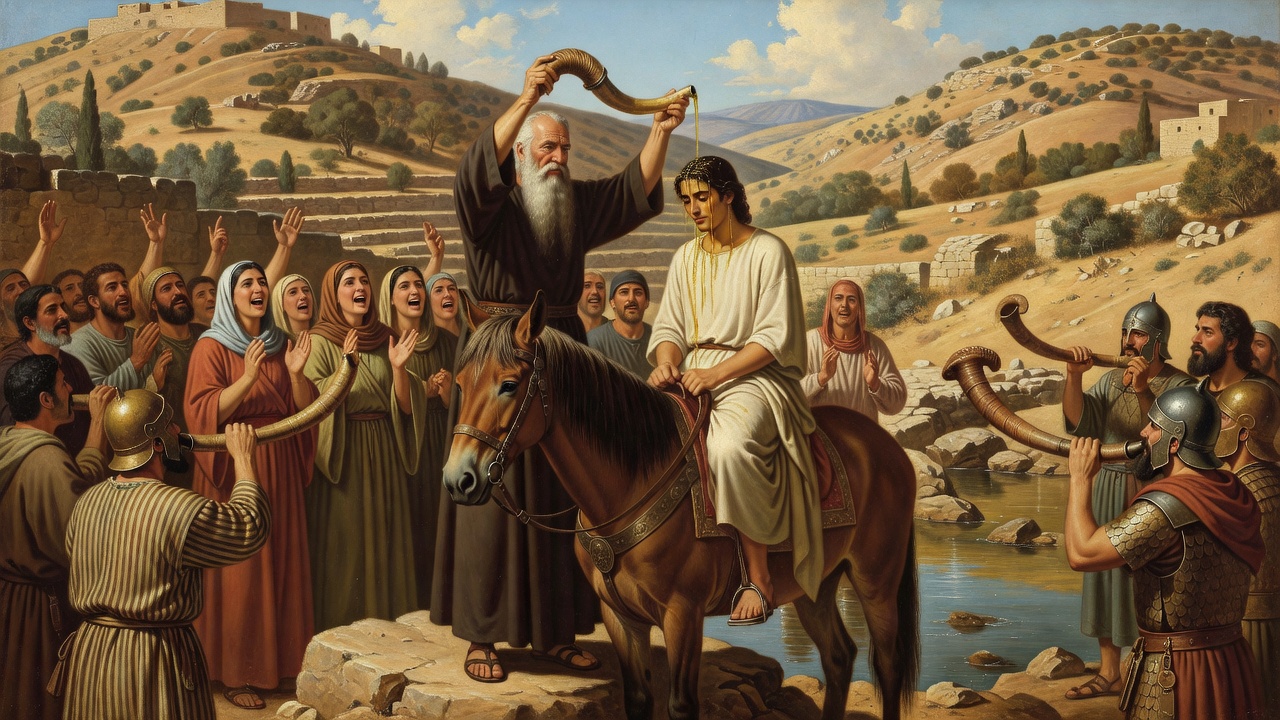
- Riding the king's own mule was a decisive public declaration of royal authority. By David's explicit instruction, Solomon was escorted down to the spring of Gihon, where Zadok anointed him king with oil taken from the tabernacle to the sound of ram's horns and popular celebration.Sources: Gihon · Zadok · the Bible text itself
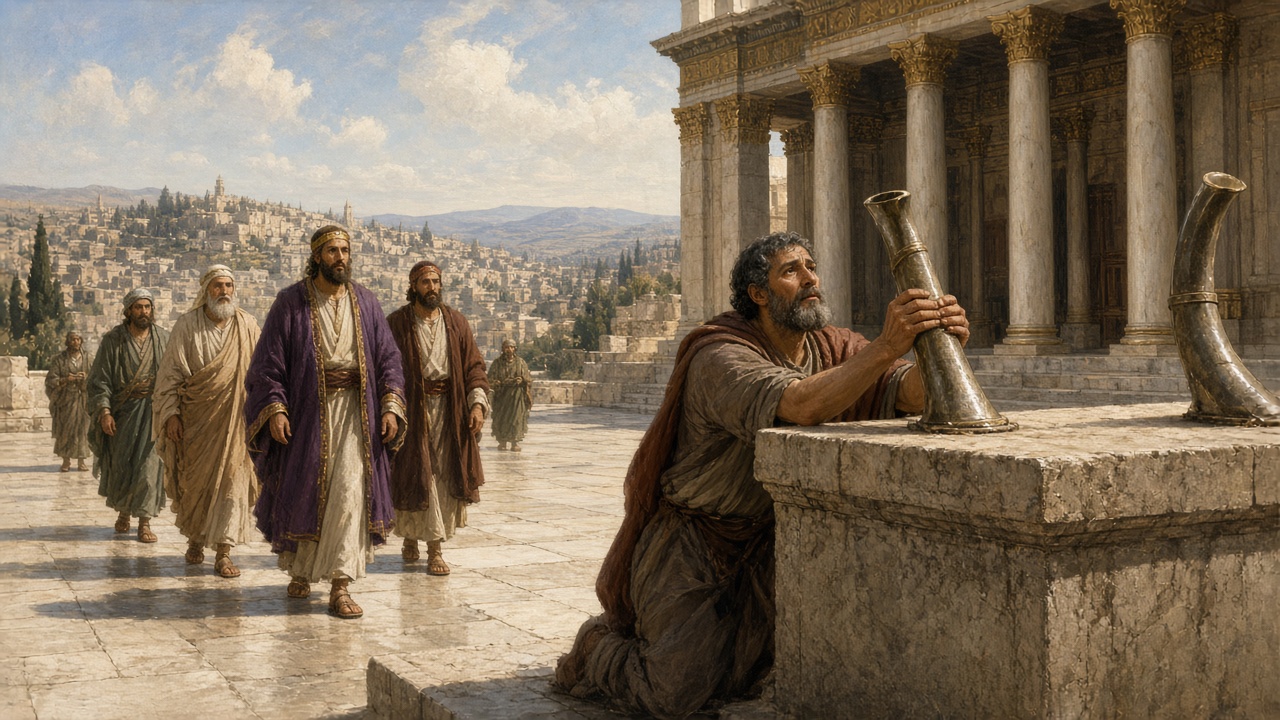
- Upon hearing of Solomon's public coronation, Adonijah fled in terror and sought asylum by taking hold of the horns of the sacrificial altar. Solomon granted him conditional clemency, sparing his life so long as he proved himself a worthy man.Sources: Adonijah · the Bible text itself
Notes written with AI assistance from open sources (Theographic Bible Metadata, CC BY-SA 4.0; Easton’s Bible Dictionary, public domain) and reviewed before publishing.
Places in this chapter
- Shunem · Today: Sulam · 32.606, 35.334 · verse 3
- Serpent’s Stone · Today: within 100 m of Bir Ayub · 31.767, 35.236 · verse 9
- Gihon · Today: Gihon Spring · 31.773, 35.236 · verses 33, 38, 44, 45
- Jerusalem · 31.777, 35.234 · verse 40
Only places identified with high confidence are shown (90% or more according to the scholarly sources compiled by OpenBible). Period map: DARE (Digital Atlas of the Roman Empire), CC BY 4.0; modern map: © OpenStreetMap contributors; places: OpenBible.info (CC BY 4.0).
Credits and license for this translation
Paipel
The Holy Bible in the Chuukese language of the Federated States of Micronesia
copyright © 1984, 1989, 1991, 2001 Liebenzel Mission
Language: Chuukese
Translation by: Liebenzell Mission
Old Testament © 1989, 2001 Liebenzel Mission
New Testament © 1984, 1991 Liebenzel Mission
This translation is made available to you under the terms of the
Creative Commons Attribution-No Derivatives license 4.0.
You may share and redistribute this Bible translation or extracts from it in any format, provided that:
You include the above copyright and source information.
You do not make any derivative works that change any of the actual words or punctuation of the Scriptures.
Pictures included with Scriptures and other documents on this site are licensed just for use with those Scriptures and documents.
For other uses, please contact the respective copyright owners.
2024-01-24
Source: http://ebible.org/chk/ · eBible.org