Mark 12
U Chʼuʼul Tʼan Dios · Tap a verse to see its cross-references.
El ejemplo de los trabajadores malvados
1De ya'i aj Jesús u täq'ui u ye'benob u t'an Dios t'oc tz'aji que mach totoj cheque cua' u yäle' ni tz'aji. U yälbijob ca'da:
―Ajni untu winic que u päq'ui uva tan u cab, y u bojte'i u junxoyma. U chi ump'e ch'en bajca u xe u yätz'e' jini uva, y u tz'osi täcä ump'e noj torres bajca u yajtä tu pam uc'a u cänäntan ni päc'äbi jini.
’De ya'i u yäc'bi tu c'äb otro ajpatanob ni cab jini tuba u cänäntäben, y une bixi nat. 2Jinq'uin c'oti u q'uini tuba c'ä'nac u jut ni päc'äbi, u täsqui untu u yajc'äncan tuba u c'atben ni ajpatanob jini tz'ita' u jut ni päc'äbi. 3Pero ni ajpatanob jiniba u q'uechi ni ajc'äncan jini, u bon cunijob y u täsquijob que bixic y mach u yäc'bijob niump'e cua'. 4De ya'i u yum u caba ni päc'äbi sujli u täscun otro u yajc'äncan. Jinda täcä u bon cunijob t'oc ji'tun, u tzepbijob tan u pam y u bon cäräx älbijob. 5Ni u yum u caba ni päc'äbi sujli u täscun otro u yajc'äncan. Ni jindaba u tzämsijob. Ji'pat u chi segui u bon täscun otros u yajc'äncan. Ni ajc'äncanob jini, ayan machca u cunijob y ayan machca u tzämsijob.
6’De ya'i ajni untu u yajlo' que mäx u yajna'tan, y u täsqui täcä, uc'a ti tu c'ajalin ca'da: “Bay cajlo'ba u xe chich u tz'ombenob u t'an”. 7Pero ni ajpatanob jini u maläc älijob ca'da: “Ni ajlo'daba une u xe tä colan ji'pat de u yum ni cabda. Cola cä tzämsenla jiq'uin, uc'a ca' jini colac täc'ala ni cabda”. 8Jin uc'a u q'uechijob y u tzämsijob y u pa'sijob jini ajchäme tama u caba ni päc'äbi jini.
9De ya'i aj Jesús u yälbijob:
―¿Cua' a wäle'la u xe u chen u yum ni u caba päc'äbi jini? Cäle' que u xe tä te, u xe u tzämsen ni ajpatanob jini y u xe u yäc'ben u caba jini päc'äbi otros ajpatanob.
10’¿Mach to quira a tziquila cache' u yäle' ni jun ta Dios tz'ibiba? U yäle' ca'da:
Ni ji'tun que u yäli ajcheraj otot que mach utzba,
jin une ch'ämqui tuba xic mero u ch'ixma otot.
11Jindaba Ajnoja chich u chi ca' jini, y tä' pitzi cua' u chi.
12De ya'i jinijob que mach yo u chänen aj Jesúsba u yolijob u q'ueche' u yäq'ue' preso, uc'a ti tu c'ajalinob cache' ni tz'aji que u yäliba, de unejob une u yäli. Pero bäc'tajob t'oc ni caj, jin uc'a mach u q'uechijob. De ya'i bixijob täcä.
El asunto de los impuestos
13Ji'pat ajt'äbälajob tuba aj judíosob u tulaj täsquijob aj fariseojob bajca an aj Jesús, y che' chich täcä aj Herodesjob tuba u jiranob si u ch'e' u yäc'ben u säte' uc'a u sube'ob. 14Ni winicobdaba c'otijob bajca an aj Jesús y u yälbijob ca'da:
―Maestro, cuwi t'ocob que aneba upete a wäle' tu toja, y mach u che cua' u yäle' ni gente, uc'a cachichca une a ye'ben chich u t'an Dios tu toja, y a ye'ben cache'da u ch'e' u bisan bij t'oc Dios. ¿Cache'da a wäle' ane? ¿Utz quira äc'bintic ni ajmanda tuba aj romanojob jini taq'uin que u c'atänba, o mach utz? ¿Cä'benla quira, o mach cä'benla?
15Aj Jesúsba yuwi chich cua' an tu c'ajalinob, y u yälbijob ca'da:
―¿Cua' uc'a a sacänla cache' a wäc'benon cä säte'? Täsenla wida ump'e taq'uin uc'a cä chänen.
16Unejob u yäc'bijob. Jinq'uin u chäni aj Jesús jini taq'uin, u c'atbijob ca'da:
―¿Caxca u retrato ni jinda, y caxca u c'aba' ya' tz'ibi tuyac'o?
Unejob u p'ali:
―Tuba aj César.
17De ya'i aj Jesús u yälbijob ca'da:
―Äc'benla aj César jini tuba chich aj Césarba, y äc'benla Dios jini tuba chich Diosba.
Y upete tajch'icwäni u jutob u yubin cache'da u p'ali.
La pregunta sobre la resurrección
18De ya'i c'oti bajca an aj Jesús aj saduceojob. Ni winicobdaba u yäle'ob cache' mach u cuxpa ajchäme. Jin uc'a u yälbijob aj Jesús ca'da:
19―Maestro, aj Moisés u colesi tz'ibi tuyac'o jun cache' si untu winic chämicba, y u colesan jit'oc sin u bijch'oc, c'änä lotojac jini ixic t'oc jitz'in ni c'äsi' winic, uc'a tu tz'isen u bijch'oc ni neba' ixicba, es ca' a wälä u bijch'oc ni winic que chämiba. 20Ajni untu winic que u cänänti siete u yajlo'. Ni najtäcäba lotoji, pero chämi sin que ajnic u bijch'oc. 21De ya'i ni neba' ixic lotoji t'oc u cha'tulib, pero chämi täcä sin que ajnic u bijch'oc. Che' chich u chi pasa täcä u yuxtulib. 22Ni siete u ch'ocob ni winic jini laj lotojijob t'oc ni ixic jini, pero laj chämijob sin que ajnic u bijch'oc. Ji'pat chämi täcä ni ixic. 23Tu xe tä cuxpanob jinq'uin u xe tä cuxpan ajchämejobba, ¿caxcamba de ni siete winicob jini u xe tä colan de jit'oc? Uc'a upetejob laj ajni chich de jit'oc.
24Aj Jesús u p'albijob ca'da:
―Anelaba mach a wi cua' a wäle'la, uc'a mach a che entendela cua' u yäle' ni jun ta Dios tz'ibiba y cache'da an ni poder ta Dios. 25Uc'a jinq'uin u xe tä cuxpan ajchämejobba, mach uxin tä lotojanob, y mach uxin u yäq'ue' jixic ch'ocob tuba lotojac, uc'a unejobba u xe tä ajtä ca' chich ni ángelojob que ya'an tä cieloba. 26Badaba co cälbenetla cache' u xe chich tä cuxpan ajchäme. ¿Mach to quira a tziquila cua' u yäle' tama ni jun que u tz'ibi aj Moisésba? Ni jun jini u yäle' cache' Dios c'oti tama noj chäcch'ix u pecän aj Moisés, jinq'uin c'oti aj Moisés u chänen cua' uc'a ayan c'ac' tama ni chäcch'ix y mach upul. U yälbi ca'da: “No'on ni Dioson tuba aj Abraham, tuba aj Isaac, y tuba aj Jacob”. 27Uc'a Diosba mach jin Dios tuba ajchämejob. Dios une tuba machcatac cuxu ayan. Uc'a unejob totoj cuxu ayanob tu jut Dios. Anelaba mach a wi cua' mu' a wäle'la.
El mandamiento más importante
28C'oti täcä bajca an aj Jesús untu jini que u ye'e' ni ley taj Moisés, y u yubi cua' jini mu' u yäle'ob t'oc aj Jesús, y u yubi täcä cache' u p'ali tu toja. Y une u c'atbi ca'da:
―¿Camba ni manda más c'änä cä tz'onänla que u yäq'ui Diosba?
29Aj Jesús u p'albi:
―Ni manda más c'änä cä tz'onänla de upete mandaba, jinda une: “Ubinla, lo' Israel. Ni Cajnojala Diosba, tontuntu une. 30Yajna'tanla a Wajnojala Dios con to'o a ch'a'aljinla uc'a tä' a wo a chenla, con to'o a pixanla, con to'o a c'ajalinla, y con to'o a muc'la”. Jinda ni manda más c'änä cä tz'onänlaba. 31U chap'elibba es ca' chich jini täcä: “Yajna'tan a lot ca' chich a yajna'tan aba ane”. Mach'an niump'e otro manda más c'änä cä tz'onänla que jindajob.
32De ya'i jini que u ye'e' ni ley taj Moisésba u yäli ca'da:
―Utz chich cua' a wäli, Maestro. Toj chich cua' a wäli, cache' tontuntu Dios ayan, y mach'an otro dios ca' une. 33Y si cä yajna'tanla Dios con to'o cä ch'a'aljinla uc'a tä' co cä chenla, y con to'o cä c'ajalinla, con to'o cä pixanla, y con to'o cä muc'la, si cä yajna'tanla täcä cä lotla ca' chich cä yajna'tan cäbala no'onlaba, más utz une que cua' chichca jini que u subbinte Diosba, y más utz täcä que cua' chichca matän que u pulcan pan alta tuba subbintic Diosba.
34Jinq'uin u yubi aj Jesús cache' tu toja u p'ali jini winic, u yälbi ca'da:
―Tz'ita' yo tuba a sapän ajniquet tu manda Dios.
De ya'i niuntu mach u ni' oli u c'atben niump'e cua'.
¿De quién es hijo el Cristo?
35Aj Jesús ya'an u ye'benob u t'an Dios tama noj ch'u'ul otot, u yälbenob ca'da:
―¿Can uc'a u yäle'ob ni machca u ye'e' ley taj Moisésba cache' aj Cristo u yajlo' aj David? 36Ni Ch'u'ul Pixan u yäc'bi aj David u yäle' ca'da:
Ajnoja Dios u yälbi Cajnoja:
“Chumi' täc noj
ixta que cä'benet a xäc'teq'ue' jini machcatac mach yo u chänenetba”.
37Bada jiq'uin, ixta aj David u yälben aj Cristo cache' u Yajnoja. ¿Cache'da a wäle'la jiq'uin cache' aj Cristo es u yajlo' aj David?
Ni noj q'uenel gente que ya'an bajca an aj Jesúsba u c'alin ubinob cua' u yäle'.
Jesús acusa a los maestros de la ley
38Aj Jesús u ye'bijob täcä ca'da:
―Cänäntan abala t'oc machcatac u ye'e' ni ley taj Moisésba. Unejobba tä' yojob numic t'oc u noj tamäl buc tuyac'o, y tä' yojob que ni gente tä calle u chen saludajob. 39Unejobba tä' yojob chumlecob tu pan ni chumlib bajca u chumtä ajt'äbälajob tuba ni ch'uj tuba aj judíosob y che' chich täcä bajca u c'uxnanob yojob chumlec tu pam jini chumlib más utzba. 40Unejobba u jajbenob u yotot neba'täc ixictac y u susuc chenob noj tamäl c'änti'ya. Unejobba, más q'uen castigo u xe u yäc'ben Dios.
La ofrenda de la viuda pobre
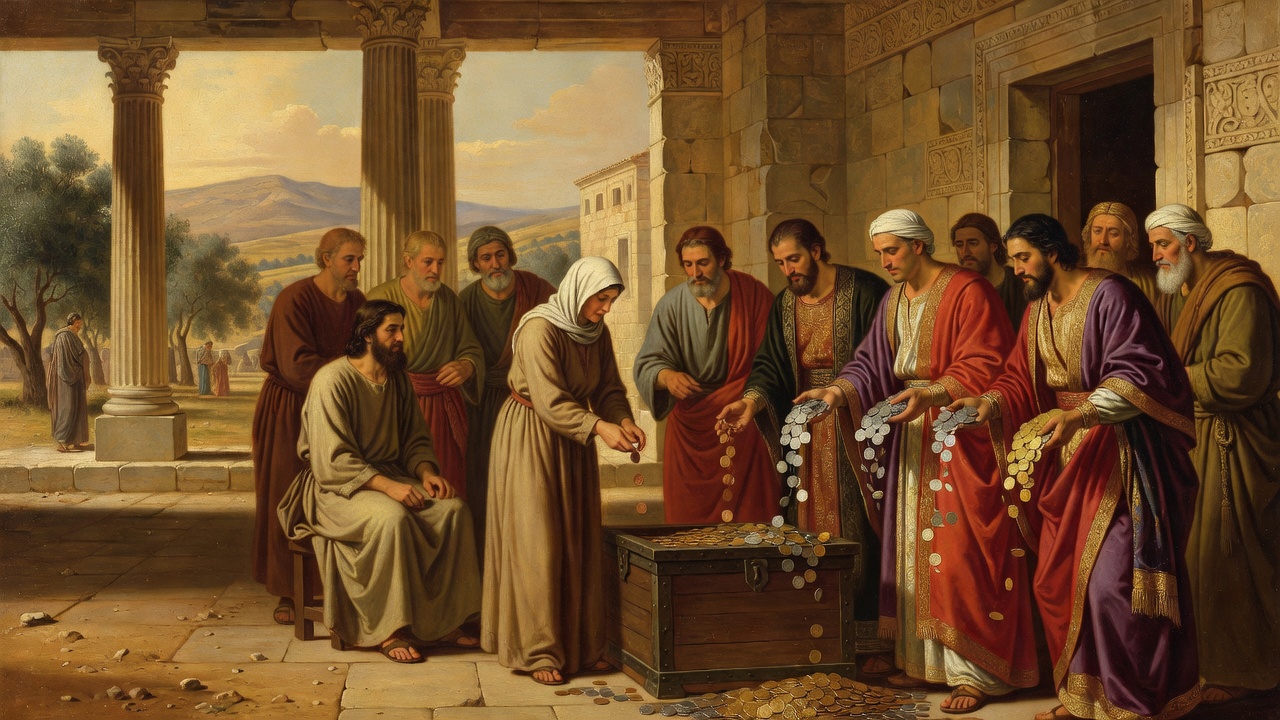
41Unnum aj Jesús ya' chumca tama noj ch'u'ul otot tu ch'ejpa jini cajón bajca u yälo taq'uin, u chänen cache' ni gente u yäq'ue' taq'uin. C'otijob ajtaq'uini täcä u yäq'ue' q'uen taq'uin. 42Jimba rato jini c'oti untu neba' ixic y u yäq'ui tama jini cajón chap'e yoc bit taq'uin que mach mäx choj u valor. 43De ya'i aj Jesús u joq'ui u yajcänt'anob y u yälbijob ca'da:
―Totojtoj cälbenetla cache' ni pobre neba' ixicdaba más u chen vale lo que u yäq'ui que jini taq'uin que u yäq'ui otrosjobba. 44Uc'a unejobba u yäq'uijob tz'ita' u colob de lo que u cänäntanob. Pero ni ixicdaba u yäq'ui upete lo que u cänäntan, ixta mach acoli tuba u mäne' t'oc cua' u c'uxe'.
Did you know?
Debates in the Temple
- The Sadducees, who say there is no resurrection, question Jesus about seven brothers and one widow, appealing to what Moses wrote. He points them to the burning bush in the Book of Moses, where God says, “I am the God of Abraham, the God of Isaac, and the God of Jacob.” Abraham, “father of a multitude,” was Terah’s son; Isaac was Abraham’s only son by Sarah; and Jacob was the second-born of the twin sons of Isaac and Rebekah.Sources: the Bible text itself · Abraham · Isaac · Jacob (Israel)
- Asked which commandment is the most important, Jesus begins, “Hear, O Israel, the Lord our God, the Lord is One,” and adds, “Love your neighbor as yourself.” Israel is another name for Jacob, the second-born twin son of Isaac and Rebekah; Jacob’s name is explained as one who follows on another’s heels, or supplanter.Sources: the Bible text itself · Jacob (Israel)
- Teaching in the temple courts, Jesus asks how the scribes can say that the Christ is the Son of David if David himself calls him “Lord.” David, whose name means “Beloved,” was the eighth and youngest son of Jesse, a citizen of Bethlehem, and his early occupation was tending his father’s sheep on the uplands of Judah.Sources: the Bible text itself · David
Notes written with AI assistance from open sources (Theographic Bible Metadata, CC BY-SA 4.0; Easton’s Bible Dictionary, public domain) and reviewed before publishing.
Credits and license for this translation
U Chʼuʼul Tʼan Dios
New Testament in Chontal, Tabasco (MX:chf:Chontal, Tabasco)
copyright © 1977 Wycliffe Bible Translators, Inc.
Language: Chontal, Tabasco
Translation by: Wycliffe Bible Translators, Inc.
Chontal, Tabasco [chf], Mexico
Copyright Information
© 1977, Wycliffe Bible Translators, Inc.
This translation text is made available to you under the
terms of the Creative Commons License: Attribution-Noncommercial-No Derivative Works.
( http://creativecommons.org/licenses/by-nc-nd/3.0/ )
In addition, you have permission to port the text to different file formats, as long as you
do not change any of the text or punctuation of the Bible.
You may share, copy, distribute, transmit, and extract portions
or quotations from this work, provided that you include the above copyright
information:
You must give Attribution to the work.
You do not sell this work for a profit.
You do not make any derivative works that change any of the actual words or punctuation of the Scriptures.
Permissions beyond the scope of this license may be
available if you contact
us with your request.
The New Testament
in Chontal, Tabasco
© 1977, Wycliffe Bible Translators, Inc.
This translation is made available to you under the terms of the
Creative Commons Attribution-Noncommercial-No Derivatives license 4.0.
You may share and redistribute this Bible translation or extracts from it in any format, provided that:
You include the above copyright and source information.
You do not sell this work for a profit.
You do not change any of the words or punctuation of the Scriptures.
Pictures included with Scriptures and other documents on this site are licensed just for use with those Scriptures and documents.
For other uses, please contact the respective copyright owners.
2014-04-22
Source: http://ebible.org/chfNT/ · eBible.org