Luke 11
U Chʼuʼul Tʼan Dios · Tap a verse to see its cross-references.
Jesús y la oración
1Unnum aj Jesús ya'an u chen c'änti'ya ump'e lugar, y jinq'uin u tzupsiba untu u yajcänt'an u yälbi ca'da:
―Cajnoja, ye'benon t'ocob cache' u yute c'änti'ya ca' chich aj Juan u ye'bi u yajcänt'anob.
2Une u yälbijob ca'da:
―Jinq'uin a chen c'änti'yala, äläla ca'da:
Cä Pap, bajca anet tä cielo, ch'u'ul ajnic a c'aba'.
La'ix de Ajnoja, utic ca' chich a wo, cama' tä cielo, che' chich täcä pancab.
3Benon t'ocob bada cä pa' waj cama' upete q'uin.
4Chen perdona cä tanä t'ocob uc'a no'on t'ocob täcä cä chen perdona t'ocob upete machcatac u säte' t'oc no'on t'ocob.
Mach a wäq'ue'on cä chen cä tanä t'ocob. Tz'eje'on t'ocob t'oc jini mach utzba.
5Aj Jesús u yälbijob täcä ca'da:
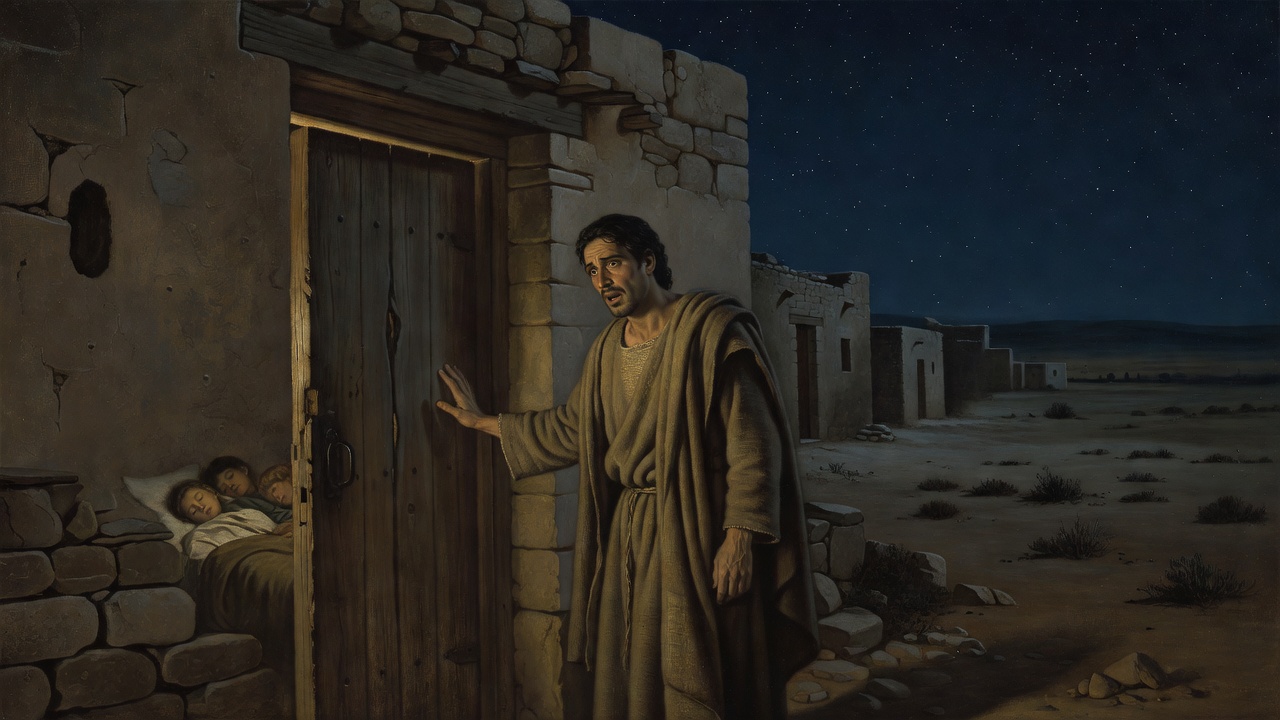
―Si untu de anela ajnic untu a lot y xiquet ca'an tänxin ac'äb y a wälben ca'da: “Cä lot, äc'benon cä majnan uxq'ue waj, 6uc'a untu camigo que bixe u chen tä viaje numi täj cotot y mach'an cua' cä'ben u c'uxe'”. 7Desde tan otot u xe u p'alän ca'da: “Mach ajniquet a lotänon uc'a ni ti' otot mäcä ayan y cä bijch'oc ya'anob nämte' t'oc no'on tan cä wäyiba. Mach u ch'ä ch'oyicon cä'benet”.
8De ya'i u yäli aj Jesús ca'da:
―No'on cälbenetla que mach uxin tä ch'oye u yäc'ben ni waj aunque es u yamigo. Pero u xe chich tä ch'oye u yäc'ben cua' chichca c'änä uc'a, uc'a u bon c'atben. 9Y no'on cälbenetla ca'da: Bon c'atbenla Dios cua' chichca jini y une u xe u yäc'benetla chich. C'änä a chenla ca' u chen machca u bon sacän cua' chichca ixta que mach u pojlen, y Dios u xe u yäc'benetla chich lo que a c'atbenlaba. C'änä a chenla ca' u chen machca u bon jätz'e' ti' ump'e otot ixta que mach jäbbintic, y Dios u xe u yäc'benetla chich lo que a c'atbenlaba. 10Uc'a upete machca u c'atänba u yäc'binte chich, y machca u sacän u pojlen, y machca u jätz'e' ti' otot u xe tä jäbbinte.
11’¿Si a wajlo' u c'atbenet u pa' wajba, a xe quira a wäc'ben ump'e ji'tun? Mach une. ¿Si u c'atbenet untu u pa' buch', en lugar de buch'ba, a xe quira a wäc'ben untz'it chan? Mach chich täcä. 12¿O si u c'atbenet ump'e u pa' säctoc'ba a xe a súbben quira untu sina? Mach chich uxet a chenla ca' jini. 13Anela malojetla y a wila chich cache' u ch'e' a wäc'benla a bijch'ocla cua' chichca jini utztacba. ¿Mach quira cä Papla Dios täcä más u xe u yäc'ben Ch'u'ul Pixan machcatac u c'atben?
Acusan a Jesús de tener el poder del demonio
14De ya'i ya'an aj Jesús u pa'sen untu tzuc pixan tuyac'o untu winic que u colesi a'uma'. Jinq'uin pasi ni tzuc pixan tuyac'o ni a'uma', u chi t'an y ni gente tajch'icwäni u jutob u chänen. 15Yebe de unejob u yälijob ca'da:
―Une u pa'sen tzuc pixan tuyac'o untu uc'a aj Beelzebú, jini ajnoja tuba tzuc pixanob, u yäc'ben u poder.
16Otrosjob, tuba ajnic cua' t'oc u sube'job, u c'atbijob que u ye'benob ump'e seña que u te tä cielo. 17Pero une yuwi cua' an tu c'ajalinob y u yälbijob ca'da:
―Cachichcamba rey u xe tä xupo bajca u chen manda si jini machcatac u chen mandaba u jec'lan ubajob tä buya, y tan ump'e otot bajca u jec'lan ubajob tä buya mach u ni' ch'ä ajnicob tomp'e. 18Si jini machcatac ya'an t'oc aj Satanásba u jec'lan ubajob tä buya, mach u ni' ch'ä u chen mandajob tomp'e. Jinda cälbenetla uc'a anela a wäle'la cache' cä pa'sen tzuc pixan tuyac'o untu uc'a aj Beelzebú u yäc'benon poder. 19Si no'on cä pa'sen tzuc pixan tuyac'o untu uc'a aj Beelzebú u yäc'benon ni poderba, ¿caxca une jiq'uin u yäc'ben poder a wajcänt'anla tuba u pa'sen tzuc pixan? Jin uc'a unejob chich u xe u ye'benetla cache' mach toj cua' a wäle'la. 20Pero si no'on cä pa'sen tzuc pixan tuyac'o untu uc'a Dios u yäc'benon poderba, ca' jini u ch'e' a wina'tanla que Dios u täq'ui bada u chen manda bajca anetla.
21’Jinq'uin untu winic q'uen u muc'ba y t'oc u tz'ombaba ya'an u cänäntan yotot, mach'an machca u täle' lo que u cänäntan. 22Pero jinq'uin u te untu más an u muc' que uneba y u säte' une, u xe u jajben u tz'omba, jin u yäle' u japän uba t'ocba, y u pucän lo que u pa'säbi.
23’Machca mach'an t'oc no'onba contra de no'on ayan; y machca mach u täclon cä sacän winicob tuba u tz'omben Dios, une u yäc'ben u puclan ubajob.
El espíritu malo que vuelve
24’Jinq'uin ni tzuc pixan u pase tuyac'o untu winic u nume bajca mach'an machca u sacän bajca u ch'e' uba, y uc'a mach u pojleba u yäle' ca'da: “Acä sujtä tä oche bajca pason, ca' a wälä täj cotot”. 25Jinq'uin u c'ote, u pojlen ni winic ca' a wälä ump'e otot que misi ayan y tusu an upete. 26De ya'i u bixe y u täsen otros siete tzuc pixan más malo que une. U yochejob tuyac'o ni winic y u paq'uin ajtäjob ya' jini, y ji'pat ni winic jini u xe tä ajtä más peor que ajni najtäcäba.
La felicidad verdadera
27Jinq'uin mu'to u yäle' ni jiniba, untu ixic tama ni noj q'uenel gente u chi ump'e noj t'an u yäle' ca'da:
―¡Ch'a'a ujin machca u päncäbeset, y u tzu'set!
28Une u yäli ca'da:
―¡Más ch'a'a ujinob machcatac u yubin u t'an Dios, y u tz'onän!
La gente mala pide una señal milagrosa
29Jinq'uin u c'ac'a' woyli uba ni gente net' net', aj Jesús u täq'ui u yäle' ca'da:
―Anela que cuxuletla badaba mäx malojetla. A c'atän cä ye'benetla cua' chichca uc'a a chänenla y a tz'onänla cache' u Yajlo' Dioson. Seq'uen jinda cä xe cä chen tuba a chänenla. Cä xe cä chen ca' chich Dios u chi t'oc aj Jonás. 30Uc'a ca' chich Dios u chi t'oc aj Jonás tuba u chänenob a'ajtäjob tä Nínive oniba, ca' a wälä ca' jini Dios u xe u chen t'oc no'on täcä que sutwänon de winicba, tuba a chänenla anela que cuxuletla badaba. 31Tu xe tä c'ote u q'uini ni toji'tanä, jinq'uin anela que cuxuletla badaba a xe tä ajtäla tu pänte' Dios tuba a ubinla cua'tac a xe tä äc'binte a toje'la, u xe tä c'ote ya' jini täcä jini ixmanda ajni oniba que u chen manda tama ump'e cab tä sur. U xe u yälbenetla cache' a sätila uc'a uneba ati ta tu xupiba u pancab tuba u yubin ni c'ajalin que u yäq'ue' ni rey aj Salomónba. Ubixtola, no'onba ya'anon wida, y más ajnojalon que ni rey aj Salomón. 32Tu xe tä c'ote u q'uini ni toji'tanä, jinq'uin anela que cuxuletla badaba a xe tä ajtäla tu pänte' Dios tuba a ubinla cua'tac a xe tä äc'binte a toje'la, u xe tä c'ote ya' jini täcä jini a'ajtäjob tä Nínive. U xe u yälbenetla cache' a sätila uc'a unejob u q'uexi u c'ajalinob tuba mach u ni' chen u tanäjob jinq'uin aj Jonás u tz'aycäbijob u t'an Dios. Ubixtola, no'onba ya'anon wida, y más ajnojalon que aj Jonás.
La lámpara del cuerpo
33Aj Jesús u chi t'an tä cha'num u yäle' cache' u t'an uneba y cua'tac u chenba u c'ote t'oc ca' a wälä ump'e junch'äcni. U yäli ca'da:
―Niuntu mach u mucu ump'e candil tz'äbäba uc'a mach chänintic, y mach u yäc'ä yaba cajón täcä. U yäq'ue' tu chumliba tuba u chänenob u c'ac'a ni candil machca u yoche. 34T'oc cä jutla u ch'e' cä chänenla ni junch'äcni. Si mach'an u cuenta cä jutla cä chen chanäla utz. Si choc' cä jutlaba mach cä chänela niump'e cua'. A pixanla ca' chich jini täcä. Si a wäq'ue' cua' chichca utz tan a pixanla, es ca' a wälä ya'anetla tan junch'äcni. Si a wäq'ue' cua' chichca mach utz tan a pixanla es ca' a wälä ya'anetla tan it'obni. 35Jin uc'a, c'änä a chenla cua' chichca utzba uc'a ajnic junch'äcni tan a pixanla. Mach a täq'ue'la a chenla ni mach utzba y ca' jini a wäc'ben ni junch'äcni tan a pixanla sutwänic de it'obni. 36Si a totoj chenla cua' chichca utzba sin que a chenla niump'e cua' mach utz, u xe tä c'ac'a' ajtä junch'äcni tan a pixanla. Es ca' a wälä ump'e candil ya' tz'äbäba que u chictanetla t'oc u c'ac'a.
Jesús acusa a los fariseos y a los maestros de la ley
37Jinq'uin u tzupsi u chen t'anba untu aj fariseo u yälbi si yo c'uxnac t'oc, y ochi aj Jesús tan otot y chunwäni tä mesa tä c'uxnan. 38De ya'i aj fariseo tajch'icwäni u jut u chänen que aj Jesús mach u poqui u c'äb tu xe tä c'uxnan, ca' chich u tz'onänob aj fariseojob que c'änä u chenob tu xejob tä c'uxnan. 39Cajnojala u yälbi ca'da:
―Anela lo' fariseo, seq'uen a pächi a poque'la ca' chich a poque' ump'e pote o ump'e plato. Tan a pixanlaba xuch' namás a chen pensala y q'uen malujle ayan. 40Anela mach'an a c'ajalinla. Jini machca u chi cua'tac ayan pancab, ¿mach quira une chich u chi täcä a pixanla? 41Chenla utz t'oc cua' chichca a cänäntanla, y de ya'i u xe tä ajtä limpio a pixanla.
42’¡Tä' lástimajetla lo' fariseo!, uc'a a chenla cua' chichca mach tä' c'änä uticba, y jini tä' c'änä uticba mach a chela. De cada diez mazo de yerba buena ump'e a wäc'ben Dios. Che' chich a chenla täcä t'oc ni tiscoc y upete bänäla ta tz'acba, pero mach a che casola a chenla tu toja, y ni Dios täcä mach a yajna'tala. Jinda u yoli a chenla sin que a wäctanla a chenla ni najtäcäba.
43’¡Tä' lástimajetla lo' fariseo!, uc'a a wola äc'bintiquetla ni najtäcäl chumlib ya'an tu pänte'ba tama ni ch'uj taj judíosob y a wola u c'alin äc'benetla u c'aba' Dios cachichca une que u nuc'tanetla tan caj.
44’¡Tä' lástimajetla anela que a wila ni ley, y anela lo' fariseo! ¡Anela ajsusutcheriajetla! Anelaba ca' a wälä muclibaletla tajchäme que mach cheque bajca an, y winicob u numejob tu pam y mach yuwijob si u mucliba ajchäme, y ca' jini u xac'än ubajob. Ca' chich jini täcä mach cheque ni malujle que ayan tan a pixanla, y machcatac u yole' uba t'oc anela, ca' a wälä u päc'chin uba t'oc a tanäla ane sin que yuwina'tanob.
45De ya'i u p'ali untu machca yuwi ni ley u yälben aj Jesús ca'da:
―Cajnoja, jinq'uin a wäle' ca' jiniba, ixta no'on t'ocob mach uyal utz täj c'ajalin t'ocob täcä.
46Aj Jesús u yäli ca'da:
―¡Tä' lástimajetla täcä anela que a wila ni ley! Uc'a a q'ue'nesanla lo que u yäle' ni ley utic. Niuntu mach a täclela täcä tuba u chen lo que a wäle'la que c'änä uticba. Es ca' a wälä a wäc'benla ump'e cuch tu pat winicob que mach u c'äleba, y anela chich mach a tälbenla u cuchob, pero t'oc niuntz'it a ni'c'äbla tuba a täclenla u bisinte.
47’¡Tä' lástimajetla!, uc'a anela a cherben u noj pitzil boberajob tu pam bajca mujqui ni ajt'anob ta Dios, y a c'äsi' noxi'papla oni ni u tzämsijobba. 48Anela a wila chich cua' u chijob a c'äsi' noxi'papla oni, y tan a pixanlaba a wäle'la cache' utz chich cua' u chijob, uc'a toj chich que unejob u tzämsijob ni ajt'anob ta Dios y anelaba a cherben u noj pitzil boberajob tu pam bajca mujqui.
49’Diosba yuwi chich upete cua'tac ayan. Jin uc'a u worin äli ca'da: “Cä xe cä täscäbenob ajt'anob y ajc'äncanob täc'a, y yebe de unejob u xe u tulaj tzämsenob y u xe u tulaj tz'ibajtesanob”. 50Uc'a machcatac cuxujtac badaba u xe tä äc'binte u tojbenob u tanä jini machcatac u tzämsijob upete najt'anob ta Dios desde uti u pancab. 51Machcatac de anela cuxuletla badaba a xe tä äc'binte a tojbenla u tanä machcatac u tzämsijob ni ajt'anob ta Dios desde jinq'uin tzämsinti aj Abel y upete machcatac ti tä tzämsintejob ji'pat ixta que tzämsinti aj Zacarías. Aj Zacaríasba tzämsinti une tänxin de ni noj ch'u'ul otot t'oc bajca an ni alta bajca u pulcan cua' chichca matän ta subbintic Diosba.
52’¡Tä' lástimajetla anela que a wila ni ley!, uc'a anela chich mach a wäctala ni gente u cäne'ob ni totoj c'ajalin utzba, jini t'an ta Diosba. Anela mach a cänila, y machcatac u yolijob u cäne'jobba anela mach a wäc'bila u cäne'job.
53Jinq'uin aj Jesús mu'to u yäle' ni jindaba, naj fariseojob y machcatac yuwi ni ley u tz'ibi aj Moisés u täq'uijob u yälben cua' chichca jini y u sacänob tä buya tuba u yäc'ben u yäle' q'uen cua' chichca jini. 54U yolijob u yäc'ben u yäle' cua' chichca mach jin u tojaba, y u pitänob ixta que mach ajnic cua' t'oc u sube'ob.
Did you know?
Prayer, Signs, and Woes
- Jesus speaks of the blood of all the prophets, from the blood of Abel to the blood of Zechariah, who was killed between the altar and the sanctuary. Abel was the second son of Adam and Eve and was killed by his brother Cain. Easton's Bible Dictionary (1897) identifies this Zechariah as the son or grandson of the high priest Jehoiada, stoned at the king's command in the court of the house of the Lord after he condemned the king and the people, and notes that Jesus alludes to that murder in this chapter.Sources: the Bible text itself · Abel · Zacharias
- Jesus says this generation will be given no sign except the sign of Jonah: as Jonah was a sign to the Ninevites, so the Son of Man will be a sign to this generation, and the men of Nineveh, who repented at his preaching, will condemn it at the judgment, because someone greater than Jonah is here. Easton's Bible Dictionary (1897) describes Jonah, son of Amittai of Gath-hepher, as a prophet of Israel and a missionary to Nineveh, and calls him a type of the Son of Man. It describes Nineveh as a great and populous city, the flourishing capital of the Assyrian empire.Sources: the Bible text itself · Jonah · Nineveh
- After Jesus drives out a demon that was mute, some say he does it by Beelzebul, the prince of the demons. Easton's Bible Dictionary (1897) explains the name Satan as adversary or accuser, says the New Testament uses it interchangeably with the devil, and lists Beelzebub among his titles. Jesus answers that every kingdom divided against itself will be laid waste, and asks how Satan's kingdom can stand if Satan is divided against himself.Sources: the Bible text itself · Satan
Notes written with AI assistance from open sources (Theographic Bible Metadata, CC BY-SA 4.0; Easton’s Bible Dictionary, public domain) and reviewed before publishing.
Places in this chapter
Only places identified with high confidence are shown (90% or more according to the scholarly sources compiled by OpenBible). Period map: DARE (Digital Atlas of the Roman Empire), CC BY 4.0; modern map: © OpenStreetMap contributors; places: OpenBible.info (CC BY 4.0).
Credits and license for this translation
U Chʼuʼul Tʼan Dios
New Testament in Chontal, Tabasco (MX:chf:Chontal, Tabasco)
copyright © 1977 Wycliffe Bible Translators, Inc.
Language: Chontal, Tabasco
Translation by: Wycliffe Bible Translators, Inc.
Chontal, Tabasco [chf], Mexico
Copyright Information
© 1977, Wycliffe Bible Translators, Inc.
This translation text is made available to you under the
terms of the Creative Commons License: Attribution-Noncommercial-No Derivative Works.
( http://creativecommons.org/licenses/by-nc-nd/3.0/ )
In addition, you have permission to port the text to different file formats, as long as you
do not change any of the text or punctuation of the Bible.
You may share, copy, distribute, transmit, and extract portions
or quotations from this work, provided that you include the above copyright
information:
You must give Attribution to the work.
You do not sell this work for a profit.
You do not make any derivative works that change any of the actual words or punctuation of the Scriptures.
Permissions beyond the scope of this license may be
available if you contact
us with your request.
The New Testament
in Chontal, Tabasco
© 1977, Wycliffe Bible Translators, Inc.
This translation is made available to you under the terms of the
Creative Commons Attribution-Noncommercial-No Derivatives license 4.0.
You may share and redistribute this Bible translation or extracts from it in any format, provided that:
You include the above copyright and source information.
You do not sell this work for a profit.
You do not change any of the words or punctuation of the Scriptures.
Pictures included with Scriptures and other documents on this site are licensed just for use with those Scriptures and documents.
For other uses, please contact the respective copyright owners.
2014-04-22
Source: http://ebible.org/chfNT/ · eBible.org