Matthew 11
Lataiquiʼ loyaʼapa iƚe al cʼa lixpicʼepa L̵anDios · Tap a verse to see its cross-references.
1Jesús ixc'ai'i'mola' limbamaj coquexi' ts'ilihuequi ipanni jiƚpiya. Ti'huaf'caita locuenaye quiƚeloƚya' Galilea. Timuc'itola' lan xanuc', tuya'ata te ts'i'ic' lixpic'epa ȽanDios, iƚe lataiqui' ac'a loya'apa.
2Iƚne ƚitiné Juan Bautista itats'iya. Icuej'ma lo'epa cal Cristo. Umme'mola' oquexi' ts'ilihuequi, timila':
―Tonƚeƚe. 3Tolicuis'etsa Jesús, toƚmitsa: “Itsiya aƚ'huaicoyi ƚocuaiya anuli Ƚommeya ȽanDios. ¿Te ma' ima'? o ¿te ti'hua aƚ'huaico'me ƚocuaiya?”
4Toƚta'a icuis'e'me Jesús. Iƚque italai'e'e'mola', timila':
―Ne'. Tonƚeƚe, toƚcuaitsa pe lopa'a Juan tolu'itsa loƚcuejpa, loƚsimpa. Toƚmitsa:
5Tehuetsaleyi lan fohue, tiyenayi lan coxo,
tixaƚconnala' ts'ilehui lepra, ti'inala' limpio,
ticuejnayi lan taƚpe, timaf'inayi limanapola',
lan xanuc' pe aiquiƚ'hueca tu'innila' Lataiqui', iƚe loya'apa al c'a lixpic'epa ȽanDios.
6Jouc'a toƚmitsa Juan: “Cal xans natenƚcocopa lai'ejma', iƚque ƚinca ac'a loyaicoya”.
7Iyena'me loquexi' ts'ilihuequi Juan. Jesús ipango'ma ipalaico'ma iƚquiya. Timila':
―¿Te coƚtsecohuo'me jipu'hua pe ailopa'a quiƚya'? ¿Te coƚsinhuo'me jiƚpiya? ¿Te oƚnespá oƚsinhuo'me anuli al jaxa tife'ne ƚahua'? 8Ja'ni a'i, ¿te coƚtsecohuo'me? ¿Naitsi coƚsinhuo'me jiƚpiya? ¿Te oƚsinhuo'me anuli cal xans nopo'nopa al c'a lipijahua', acueca' lipitali? A'i. Lan xanuc' nopo'nopá liƚpijahua' acueca' al c'a timajnyi ƚilejut'ƚi lan rey.
9’¿Te coƚtsecohuo'me? ¿Naitsi coƚsinhuo'me? ¿Te oƚsinhuo'me anuli cal profeta? Aƚinca oƚsinhuo'me anuli cal profeta, iƚque Juan. Iƚque tuliquila' lam profeta, xonca acuecaj xans. 10Al Paxi Liniƚingiya joupa ipalaicopa Juan ticuaihuo. Ticua:
¡Aƚquimf'eƚa'! Cumme'ma ƚainepaluc.
Iƚque ti'huaj'me'mo', tuya'a'ma ima' tocuaihuo.
Tilanc'e'e'mo' lopene, pe lofmuyaicoya.
11Camilhuo' al ƚinca: Iƚque Juan acueca' xans. Ailopa'a caca'no' quipo'nopa ƚi'hua to iƚquiya. Tama aimi'iya mi'onƚyacola' to Juan, ja'ni joupa itsufaipa petsi locuxeyopa ȽanDios Nopa'a lema'a, tama xonca aca'hua xans, iƚque cal xans joupa ulijnapa Juan.
12’Lan xanuc' niquimf'epá loya'apa Juan Bautista ehue'me te co'iya mepenufyacola' ȽanDios cal Rey Nopa'a lema'a. Itsiya ma' anuli tehueyi, iƚpic'a tepenuftsola'. 13Li'huamma Juan enanƚcopa lataiqui' loya'apa lo'iya, iƚe liniƚijmpa Moisés jouc'a liniƚijmpa lam profeta. 14Iniƚijmpá: “Ticuaicohuo cal profeta Elías”. Joupa enanƚpa iƚe lataiqui'. Juan Bautista ma' iƚque Elías. Ja'ni tolapenuf'me laifmipolhuo' toƚsim'me toƚta'a. 15Naitsi nocuejpa aƚquimf'eƚa' iya' laitaiqui'.
16’¿Te caif'onƚicoyacolhuo' imanc' moƚmana' itsiya'? ¿Te ts'i'ic' loƚ'ejma'? Ca'onƚico'molhuo' to jipu'hua laica'uhuay nocutshuoƚanna pe locucaleyompa. Tijoc'iyi, timinnila' liƚf'as ca'uhuay: 17“Illanc' aƚfus'mipá laƚjaxa, aƚpic'a toƚsouƚe. Aicoƚsahua'. Lunac'lipá ihuotsoqueya, aicoƚjoliqui'.”
18’Ma toƚta'a imanc' loƚ'ejma'. Ailopa'a catenƚcocoyacolhuo'. Juan Bautista aimitesma to moƚtetsoyi, aimixnay vino. Toƚcuayi: “Iƚque itsufaipa ƚiponta'a Satanás”. 19Iya' iƚque cal Xans Ƚiximpa cal profeta pu'hua lema'a. Iya' aicuai'ma fa'a li'a ƚamats' catesma to moƚtetsoyi imanc', caxnay al vino. Imanc' aƚnesc'e'e, toƚcuayi: “¡Toƚsinƚe! Iƚca'a cal xans intetsopa, in‑xnatsaipa. Liƚejmale in'najtsi'iyale jouc'a locuenaye lan xanuc' pe aimihuejcoyi locuxepa ȽanDios.”
’Ƚinca ȽanDios acueca' ac'a lipicuejma', toƚta'a timujyi iƚne pe naihuejcopá, jouc'a acueca' ac'a liƚpicuejma'.
20Jesús ipango'ma inesco'mola' iƚne ƚiƚeloƚya' petsi li'ehuo'ma axpe' acueca'. Ipalaico'mola' iƚne lan xanuc' pe aiquiƚsuej'meya. Ines'ma te ts'i'ic' loyalaicoyacu. Ticua:
21―Ima' miƚya' Corazín, ¡acueca' lofteƚcoya! Jouc'a ima' miƚya' Betsaida, ¡acueca lofteƚcoya! Jiƚpiya loƚxanuc' ixim'me al cueca' lo'epa ȽanDios, aiquiƚsuej'meya. Luyaipa quitine lan xanuc' nomana' ƚiƚeloƚya' Tiro y Sidón ja'ni coƚa' ixim'me toƚta'a iƚniya coƚa' tixhuej'menacu, tipo'no'me liƚpijahua' ayolca, timet'ƚi'me capi' liƚ'a, timujco'moƚtsi ixhuej'menamma liƚjunac'. 22Al Cuecaj Quitine Locuaicoya ȽanDios titeƚ'mi'mola' iƚne ƚiƚeloƚya' Tiro y Sidón jouc'a liƚxanuc', xonca titeƚ'mi'molhuo' imanc' miƚeloƚya' Corazín y Betsaida.
23’Ima' miƚya' Capernaum, ¿te to'nof'e'moxi xonca al toncay? ¿Te ti'onƚcoto' to ȽanDios? A'i. Ti'oc'em'mo'. Toxinnoxi jiƚpe al muf. Jiƚpe liƚya' loƚxanuc' ixim'me al cueca' lo'epa ȽanDios, aiquiƚsuej'meya. Luyaipa quitine lan xanuc' nimajm'me liƚya' Sodoma, ja'ni coƚa' ixim'me toƚta'a iƚniya tixhuej'menacu, coƚa' a'i mecaniya liƚpiƚya'. 24Iya' camilhuo': Al Cuecaj Quitine Locuaicoya, ȽanDios titeƚ'mi'mola' liƚya' Sodoma jouc'a lixanuc', jouc'a titeƚ'mi'molhuo' ima' miƚya' Capernaum jouc'a loxanuc', xonca titeƚ'mi'molhuo'.
25Iƚniya ƚitiné Jesús ipalaic'opa qui'Ailli', timi:
―Mai'Ailli', ima' iƚPoujna lema'a y li'a ƚamats'. Cax'najtsi'ihuo' lof'epa. Tomuc'ila' laixanuc', iƚne lo'onƚcospola' to la'uhuay. Mepi'ipola' liƚpicuejma', ticuec'eƚe laitaiqui'. Lan xanuc' ts'iƚsina', xonca nixhuepá, aicomepi'ila' toƚta'a liƚpicuejma'. Iƚniya iximpá ipime laitaiqui', to emiya. Aimi'i muhuaƚcufyi. 26Aƚinca mai'Ailli', toƚta'a loxpic'epa, toƚiya latenƚcocopo'.
27’Cai'Ailli' jahuay lapi'ipa cacuxe'etsola'. Iya' i'Hua ȽanDios lan xanuc' aimi'iya maƚsingufya iya' laipicuejma'. Ma le'a cai'Ailli' aƚsingufi. Lan xanuc' jouc'a aimi'iya mixingufyacu cai'Ailli' te ts'i'ic' lipicuejma'. Ma le'a iya' ƚi'Hua aixingufi. Iya' caxpic'e naiƚne laifmuc'iyacola', iƚne camuc'ila' te ts'i'ic' lipicuejma' cai'Ailli'. Iƚne ƚinca timetsaicoyi cai'Ailli'.
28’Imanc', ja'ni joupa ixojtolhuo', ja'ni toƚsinyi ipime lapajnya, tonƚouyunca, capenuf'molhuo'. Iya' cunxac'i'molhuo'. Tuyai'ma ƚoƚpixoqui. Cunxoc'i'molhuo' cunlata. 29Lihuejcoƚa', iya' camuc'i'molhuo'. Iya' a'i noyac'. Iya' nin manxu. Catinu'ena'molhuo' ƚolunxajma'. Aimoƚsinconayacu ipime ni acumta lapajnya. 30Iƚe laitaiqui' laifcuxe'eyacolhuo' a'ij cumta, jouc'a laifmuc'iyacolhuo' a'i quipime lananƚcoya.
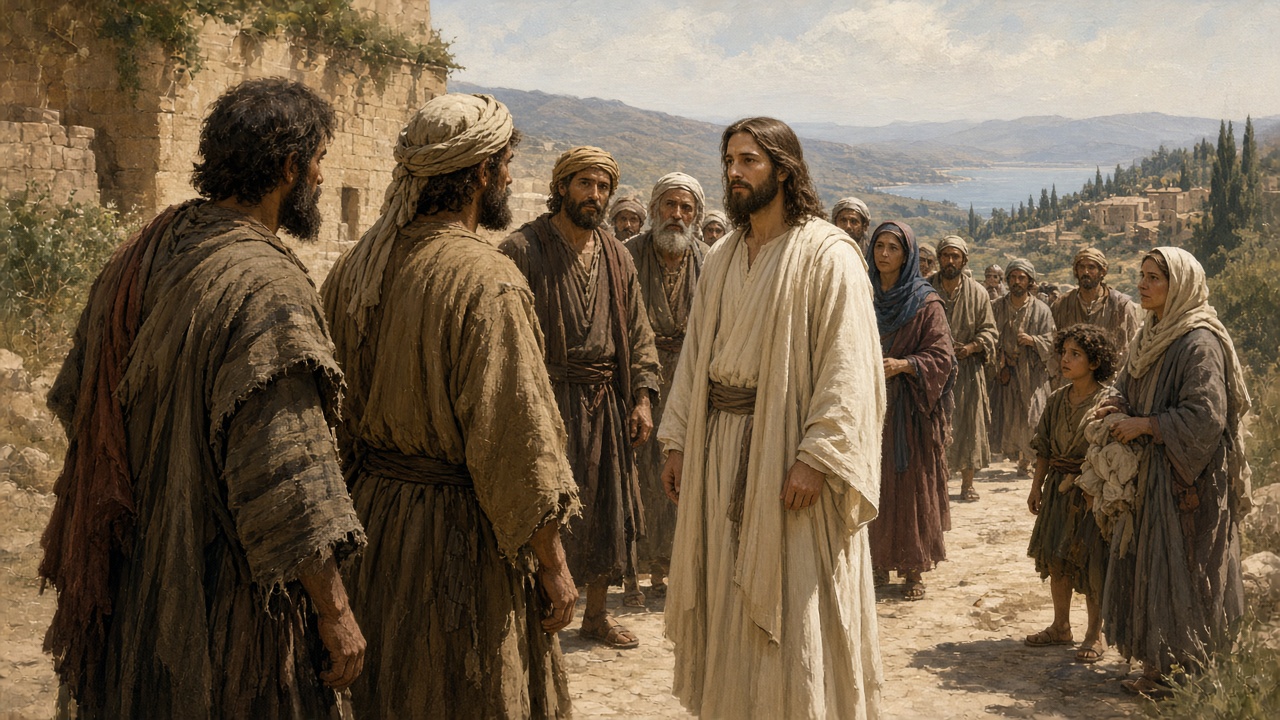
Did you know?
John's question and the cities that did not repent
- From prison, John sent his disciples to ask whether Jesus was the one who was to come. Jesus told the crowds that John was more than a prophet—the messenger sent ahead to prepare the way—and, if they were willing to accept it, the Elijah who was to come. A Bible dictionary calls John the forerunner and says his mission was already the subject of prophecy, citing Isaiah 40:3 and Malachi 3:1; it also introduces Elijah as the Elias of the New Testament.Sources: the Bible text itself · John the Baptist · Elijah
- Jesus then denounced Chorazin, Bethsaida, and Capernaum, where most of his miracles had been performed, because they did not repent. A dictionary identifies Chorazin with modern Kerazeh, about two and a half miles up the Wady Kerazeh from Capernaum, and says that Capernaum, absent from the Old Testament, became Jesus' own city after he left Nazareth. It places Bethsaida on the east side of the lake, two miles up the Jordan in Gaulonitis, enlarged by Philip the tetrarch and named Julias after the emperor's daughter, though some have supposed there was only one Bethsaida, near where the Jordan enters the lake.Sources: the Bible text itself · Chorazin · Capernaum · Bethsaida
- He set those cities against Tyre and Sidon, which he said would have repented long ago in sackcloth and ashes, and against Sodom, which he said would have remained to this day. Sidon, on the Mediterranean coast about twenty-five miles north of Tyre, was the oldest Phoenician city there and the mother city of Tyre. A dictionary says the commerce of the whole world was gathered into Tyre's warehouses, and that Sodom, in the vale of Siddim, was destroyed by fire from heaven so completely that no trace of it has been found.Sources: the Bible text itself · Sidon · Tyre · Sodom
Notes written with AI assistance from open sources (Theographic Bible Metadata, CC BY-SA 4.0; Easton’s Bible Dictionary, public domain) and reviewed before publishing.
Places in this chapter
- Galilee · 32.760, 35.527 · verse 1
- Sidon · Today: Sandikli archaeological site in Sidon · 33.561, 35.372 · verses 21, 22
- Tyre · 33.271, 35.196 · verses 21, 22
Only places identified with high confidence are shown (90% or more according to the scholarly sources compiled by OpenBible). Period map: DARE (Digital Atlas of the Roman Empire), CC BY 4.0; modern map: © OpenStreetMap contributors; places: OpenBible.info (CC BY 4.0).
Credits and license for this translation
Lataiquiʼ loyaʼapa iƚe al cʼa lixpicʼepa L̵anDios
New Testament in Chontal, Highland Oaxaca (MX:chd:Chontal, Highland Oaxaca)
copyright © 1991 Wycliffe Bible Translators, Inc.
Language: Chontal, Highland Oaxaca
Translation by: Wycliffe Bible Translators, Inc.
Chontal, Sierra de Oaxaca [chd], Mexico
Copyright Information
© 1991, Wycliffe Bible Translators, Inc.
This translation text is made available to you under the
terms of the Creative Commons License: Attribution-Noncommercial-No Derivative Works.
( http://creativecommons.org/licenses/by-nc-nd/3.0/ )
In addition, you have permission to port the text to different file formats, as long as you
do not change any of the text or punctuation of the Bible.
You may share, copy, distribute, transmit, and extract portions
or quotations from this work, provided that you include the above copyright
information:
You must give Attribution to the work.
You do not sell this work for a profit.
You do not make any derivative works that change any of the actual words or punctuation of the Scriptures.
Permissions beyond the scope of this license may be
available if you contact
us with your request.
The New Testament
in Chontal, Highland Oaxaca
© 1991, Wycliffe Bible Translators, Inc.
This translation is made available to you under the terms of the
Creative Commons Attribution-Noncommercial-No Derivatives license 4.0.
You may share and redistribute this Bible translation or extracts from it in any format, provided that:
You include the above copyright and source information.
You do not sell this work for a profit.
You do not change any of the words or punctuation of the Scriptures.
Pictures included with Scriptures and other documents on this site are licensed just for use with those Scriptures and documents.
For other uses, please contact the respective copyright owners.
2014-04-22
Source: http://ebible.org/chdNT/ · eBible.org