Acts 3
Lataiquiʼ loyaʼapa iƚe al cʼa lixpicʼepa L̵anDios · Tap a verse to see its cross-references.
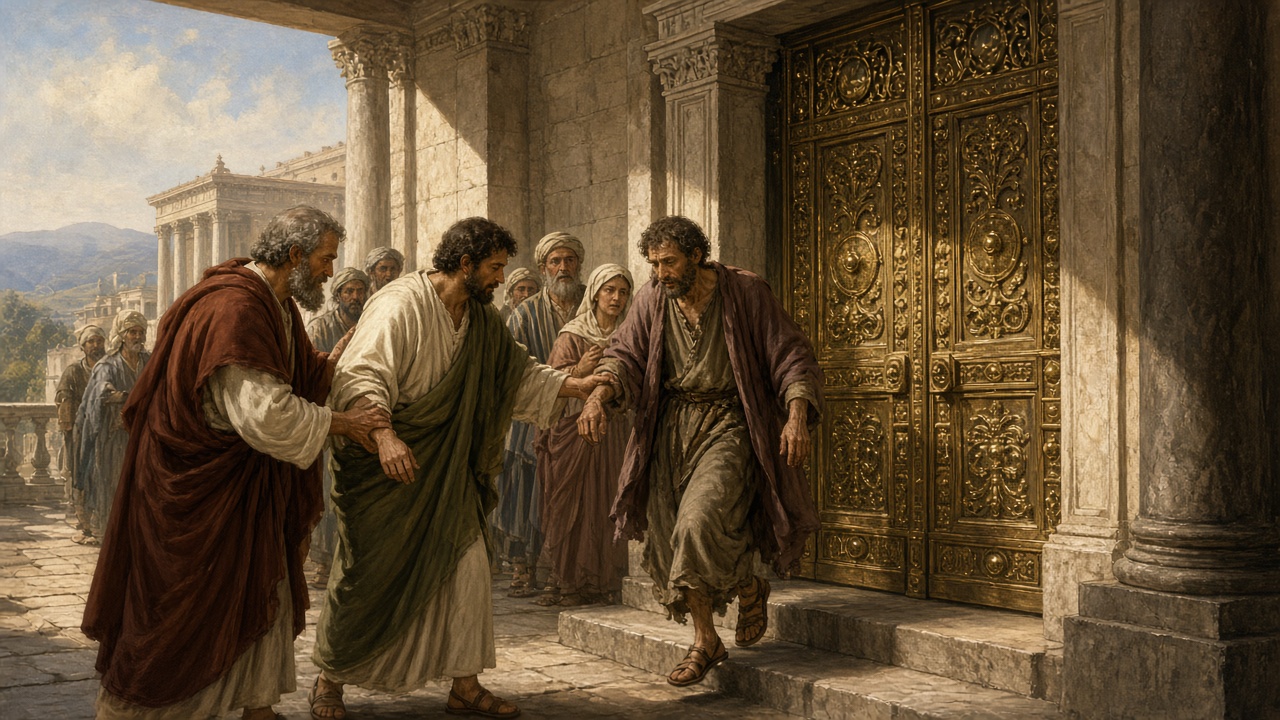
1Anuli litine iye'me al cuecaj xoute' Pedro jouc'a Juan. I'ipa al fanej hora. Maƚpe lan xanuc' tijoc'iyi ȽanDios. 2Jiƚpe ticutsu anuli cal coxo. Toƚta'a lipajnta. Itine itine tiƚcuai'emma ƚunaj xoute', pe lopa'a al puerta lacui'impa: Xonca Lilange. Jiƚpe cal coxo tixahue'ela' tepi'inni quitomí iƚne lan xanuc' mitsuflaiyi al xoute'. 3Ixim'mola' Pedro jouc'a Juan mitsuflaiyi al xoute', ixahue'e'mola' tepi'iƚe quitomí. 4Pedro jouc'a Juan ehuelonc'e'e'me li'a. Pedro timi:
―Ima' alahuelojntsonga'.
5Cal xans i'e'ma to limi'ma. Ticua: “Lapi'i'ma caitomí”. 6Pedro timí:
―Iya' ailopa'a caitomí, ni huata ni axpe'. Ƚinca catoc'i'mo'. Cajoc'i'ma Jesús ƚas Nazaret, iƚque tixaƚ'metso'. Ima', ¡totsahuenni! ¡To'huaƚa'!
7Pedro i'noƚ'e'e'ma al c'a quimane. Ecaxu'ma. Aiquicoƚ'ma i'ina'ma quiƚpujfxi li'mitsi', jouc'a licoxac' qui'mitsi'. 8Iyuf'conni, ecax'ma, ipango'ma i'hua'ma. Itsuflai'me al xoute' iƚque jouc'a Pedro y Juan. Ti'hua iyuf'conni, tix'najtsi'i ȽanDios. 9Jahuay lan xanuc' nomana' jiƚpiya ixim'me ti'hua, icuej'me tix'najtsi'i ȽanDios. 10Imetsaico'me, ticuayi: “Iƚca'a cal xans micutsu ƚunaj xoute' jiƚpe al puerta lacui'impa: Xonca Lilange, tixa'hue quitomí. Itsiya, ¿te qui'ipa? Itsiya ti'huanghua.”
11Jiƚpe al cuecaj xoute' ƚipinujnca Salomón efot'ƚe'moƚtsi lan xanuc'. Iximpá cal coxo joupa ixaƚconapa, tecaxc'o nolojmay Pedro y Juan, i'noƚila' iƚniya. Ticuayi: “¿Te qui'ipa lixaƚcopa?” 12Pedro lixim'mola' lan xanuc' lefoƚya timila':
―Imanc' cunc'ixanuc', oƚtatahuelo Israel, ¿te aicoƚcueca li'ipa? ¿Te calahuelojncoponga' illanc'? ¿Te aga illanc' caƚtuca' aƚ'e'epa ti'huaƚa' iƚque cal xans? ¿Te aga illanc' xonca lihuejcoyi ȽanDios, toƚta'a lapi'iponga' laƚmane aƚsaƚ'meƚe jiƚca'a cal xans? A'i. 13Ma ȽanDios i'epa iƚta'a al cueca' itsiya. Iƚque ilenDios laƚtatahueló Abraham, Isaac y Jacob jouc'a ilenDios laƚ'aillí, itsiya imuc'ipolhuo' joupa imetsaicopa Jesús i'Hua. Imuc'ipolhuo' joupa imetsaicopa ixhuai'nipa lipenic', iƚe lanic' lepi'ipa ti'eƚa'. Maƚque Jesús imanc' oƚcupá icuaitsi limane ƚincuxepa Pilato. Pilato ipic'a tux'masnaƚa', imanc' aicoƚcuac', oƚcuanac'epá. 14Imanc' oƚsa'hue'me Pilato tux'masnaƚa' ƚocuena cal xans, iƚque cal cuej quinma'ahuale. Jesús, cal Paxi Xans, cal Ƚijca Xans, imanc' aicoƚcuac', aicolapenufi. 15Imanc' oƚma'a'me Jesús, maƚque ƚalapi'iponga' laƚpitine. ȽanDios imaf'i'inapa, ipa'apa pe lomana' lamizhua. Jahuay illanc' laƚejmalepá aƚsimpá imaf'inapa. 16Aƚ'huaiyijnyi Jesús. Aƚsina' ja'ni aƚnesco'me lipuftine Jesús, ȽanDios tixaƚ'me'ma cal coxo. Toƚta'a li'ipa. Maƚque Jesús aƚtoc'iponga' aƚ'huaiyijnle toƚta'a, toƚiya imanc' toƚsinyi iƚca'a cal xans joupa ixaƚconapa, ailopa'a quicuana.
17’Cunc'aipimaye, aixina' li'ipa. Litine loƚma'apa Jesús imanc' aicoƚsina' naitsi iƚque. Jouc'a aiquiƚsina' iƚne nicuxepolhuo'. 18Ma ȽanDios enant'ƚipa litaiqui', iƚe loya'apa lam profeta. Jahuay iƚniya uya'a'me titeƚco'ma cal Cristo.
19’Itsiya toƚsuej'menca iƚe loƚ'epa. Toƚpai'iƚe loƚpicuejma'. Toƚta'a ȽanDios tiƚonc'e'ena'molhuo' loƚjunac', tunxac'i'molhuo', tipaxne'molhuo'. 20ȽanDios joupa u'ipolhuo' tumme'e'molhuo' cal Cristo. Ja'ni toƚsuej'menanca, ƚinca tumme'econa'molhuo' Jesús, maƚque cal Cristo. 21Iƚque copa'a pu'hua lema'a, i'huaijma ticuaitsi litine jahuay tilajnla' al c'a, ti'iƚa' al ts'e lema'a, al ts'e li'a ƚamats'. Toƚta'a linespa ȽanDios. Li'ipa lipaxi profeta uya'a'me iƚe litaiqui' ȽanDios. 22Moisés inesco'ma cal Cristo locuaicoya fa'a li'a ƚamats'. U'ipola' laƚtatahueló lo'iya, timila':
ȽanDios ƚoƚPoujna tepi'i'molhuo' anuli cal profeta.
Iƚque aƚ'onƚcota to iya', ti'i'ma anuli ƚoƚpiƚya' xans.
Iƚque toƚquimf'e'me, tolihuejco'me jahuay lomiyacolhuo'.
23Naitsi aimihuejma, iƚque tenaj'ma nulemma, aimi'econayacola' anuli lixanuc' ȽanDios.
24’Ipangocopa Samuel jahuay lam profeta uya'a'me ma' anuli lo'iya. Itsiya enanƚpa luya'apa. 25Imanc' inaxque' lam profeta, ti'i'ma tolapenuf'me iƚe al c'a lonescopa iƚniya. ȽanDios litine lipalaic'opa Abraham timi: “Tipajnta anuli nopaxneyacola' lan xanuc' ni petsi lomana' li'a ƚamats'. Ima' ti'i'ma itatahuelo iƚquiya.” Maƚe lataiqui' ȽanDios epi'ipola' loƚtatahueló jouc'a epi'ipolhuo' imanc' tolapenufle. 26ȽanDios lijoupa lepi'ipa ƚi'Hua lipenic', umme'ma ate'a pe loƚmana'. Umme'ma tipai'itsolhuo' loƚpicuejma' anuli anuli imanc', toƚta'a aimoƚ'econa'me lixcay, ȽanDios tipaxne'molhuo'.
Did you know?
Healing and Preaching at the Temple
- The temple gate called Beautiful, where a man lame from birth was placed each day to beg, is named in this chapter. It is supposed to have been the door from the court of the Gentiles into the court of the women, and it was massive, covered with plates of Corinthian brass.Sources: Beautiful Gate · the Bible text itself
- After the healing, the astonished crowd ran to Peter and John in the walkway called Solomon’s Colonnade. This was a colonnade, or cloister, probably on the eastern side of the temple; it is not mentioned with the first temple, but Josephus mentions a porch of that name in Herod’s temple.Sources: Solomon's Portico · the Bible text itself
- In his address there, Peter said the people had handed Jesus over and rejected him before Pilate, although Pilate had decided to release him. A dictionary entry identifies Pontius Pilate as the sixth Roman procurator of Judea, from A.D. 26 to 36, with headquarters at Caesarea, though he frequently went up to Jerusalem; his name comes into prominent notice in connection with the trial of Jesus.Sources: Pontius Pilate · the Bible text itself
Notes written with AI assistance from open sources (Theographic Bible Metadata, CC BY-SA 4.0; Easton’s Bible Dictionary, public domain) and reviewed before publishing.
Places in this chapter
- Beautiful Gate · Today: in Jerusalem · 31.777, 35.234 · verses 2, 10
- Nazareth · 32.702, 35.298 · verse 6
- Solomon’s Portico · Today: in Jerusalem · 31.777, 35.234 · verse 11
Only places identified with high confidence are shown (90% or more according to the scholarly sources compiled by OpenBible). Period map: DARE (Digital Atlas of the Roman Empire), CC BY 4.0; modern map: © OpenStreetMap contributors; places: OpenBible.info (CC BY 4.0).
Credits and license for this translation
Lataiquiʼ loyaʼapa iƚe al cʼa lixpicʼepa L̵anDios
New Testament in Chontal, Highland Oaxaca (MX:chd:Chontal, Highland Oaxaca)
copyright © 1991 Wycliffe Bible Translators, Inc.
Language: Chontal, Highland Oaxaca
Translation by: Wycliffe Bible Translators, Inc.
Chontal, Sierra de Oaxaca [chd], Mexico
Copyright Information
© 1991, Wycliffe Bible Translators, Inc.
This translation text is made available to you under the
terms of the Creative Commons License: Attribution-Noncommercial-No Derivative Works.
( http://creativecommons.org/licenses/by-nc-nd/3.0/ )
In addition, you have permission to port the text to different file formats, as long as you
do not change any of the text or punctuation of the Bible.
You may share, copy, distribute, transmit, and extract portions
or quotations from this work, provided that you include the above copyright
information:
You must give Attribution to the work.
You do not sell this work for a profit.
You do not make any derivative works that change any of the actual words or punctuation of the Scriptures.
Permissions beyond the scope of this license may be
available if you contact
us with your request.
The New Testament
in Chontal, Highland Oaxaca
© 1991, Wycliffe Bible Translators, Inc.
This translation is made available to you under the terms of the
Creative Commons Attribution-Noncommercial-No Derivatives license 4.0.
You may share and redistribute this Bible translation or extracts from it in any format, provided that:
You include the above copyright and source information.
You do not sell this work for a profit.
You do not change any of the words or punctuation of the Scriptures.
Pictures included with Scriptures and other documents on this site are licensed just for use with those Scriptures and documents.
For other uses, please contact the respective copyright owners.
2014-04-22
Source: http://ebible.org/chdNT/ · eBible.org