Psalms 80
Y CUATRO EBANGELIO SIJA YAN Y CHECHO Y APOSTOLES YAN Y SALMO SIJA · Tap a verse to see its cross-references.
1ECUNGOG, O Pastot guiya Israel, jago ni y umesgagaejon si José taegüije y manadan quinilo; jago ni y sumasaga gui entalo y querubin sija manina mona.
2Y menan Efraim, yan Benjamin, yan Manases, nacajulo y minatatngamo, ya maelajao para usatbajam.
3Birajam talo, O Yuus; ya nafanina y matamo ya infansatbo.
4O Jeova, Yuus y inetnon sendalo, asta ngaean unlálalaloja contra y tinayuyut y taotaomo?
5Unafañochocho sija ni y pan lago; yan unnae sija ni y lago para ujaguinem gui dangculo na medida.
6Unnafanmumojam yan y tiguangmame: yan y enimigonmame manmachachatgue jam gui entaloñija.
7Birajam talo, O Yuus y inetnon sendalo, ya nafanina y matamo; ya infansatbo.
8Jago chumule juyong y trongcon ubas guiya Egipto: ya jagasja unyute juyong y nasion, ya untanme güe.
9Jago fumamauleg y saga gui menaña, ya güiya y natadodong y jaleña, yan nabula y tano.
10Ya sabana sija mantinampe ni y aninengña, yan y ramasña taegüije y sedro Yuus na trongcon jayo.
11Jatago juyong y ramasña gui tase; yan y manlodo na siniso gui sadog.
12Sa jafa unjulog papa y quelatña: ya todo y manmalolofan gui chalan matitife güe?
13Y balaco guinin y jalomtano machuchule ya mayúyulang, yan y manmachaleg na gâgâ gui fangualuan cumacano.
14Birajao talo, O Yuus inentnon sendalo, ingagagao jao: ya talag papa guinin y langet ya unlie yan unbisita este na trongcon ubas,
15Ya y fangualuan ni y tinanom y agapa na canaemo, yan y ramas ni jago munafitme para jagoja namaesa,
16Masinenggue ni y guafe, ya mautut papa esta; ya manmalingo pot y chinema gui menamo.
17Polo y canaemo gui jilo y taotao gui agapa na canaemo, gui jilo y lajin y taotao ni unnametgot para jago.
18Ayo nae ti infanalo tate guinin jago: nafanlâlâjam ya bae inagang y naanmo.
19Birajam talo, O Jeova, Yuus y inetnon sendalo, ya nafanina y matamo; ya infansatbo.
Did you know?
A Prayer for the Uprooted Vine
- The psalm specifically mentions Ephraim, Benjamin, and Manasseh, tribes closely linked by descent from Rachel through Joseph and Benjamin. During Israel's wilderness wanderings, these three tribes were assigned to camp and march together on the western side of the tabernacle.Sources: Benjamin (patriarch) · Manasseh (son of Joseph) · the Bible text itself
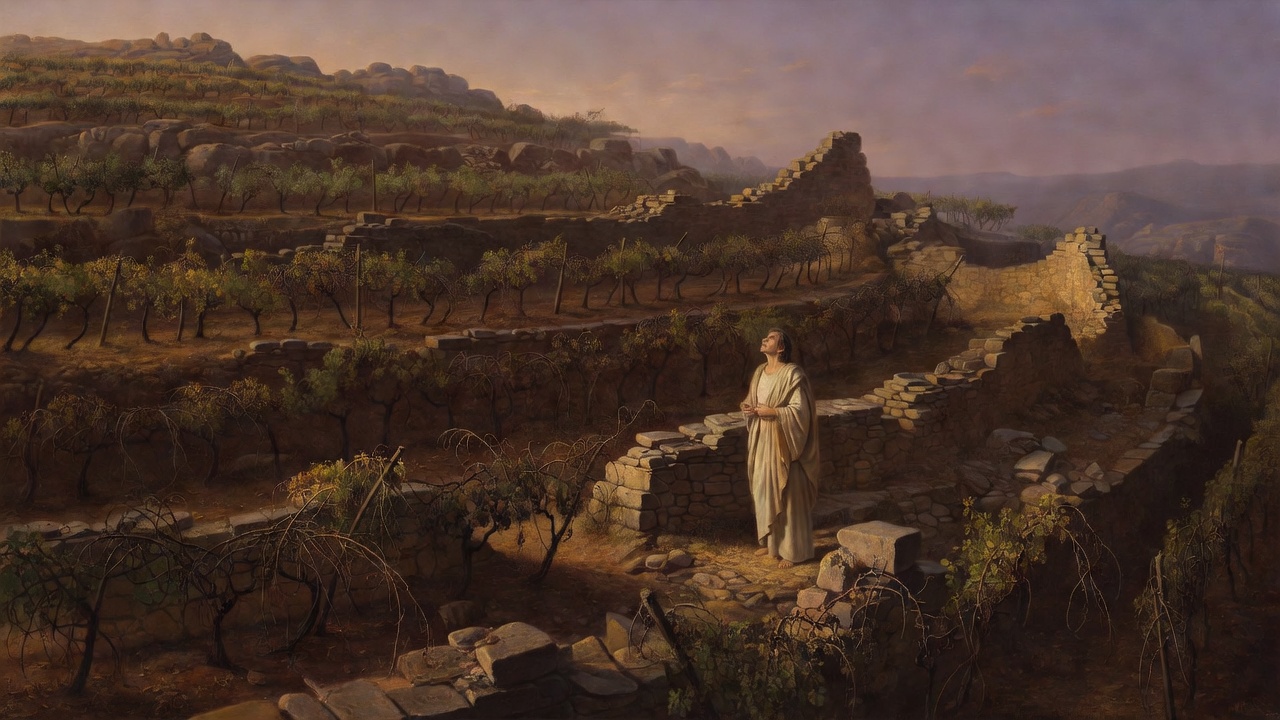
- The author uses an extended allegory comparing the nation of Israel to a grapevine brought out of Egypt and replanted in Canaan. The song laments that God had torn down the protective vineyard walls, leaving the fruitful vine exposed to wild beasts and passersby.Sources: Egypt · the Bible text itself
- This poem is part of a distinct collection spanning Psalms 73 through 83 attributed to Asaph. The biblical record describes Asaph as a leading Levite musician in the time of King David whose musical guild or descendants continued his tradition in temple worship.Sources: Asaph (Levite) · the Bible text itself
Notes written with AI assistance from open sources (Theographic Bible Metadata, CC BY-SA 4.0; Easton’s Bible Dictionary, public domain) and reviewed before publishing.
Places in this chapter
- Egypt · 30.129, 31.308 · verse 8
- Euphrates · Today: Euphrates River · 31.004, 47.442 · verse 11
- Great Sea · Today: Mediterranean Sea · 31.805, 34.170 · verse 11
Only places identified with high confidence are shown (90% or more according to the scholarly sources compiled by OpenBible). Period map: DARE (Digital Atlas of the Roman Empire), CC BY 4.0; modern map: © OpenStreetMap contributors; places: OpenBible.info (CC BY 4.0).
Credits and license for this translation
Y CUATRO EBANGELIO SIJA YAN Y CHECHO Y APOSTOLES YAN Y SALMO SIJA
The four Gospels, Acts, and Psalms in the Chamorro language of Guam and Northern Marianas Islands territories of the United States of America
Public Domain
Language: Chamorro
Translation by: American Bible Society
2015-01-02
Source: http://ebible.org/cha/ · eBible.org