Mark 4
Thukam Thar Lente Ṭon · Tap a verse to see its cross-references.
Thlaici Vorhtu Tahṭhipnak
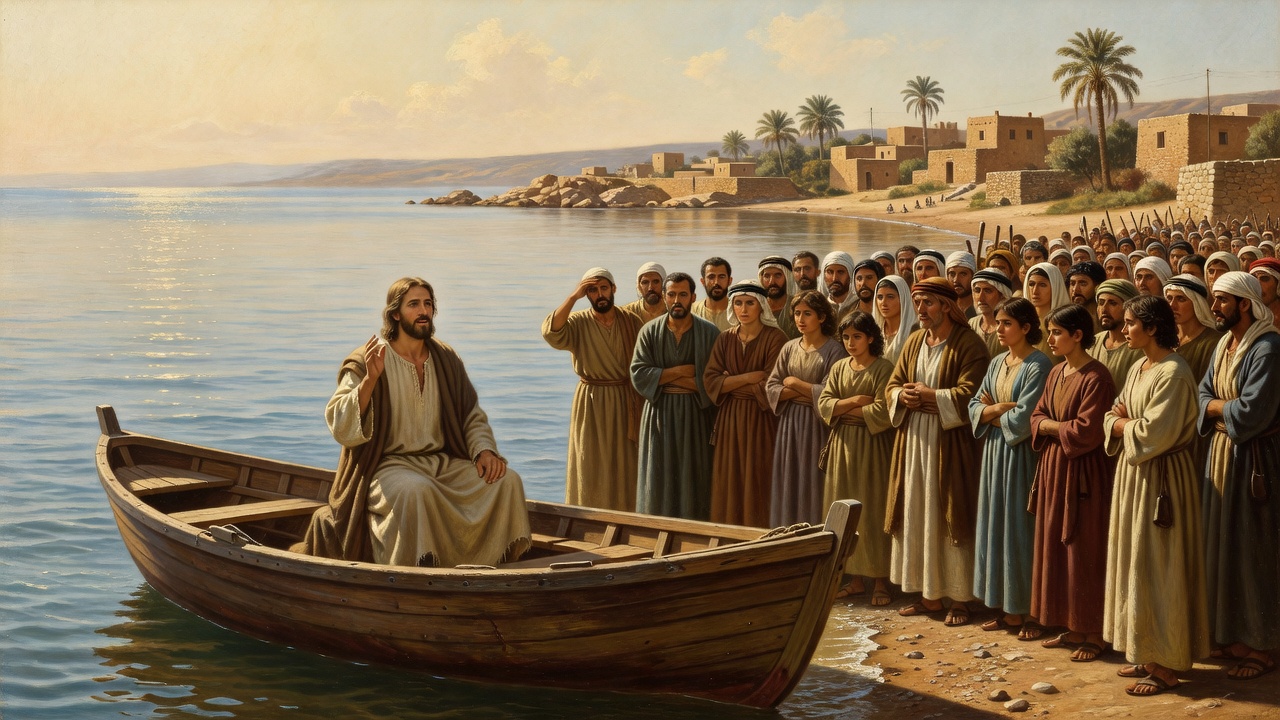
1Jesuh cu Galilee Tili kap ah thuzirh a thok sal. A sinih a tiangtu minung an tam tuk ruangah, lawng sungah a lut ih a to. Mipi pawl cu tili kap leilung ah an um. 2Cun tahṭhipnak pawl hmangin thu a zirh hnei ih, mipi pawl sinah:
3“Ṭhangai in ngai uh! Thlaici vorhtu cu thlaici vorh dingah a feh. 4Thlaici cu a vorh ih, a hrekkhat cu zalam tluan ah an ṭil ih vate pawl nih an ei. 5Thlaici hrekkhat cu lung tamnak hmun ah an ṭil ih leilung a sah lo ruangah thlaici cu an kho lohli. 6Asinain ni a hang suah tikah, ni nih a sat hnei ih an hram a thuk lo ruangah an rocar colh. 7Thlaici hrekkhat cu hling lakah an ṭil. Hling cu a hang ṭhang ih thlaikho cu a khuh colh ruangah an vui thei lo. 8Thlaici dang pawl cu leiram ṭhatnak ah an ṭil. An hang ṭhang ih a let sawmthum, a let sawmruk, a let zakhat tiangin an vui thei,” tiah a sim hnei.
9Cun an sinah, “Theihnak naa a neitu nih thei seh,” tiah a ti.
Tahṭhipnak pawl ih Tumtahmi
10Jesuh cu ama lawng a um laiah, a kiangkap um pawl le a dungthluntu hleinih pawl nih tahṭhipnak thu pawl an sut 11Cun Jesuh nih an sinah, “Pathian Uknak thuthup cu nan sinah pek a i cem, asinain a leng mi pawl hrangah cu tahṭhipnak thawn sip a i, 12curuangah,
“ ‘An zoh ngelngo thok naʼn
an hmu thei thok lo,
An naa nih a thei thok naʼn
an fiahthiam thok lo;
Zangahtihle Pathian sin an kir sal thok ih
a ngaihthiam hnei pang thok,’ ” tiah a sim.
Jesuh nih Thlaici Vorhtu Tahṭhipnak A Simfiang
13Cun Jesuh nih an sinah, “Hivai tahṭhipnak hi nan cingthiam lo maw? Aitih cun zangtin tahṭhipnak hmahhmah cu nan cingthiam thok? 14Thlaici vorhtu nih Pathian thu a vorh. 15Mi hrekkhat cu zalam tluan ih a ṭilmi thlaici mang an i. Thu cu an thei, asinain Seihtan a tiang lohli ih an sungih tuhmi thu cu a laksak hnei. 16Cumangin a hrekkhat cu lung tamnak hmun ih a ṭilmi thlaici mang an i. Pathian thu an theih cangin lungawi ngai in an cohlang lohli. 17Asinain anma ah hrilhhram an neih lo ruangah reilote kau a daih. Cun Pathian thu ruangih harsatnak le hremnak a tian tikah Pathian an phatsan. 18Mi hrekkhat cu hling lakih a ṭilmi thlaici mang an i. Pathian thu cu an thei, 19asinain leitlun nunnak thu ih donharnak, let duhnak le thil dang duhnak pawl nih, Pathian thu cu a khuh ruangah an vui thei lo. 20Asinain mi hrekkhat cu leiram ṭhatnak ih a ṭilmi thlaici mang an i. Pathian thu cu an thei, an cohlang ih a let sawmthum, a let sawmruk, a let zakhat tiangin an vui thei,” tiah a ti.
Kho ih Khuhmi Mei-inn
21Cun Jesuh nih an sinah, “Mei-inn cu kho tang le ihkhun tangah siah a i kel maw? Mei-inn vannak ah siah a i ko lo maw? 22Zangahtihle phorh lo dingih thuhmi le lang nolhsal lo dingmi thuthup zangkhaw a um lo. 23Theihnak naa a neitu nih thei seh,” tiah a ti.
24Cun Jesuh nih an sinah, “Nan theihmi thu hi ṭhaten ruat uh. Midang tahnak ih nan hmanmi mangin nan khaw tah nan i ve thok — cunakih tamsawn hman bet nan i thok. 25Zangahtihle a neitu cu pek bet a i thok ih, a nei lo tu cu a neihsun hman laksak a i thok,” tiah a ti.
A Ṭhangmi Thlaici Tahṭhipnak
26Cun Jesuh nih, “Pathian Uknak cu, mi pakhat nih lo sungah thlaici a vorh ih, 27ama cu zan ah a it ih sun ah a tho, cuvai lai ah thlaici cu ama ten a kho ih a ṭhang; zangah aitin a ṭhang thiam tih khaw a fiah lo. 28A ma ten leilung nih a ṭhang ter ih a thei ter, hmasabik ah hnah no a cerh ter, cule a vui ter ih netabik ah a fang a um ter. 29Asinain a vui a cut tikah, cawlak can a cut i ruangah, a tacin thawn a la lohli tu mang a i,” tiah a ti.
Ṭangṭap Ci Tahṭhipnak
30Cun Jesuh nih, “Pathian Uknak cu zangtu thawn kan tahṭhim thok? Asihlole zangtu tahṭhipnak hmangin kan sim thok? 31Lo sungih vorhmi ṭangṭap ci mang a i. Ṭangṭap ci cu leitlun ih thlaici hmahhmah lakih a fate bik a i. 32Ṭangṭap ci cu vorh a ih tikah, a hang ṭhang ih thlaihnah dang hmahhmah nakin a hnem sawn. Tlangṭek hnem ngaingai a nei ih van ih vate pawl nih bu khaw an sa,” tiah a ti.
33An fiahthiam theinak dingah, Jesuh nih himang tahṭhipnak tamngai hmangin an sinah thu a sim. 34Tahṭhipnak tello in an sinah thu a sim lo. Asinain anma lawng kau an um can ah, a dungthluntu pawl sinah zangtinkim a simfiang.
Jesuh nih Zil le Tisuar A Dai Ter
35Cuvai ni simla a kim tikah, Jesuh nih a dungthluntu pawl sinah, “Tili khatla ralah feh u sing,” tiah a ti. 36Cun mipi pawl cu an ramta; Jesuh cu lawng sungah a to cia ih an feh pit. Lawng dang pawl khaw cuva ah an um ve. 37Cun zil fak ngai in a zuang ciamco ih tisuar nih lawng cu a siatsuah ruangah lawng cu ti in a khat. 38Jesuh cu lawng mei laah a um ih tokheng tlun ah a ihhmul. Cun an ṭhang ih, “Sayapa, kan riaral colh thok hi poi na ti lo maw?” tiah an ti.
39Jesuh cu a hang tho ih zil cu a tai, cule tisuar sinah, “Dai i! Um zirziar!” tiah thu a pe. Cun zil cu a zuang i lo ih a dai ṭhipṭhep. 40Jesuh nih a dungthluntu pawl sinah, “Zangruangah aitluk lawmlam in nan ṭih? Zupnak nan nei rih lo maw?” tiah a ti hnei.
41Cun an ṭih tuk lawmlam ih pakhat le pakhat, “Hi pa hi zangtumang minung zetzo a i si na, zil le tisuar hman nih a thu an ngai?” tiah an ti fa.
Did you know?
Parables of the Kingdom by the Sea
- Mark 4 begins with Jesus teaching a large crowd from a boat on the sea and ends with a violent windstorm on that water. A chronology of the episode dates these seaside parables and the miracle to a single day in AD 28.Sources: the Bible text itself · Seaside Parables and Miracle
- In explaining the sower, Jesus says that Satan comes and takes away the word sown along the path. The name Satan means adversary or accuser, and in the New Testament it is used interchangeably with the devil more than thirty times.Sources: the Bible text itself · Satan
- Jesus says the kingdom of God is like seed that sprouts and grows while the sower sleeps and wakes, though he does not know how: the earth produces the crop by itself, first the stalk, then the head, then grain that ripens. He also compares it to a mustard seed, the smallest of all seeds sown on the earth, which becomes the largest of all garden plants, with birds nesting in its shade. He told the crowds nothing without a parable, but privately explained everything to his own disciples.Sources: the Bible text itself
Notes written with AI assistance from open sources (Theographic Bible Metadata, CC BY-SA 4.0; Easton’s Bible Dictionary, public domain) and reviewed before publishing.
Credits and license for this translation
Thukam Thar Lente Ṭon
The Holy Bible in the Falam Chin language of Myanmar: Thukam Thar Lente Ṭon
copyright © 2025 The Word for the World International
Language: Falam
Contributor: The Word for the World International
Lente Thukam Thar
The New Testament in Lente Language
The Word for the word
This translation is made available to you under the terms of the
Creative Commons Attribution Share-Alike license 4.0.
You have permission to share and redistribute this Bible translation in any format and to make reasonable revisions and adaptations of this translation, provided that:
You include the above copyright and source information.
If you make any changes to the text, you must indicate that you did so in a way that makes it clear that the original licensor is not necessarily endorsing your changes.
If you redistribute this text, you must distribute your contributions under the same license as the original.
Pictures included with Scriptures and other documents on this site are licensed just for use with those Scriptures and documents.
For other uses, please contact the respective copyright owners.
Note that in addition to the rules above, revising and adapting God's Word involves a great responsibility to be true to God's Word. See Revelation 22:18-19.
2025-07-02
Source: http://ebible.org/cfm/ · eBible.org