Mark 12
Thukam Thar Lente Ṭon · Tap a verse to see its cross-references.
Sabit Dum Ṭuanṭuantu pawl thawn Tahṭhipnak
1Cun Jesuh nih an sinah tahṭhipnak thawn thusip a thok. “Mi pakhat nih sabit dum a tuah ih hruang in a kulh, cule sabit ti surnak ah khur a lai ih hrawlte a don. Cun a dum cu man pek ih a sawngtu pawl sinah a ramta ih lam hlapi ah khual a tlawn. 2A tikcu can a kim tikah, dum sawngtu pawl sin in a covo sabit thei la dingah, a siahhlawh pakhat a thlah. 3Cun cuvaipa cu an tlai ih an thawi hnukah zahawr in an tlungter. 4Cule an sinah siahhlawh dang pakhat cu a thlah seisei. Cun cuvaipa cu a lu ah an thawi ih hmualpho le ningzak in an tuah. 5A dang a thlah sal seisei ih a thlahmi pa cu an that. Cule a dang tamngai khaw cu a thlah bet, a hrekkhat cu an thawi ih a hrekkhat cu an that. 6Thlah dingmi pakhat la cu a nei rih, a duhdawt ngaimi a fapa a si. Netabikah dum sawngtu pawl sinah cun a fapa cu a thlah ih, ‘Ka fapa cu an upat kau thok,’ tiah a ti. 7Asinain dum sawngtu pawl nih, ‘Hivaipa hi ro cotu thok cu a i. Cei uh, that lausing, cule a co dingmi ro hmahhmah cu kan maiʼ ta an i thok,’ tiah pakhat le pakhat an ti fa. 8Cun cuvaipa cu an tlai ih an that, cule sabit dum lengah an hlon.
9“Sabit dum neitu nih zangtin tuah lai? a feh thok ih dum sawngtu pawl cu a siatsuah hnei thok, cule sabit dum cu midang sinah a pe thok. 10Ca thianghlim sungah:
“ ‘Inn satu pawl ih an hnon mi lung cu
A thupi bikmi innkil lung ah a cang.
11Hihi Bawipa ih tuahmi a i,
Cule kan mithmuh ah mangbangza a i, tiih nganmi khi nan siar kel lo maw?’ tiah a ti.”
12Cun Judah upa pawl cu Jesuh tlaih dan ding an hrawl, asinain mipi pawl an ṭih. Zangahtihle cuvai tahṭhipnak cu anma tihsat ih a sipmi a si tih an fiah. Curuangah Jesuh cu an ramta ih lam hlapi ah an feh.
Siah Peknak Thu Thusuhnak
13Cun a ṭonkam in ama an tlaih theinak dingah, Farasi hrekkhat le Herod ih milai hrekkhat cu Jesuh sinah an thlah. 14Cun Jesuh sin an ban ih a sinah, “Sayapa, nang cu, mi nih zangtin ka na ruat eng thok, tih khaw zanghrel loʼn thudik na sim, tih kan fiah. Zangahtihle minung mithmai na zoh lo ih Pathian ih zalam cu dik ngaiin na zirh. Caesar sinih siah pek hi daan nih a siang maw siang lo? Kan pe thok maw pe thok lo?” tiah an sut.
15Asinain Jesuh nih an depdetnak a fiah ih an sinah, “Zangruangah ka na hneksak eng? ngun tangka ka pe hnik uh, cule ka zoh hnik thok,” tiah a ti hnei.
16Cun ngun tangka cu an pe ih an sinah, “Hihi hutu ih muihmel a si ih, zangtu thu a ngan fa?” tiah a sut hnei.
Anni nih, “Caesar ih,” tiah an ti.
17Cule Jesuh nih an sinah, “Caesar ih thil pawl cu Caesar sinah pe uh, cule Pathian ih thil pawl cu Pathian pe uh,” tiah a ti.
Cun Jesuh cungah an mang a bang ngai.
Mithi Thawhsalnak Thu Thusuhnak
18Cun Jesuh sinah thawhsalnak a um lo titu Sadusi pawl an tiang ih thu an sut. 19“Sayapa, Moses nih, ‘mi pakhat cu fa nei loʼn a nupi a thihtak asihle a unau pa nih cuvai nuhmei cu a ṭhi thok ih, a unau pa ih hrangah ci a thlahsak thok,’ tiah kan na ngansak. 20Cun unau pasarih an um, uta bik nih nupi a ṭhi ih fa nei loʼn a thi. 21Cule a panihnak pa nih cuvai nu cu a ṭhi ih fa nei loʼn a thi ve. Cun a pathumnak pa khaw cumang thotho in a cang. 22Cule an pasarih in fa nei loʼn an thi colh. Neta bik ah numi nu khaw a thi ve. 23Curuangah thawhsalnak ih an thawhsal tikah, hutu bik ih nupi a si thok? An pasarih in nupi ah an ṭhi vek sikhaw?” tiah an sut.
24Jesuh nih an sinah, “Pathian ih cahnak huham le Ca Thianghlim nan fiah lo ruangah nan sual a i lo maw? 25Zangahtihle thihnak in an thawhsal tikah, an ṭhi fa i thok lo, ṭhitfaknak khaw a um i thok lo ih, vancung ih a ummi vancungmi pawl mang an i thok. 26Cun mithi thawhsalnak thu ah, hrambur sung in Pathian nih Moses sinah, ‘Kei cu Abraham ih Pathian, Isak ih Pathian, le Jakob ih Pathian ka si,’ a tihmi Moses cabu khi nan siar kel lo maw? 27Ani cu a thimi pawl ih Pathian a i lo, a nungmi pawl ih Pathian a i sawn. Curuangah nan ruatsual ngai,” tiah a ti hnei.
A Thupi Bikmi Thupek
28Cun daanthiam pawl lakih mi pakhat cu a tiang ih, thu an relmi cu a ngai. Cule Jesuh nih ṭha tukin a sawn hnei thiam tih a hmuh tikah, “Thupek hmahhmah lakah khoitu hi a thupi bik?” tiah a sut.
29Jesuh nih, “A thupi bikmi Thupek cu: ‘Maw Israel, ngai hnik, Bawipa kan Pathian, Bawipa cu pakhat a i. 30Cun Bawipa na Pathian cu na thinlung zateʼn, na nunnak zateʼn, na ruahnak zaten le na cahnak zaten na duhdawt thok,’ tihhi a i. 31Cun a panihnak cu: ‘Nangma le nangma na duhdawt fak mangin na inn kiangveng pawl na duhdawt thok,’ tihhi a i. Hi thupek pawl nakih thupi sawn thupek a um lo,” tiah a sawn.
32Cule daanthiam pa nih a sinah, “Sayapa, na sipmi cu a ṭha. Thudik na sim, zangahtihle Pathian pakhat kau a um, ani siarlo pathian dang an um lo. 33Cun thinlung zate, fiahthiamnak zate, cahnak zate thawn ama Pathian duhdawt, le ma le ma duhdawt fak mangin inn kiangveng pawl duhdawt cu meihul thawinak le thawinak dangdang pawl nakin a thupi sawn,” tiah a sawn.
34Cun Jesuh nih, cupa nih fing ngaiin a let, tih a hmuh tikah, a sinah, “Pathian uknak thawn nan hlat fa lo,” tiah a ti.
Cuvai hnuk cu hukhaw nih thu an sut ngam i lo.
Khrih Thu Thusuhnak
35Cun Jesuh cu biakinn songah thu a zirh. Jesuh nih, “Zangtin daanthiam pawl nih Khrih cu David ih fapa a si, tiah an ti thiam? 36David ama rori nih Thlarau Thianghlim hmangin:
“ ‘Bawipa nih ka Bawipa sinah:
Na ral pawl na ke tangih ka siah hlan lo,
Ka vorh la ah to,’ tiah a ti.
37A ma David rori hman nih ani cu ‘Bawipa’ tiah a ko. Curuangah zangtin a fapa cu a si thiam thok?” tiah a ti.
Jesuh nih Daanthiam pawl Ralrinnak A Pe
Cule mipi tam ngai nih Jesuh ih thuzirhmi cu lungawi ngaiin an ngai. 38Cun a thuzirhnak ah Jesuh nih, “Daanthiam pawl khi ralring uh, an ni cu angki fual thawn tawivah an duh ih dawr tluan ah cibai buk an duh. 39Cule Sinakok ah tonak ṭhabik ah to an duh ih puai tuahnak ah upatnak hmun ih to an duh. 40Nuhmei pawl ih inn an long ih, mi deuhnak ah rei ngaingai in thla an cam fa ter. Hipawl hi thuṭhennak nasa sawn an tuar thok,” tiah a ti.
Nuhmei ih Thawhhlawm
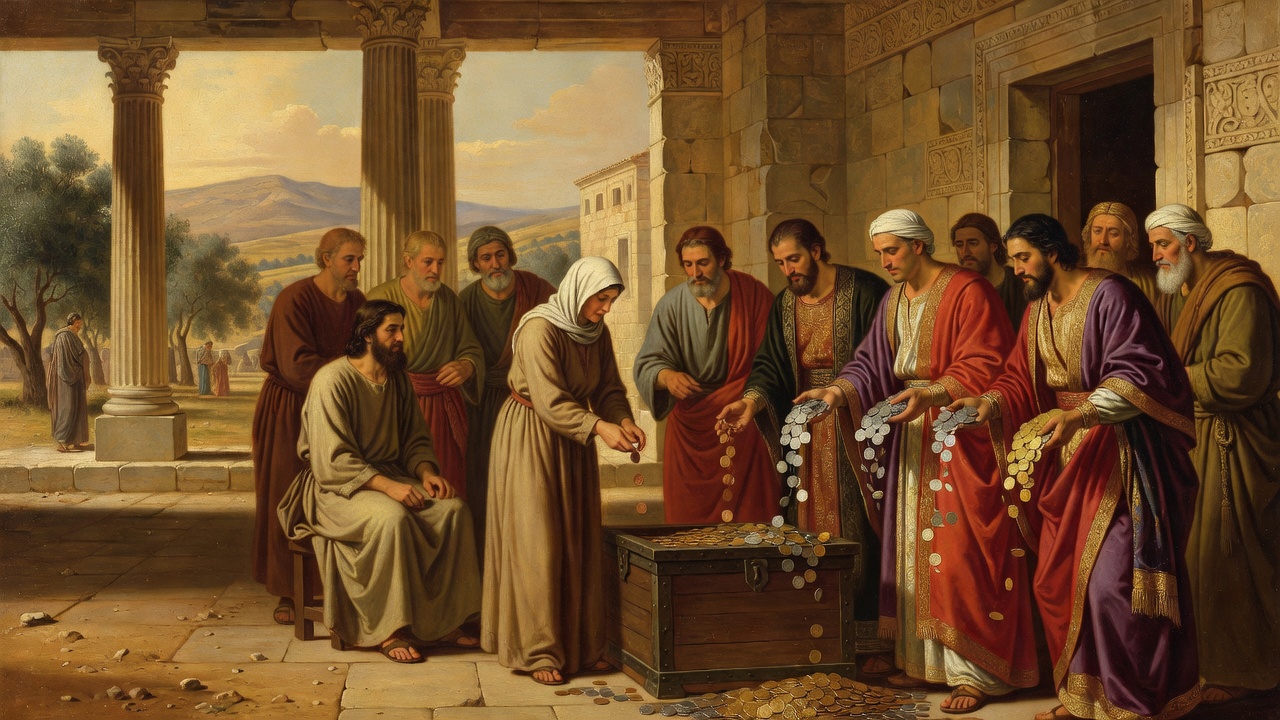
41Cun Jesuh cu thawhhlawm bawm zawn ah a to ih, mipi nih thawhhlawm bawm sungah zangti in tangka an ṭhil, tih a zoh. Milian pawl nih tangka tamngai an ṭhil. 42Cun nuhmei fahrah pakhat a tiang ih dar tangka pia nih a ṭhil ve. 43Cule a dungthluntu pawl cu a ko hnei ih an sinah, “Thutak in nan ta sim, hivai nuhmei fahrah nu hi thawhhlawm bawm sungih a ṭhiltu dang pawl hmahhmah nakin tamsawn a ṭhil. 44Zangahtihle midang pawl hmahhmah cu an neih hleifuanmi an pe; asinain ani cu a fahrah ngai na in — a nunkhaw saknak ding ih a neihmi zatein a ṭhil colh,” tiah a ti.
Did you know?
Debates in the Temple
- The Sadducees, who say there is no resurrection, question Jesus about seven brothers and one widow, appealing to what Moses wrote. He points them to the burning bush in the Book of Moses, where God says, “I am the God of Abraham, the God of Isaac, and the God of Jacob.” Abraham, “father of a multitude,” was Terah’s son; Isaac was Abraham’s only son by Sarah; and Jacob was the second-born of the twin sons of Isaac and Rebekah.Sources: the Bible text itself · Abraham · Isaac · Jacob (Israel)
- Asked which commandment is the most important, Jesus begins, “Hear, O Israel, the Lord our God, the Lord is One,” and adds, “Love your neighbor as yourself.” Israel is another name for Jacob, the second-born twin son of Isaac and Rebekah; Jacob’s name is explained as one who follows on another’s heels, or supplanter.Sources: the Bible text itself · Jacob (Israel)
- Teaching in the temple courts, Jesus asks how the scribes can say that the Christ is the Son of David if David himself calls him “Lord.” David, whose name means “Beloved,” was the eighth and youngest son of Jesse, a citizen of Bethlehem, and his early occupation was tending his father’s sheep on the uplands of Judah.Sources: the Bible text itself · David
Notes written with AI assistance from open sources (Theographic Bible Metadata, CC BY-SA 4.0; Easton’s Bible Dictionary, public domain) and reviewed before publishing.
Credits and license for this translation
Thukam Thar Lente Ṭon
The Holy Bible in the Falam Chin language of Myanmar: Thukam Thar Lente Ṭon
copyright © 2025 The Word for the World International
Language: Falam
Contributor: The Word for the World International
Lente Thukam Thar
The New Testament in Lente Language
The Word for the word
This translation is made available to you under the terms of the
Creative Commons Attribution Share-Alike license 4.0.
You have permission to share and redistribute this Bible translation in any format and to make reasonable revisions and adaptations of this translation, provided that:
You include the above copyright and source information.
If you make any changes to the text, you must indicate that you did so in a way that makes it clear that the original licensor is not necessarily endorsing your changes.
If you redistribute this text, you must distribute your contributions under the same license as the original.
Pictures included with Scriptures and other documents on this site are licensed just for use with those Scriptures and documents.
For other uses, please contact the respective copyright owners.
Note that in addition to the rules above, revising and adapting God's Word involves a great responsibility to be true to God's Word. See Revelation 22:18-19.
2025-07-02
Source: http://ebible.org/cfm/ · eBible.org