Luke 10
Biblica® Open Slovo na cestu · Tap a verse to see its cross-references.
Ježíš vysílá sedmdesát učedníků
1Ježíš vybral ještě jiných sedmdesát svých následovníků a poslal je ve dvojicích napřed do míst, která chtěl později sám navštívit. 2Řekl jim: „Úroda je bohatá, ale ženců je málo. Proste Boha, ať pošle dělníky na svoji sklizeň. 3Jděte! Posílám vás jako ovce mezi vlky. 4Neberte s sebou žádnou peněženku, ani mošnu, ani náhradní obuv. Nemarněte čas zbytečným povídáním. 5Do kteréhokoliv domu vejdete, pozdravte je přáním pokoje. 6Přijmou-li vás přátelsky, usídlí se skutečně v tom domě pokoj, který jste jim přáli. Odmítnou-li vás, vám pokoj zůstane, a oni ho budou postrádat. 7Tam, kde vás přijmou, zůstaňte potřebnou dobu a nerozpakujte se přijmout jejich pohostinnost, protože dělník má právo na svou mzdu. 9V tom místě uzdravujte nemocné a hlásejte, že docela nablízku je Boží moc a milosrdenství, že Kristus je zde. 10Tam, kde vás nepřijmou, vyjděte do ulic a řekněte: 11‚Nechceme od vás nic, i ten váš prach setřásáme ze svých nohou. Vezměte však na vědomí, že i k vám přichází Kristus, a protože ho odmítáte, čeká vás Boží soud. 12Budete na tom hůř než lidé ze Sodomy, kteří neměli takovou příležitost jako vy.‘ “ 13Pak Ježíš začal hovořit o galilejských městech, kde mu tak mnozí neuvěřili: „Běda ti, Korozaim, běda ti, Betsaido! 14Kdyby se v pohanských městech Týru a Sidónu děly takové zázraky jako u vás, dávno by činili pokání ze všeho zlého, kterého se kdy dopustili. A tak Týru a Sidónu bude v den posledního soudu snesitelněji než vám. 15Poroste až do nebe tvá pýcha, Kafarnaum? Tvůj pád bude veliký!“ 16Potom učedníkům ještě dodal: „Kdo vám bude naslouchat, naslouchá mně, kdo vámi pohrdne, pohrdá i mnou. A kdo mne odmítne, odmítne toho, který mne poslal – samého Boha!“
Návrat sedmdesáti učedníků
17Později se těch sedmdesát učedníků vrátilo s radostnými zprávami: „Pane, dařilo se nám vyhnat i démony, když jsme vyslovili tvé jméno.“ 18Ježíš řekl: „Mám před očima satanovu konečnou porážku. 19Už teď vám dávám moc zašlapávat síly tohoto nepřítele, jako když člověk hubí jedovaté hady a štíry. Nebojte se jich, neuškodí vám. 20Z toho se však neradujte, že se vám mocnosti zla podrobují, ale radujte se, že vaše jména jsou zapsána v nebi.“ 21Boží Duch naplnil Ježíše v té chvíli velkou radostí, takže se modlil: „Děkuji ti, Otče, Pane nebe i země, že jsi skryl před učenými a rozumáři tyto skutečnosti a odkrýváš je dětsky prostým lidem. Ano, Otče, tak se ti to líbí. 22Všechno jsi mi svěřil; jen ty víš, kdo jsem já, a já vím, kdo jsi ty. Nikdo není schopen tě pochopit, pokud mu to neobjasním.“ 23Pak se obrátil na své učedníky a řekl jim: „Radujte se, že to všechno smíte vidět na vlastní oči. 24Mnozí proroci a králové si přáli vidět a slyšet, co vy teď spoluprožíváte, ale nebylo jim to dáno.“
Ježíš vypráví podobenství o milosrdném Samařanu
25Jeden z učitelů zákona chtěl přivést Ježíše do úzkých a zeptal se ho: „Mistře, co mám dělat, abych si zajistil věčný život?“ 26Ježíš mu odpověděl otázkou: „Co o tom říká Mojžíšův zákon? Co tam čteš?“ 27Muž na to uvedl slova ze zákona: „Miluj Pána Boha z celého srdce, z celé duše, vší silou a celým rozumem a svého bližního miluj tak, jako miluješ sebe.“ 28„Správně,“ řekl Ježíš, „řiď se podle toho a přijdeš do nebe.“ 29Učitel zákona se však nechtěl tak lehce vzdát, a proto se ještě zeptal. „Ale kdo je můj bližní?“ 30Na to mu Ježíš vyprávěl následující příběh: „Jeden muž se vydal z Jeruzaléma do Jericha. Cestou ho přepadli lupiči, okradli, zbili a polomrtvého nechali ležet. 31Šel kolem kněz, uviděl zraněného, ale vyhnul se mu. 32I jeden chrámový sluha šel okolo, ale ani ten mu neposkytl pomoc. 33Nakonec přišel jeden muž ze Samaří. Když uviděl zraněného, bylo mu ho líto. 34Zapomněl na starou nenávist mezi Židy a Samařany, ošetřil přepadeného a ovázal mu rány. Pak ho posadil na svého mezka, zavezl do hostince a tam o něho pečoval. 35Druhého dne dal hostinskému dva stříbrňáky s prosbou: ‚Věnuj mu potřebnou péči, a kdyby tě to stálo víc, než jsem ti dal, vyrovnám se s tebou, až pojedu zpátky.‘ “ 36„Co myslíš,“ zeptal se Ježíš, „který z těch tří se zachoval k tomu přepadenému jako bližní?“ 37Učitel zákona odpověděl: „Ten, který mu pomohl.“ Ježíš na to řekl: „Jdi a jednej také tak.“
Ježíš navštěvuje Marii a Martu
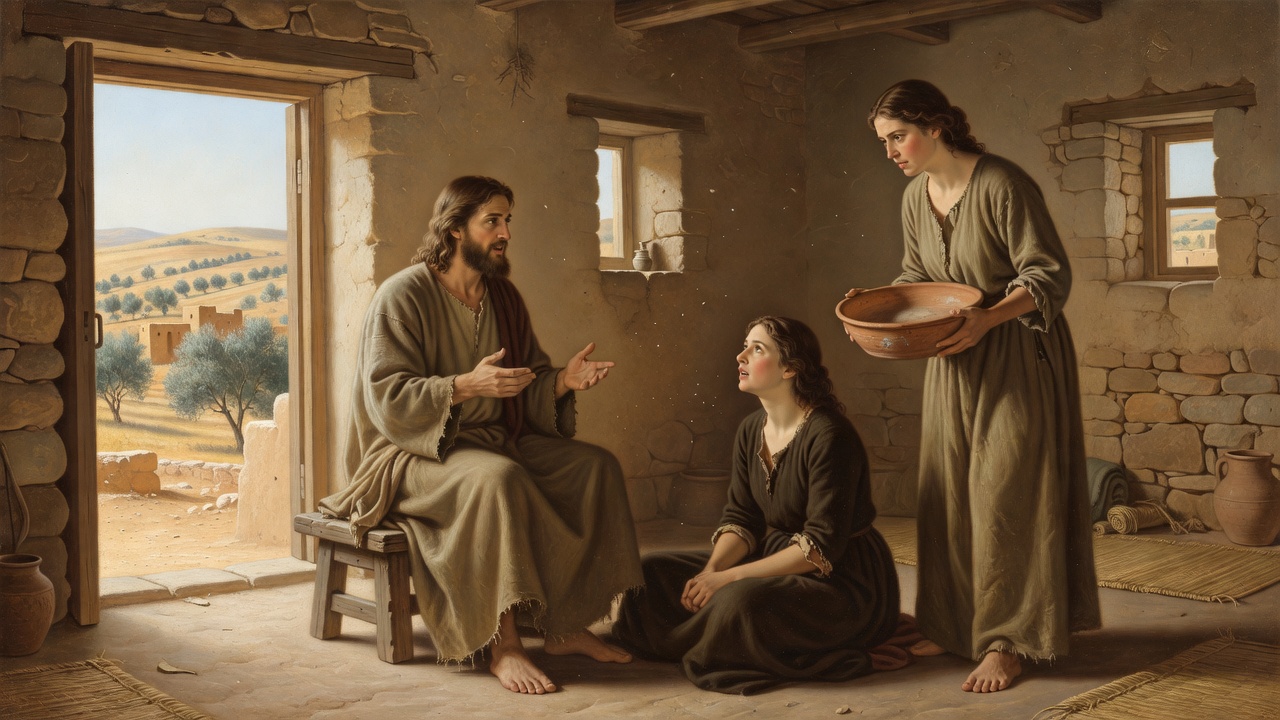
38Ježíš s učedníky pokračoval v cestě. V jedné vesnici je do svého domu pozvala žena jménem Marta. 39Její sestra Marie se posadila a pozorně naslouchala Ježíšovým slovům. 40Marta měla zatím plné ruce práce s pohoštěním. Za chvíli přišla k Ježíšovi s výčitkou: „Pane, nevidíš, co mám práce, a že Marie si jen tak sedí? Pošli ji, ať mi pomůže!“ 41Ježíš jí odpověděl: „Milá Marto, ty se moc staráš a příliš se namáháš pro věci, které za to nestojí. 42Člověk potřebuje jen málo. Doopravdy vlastně jen jedno. Marie to pochopila a to jí nikdo nevezme.“
Did you know?
The mission, the towns, and Martha and Mary
- Easton's Bible Dictionary (1897) identifies Chorazin, named in this chapter's woes along with Bethsaida and Capernaum, with Kerazeh, about two and a half miles up the Wady Kerazeh from Capernaum. It says that after Jesus was expelled from Nazareth, Capernaum became his own city. The chapter compares those towns with Tyre and Sidon; the dictionary calls Sidon the first home of the Phoenicians on the coast of Palestine and the mother city of Tyre, about twenty-five miles north of Tyre.Sources: the Bible text itself · Chorazin · Capernaum · Sidon
- Easton's Bible Dictionary (1897) gives the name Martha as meaning bitterness, and says that she, her sister Mary, and their brother Lazarus lived at Bethany, with Martha probably the eldest. Because this passage calls the house hers, the dictionary notes that some have supposed she was a widow and that her brother and sister lodged with her. It describes her as anxious and bustling in caring for her guest, unlike Mary, who sat at Jesus' feet and listened.Sources: the Bible text itself · Martha · Mary (sister of Lazarus)
- The Lord appoints seventy-two others and sends them two by two ahead of him, and an event chronology dates that sending to AD 29. When they return, rejoicing that even the demons submit in his name, he says he saw Satan fall like lightning from heaven. Easton's Bible Dictionary (1897) explains the name Satan as adversary or accuser, and notes that the New Testament uses it interchangeably with the devil more than thirty times.Sources: the Bible text itself · 70 Sent Out · Satan
Notes written with AI assistance from open sources (Theographic Bible Metadata, CC BY-SA 4.0; Easton’s Bible Dictionary, public domain) and reviewed before publishing.
Places in this chapter
- Sidon · Today: Sandikli archaeological site in Sidon · 33.561, 35.372 · verses 13, 14
- Tyre · 33.271, 35.196 · verses 13, 14
- Jericho · Today: Tell el Alayiq · 31.852, 35.436 · verse 30
- Jerusalem · 31.777, 35.234 · verses 30, 38
Only places identified with high confidence are shown (90% or more according to the scholarly sources compiled by OpenBible). Period map: DARE (Digital Atlas of the Roman Empire), CC BY 4.0; modern map: © OpenStreetMap contributors; places: OpenBible.info (CC BY 4.0).
Credits and license for this translation
Biblica® Open Slovo na cestu Czech: Biblica® Open Slovo na cestu (New Testament) copyright © 1988, 2000, 2012 Biblica, Inc. Language: Čeština (Czech) Contributor: Biblica, Inc. Biblica® Open Slovo na cestu™ Biblica® Open Czech Living New Testament™ Copyright © 1988, 2000, 2012 by Biblica, Inc. “Biblica” is a trademark registered in the United States Patent and Trademark Office by Biblica, Inc. Used with permission. Creative Commons License This work is made available under the Creative Commons Attribution-ShareAlike 4.0 International License (CC BY-SA). To view a copy of this license, visit creativecommons.org/licenses/by-sa/4.0/ or send a letter to Creative Commons, PO Box 1866, Mountain View, CA 94042, USA. Biblica® is a trademark registered by Biblica, Inc., and use of the Biblica® trademark requires the written permission of Biblica, Inc. Under the terms of the CC BY-SA license, you may copy and redistribute this unmodified work as long as you keep the Biblica® trademark intact. If you modify a copy or translate this work, thereby creating a derivative work, you must remove the Biblica® trademark. On the derivative work, you must indicate what changes you have made and attribute the work as follows: “The original work by Biblica, Inc. is available for free at www.biblica.com and open.bible .” Notice of copyright must appear on the title or copyright page of the work as follows: Biblica® Open Slovo na cestu™ Biblica® Open Czech Living New Testament™ Copyright © 1988, 2000, 2012 by Biblica, Inc. “Biblica” is a trademark registered in the United States Patent and Trademark Office by Biblica, Inc. Used with permission. You must also make your derivative work available under the same license (CC BY-SA). If you would like to notify Biblica, Inc. regarding your translation of this work, please contact us at https://open.bible/contact . This translation is made available to you under the terms of the Creative Commons Attribution Share-Alike license 4.0. You have permission to share and redistribute this Bible translation in any format and to make reasonable revisions and adaptations of this translation, provided that: You include the above copyright and source information. If you make any changes to the text, you must indicate that you did so in a way that makes it clear that the original licensor is not necessarily endorsing your changes. If you redistribute this text, you must distribute your contributions under the same license as the original. Pictures included with Scriptures and other documents on this site are licensed just for use with those Scriptures and documents. For other uses, please contact the respective copyright owners. Note that in addition to the rules above, revising and adapting God's Word involves a great responsibility to be true to God's Word. See Revelation 22:18-19. 2025-04-30
Source: http://ebible.org/ceslb/ · eBible.org