Joshua 1
Bible Kralická 1613 · Tap a verse to see its cross-references.
About this book
About Joshua
- Easton's Bible Dictionary (1897) explains Joshua's name as "Jehovah is his help" or "Jehovah the Saviour." He was the son of Nun, of the tribe of Ephraim, born in Egypt, and Moses' successor as leader of Israel; the wars of conquest he carried on are recorded in the book that bears his name. That entry does not name the book's author or give a date for its writing.Sources: Easton: Joshua · Joshua
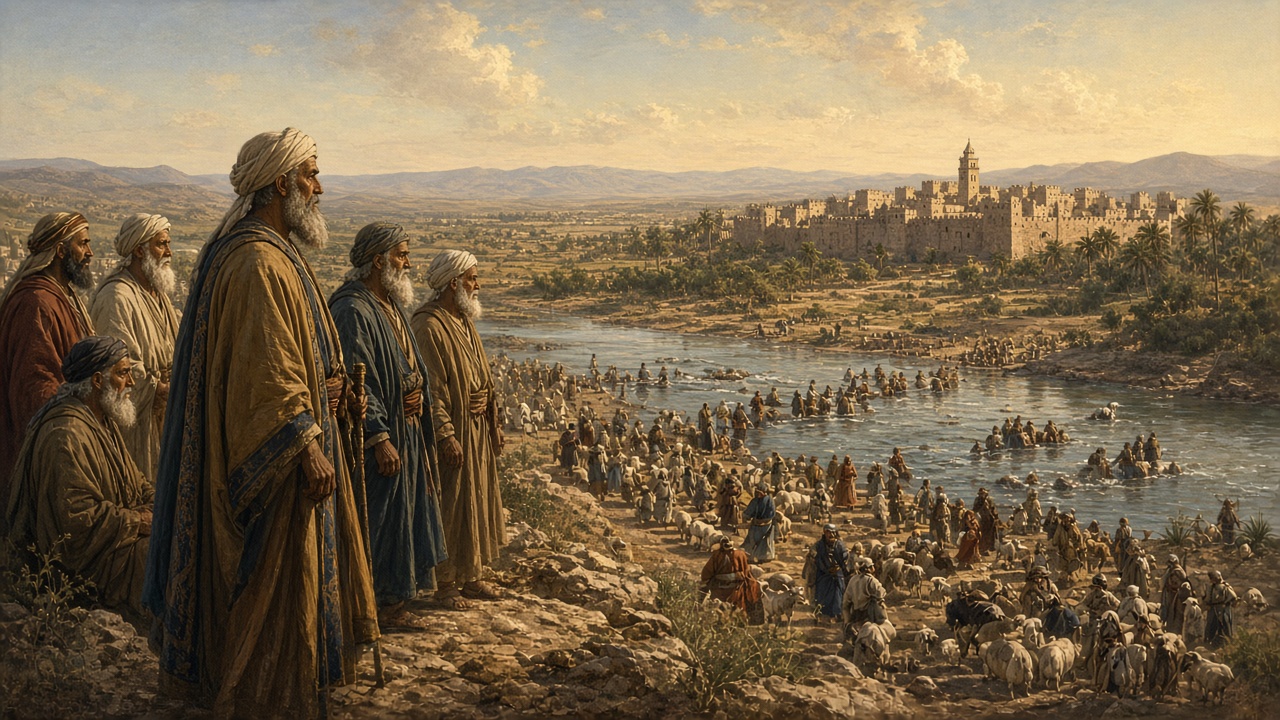
- When Joshua took command, the people were encamped at Shittim. They crossed the Jordan and camped at Gilgal, where, Easton says, he circumcised the people and kept the Passover. Jericho, a fortified city among palm trees about five miles west of the Jordan, is described as Canaan's strongest fortress and the key to western Palestine; Ai, east of Bethel, was the second Canaanite city taken, after an initial defeat.Sources: Easton: Joshua · Jericho · Ai
- Easton's Bible Dictionary (1897) says Joshua conquered six nations and thirty-one kings, then divided the land among the tribes, with Timnath-serah in Mount Ephraim assigned to himself. East of the Jordan, Gilead is described as a mountainous region held by the tribes of Gad and Reuben and the southern part of Manasseh.Sources: Easton: Joshua · Gilead
- Quoting Edersheim, the dictionary says Joshua's name was changed from Oshea, "help," to Jehoshua, "Jehovah is help," and notes that he is called Jesus in Acts 7:45 and Hebrews 4:8. It states that he died at the age of one hundred and ten, twenty-five years after crossing the Jordan, and was buried in his own city of Timnath-serah; of his father Nun, nothing more is recorded than that he was Joshua's father.Sources: Easton: Joshua · Joshua · Nun
- Before leading the conquest, Joshua commanded Israel's host against the Amalekites at Rephidim, served as Moses' minister, and was one of twelve sent to explore Canaan; only he and Caleb brought back an encouraging report. As Easton sketches the book, it runs from the crossing of the Jordan and the taking of Jericho through years of war to the division of the land and Joshua's last address.Sources: Easton: Joshua
Notes written with AI assistance from open sources (Theographic Bible Metadata, CC BY-SA 4.0; Easton’s Bible Dictionary, public domain) and reviewed before publishing.
1Stalo se pak po smrti Mojžíše, služebníka Hospodinova, že mluvil Hospodin k Jozue, synu Nun, služebníku Mojžíšovu, řka: 2Mojžíš, služebník můj, umřel; protož nyní vstaň, přejdi Jordán tento, ty i všecken lid tento, a jdi do země, kterouž já dávám synům Izraelským. 3Každé místo, po kterémž šlapati budete nohama svýma, dal jsem vám, jakož jsem mluvil k Mojžíšovi. 4Od pouště a Libánu toho až k řece veliké, řece Eufrates, všecka země Hetejská až do moře velikého na západ slunce bude pomezí vaše. 5Neostojí žádný před tebou po všecky dny života tvého; jakož jsem byl s Mojžíšem, tak budu s tebou; nenechám tebe samého, aniž tě opustím. 6Posilniž se a zmužile se měj, nebo ty uvedeš v dědictví lidu tomuto zemi, kterouž jsem s přísahou zaslíbil otcům jejich, že ji dám jim. 7Toliko posilň se a udatně sobě počínej, abys ostříhal a činil všecko podlé zákona, kterýž přikázal tobě Mojžíš, služebník můj; neuchyluj se od něho na pravo ani na levo, abys byl opatrný ve všem, k čemuž se obrátíš. 8Neodejdeť kniha zákona tohoto od úst tvých, ale přemyšlovati budeš o něm dnem i nocí, abys ostříhal a činil všecko podlé toho, což psáno jest v něm; nebo tehdáž šťastný budeš na cestách svých, a tehdáž opatrný budeš. 9Zdaliž jsem nepřikázal tobě, řka: Posilni se a zmužile se měj, neboj se, ani lekej, nebo s tebou jest Hospodin Bůh tvůj, kamž se koli obrátíš. 10Tedy přikázal Jozue správcům lidu, řka: 11Projděte skrze tábor a přikažte lidu, řkouce: Nachystejte sobě potravy, nebo po třech dnech půjdete přes Jordán tento, abyste vejdouce, opanovali zemi, kterouž Hospodin Bůh váš dává vám k dědičnému vládařství. 12Rubenovu pak pokolení a Gádovu, a polovici pokolení Manassesova mluvil Jozue, řka: 13Pomněte na to, co vám přikázal Mojžíš služebník Hospodinův, když řekl: Hospodin Bůh váš způsobil vám odpočinutí, že vám dal zemi tuto. 14Ženy vaše, dítky vaše i dobytek váš nechť zůstanou v zemi, kterouž dal vám Mojžíš s této strany Jordánu, vy pak jděte vojensky zpořádaní před bratřími svými, kteříkoli jste muži silní, a pomáhejte jim, 15Dokudž nedá odpočinutí Hospodin bratřím vašim jako i vám, a neobdrží dědičně také i oni země, kterouž Hospodin Bůh váš dává jim. Potom navrátíte se do země dědictví svého, kterouž dal vám Mojžíš, služebník Hospodinův, s této strany Jordánu, k východu slunce, a dědičně vlásti jí budete. 16I odpověděli k Jozue, řkouce: Všecko, což jsi nám rozkázal, učiníme, a kamžkoli pošleš nás, půjdeme. 17Rovně jakž jsme poslouchali Mojžíše, tak poslouchati budeme tebe; jediné nechť jest Hospodin Bůh tvůj s tebou, jako byl s Mojžíšem. 18Kdo by koli odporný byl rozkázaní tvému, a neposlouchal by řečí tvých ve všech věcech, kteréž bys přikázal jemu, umřeť; toliko posilň se a zmužile se měj.
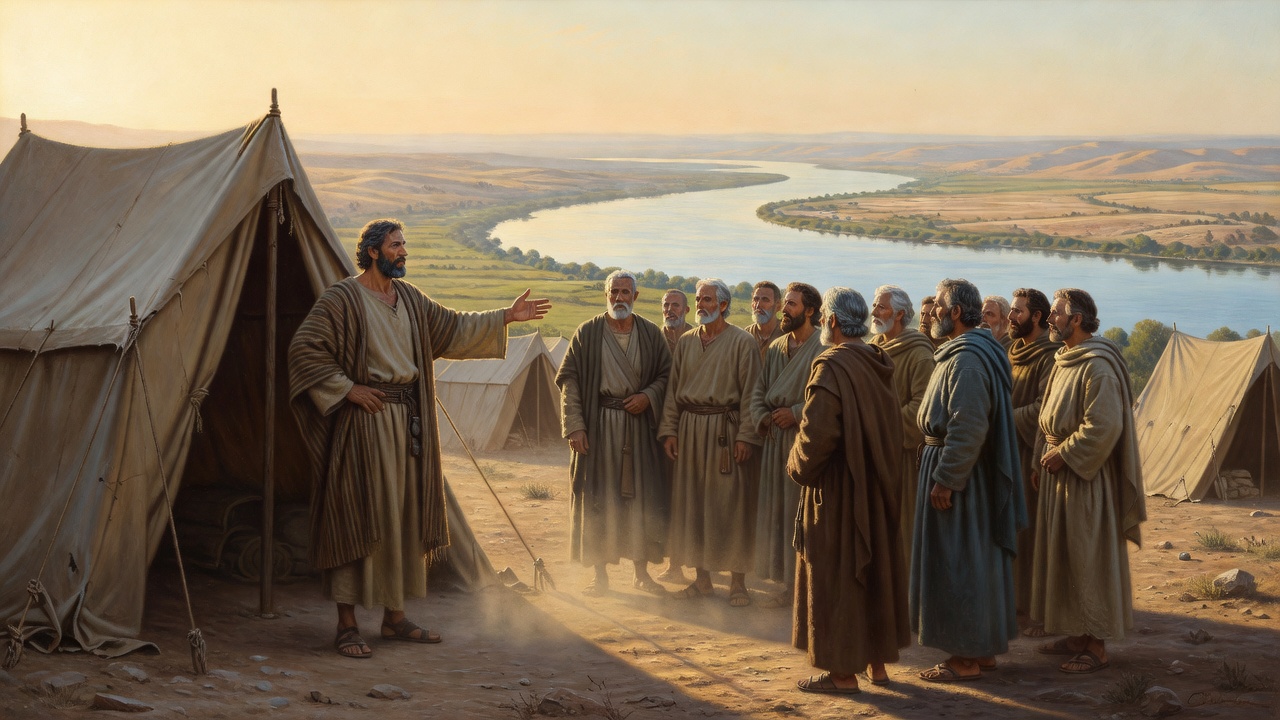
Did you know?
Joshua Assumes Leadership
- Joshua, the son of Nun from the tribe of Ephraim, served as Moses' assistant and military commander before being commissioned to succeed him as leader of Israel. His name means "Jehovah is his help" or "Jehovah the Saviour."Sources: Joshua · the Bible text itself
- The territory outlined in God's commission to Joshua stretches from the southern wilderness and the Lebanon mountain range in the north to the Euphrates (called "the great river") in the east and the Mediterranean ("the Great Sea") to the west.Sources: the Bible text itself · Lebanon · Euphrates · Great Sea
- The tribes of Reuben, Gad, and the half-tribe of Manasseh had already received territory east of the Jordan River under Moses. However, their armed warriors were required to cross over ahead of the other tribes to assist them until the entire land was secured.Sources: the Bible text itself · Manasseh (son of Joseph)
Notes written with AI assistance from open sources (Theographic Bible Metadata, CC BY-SA 4.0; Easton’s Bible Dictionary, public domain) and reviewed before publishing.
Places in this chapter
- Jordan · Today: Jordan River · 31.761, 35.558 · verses 2, 11, 14, 15
- Euphrates · Today: Euphrates River · 31.004, 47.442 · verse 4
- Great Sea · Today: Mediterranean Sea · 31.805, 34.170 · verse 4
- Lebanon · 33.540, 35.584 · verse 4
- Negeb · 31.245, 34.841 · verse 4
- Syria · Today: Aram · 33.511, 36.306 · verse 4
Only places identified with high confidence are shown (90% or more according to the scholarly sources compiled by OpenBible). Period map: DARE (Digital Atlas of the Roman Empire), CC BY 4.0; modern map: © OpenStreetMap contributors; places: OpenBible.info (CC BY 4.0).
Credits and license for this translation
Bible Kralická 1613
The Holy Bible in the Czech language from the last Kralická edition of 1613.
Public Domain
Language: český (Czech)
Translation by: Jan Blahoslav et al
Bible Kralická: Bible svatá aneb všechna písma Starého i Nového zákona podle posledního vydání Kralického z roku 1613. První český překlad z originálních jazyků kladoucí důraz na liturgické užití a vroucí zbožnost. NZ přeložil Jan Blahoslav 1564. Pro překlad SZ byla vytvořena zvláštní rada nejvzdělanějších odborníků, vzdělaných na předních evropských evangelických universitách, které tehdy Jednota bratrská měla. Jejich překlad vyšel v pěti dílech v letech 1579-1593 (6. díl byl Blahoslavův překlad NZ). V r. 1613 vyšlo souhrnné vydání v jednom. Bratři vytvořili mistrné dílo, vrchol překladatelského úsilí slovanských národů. Bible Kralická měla navíc nemalý podíl na zachování českého jazyka v době pobělohorské a po staletí též tvořila most mezi Čechy a Slováky.
This PUBLIC DOMAIN (not copyrighted) Bible translation is brought to you courtesy of eBible.org .
2023-10-20
Source: http://ebible.org/ces1613/ · eBible.org