Psalms 53
Asang Khongca Bible (2019) · Tap a verse to see its cross-references.
Katoeng kruek zaehoikung Muhalath hanah. David ih Maskil.
Kamthunawk ih taham
1Kamthu mah loe a palung thungah, Sithaw om ai, tiah thuih. Nihcae loe anghmaa angtaa kami, panuet thok zaehaih sah kami ah oh o: kahoih hmuen sah kami maeto doeh om ai.
2Panoek thoemhaih tawn, Sithaw pakrong kami oh khoe maw, tiah Sithaw mah van hoiah kami capanawk to khet tathuk.
3Kaminawk loe loklam amkhraeng o boih; nihcae loe amro o boih boeh; hmuen kahoih sah kami maeto doeh om o ai, om roe om ai, maeto doeh om ai.
4Takaw caak baktiah nihcae mah kai ih kaminawk to caak o, Sithaw doeh kawk o vai ai: kahoih ai hmuen sah kaminawk loe panoekhaih tawn o ai boeh maw?
5Sithaw mah nang takui khoep kaminawk ih ahuhnawk to haeh pae phaeng boeh pongah, zit han om ai to mah paroeai a zit o; Sithaw mah nihcae to patoek pongah, azathaih tongsak boeh.
6Aw, Israel kaminawk pahlonghaih loe, Zion mae hoiah angzo nasoe! Sithaw mah angmah ih kaminawk misong angtanghaih thung hoiah hoih let naah, Jakob loe anghoe ueloe, Israel loe poeknawm tih.
Did you know?
A Reflection on Folly and Deliverance
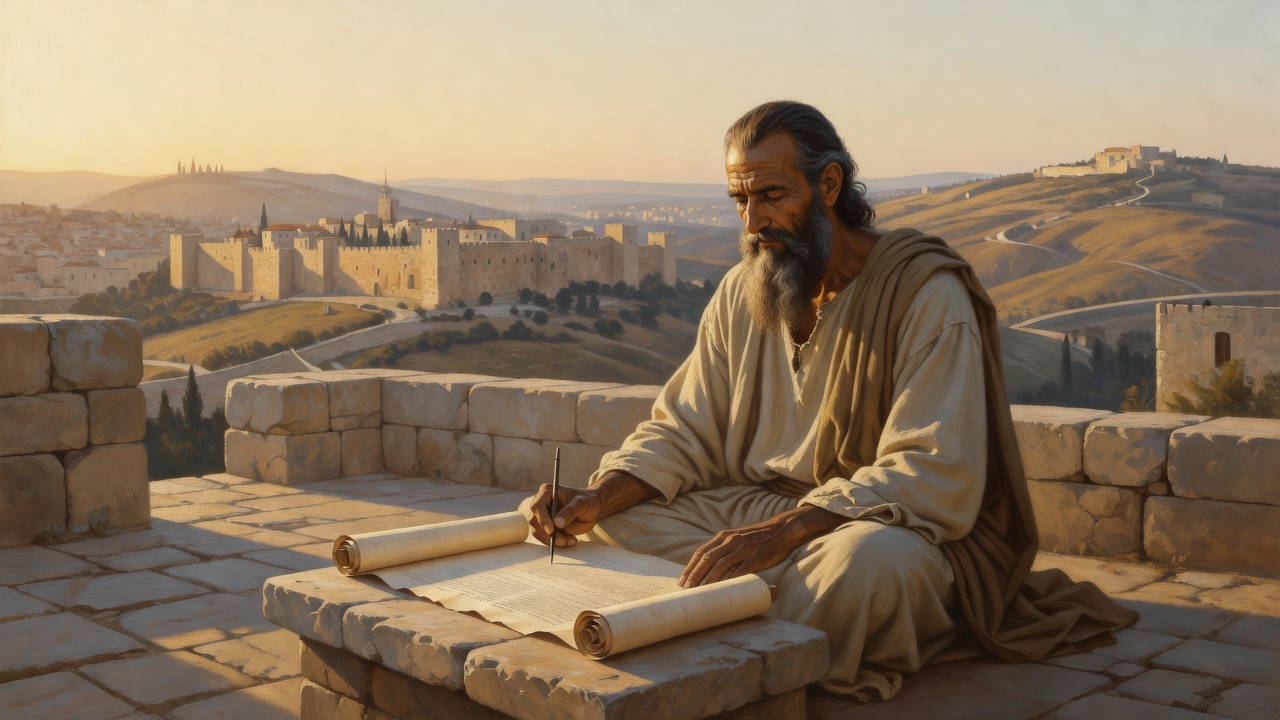
- The psalm depicts God observing humanity from heaven to see if any seek Him, observing that all have turned aside and become corrupt.Sources: the Bible text itself
- The closing verse calls for salvation to come from Zion, the south-eastern hill of Jerusalem where David established his citadel and palace after capturing it from the Jebusites.Sources: the Bible text itself · Zion
- The poem concludes by pairing the names Jacob and Israel in a call for rejoicing, recalling the patriarch Jacob, the son of Isaac, who also bore the name Israel.Sources: the Bible text itself · Jacob (Israel)
Notes written with AI assistance from open sources (Theographic Bible Metadata, CC BY-SA 4.0; Easton’s Bible Dictionary, public domain) and reviewed before publishing.
Places in this chapter
- Zion · Today: Jerusalem · 31.777, 35.234 · verse 6
Only places identified with high confidence are shown (90% or more according to the scholarly sources compiled by OpenBible). Period map: DARE (Digital Atlas of the Roman Empire), CC BY 4.0; modern map: © OpenStreetMap contributors; places: OpenBible.info (CC BY 4.0).
Credits and license for this translation
Asang Khongca Bible (2019)
The Holy Bible in the Asang Khongca language of Mynmar
Public Domain
Language: Asang Khongca (Chin, Eastern Khumi)
Dialect: Asaang Khongca
Published in Mynmar, which is not a signatory to international copyright treaties. Copyright may apply locally in Mynmar. Translator names withheld for security reasons.
2020-09-24
Source: http://ebible.org/cekak/ · eBible.org