Malachi 1
Asang Khongca Bible (2019) · Tap a verse to see its cross-references.
About this book
About Malachi
- Easton's Bible Dictionary (1897) presents Malachi, a name meaning "messenger" or "angel," as the last of the minor prophets and the writer of the last book of the Old Testament canon. Nothing is known of him beyond what is contained in his book of prophecies.Sources: Easton: Malachi · Malachi
- Some have supposed that the name is simply a title for a messenger of Jehovah, not a proper name. Easton's Bible Dictionary (1897) concludes, however, that there is reason to regard Malachi as the prophet's ordinary name.Sources: Easton: Malachi · Malachi
- Easton's Bible Dictionary (1897) dates the prophecies to about 420 B.C., after Nehemiah's second return from Persia, or possibly before that return. Because Ezra does not mention him and he does not mention the restoration of the temple, the dictionary infers that he prophesied after Haggai and Zechariah.Sources: Easton: Malachi
- Easton's Bible Dictionary (1897) treats Malachi as a contemporary of Nehemiah, comparing Malachi 2:8 with Nehemiah 13:15 and Malachi 2:10-16 with Nehemiah 13:23. It also notes that the temple services were still in existence, citing Malachi 1:10, 3:1 and 3:10.Sources: Easton: Malachi
Notes written with AI assistance from open sources (Theographic Bible Metadata, CC BY-SA 4.0; Easton’s Bible Dictionary, public domain) and reviewed before publishing.
Edom amtimhhaih mah Sithaw tahmenhaih amtuengsak
1Malakhi khae hoiah Sithaw ih lok Israel kaminawk khaeah angzoh. 2Angraeng mah, Nangcae to kang palung, tiah thuih. Toe nangcae mah loe, Kawbangah maw kaicae hae nang palung? tiah na thuih o. Angraeng mah, Esau loe Jakob ih amya na ai maw? tiah thuih: toe Jakob ni ka palung, 3Esau loe ka hnukma, anih ih mae hoi qawk ah a toep ih ahmuennawk to tasuinawk ohhaih praezaek ahmuen ah kang coengsak. 4Edom mah, Kaicae loe kamtang o, toe kam laem o moe, kapong sut ahmuen to ka sak o let han, tiah thuih; toe misatuh kaminawk ih Sithaw mah, Nihcae mah sah o ngawn tih, toe kai mah ka phraek pae han; prae loe kahoih ai kaminawk ih prae, tiah kawk ueloe, to kaminawk loe dungzan Angraeng palungphuihaih thungah om o tih. 5Nangmacae mah mik hoi na hnuk o naah, Angraeng lensawkhaih loe Israel ramri tasa bang khoek to oh bae hae, tiah na thui o tih, tiah thuih.
Qaima toksak pazaehaih
6Capa mah ampa to saiqat moe, tamna mah angmah ih angraeng to saiqat: Aw, kai ih ahmin patoek, nangcae qaimanawk, misatuh kaminawk ih Angraeng mah, Kai loe ampa ah ka oh, toe kai saiqat paek kami na oh o maw? Kai loe Angraeng ah ka oh, toe kai zii kami na oh o maw? tiah thuih. Nangcae mah, Kaicae mah nang ih ahmin to kawbangah maw khet ka patoek o? tiah na thuih o. 7Panuet thok takaw to ka hmaicam ah nang paek o; toe nangcae mah kawbang maw panuet thok ah kang sak o? tiah na thuih o. To tiah lok na thuih o naah, Angraeng ih caboi to nam hnong o sak boeh. 8Mik kamaeng moinawk to angbawnhaih ah na paek nahaeloe, sakpazaehaih ah om mak ai maw? Khokkhaem moi hoi kangoi moinawk to na sin o nahaeloe, sakpazaehaih ah om mak ai maw? To moinawk to prae ukkung hanah sin pae o noek ah! Nangcae nuiah anih palung anghoe tih maw? Nangcae to anih mah talawk tih maw? tiah misatuh kaminawk ih Angraeng mah thuih. 9Vaihi Sithaw mah aicae tahmen hanah, Sithaw khaeah tahmen hnikhaih lawk to thui oh: to tiah na hnik o haih rang hoiah anih mah nangcae to talawk tih maw? tiah misatuh kaminawk ih Angraeng mah thuih. 10Nangcae thungah mi mah maw kai ih thok to khaa tih? Nangcae mah tidoeh avang ai ah Ka hmaicam nuiah hmai to tik o hmah: nangcae nuiah palung kang hoe ai, nangcae ih ban hoi na tathlang o ih hmuen doeh ka talawk mak ai, tiah misatuh kaminawk ih Angraeng mah thuih. 11Ni tacawthaih hoi niduem khoek to Gentel kaminawk salakah Ka hmin lensawkhaih to om tih; prae kaminawk boih khaeah ka hmin lensawk han oh pongah, ka hmin ohhaih ahmuen kruekah hmuihoih thlaekhaih hoi kaciim hmuenpaekhaih to sah o tih, tiah misatuh kaminawk ih Angraeng mah thuih. 12Toe nangcae mah loe to hmuen to panuet thok ah na sak o lat, Angraeng ih caboi loe panuet thoh; anih ih thingthai hoi moi doeh panuet thoh, tiah na thuih o. 13Nangcae mah, Khenah, kang pho o parai boeh! tiah na thuih o moe, hnah na uengh o thuih, tiah misatuh kaminawk ih Angraeng mah thuih. Ahmaa kaom, khokkhaem, kangoi moinawk to hmuenpaekhaih ah na sin o, ban hoi na sin o ih hmuennawk to ka talawk han maw? tiah misatuh kaminawk ih Angraeng mah thuih. 14Lokkamhaih a sak pacoengah, tuu khongkha thungah tuu tae maeto a tawnh e, amsawnlok thuihhaih hoiah Angraeng khaeah coek koi kaom tuu paek kami loe kasae tongh nasoe: Kai loe lensawk Siangpahrang ah ka oh, kai ih ahmin loe zit thoh, tiah Sithaw panoek ai kaminawk mah thuih o, tiah misatuh kaminawk ih Angraeng mah thuih.
Did you know?
Honoring God and Defective Offerings
- The name Malachi means messenger or angel. While some have suggested it was a title rather than a proper name, scholars and traditions widely treat it as the prophet's personal name, placing his ministry during the period of Nehemiah, after Haggai and Zechariah.Sources: Malachi
- The opening dispute recalls the twin brothers Jacob and Esau, the ancestors of Israel and Edom. The text contrasts God's covenant love for Israel with the judgment and desolation coming upon the mountainous region of Edom.Sources: Esau (Edom) · Jacob (Israel) · Edom · the Bible text itself
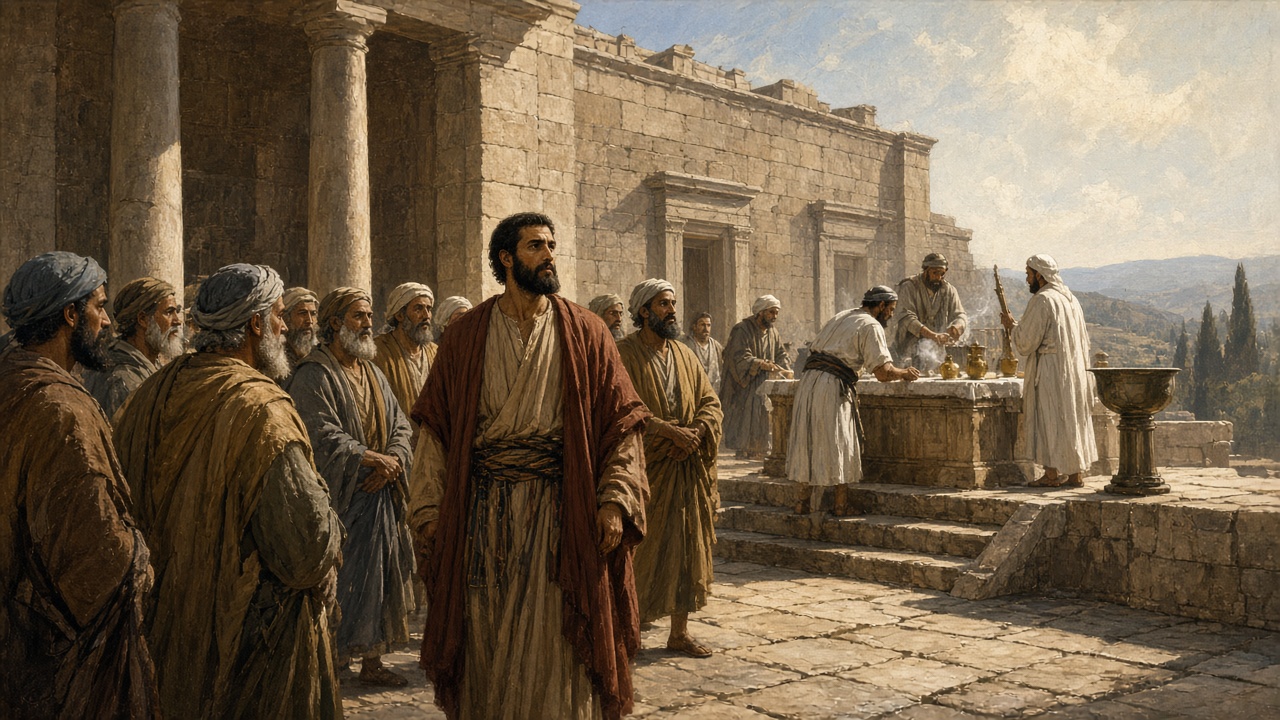
- The priests are rebuked for offering blind, lame, and diseased animals on the altar rather than unblemished livestock. Malachi exposes their disrespect by asking whether a civil governor would accept such inferior gifts.Sources: the Bible text itself
Notes written with AI assistance from open sources (Theographic Bible Metadata, CC BY-SA 4.0; Easton’s Bible Dictionary, public domain) and reviewed before publishing.
Places in this chapter
- Edom · 30.746, 35.604 · verse 4
Only places identified with high confidence are shown (90% or more according to the scholarly sources compiled by OpenBible). Period map: DARE (Digital Atlas of the Roman Empire), CC BY 4.0; modern map: © OpenStreetMap contributors; places: OpenBible.info (CC BY 4.0).
Credits and license for this translation
Asang Khongca Bible (2019)
The Holy Bible in the Asang Khongca language of Mynmar
Public Domain
Language: Asang Khongca (Chin, Eastern Khumi)
Dialect: Asaang Khongca
Published in Mynmar, which is not a signatory to international copyright treaties. Copyright may apply locally in Mynmar. Translator names withheld for security reasons.
2020-09-24
Source: http://ebible.org/cekak/ · eBible.org