Joshua 1
Asang Khongca Bible (2019) · Tap a verse to see its cross-references.
About this book
About Joshua
- Easton's Bible Dictionary (1897) explains Joshua's name as "Jehovah is his help" or "Jehovah the Saviour." He was the son of Nun, of the tribe of Ephraim, born in Egypt, and Moses' successor as leader of Israel; the wars of conquest he carried on are recorded in the book that bears his name. That entry does not name the book's author or give a date for its writing.Sources: Easton: Joshua · Joshua
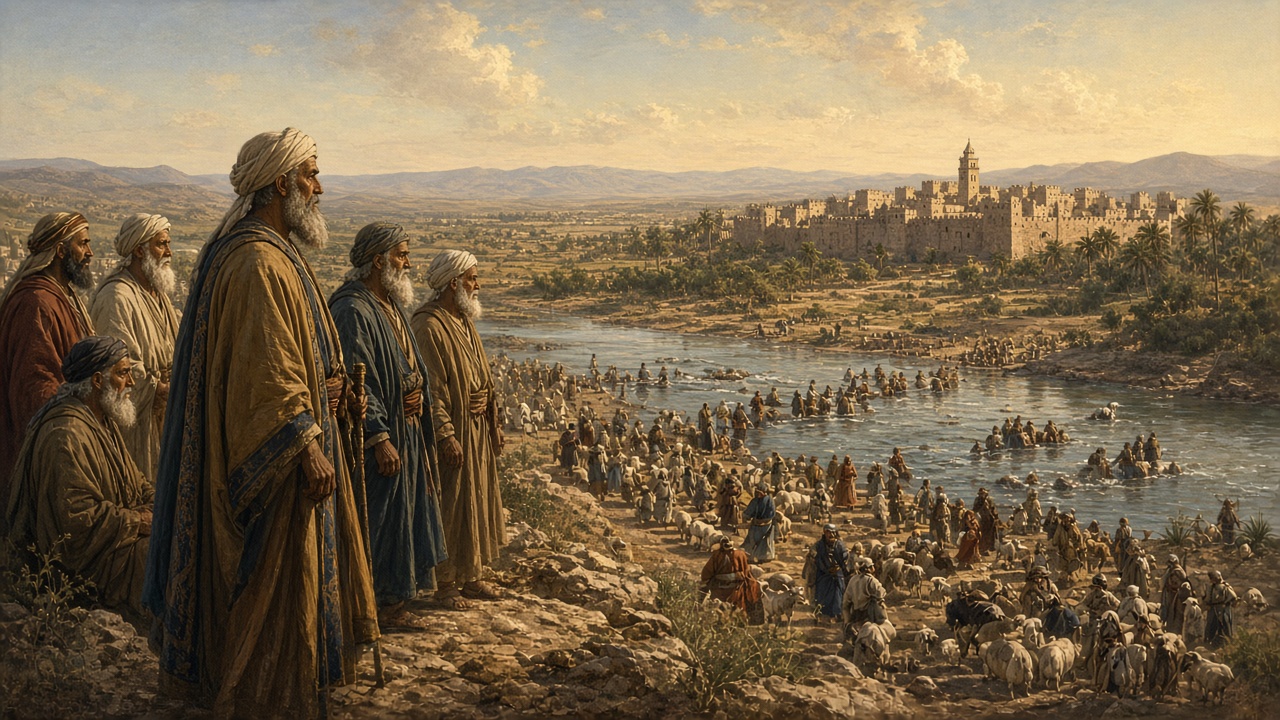
- When Joshua took command, the people were encamped at Shittim. They crossed the Jordan and camped at Gilgal, where, Easton says, he circumcised the people and kept the Passover. Jericho, a fortified city among palm trees about five miles west of the Jordan, is described as Canaan's strongest fortress and the key to western Palestine; Ai, east of Bethel, was the second Canaanite city taken, after an initial defeat.Sources: Easton: Joshua · Jericho · Ai
- Easton's Bible Dictionary (1897) says Joshua conquered six nations and thirty-one kings, then divided the land among the tribes, with Timnath-serah in Mount Ephraim assigned to himself. East of the Jordan, Gilead is described as a mountainous region held by the tribes of Gad and Reuben and the southern part of Manasseh.Sources: Easton: Joshua · Gilead
- Quoting Edersheim, the dictionary says Joshua's name was changed from Oshea, "help," to Jehoshua, "Jehovah is help," and notes that he is called Jesus in Acts 7:45 and Hebrews 4:8. It states that he died at the age of one hundred and ten, twenty-five years after crossing the Jordan, and was buried in his own city of Timnath-serah; of his father Nun, nothing more is recorded than that he was Joshua's father.Sources: Easton: Joshua · Joshua · Nun
- Before leading the conquest, Joshua commanded Israel's host against the Amalekites at Rephidim, served as Moses' minister, and was one of twelve sent to explore Canaan; only he and Caleb brought back an encouraging report. As Easton sketches the book, it runs from the crossing of the Jordan and the taking of Jericho through years of war to the division of the land and Joshua's last address.Sources: Easton: Joshua
Notes written with AI assistance from open sources (Theographic Bible Metadata, CC BY-SA 4.0; Easton’s Bible Dictionary, public domain) and reviewed before publishing.
Angraeng mah Joshua patuk
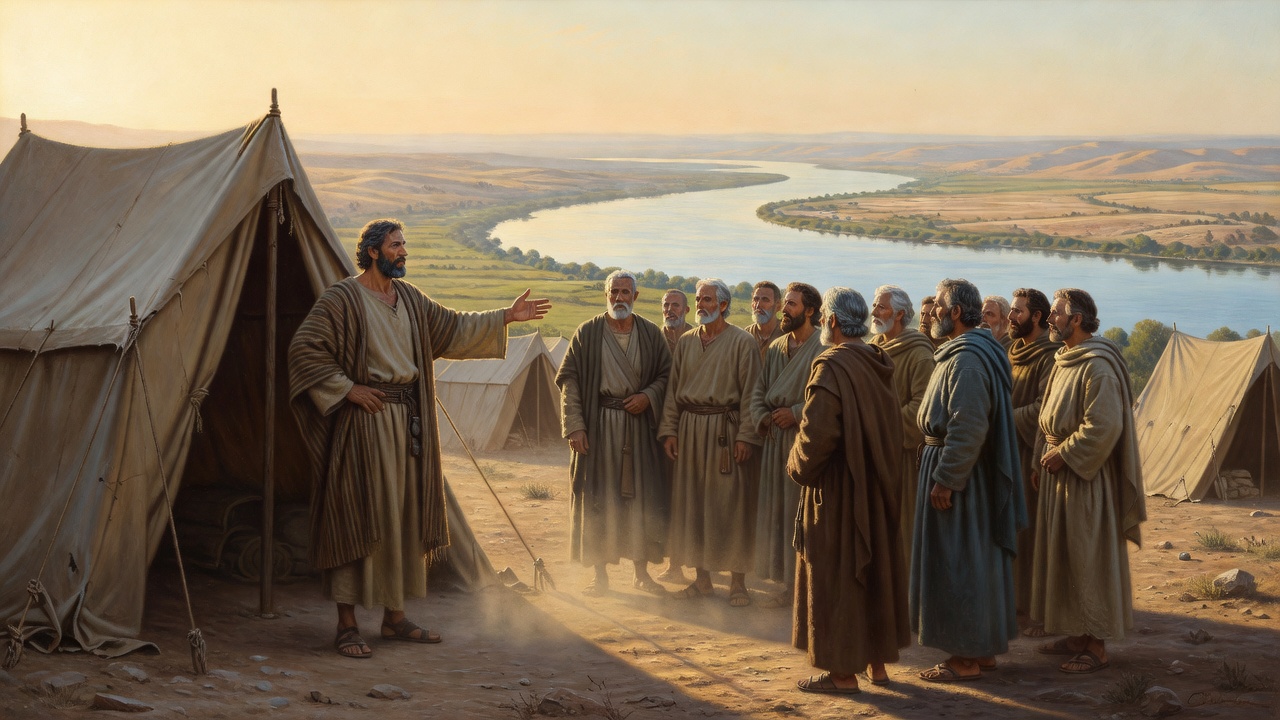
1Angraeng ih tamna Mosi duek pacoengah, Mosi lawnhkung, Nun capa Joshua khaeah, Angraeng mah, 2Ka tamna Mosi loe duek boeh; to pongah vaihi angthawk loe, nangmah hoi haeah kaom kaminawk boih, Jordan vapui yaeh ah caeh oh, Israel kaminawk khaeah ka paek ih prae thungah akun o ah. 3Mosi khaeah ka thuih ih lok baktih toengah, khok hoi na cawh ih ahmuen boih to kang paek han. 4Praezaek hoi kamtong Lebanon karoek to, Euphrates vapui hoi kamtong Hit kaminawk ih prae boih, niduem bang kaom kalen parai tuipui karoek to, na prae ah om tih. 5Na hing thung misatuk hanah na hmaa ah angdoe kami mi doeh om mak ai; Mosi ka oh thuih baktih toengah, kang oh thuih han; kang caeh taak mak ai, kang pahnawt sut mak ai. 6Nihcae ampanawk khaeah paek han lokkam ih prae to toep hanah, hae kaminawk qawk na pazet han oh pongah, thacaksak loe, misahoihaih hoiah om ah. 7Ka tamna Mosi khaeah ka paek ih kaaloknawk boih pazui thaih hanah, thacaksak loe misahoihaih hoiah om ah; na caehhaih ahmuen kruekah hmacawn thai hanah, bantang bang maw, banqoi bang maw amkhraeng hmah. 8Hae kaalok kangrik Cabu hae na pakha thung hoi tacawtsak ving han om ai, kroek ai ah om hmah; to Cabu thung tarik ih loknawk boih pazui thai hanah, aqum athun palung angpaekhaih hoiah kroek ah; to tiah nahaeloe na caehhaih loklam hmacawn ueloe, na tawn ih hmuen to pung tih. 9Lok kang paek na ai maw? Na thacaksak loe, misahoihaih hoiah om ah; zii hmah loe, palungboeng hmah; na caeh haih ahmuen kruekah, na Angraeng Sithaw mah na oh haih tih, tiah a naa.
Jordan vapui angkat han thuihaih
10To pongah Joshua mah ukkung kacoehtanawk khaeah, 11kaminawk ohhaih ahmuen ah caeh oh loe, Na Angraeng Sithaw mah qawktoep han paek ih prae thungah akun thai hanah, ni thumto thung hae Jordan vapui angkat han oh pongah, caaknaek patung o coek ah, tiah thuih pae oh, tiah a naa.
12Toe Joshua mah Reuben kaminawk, Gad kaminawk hoi ahap Manasseh kaminawk khaeah, 13Angraeng ih tamna Mosi mah nangcae khaeah, Na Angraeng Sithaw mah anghakhaih ahmuen hoi hae prae hae ang paek o boeh, tiah thuih ih lok to panoek oh. 14Na zunawk, na caanawk hoi pacah ih moinnawk loe Mosi mah ang paek o ih Jordan vapui yaeh ih prae ah suem oh; toe nangcae thung ih thacak misatuh kop kaminawk loe maiphaw to sin o nasoe, nam nawkamyanawk hmaa ah vapui angkat o nasoe loe, 15Angraeng mah nangcae hanah anghakhaih ahmuen ang paek o baktih toengah, nihcae han anghakhaih ahmuen paek ai karoek to, na Angraeng Sithaw mah nihcae han paek ih prae to toep o ai karoek to, nam nawkamyanawk to abom oh; to pacoengah amlaem o let loe, Jordan ni angyae bang kaom ahmuen, Angraeng ih tamna Mosi mah ang paek o ih prae to toep oh, tiah a naa. 16To naah nihcae mah Joshua khaeah, Nang paek ih lok to ka pazui o boih moe, nang patoeh ih ahmuen kruekah ka caeh o han. 17Mosi ih lok to ka tahngai o boih baktih toengah, na lok doeh ka tahngai o han; Mosi khaeah Angraeng Sithaw oh baktih toengah, nang khaeah doeh om nasoe. 18Mi kawbaktih doeh na lok to aek moe, na lok tahngai ai kami loe, na paek ih lok baktih toengah, paduek han oh; na thacaksak loe, misahoihaih hoiah om ah, tiah a naa o.
Did you know?
Joshua Assumes Leadership
- Joshua, the son of Nun from the tribe of Ephraim, served as Moses' assistant and military commander before being commissioned to succeed him as leader of Israel. His name means "Jehovah is his help" or "Jehovah the Saviour."Sources: Joshua · the Bible text itself
- The territory outlined in God's commission to Joshua stretches from the southern wilderness and the Lebanon mountain range in the north to the Euphrates (called "the great river") in the east and the Mediterranean ("the Great Sea") to the west.Sources: the Bible text itself · Lebanon · Euphrates · Great Sea
- The tribes of Reuben, Gad, and the half-tribe of Manasseh had already received territory east of the Jordan River under Moses. However, their armed warriors were required to cross over ahead of the other tribes to assist them until the entire land was secured.Sources: the Bible text itself · Manasseh (son of Joseph)
Notes written with AI assistance from open sources (Theographic Bible Metadata, CC BY-SA 4.0; Easton’s Bible Dictionary, public domain) and reviewed before publishing.
Places in this chapter
- Jordan · Today: Jordan River · 31.761, 35.558 · verses 2, 11, 14, 15
- Euphrates · Today: Euphrates River · 31.004, 47.442 · verse 4
- Great Sea · Today: Mediterranean Sea · 31.805, 34.170 · verse 4
- Lebanon · 33.540, 35.584 · verse 4
- Negeb · 31.245, 34.841 · verse 4
- Syria · Today: Aram · 33.511, 36.306 · verse 4
Only places identified with high confidence are shown (90% or more according to the scholarly sources compiled by OpenBible). Period map: DARE (Digital Atlas of the Roman Empire), CC BY 4.0; modern map: © OpenStreetMap contributors; places: OpenBible.info (CC BY 4.0).
Credits and license for this translation
Asang Khongca Bible (2019)
The Holy Bible in the Asang Khongca language of Mynmar
Public Domain
Language: Asang Khongca (Chin, Eastern Khumi)
Dialect: Asaang Khongca
Published in Mynmar, which is not a signatory to international copyright treaties. Copyright may apply locally in Mynmar. Translator names withheld for security reasons.
2020-09-24
Source: http://ebible.org/cekak/ · eBible.org