Job 14
Asang Khongca Bible (2019) · Tap a verse to see its cross-references.
1Nongpata mah tapen ih kami loe nawnetta hing nathung raihaih hoiah koi.
2Anih loe apawk baktiah ampha tahang moe, azaem roep; tahlip baktiah cawnh, cak poe ai.
3To baktih hmuen pongah mik na padai moe, lokcaekhaih hmaa ah nang caeh haih han maw?
4Mi mah maw kaciim ai thung hoiah kaciim hmuen to sin thai tih? Mi mah doeh sin thai mak ai.
5Kami ih aninawk to kroek moe, khrah nazetto maw oh pae vop, tiah na panoek pae pongah, anih mah poeng thai han ai ah ramri to na sak pae.
6Toksak han tlai ih kami baktiah, angmah ih aninawk boeng khoek to, angmah koeh ah oh hanah, anih to angqoi taak ah.
7Thing loe pakhruk cadoeh, tadok tacawt let ueloe, tanghang kangtha tacawt let tih, tiah oep han oh.
8Long thung ih tangzuun loe mitong boeh pongah, long ah akung dueh cadoeh,
9tui hmui hoiah tadok let ueloe, thingkung kanawk baktiah tanghang tacawt let tih.
10Toe kami loe duek moe, qong ving; ue, a hinghaih boeng pacoengah loe naa ah maw om vop tih?
11Tuipui tui loe anghmat moe, vacong tui doeh kaang king baktih toengah,
12kami loe angsong moe, angthawk let ai boeh; vannawk anghmaa ai karoek to anglawt mak ai, a iihhaih ahmuen hoi angthawk mak ai boeh.
13Aw taprong thungah na hawk ah, palung na phuihaih dip ai karoek to, tamquta hoi na hawk ah! Kai pahnet han ai ah, ka oh han ih atue to na khaek pae ah.
14Kami loe duek pacoengah hing let tih maw? Karai toksakhaih aninawk loe sawk parai cadoeh, kam khraihaih atue pha ai karoek to ka zing han.
15Nang kawk naah, kang pathim pae han; na ban hoi sak ih hmuen to na koeh.
16Vaihi loe ka khok tangkannawk to na kroek moe, ka zaehaih to na khen ai boeh.
17Ka sakpazaehaih loe pasah thungah catui ka daeng boeh moe, ka zaehaih nang kraeng pae hmoek boeh.
18Tanim thaih mae loe anghmat boeh moe, lungsong doeh a ohhaih ahmuen hoiah angthuih ving boeh.
19Tuinawk mah thlung to maawtsak moe, tui tha mah long to takhawh baktih toengah, kami oephaih to nam rosak.
20Kami to na pazawk poe, anih loe anghmat ving boeh; anih ih mikhmai to nam khraisak moe, kalah bangah na patoeh ving.
21A capanawk mah pakoehhaih hnu o cadoeh, anih mah panoek ai boeh; nihcae atlim ah krah o cadoeh, anih mah panoek pae ai boeh.
22Toe anih ih ngan to naa ueloe, a hinghaih palungsae tih, tiah a naa.
Did you know?
The Frailty of Life and the Hope of Renewal
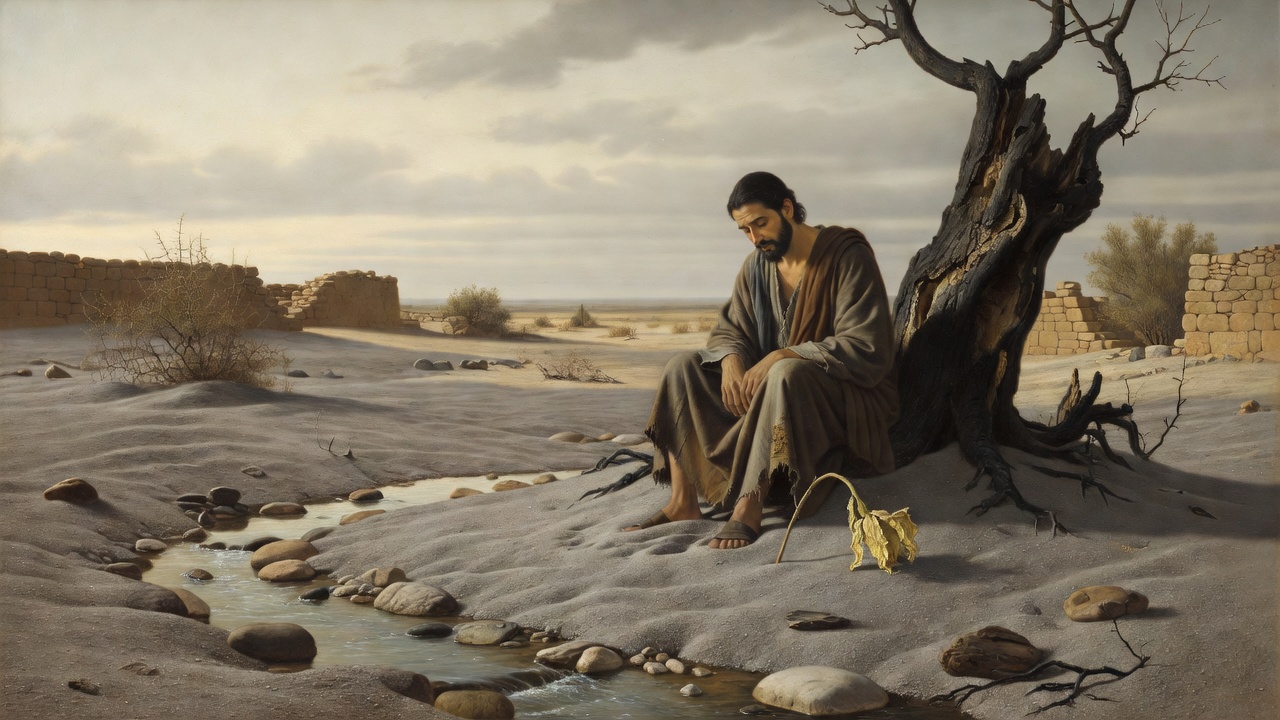
- In this speech, Job contrasts the fate of mortals with that of a tree. While a felled tree can sprout new shoots at the scent of water even after its stump seems dead, a human being dies, lies down, and does not rise again to life on earth.Sources: the Bible text itself
- Job contemplates Sheol as a potential hiding place where he might be sheltered until divine anger passes, imagining a longing in which God would seal his transgressions in a bag and call upon the work of His hands.Sources: the Bible text itself
- To capture the brevity and decay of human existence, the chapter draws upon natural metaphors of erosion and transience, comparing human life to a fleeting shadow, a withered flower, and rocks worn down by water.Sources: the Bible text itself
Notes written with AI assistance from open sources (Theographic Bible Metadata, CC BY-SA 4.0; Easton’s Bible Dictionary, public domain) and reviewed before publishing.
Credits and license for this translation
Asang Khongca Bible (2019)
The Holy Bible in the Asang Khongca language of Mynmar
Public Domain
Language: Asang Khongca (Chin, Eastern Khumi)
Dialect: Asaang Khongca
Published in Mynmar, which is not a signatory to international copyright treaties. Copyright may apply locally in Mynmar. Translator names withheld for security reasons.
2020-09-24
Source: http://ebible.org/cekak/ · eBible.org