Isaiah 5
Asang Khongca Bible (2019) · Tap a verse to see its cross-references.
Misur takha patahhaih
1Ka palung ih kami hanah, anih ih misur takha to laa ah ka sak pae han. Ka palung ih kami loe long kahoih maesom nuiah misur takha to a tawnh; 2anih loe long to takaeh moe, thlungnawk to takhoe boih pacoengah, a koeh ih misurkung to a thling, athung ah toephaih imsang to sak moe, misurtui pasawhhaih doeh a sak; anih mah kahoih misurthaih athai tih tiah oephaih a tawnh, toe kahoih ai misurthaih to athaih pae lat. 3Vaihiah, Aw Jerusalem kaminawk hoi Judah kaminawk, nangcae loe kai hoi misur takha salakah lokcaekkung ah om oh. 4Kaih ih misur takha hanah timaw ka sah thai tih boeh? Ka hoih misurthaih athai tih mue, tiah oephaih ka tawnh, toe kahoih ai misurthaih to athaih lat. 5Kaimah ih misur takha hae kawbangmaw ka sak han, tiah vaihi kang thuih o noek han; pakaa ih sipae to ka phraek moe, minawk kalah ka caaksak han; tapang to ka phraek moe, minawk kalah ka cawhsak han. 6Misur takha to ka pahnong sut han; takha loe mi mah doeh pathoep mak ai, takae doeh takae o mak ai ueloe, congca soekhring ni amprawk lat tih boeh; a nuiah kho angzoh han ai ah tamai to lok ka paek han. 7Israel imthung takoh loe misatuh kaminawk Angraeng ih misur takha ah oh, Judah kaminawk loe palung han koi kaom misurkung ah oh o; anih loe katoeng lokcaekhaih to pakrong e, pacaekthlaekhaih to a tongh lat; toenghaih to pakrong e, khenah, qahhaih to a hnuk lat.
Judah lokcaekhaih
8Nihcae loe long ah angmacae bueng oh o sut moe, ohhaih ahmuen kakong om ai boeh pongah, im maeto pacoeng maeto, lawk maeto pacoeng maeto kangbet ah khosah kaminawk loe khosak bing o! 9Lensawk kahoih parai impuinawk loe kami om ai angqai krangah om o tih boeh, tiah misatuh kaminawk ih Angraeng mah, ka naa taengah ang thuih boeh. 10Ue, lawk bung hato kaom misur takha ahmuen ah, misur tanghang abom bath maeto khue athai ueloe, homer maeto ahmuen ah aanmu patit naah, ephah maeto khue ni hak tih. 11Mu naek hanah khawnthaw ah angthawk, misurtui paquih hanah, khoving khoek to mu nae kaminawk loe khosak bing! 12Nihcae ih poihkung ah loe kalen pui katoeng, aqui aah koi katoeng, satuem, tamoi hoi misurtuinawk to oh; toe Angraeng mah sak ih hmuen to tiah doeh sah o ai, a ban hoiah sak ih hmuen doeh dawncang pae o ai. 13Kai ih kaminawk loe panoekhaih tamsi o pongah, misong ah laemh o; nihcae ih angraengnawk loe zok kamthlam ah duek o moe, pop parai kaminawk doeh tui anghaeh loiah palai zaek o boih. 14To pongah taprong loe amoeh moe, boep thai ai ah pakha to aangh; anih ih angraengnawk, pop parai kaminawk, lensawkhaih hoi khosak nawmhaih acaeng kaminawk loe to ah anghum o tathuk tih. 15Kahoih ai kami doeh atlim ah pakhrah tathuk ueloe, thacak kami doeh pahnaem tih; amoek kaminawk ih mik doeh atlim ah pakhrah pae tih. 16Toe misatuh kaminawk ih Angraeng loe toenghaih hoiah pakoehhaih to om tih, Ciimcai Sithaw loe a toenghaih rang hoiah ciimcaisak tih. 17Tuucaanawk loe angmacae rawkcak caakhaih ahmuen ah paqai o tih, angraeng ih ahmuennawk loe angvinnawk mah caa o tih. 18Atho kaom ai alinghaih hoi sakpazaehaih to qui hoiah azuk kaminawk loe khosak bing! 19Nihcae mah Sithaw toksakhaih ka hnuk o thai hanah, anih loe karangah angzo nasoe, a tok to karangah sah lai nasoe; ka panoek o thai hanah, Ciimcai Israel Sithaw to anghnai nasoe loe, angzo lai nasoe, tiah thuih o. 20Hmuen kasae to kahoih hmuen, tiah thui kami, kahoih hmuen to kasae hmuen ah thui kami, vinghaih to aanghaih ah, aanghaih to vinghaih ah poek kami, kakhaa to kaluep ah, kaluep to kakhaa ah poek kaminawk loe khosak bing! 21Angmacae mik ah palungha kami, angmacae mik ah khopoek thaih, tiah poekhaih tawn kaminawk loe khosak bing! 22Misurtui amoeh, mu abaeh moe, naek koeh hmoek kaminawk loe khosak bing! 23To baktih kaminawk loe bokhaih hmuen to lak moe, katoeng ai kaminawk to danpaek ai ah loih o sak ving; katoeng kaminawk to toenghaih hoiah lokcaek han koeh o ai. 24To pongah hmai mah caphaeh to kangh moe, hmaipalai mah qam kazaek to kangh baktih toengah, nihcae ih tangzuun to qong ueloe, apawk doeh maiphu baktiah van ah anghaeh tahang boih tih; nihcae loe Angraeng Sithaw ih kaalok to vah o ving moe, Ciimcai Israel kami ih lok to aek o pongah to tiah oh o. 25To pongah angmah ih kaminawk nuiah Angraeng palungphui; a ban payangh moe, nihcae to boh, to pongah maesomnawk loe anghuen o moe, kami qoknawk doeh loklam um li ah aek baktiah oh o. To tiah oh pacoengah doeh, anih palungphuihaih dii ai vop, a ban to phok tahang toengtoeng vop. 26Angthla parai ahmuen ah khosah kaminawk hanah kahni to payang pae o moe, long boenghaih ahmuen ah kaom kaminawk hanah ban uengh o thuih; khenah, nihcae loe karangah angzo o tih; 27nihcae thungah angpho moe, amthaek kami mi doeh om mak ai, mi doeh iih angam o mak ai, iip doeh iip o mak ai; kazii angzaenghaih doeh khram o mak ai, khokpanai qui doeh apet mak ai; 28nihcae ih palaa loe noet parai, nihcae loe kalii to anueng o coek boeh; nihcae ih hrang khoknawk loe thlung baktiah amtaak, hrang lakoknawk doeh takhi kamhae baktiah oh. 29Nihcae hanghaih lok loe kaipui baktiah oh moe, tha kaom li kaipui baktiah a hangh o; ue, hanghaih hoiah moi to kaek o ueloe, ruet o tih, mi mah doeh lomh pae thai mak ai. 30To na niah nihcae loe tuipui ih tuiphu kangthawk lok baktiah hang o tih; kami mah to prae to khet naah, khoving hoi palungsethaih khue to hnu tih; vannawk aanghaih loe tamai mah khuk khoep tih boeh.
Did you know?
The Song of the Vineyard and the Six Woes
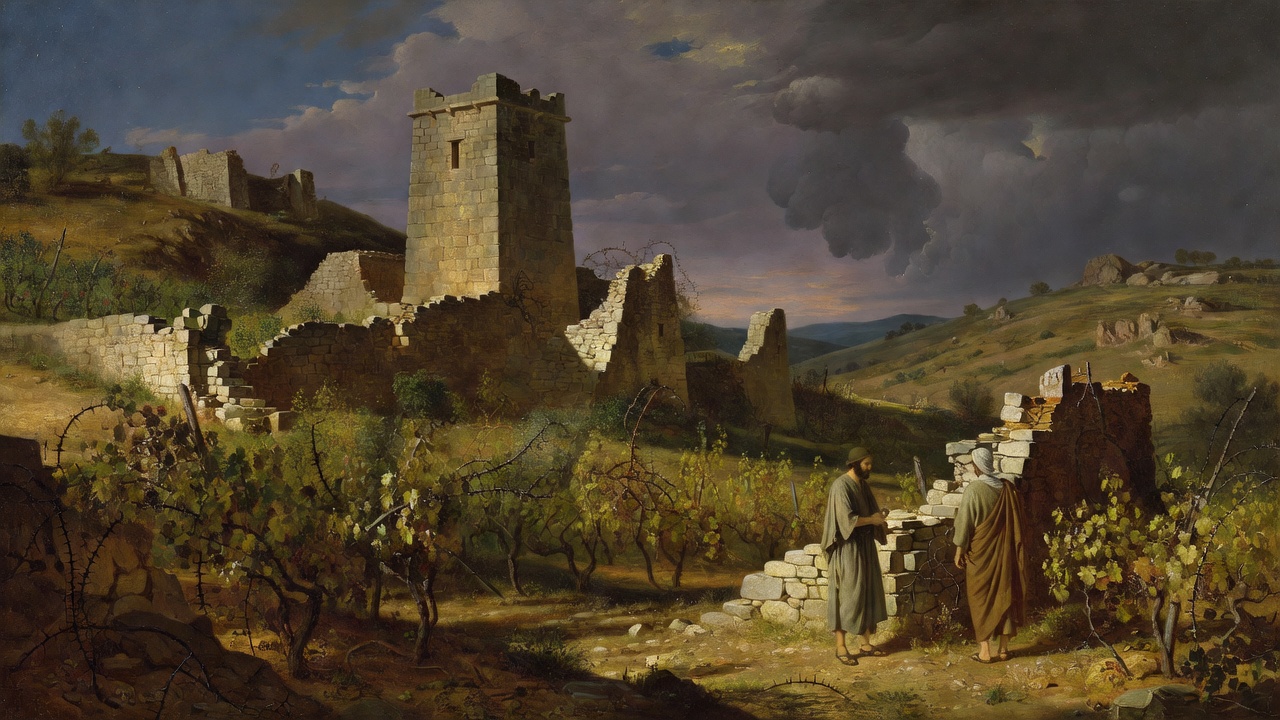
- The opening song in Isaiah 5 describes the elaborate labor of ancient Judean viticulture: clearing rocky hillsides of stones, building a protective stone watchtower, digging out a winepress in the bedrock, and planting prime vines surrounded by a protective hedge and wall. The poem turns into a legal parable where the vineyard represents the house of Israel and the people of Judah, from whom justice was expected instead of bloodshed.Sources: the Bible text itself
- The chapter delivers a series of six prophetic laments or woes, condemning specific social and moral abuses in Judah. These include wealthy landowners consolidating real estate by adding house to house and field to field, judges taking bribes to acquit the guilty while denying justice to the innocent, and leaders indulging in lavish feasting while ignoring divine instruction.Sources: the Bible text itself
- Isaiah's prophetic ministry in Jerusalem addressed the people of Judah over an extended period beginning in the mid-eighth century BC. The chapter concludes with a warning that the Lord would signal distant, disciplined foreign armies equipped with chariots, bows, and swift horses to execute judgment on the land.Sources: Jerusalem · Prophecies of Isaiah · the Bible text itself
Notes written with AI assistance from open sources (Theographic Bible Metadata, CC BY-SA 4.0; Easton’s Bible Dictionary, public domain) and reviewed before publishing.
Places in this chapter
Only places identified with high confidence are shown (90% or more according to the scholarly sources compiled by OpenBible). Period map: DARE (Digital Atlas of the Roman Empire), CC BY 4.0; modern map: © OpenStreetMap contributors; places: OpenBible.info (CC BY 4.0).
Credits and license for this translation
Asang Khongca Bible (2019)
The Holy Bible in the Asang Khongca language of Mynmar
Public Domain
Language: Asang Khongca (Chin, Eastern Khumi)
Dialect: Asaang Khongca
Published in Mynmar, which is not a signatory to international copyright treaties. Copyright may apply locally in Mynmar. Translator names withheld for security reasons.
2020-09-24
Source: http://ebible.org/cekak/ · eBible.org