Ezekiel 24
Asang Khongca Bible (2019) · Tap a verse to see its cross-references.
Moi thonghaih laom patahhaih
1Saning takawtto, khrah hato haih, ni hato naah Angraeng ih lok kai khaeah angzoh, 2kami capa, vaihni hae ani hoi akhrah hae tarik ah; Babylon siangpahrang mah hae na ni hoi kamtong Jerusalem vangpui to takui boeh. 3Laisaep thaih imthung takoh ah patahhaih lok hoiah thui paeh, nihcae khaeah, Angraeng Sithaw mah, Laom to khoeng ah loe a thungah tui to lawn ah: 4ngan kahoih, aphaih hoi palaeng moinawk to la ah loe a thungah suem ah; kahoih ahuh to kakoi ah hnawt ah. 5Kahoih koek tuu moi to la ah, ahuhnawk to laom tlim ah pacaeng ah, ahuhnawk loe amtet nasoe, tiah thuih paeh, tiah ang naa. 6Angraeng Sithaw mah, Athii kalongsak vangpui, nang loe khosak bing boeh! Moi to maeto pacoeng maeto thoe ah, nang loe sum aek mah caak ih athung bang ciim thai ai laom baktiah ni na oh boeh; taham khethaih phoisa to na nuiah amtim hmah nasoe. 7Vangpui thungah anih mah athii to longsak, anih loe maiphu hoi aphum hanah athii to long ah krai ai, athii to kamtueng phaeng thlung nuiah ni a kraih; 8palungphui hoiah lu ka lak han; athii to aphum han ai ah, anih mah palongh ih athii to kamtueng phaeng thlung nuiah ka suek boeh, tiah thuih. 9To pongah Angraeng Sithaw mah, Athii palong vangpui loe khosak bing! Kalen parai hmai to tik hanah thing to ka tapop han. 10Thing to tapop ah loe hmaitik ah, hmuihoih thuh ah loe, moi to patet ah, ahuhnawk loe hmai amngaeh o nasoe. 11To pacoengah tidoeh kaom ai laom akok to kamngaeh hmai nuiah khoeng ah, hmai mah laom to amngaeh sak tih, to tiah ni laom thung ih kakhoem tui to amkaw ueloe, sum aek to hmai mah kangh boih tih. 12Tha na pathok khing cadoeh azom pui ni, kakhoem to krah thai mak ai, hmai mah doeh cingsak thai mak ai. 13Jerusalem, nang loe zaehaih hoi amhnoghaih hoiah na koi, kang pasaeh khing boeh, toe na ciim thai ai pongah, na nuiah palung ka phuihaih pha ai karoek to nam hnonghaih to na ciim thai mak ai, tiah thuih. 14Kai, Angraeng mah thuih boeh; Kai loe ka thuih ih lok baktih toengah ka sak han, atue mah phak boeh; hnuk kang nawn let mak ai, ka paquem mak ai ueloe, dawnpakhuemhaih doeh ka tawn mak ai; na khok takanhaih hoi na sak ih hmuennawk baktih toengah, lok kang caek o han, tiah Angraeng Sithaw mah thuih.
Ezekiel zu duekhaih
15Angraeng ih lok kai khaeah angzoh, 16kami capa, khenah, mik na cop koek ih kami to kang lak pae ving han boeh; toe palungsae hmah loe, qah hmah, mikkhraetui doeh longsak hmah. 17Pauep ah, kadueh kami to qah haih hmah, lumuek to angmuek ah loe, khokpanai to abuen ah, pahni to khuk hmah, palungsae kami ih takaw to caa hmah, tiah ang naa. 18To pongah akhawn bangah kaminawk khaeah lok to ka thuih, duembang ah loe ka zu to duek ving; thuih ih lok baktih toengah akhawn bangah ka sak. 19To naah kaminawk mah, Hae tiah na sak ih hmuennawk mah kai hnuksak han koi timaw oh, nang thui mak ai maw? tiah ang naa o. 20To pongah nihcae khaeah, Angraeng ih lok kai khaeah angzoh, 21Israel imthung takoh khaeah, Angraeng Sithaw mah, Khenah, Kaimah ih hmuenciim, kahoih koek nangcae thacakhaih, na khet koeh o ih ahmuen, na paawt o duek ih hmuennawk to kam hnongsak han; na caeh o taak ih na capanawk hoi na canunawk loe sumsen hoiah dueh o tih. 22Ka sak ih baktih toengah na sah o toeng tih; pahni tamuep o hmah loe, palungsae kaminawk ih buh doeh caa o hmah. 23Lumuek to angmuek oh loe, khokpanai to abuen oh; palungsae o hmah loe, qah o hmah; toe na zae o haih pongah ngan na zaek o ueloe, maeto hoi maeto na qah o haih tih. 24Ezekiel loe nangcae han angmathaih ah om tih; a sak ih hmuennawk baktih toengah na sah o toeng tih; hae hmuen phak naah, Kai loe Angraeng Sithaw ni, tito na panoek o tih, tiah thuih. 25Nang, kami capa, nihcae thacakhaih, anghoe o haih hoi lensawkhaih, a khet koeh o ih hmuen, a koeh o ih hmuennawk, a capanawk hoi a canunawk to ka lak pae han. 26To na niah kaloih kami to nang khaeah angzo ueloe, kangcoeng hmuen tamthang to na thui tih. 27Kaloih kami hnuk na niah na pakha to among tih, lok na pae hoi tih, lok na aa mak ai boeh; nang loe nihcae han angmathaih ah om tih; to naah nihcae mah Kai loe Angraeng ni, tito panoek o tih, tiah ang naa.
Did you know?
The Siege of Jerusalem and Ezekiel's Bereavement
- Ezekiel received a divine directive to record the precise date—the tenth day of the tenth month in the ninth year—because on that very day the king of Babylon laid siege to Jerusalem.Sources: the Bible text itself · Ezekiel
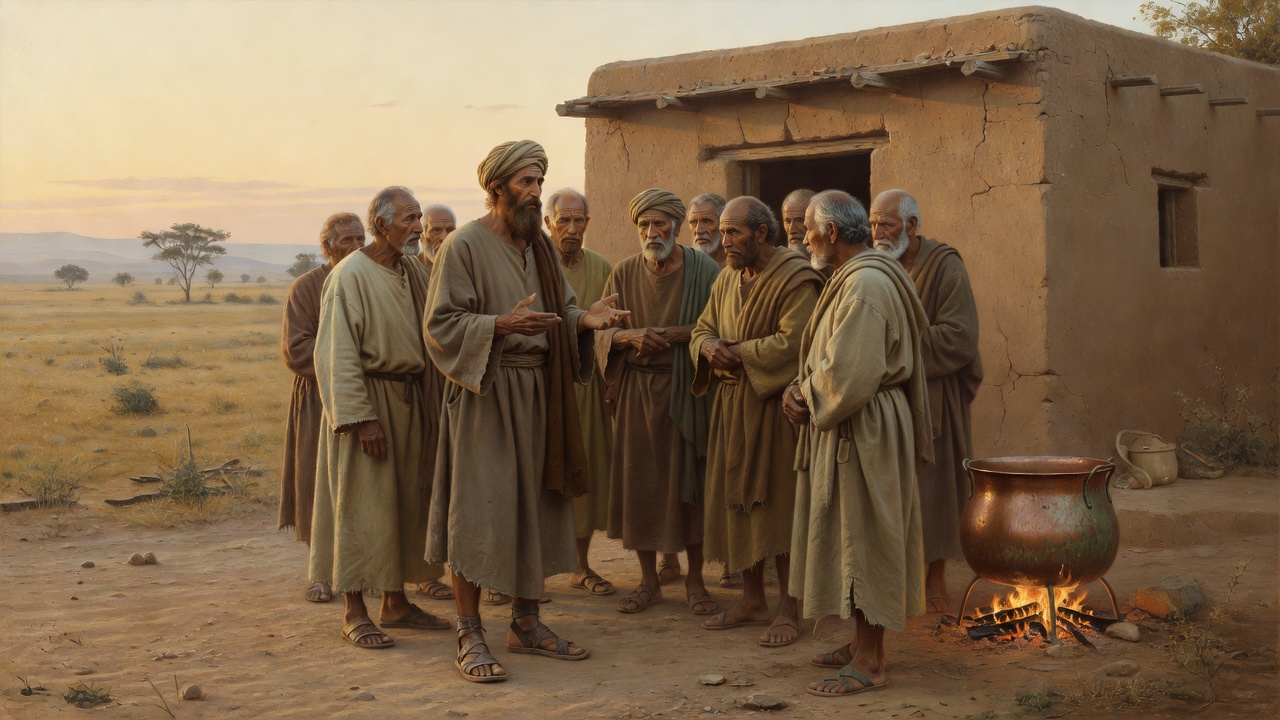
- When Ezekiel's wife died suddenly in the ninth year of his exile, he was forbidden from practicing typical mourning customs, such as weeping openly, removing his turban, going barefoot, covering his lips, or eating the bread of mourners.Sources: the Bible text itself · Ezekiel · Wife of Ezekiel
- The prophet's silent, uncustomary reaction to his personal loss was meant to serve as a sign to the exiles, foreshadowing how stunned and numb they would be when news reached them that the temple and Jerusalem had fallen.Sources: the Bible text itself · Jerusalem
Notes written with AI assistance from open sources (Theographic Bible Metadata, CC BY-SA 4.0; Easton’s Bible Dictionary, public domain) and reviewed before publishing.
Places in this chapter
Only places identified with high confidence are shown (90% or more according to the scholarly sources compiled by OpenBible). Period map: DARE (Digital Atlas of the Roman Empire), CC BY 4.0; modern map: © OpenStreetMap contributors; places: OpenBible.info (CC BY 4.0).
Credits and license for this translation
Asang Khongca Bible (2019)
The Holy Bible in the Asang Khongca language of Mynmar
Public Domain
Language: Asang Khongca (Chin, Eastern Khumi)
Dialect: Asaang Khongca
Published in Mynmar, which is not a signatory to international copyright treaties. Copyright may apply locally in Mynmar. Translator names withheld for security reasons.
2020-09-24
Source: http://ebible.org/cekak/ · eBible.org