Deuteronomy 24
Asang Khongca Bible (2019) · Tap a verse to see its cross-references.
1Nongpa maeto mah zu lak naah, nongpata nuiah kaciim ai hmuen to a hnuk pongah, a zu nuiah poeknawm ai nahaeloe, zu pakhrakhaih ca to tarik tih, ca to nongpata hanah paek ueloe, a im hoiah tacawtsak tih. 2Anih ih im tacawt taak pacoengah loe, to nongpata to kalah kami maeto khaeah sava sak thaih boeh. 3Sava hnetto haih mah doeh to nongpata to hnuma nahaeloe, zu pakhrakhaih ca to tarik tih, ca to nongpata hanah paek ueloe, a im hoiah tacawtsak tih, to tih ai boeh loe to nongpata zu haih hnukkhuem sava to dueh ving nahaeloe, 4anih pakhrah kami hmaloe ih sava mah to nongpata to zu ah la let thai mak ai boeh; nongpata loe ciim ai boeh; zu haih nahaeloe Angraeng mik hnukah panuet thok hmuen ah oh; na Angraeng Sithaw mah qawk ah paek ih prae nuiah zaehaih sah o hmah.
Kalah kaaloknawk
5Kami maeto loe zu lak tangsuek naah, anih loe misa angtukhaih ahmuen ah caeh mak ai; anih loe kalah tok doeh sah mak ai; saningto thung toksah ai ah im ah om tih; a lak ih zu hoiah kanawm ah khosah tih.
6Minawk ih cang kaehhaih ranui ih thlung maw, to tih ai boeh loe atlim ih thlung maw, la pae ving hmah; na lak pae ving nahaeloe, kami hinghaih lak pae ving baktiah ni oh.
7Kami maeto mah angmah ih nawkamya Israel kami to paquk moe, misong ah patoh maw, to tih ai boeh loe zaw ving nahaeloe, anih to hum han oh; to tiah nangcae salak hoiah kahoih ai hmuen to takhoe oh.
8Ngansae man naah, Levi kami qaimanawk mah thuih ih lok baktih toengah, kahoih ah pazui oh; anih mah thuih ih lok baktih toengah sah oh; nihcae khaeah ka thuih ih lok baktih toeng ah, nangcae mah pazui oh. 9Izip prae hoiah nang zoh o naah, loklam ah Miriam nuiah na Angraeng Sithaw mah sak ih hmuen to panoek oh.
10Kawbaktih hmuen doeh na imtaeng kami khaeah coi han na paek o naah, anih ih hmuen maeto lak pae hanah, anih imthung ah akun han om ai. 11Im tasa bangah om ah, hmuen na coisak ih kami mah ni pawng ih hmuen to nang hanah na sin pae tih. 12To kami loe amtang nahaeloe, a sin ih hmuen to qumh to laem ai ah paek let ah. 13Anih mah sin ih hmuen to niduem ai naah thaak pae let ah; to tiah ni to kami loe angmah ih kahni hoiah iip ueloe, nang to tahamhoihaih na paek tih; to tiah nahaeloe na Angraeng Sithaw mikhnuk ah na sak ih hmuen to katoeng ah om tih.
14Nam nawkamya maw, to tih ai boeh loe na vangpui thungah kaom angvin maw, abomh han kangaih na tlai ih kamtang tamna to pacaekthlaek hmah. 15Ni thokkruek anih ih tok tho to paek ah; paek ai ah niduemsak hmah; anih loe amtang pongah a hnuk han koi atho to palung thungah pakuem poe tih; na paek ai nahaeloe anih mah kasae thui tih, anih mah Angraeng khaeah qah nahaeloe, na nuiah zaehaih om moeng tih.
16A caanawk pongah ampanawk dueksak han om ai, ampanawk pongah a caanawk doeh paduek han om ai; kami boih angmah ih zaehaih pongah ni duek han oh.
17Prae kalah kaminawk hoi amno ampa tawn ai kaminawk to amsoem ai ah lokcaek o hmah; lamhmai ih kahni doeh pawng ih hmuen ah la pae hmah; 18nang loe Izip prae ah misong ah ni na oh; toe na Angraeng Sithaw mah to prae thung hoiah ang pahlong, tiah panoek ah; to pongah hae tiah sak han lok kang paek.
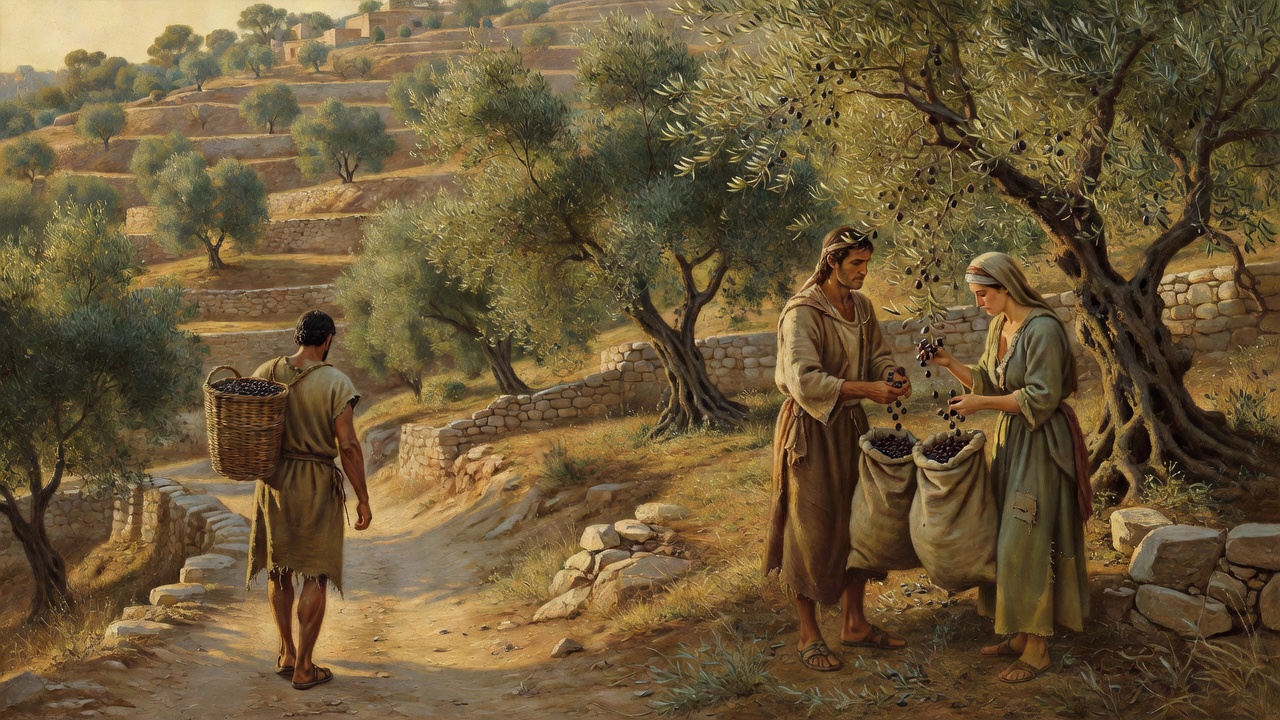
19Na lawk thung ih cang na aah naah, na tahmat ih cangqui to om nahaeloe, akhuih han amlaem let hmah; to cangqui loe prae kalah kaminawk, amno ampa tawn ai kaminawk hoi lamhmainawk hanah om tih; to tiah ni na ban hoi sak ih hmuen boih ah na Angraeng Sithaw mah tahamhoihaih paek tih. 20Olive kung pong ih olive thaih na haeh naah, kanghmat to pakhrik let hmah; kanghmat athaih loe prae kalah kaminawk, amno ampa tawn ai kaminawk hoi lamhmainawk hanah suem paeh. 21Misur takha thung ih misurthaih na pakhrik naah, kanghmat misurthaih pakhrik hanah caeh let hmah; kanghmat loe prae kalah kaminawk, amno ampa tawn ai kaminawk hoi lamhmainawk hanah caehtaak ah. 22Izip prae ah misong ah na oh o haih to pahnet o hmah; to pongah ni to tiah sak han kang thuih o.
Did you know?
Laws of Compassion, Justice, and Social Protection
- Israelite harvesting laws required landowners to leave behind forgotten sheaves of grain, leftover olives, and grape gleanings for vulnerable groups: the resident foreigner, the orphan, and the widow. This social welfare system was grounded in the collective memory that the Israelites had once been oppressed slaves in Egypt.Sources: the Bible text itself · Egypt
- Debtors and hired workers were protected by explicit legal limits. Creditors were forbidden from entering a debtor's house to seize a pledge, taking essential millstones that provided a household's daily bread, or keeping an impoverished person's sleeping cloak past sunset, and day laborers had to be paid before nightfall.Sources: the Bible text itself
- When giving instructions concerning infectious skin diseases and the guidance of Levitical priests, the text points back to the affliction of Miriam, the sister of Moses and Aaron, during the wilderness journey following the Exodus from Egypt.Sources: the Bible text itself · Miriam · Egypt
Notes written with AI assistance from open sources (Theographic Bible Metadata, CC BY-SA 4.0; Easton’s Bible Dictionary, public domain) and reviewed before publishing.
Places in this chapter
Only places identified with high confidence are shown (90% or more according to the scholarly sources compiled by OpenBible). Period map: DARE (Digital Atlas of the Roman Empire), CC BY 4.0; modern map: © OpenStreetMap contributors; places: OpenBible.info (CC BY 4.0).
Credits and license for this translation
Asang Khongca Bible (2019)
The Holy Bible in the Asang Khongca language of Mynmar
Public Domain
Language: Asang Khongca (Chin, Eastern Khumi)
Dialect: Asaang Khongca
Published in Mynmar, which is not a signatory to international copyright treaties. Copyright may apply locally in Mynmar. Translator names withheld for security reasons.
2020-09-24
Source: http://ebible.org/cekak/ · eBible.org