Deuteronomy 14
Asang Khongca Bible (2019) · Tap a verse to see its cross-references.
Kaciim hoi ciim ai caaknaek
1Nangcae loe na Angraeng Sithaw ih caa ah na oh o; kadueh kami hanah, ngan to aat hmah loe, na mik salak ih hma sam doeh aat hmah. 2Nangcae loe na Angraeng Sithaw han ciimcai kami ah na oh o; long kaminawk boih thungah, Angraeng mah angmah ih kami ah suek hanah, nangcae to qoih boeh.
Kaciim hoi kaciim ai moinawk
3Panuet thok hmuen kawbaktih doeh caa hmah. 4Na caak han ih moinawk loe maitaw, tuu hoi maeh, 5Tasuk, tasuk kalen, sakhi, sathar, taw ih maeh, saza hoi mae nui ih tuunawk, 6moi thungah a khokpadae hnetto kangbawk, rawkcak pathok thaih moinawk to caa oh. 7Rawkcak loe pathok thaih, toe khokpadae kangbawk moi thungah, kaengkuu hrang, saveh hoi kanghmong thlungkhaw thungah kaom moinawk to caa o hmah; to moinawk loe rawkcak pathok o thaih, toe a khok hnetto angbawk ai pongah, nangcae hanah ciim ai. 8Ok loe a khok hnetto angbawk, toe rawkcak pathok ai pongah, nangcae han ciim ai; a moi to caa o hmah, kadueh qok doeh sui o hmah.
9Tui thungah kaom moinawk boih thungah, pakhraeh hoi ahlip kaom tanganawk to caa oh. 10Toe pakhraeh hoi ahlip kaom ai tanganawk to loe caa o hmah; nangcae han ciim ai.
11Kaciim tavaanawk to na caak o boih thaih. 12Toe tahmu, tahmu prawn, moi caa kamnum tahmu prawnnawk, 13tahmu, masih hoi tahmu congcanawk boih, 14pangaah tavaanawk boih, 15bukbuh, tahnongsawk tui tavaa, aqum ah tavaa kacop thaih tahmunawk, 16kathoeng hoi kalen bukbuh tavaa boih, tahnongsawk tui tavaanawk, 17praezaek ih bukbuh, tanga kacaa tahmu, tahnong ah rawkcak patunghaih kaom tavaanawk, 18tahmawh sawk tui tavaa, akhok sawk moe, tahnong angkawn tavaa hoi pungpihnawk to caa o hmah. 19Pakhraeh kaom, kavak hinghaih tawn hmuennawk loe nangcae han ciim ai pongah caa o hmah. 20Toe kaciim tavaanawk boih to caa oh.
21Nangcae loe na Angraeng Sithaw han ciimcai kami ah na oh o pongah, kadueh qok to caa o hmah; na vangpui thungah kaom angvin caak hanah paek oh; to tih ai boeh loe kalah kaminawk khaeah zaw oh; maeh caa loe amno ih tahnutui hoiah nawnto thong o hmah.
Hato thungah maeto
22Na lawk thung hoi saning kruek tacawt thingthai qumponawk to, hato thungah maeto paek oh. 23Hato thungah maeto paek ih cang, misrutui hoi situi, tapen tangsuek maitawnawk hoi tuucaanawk to, angmah ih ahmin ohsak hanah, a qoih ih ahmuen ah na Angraeng Sithaw hmaa ah caa oh; to tiah na sak o nahaeloe, na Angraeng Sithaw to dungzan ah zit hanah nam tuk o thai tih. 24Na Angraeng Sithaw mah tahamhoihaih paek naah, Angraeng angmah ih ahmin to suek hanah, qoih ih ahmuen loe angthla parai pongah, hato thungah maeto na sin o thai ai nahaeloe, 25hato thungah maeto paek ih hmuen to phoisa hoiah zaw oh; phoisa to sin oh loe, na Angraeng Sithaw mah qoih ih ahmuen ah caeh oh; 26to phoisa hoiah na koeh ih hmuen to qan ah; na caak koeh ih maitaw maw, to tih ai boeh loe tuu caa, to tih ai boeh loe misurtui maw, to tih ai boeh loe kalah naek koi tui maw, to tih ai boeh loe na koeh ih hmuen to na qan pacoengah, nangmacae Angraeng Sithaw hmaa ah, nangmah hoi na imthung takoh boih nawnto caa oh loe, kanawm ah om oh. 27Na vangpui thungah kaom Levinawk loe, nangcae salakah taham tawn o ai moe, qawk doeh toep o ai pongah, nihcae to pahnawt o sut hmah.
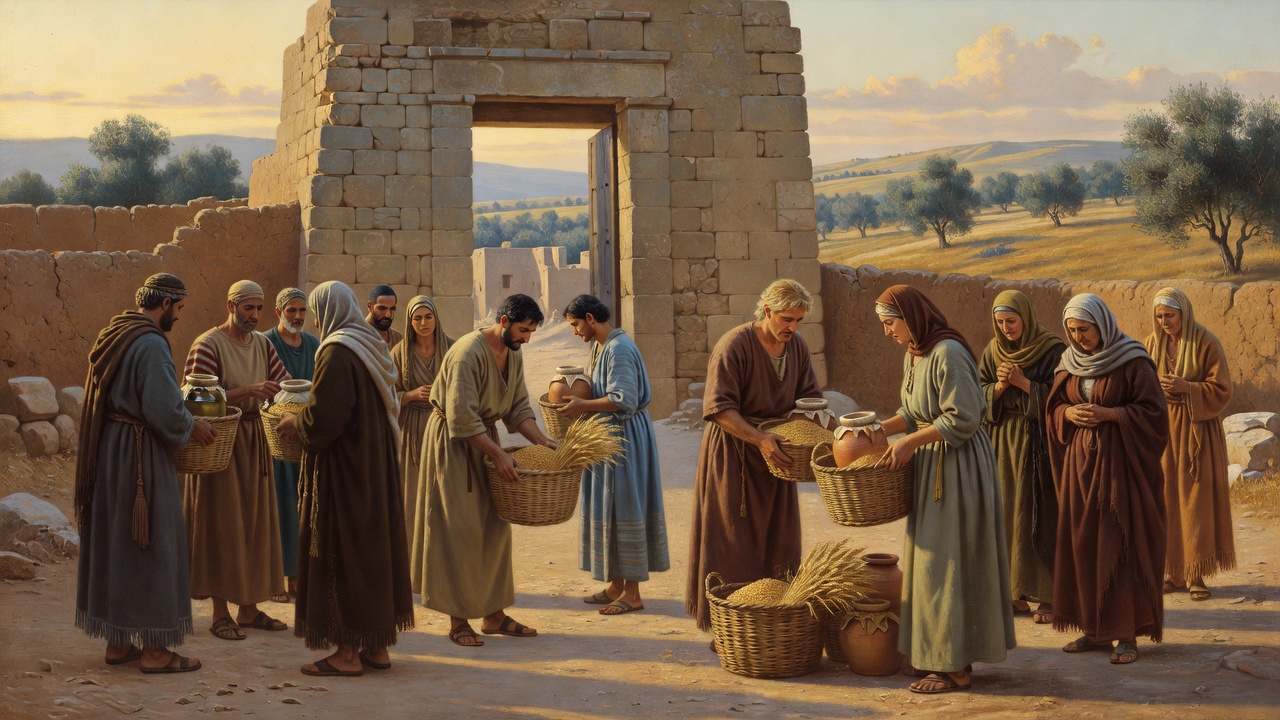
28Saning thumto boeng pacoengah, saning kruek na sin o ih hato thungah maeto loe, nangmacae ih vangpui thungah suem oh; 29to naah nangcae salakah taham katawn ai, qawk doeh toep ai Levinawk, angvinnawk, na vangpui thungah kaom ampa tawn ai kaminawk hoi lamhmainawk angzo o ueloe, zok kamhah ah caa o tih; to tiah na sak o nahaeloe, na Angraeng Sithaw mah na ban hoiah sak ih hmuennawk boih ah tahamhoihaih paek tih.
Did you know?
Dietary Regulations and Tithe Provisions
- The dietary laws in Deuteronomy 14 distinguish clean from unclean land animals based on two physical criteria: having completely divided hooves and chewing the cud. Aquatic creatures were considered clean for consumption only if they possessed both fins and scales.Sources: the Bible text itself
- To accommodate families who lived far from the designated sanctuary, the law allowed agricultural tithes to be converted into silver for travel. Upon arriving at the central sanctuary, worshippers could use the money to purchase festive food and drink to celebrate with their households.Sources: the Bible text itself
- Every third year, the annual tithe was gathered and stored within local towns rather than taken to the central sanctuary. This food was set aside to support community members without land inheritances, specifically Levites, resident foreigners, orphans, and widows.Sources: the Bible text itself
Notes written with AI assistance from open sources (Theographic Bible Metadata, CC BY-SA 4.0; Easton’s Bible Dictionary, public domain) and reviewed before publishing.
Credits and license for this translation
Asang Khongca Bible (2019)
The Holy Bible in the Asang Khongca language of Mynmar
Public Domain
Language: Asang Khongca (Chin, Eastern Khumi)
Dialect: Asaang Khongca
Published in Mynmar, which is not a signatory to international copyright treaties. Copyright may apply locally in Mynmar. Translator names withheld for security reasons.
2020-09-24
Source: http://ebible.org/cekak/ · eBible.org