Amos 6
Asang Khongca Bible (2019) · Tap a verse to see its cross-references.
Misong ah ohhaih
1Nangcae Zion ah phuhnaep kaminawk, Samaria mae angoep haih kaminawk, Israel kaminawk angzohhaih, acaeng kalah kaminawk pongah ka sang koek, tiah poekhaih tawn kaminawk, khosak na bing o! 2Kalneh ah caeh oh loe, khen oh; to hoiah thacak Hamath ah caeh oh; to pacoengah Philistia ah kaom Gath ah caeh o tathuk ah: nangcae loe to ah kaom siangpahrang ukhaih praenawk pongah na hoih o kue maw? To tih ai boeh loe nihcae ih ramri pongah nangcae ih ramri to len kue maw? 3Sethaih ni to na suek o sut moe, athii palonghaih to nang hnai o sak lat; 4tasaino hoiah sak ih iihkhun nuiah na ih o, anghnuthaih kasawk nuiah nang hnuk o moe, kahoih koek tuucaa hoi maitaw kathawk moi hoiah buh na caak o; 5David baktiah nangmacae hanah katoeng to na sak o moe, tamoi lok hoiah koeh baktiah laa to na sak o. 6Boengloeng koi mongah misurtui to na naek o, kahoih koek hmuihoih tui to nang nok o, Joseph pacaekthlaekhaih pongah palung na sae o ai. 7To pongah nangcae loe tamna ah caeh kaminawk thungah hmaloe koek kami ah na om o tih; nihcae ih kanawm poihsakhaih loe boeng tih boeh. 8Angraeng Sithaw angmah roe mah lokkamhaih to sak boeh, misatuh kaminawk ih Angraeng Sithaw mah, Jakob amoekhaih to ka panuet, anih angraenghaih ahmuennawk to ka hnukma; to pong ah vangpui hoi a thungah kaom hmuennawk boih minawk ban ah ka paek han, tiah thuih.
Pacaekthlaekhaih
9Imthung maeto ah kami hato anghmat o nahaeloe, nihcae doeh dueh o vop tih. 10Hmaiqoeng hanah kadueh qok to imthung hoi lak naah, nang hoi kaom kami imthung ah oh vop maw? tiah anih han lokdueng tih, to naah anih mah, Om ai boeh, tiah thui tih. To pacoengah anih mah, Om duem ah, aicae mah Angraeng ih ahmin thuih han om ai, tiah naa tih. 11Khenah, Angraeng mah lokpaek boeh, anih mah kalen im to phrae ueloe, tetta im doeh phrae boih tih. 12Thlung kathah nuiah hrang cawnh thai maw? Kami mah maitaw tae hoi thlung nuiah laikok atok thai maw? Nangcae mah toenghaih to kakhaa ahmuet ah nang coeng o sak moe, toenghaih athaih to na khaa o sak ving boeh. 13Nangcae loe tidoeh kaom ai, hmuen nuiah anghoehaih na tawnh o; aimacae tharahhaih rang hoiah na ai maw takiinawk to a lak o? tiah na thuih o. 14Khenah, misatuh kaminawk ih Angraeng Sithaw mah, Aw Israel imthung takoh, nangcae tuk hanah prae maeto ka pathawk han, nihcae mah nangcae to Hamath akunhaih hoi praezaek vapui karoek to na pacaekthlaek o tih, tiah thuih.
Did you know?
Complacency and Impending Exile
- Amos addresses the ruling elite who felt secure in both Zion, the fortified hill of Jerusalem, and Mount Samaria, the capital of the northern kingdom built on an elevated summit by King Omri. Despite the natural defenses and prestige of these cities, their leaders are warned that their ease and overconfidence would end in captivity.Sources: Zion · Samaria · the Bible text itself
- The prophet challenges Israel to look at renowned foreign cities such as Calneh near the Euphrates, Hamath on the Orontes in Upper Syria, and the Philistine stronghold of Gath. These neighboring powers were neither smaller nor less protected, yet they could not escape destruction.Sources: Calneh · Hamath · Gath · the Bible text itself
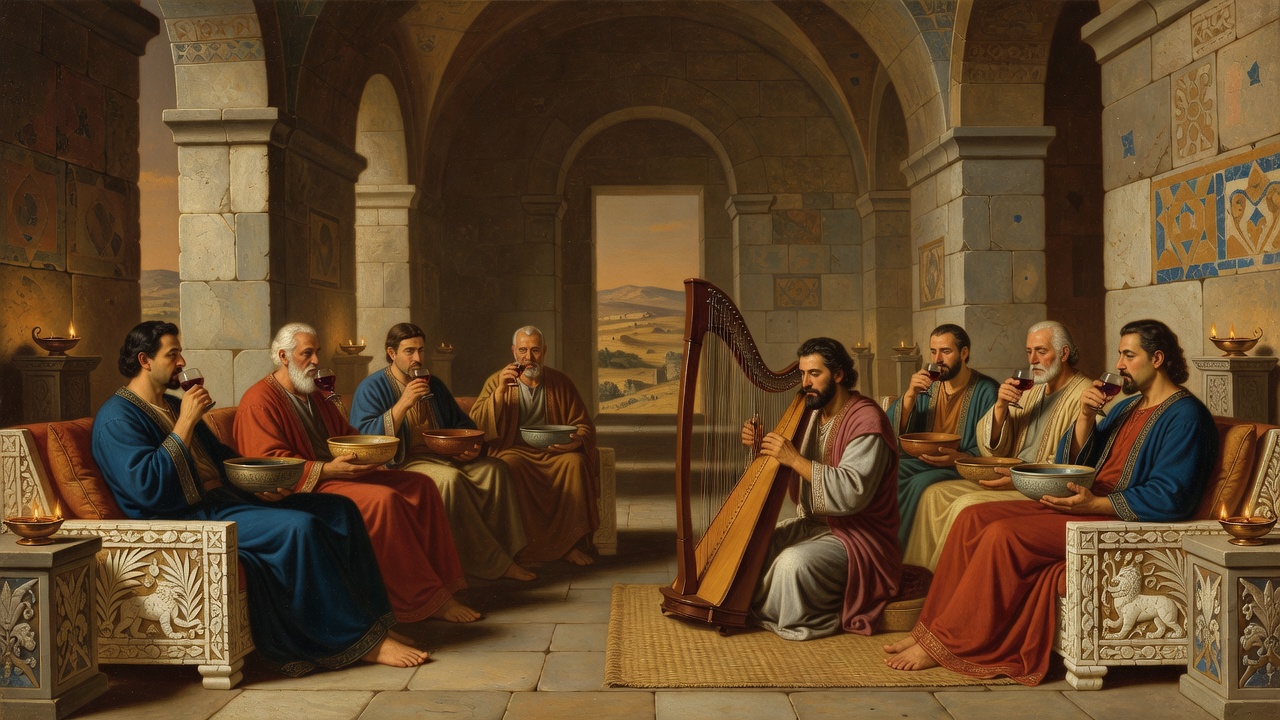
- Amos criticizes the aristocracy for indulging in extravagant banquets, resting on beds inlaid with ivory, and improvising music on harps like David, all while ignoring the impending ruin of Joseph. The name Joseph here designates the northern tribes of Israel, whose moral decay and social injustice were neglected by their wealthy leaders.Sources: David · Joseph (son of Jacob) · the Bible text itself
Notes written with AI assistance from open sources (Theographic Bible Metadata, CC BY-SA 4.0; Easton’s Bible Dictionary, public domain) and reviewed before publishing.
Places in this chapter
- Samaria · 32.276, 35.195 · verses 1, 8
- Zion · Today: Jerusalem · 31.777, 35.234 · verse 1
- Hamath · Today: Hama · 35.136, 36.750 · verse 2
- Philistia · 31.664, 34.546 · verse 2
Only places identified with high confidence are shown (90% or more according to the scholarly sources compiled by OpenBible). Period map: DARE (Digital Atlas of the Roman Empire), CC BY 4.0; modern map: © OpenStreetMap contributors; places: OpenBible.info (CC BY 4.0).
Credits and license for this translation
Asang Khongca Bible (2019)
The Holy Bible in the Asang Khongca language of Mynmar
Public Domain
Language: Asang Khongca (Chin, Eastern Khumi)
Dialect: Asaang Khongca
Published in Mynmar, which is not a signatory to international copyright treaties. Copyright may apply locally in Mynmar. Translator names withheld for security reasons.
2020-09-24
Source: http://ebible.org/cekak/ · eBible.org