Leviticus 1
Balaan nga Bibliya · Tap a verse to see its cross-references.
About this book
About Leviticus
- Easton's Bible Dictionary (1897) presents Leviticus as the third book of the Pentateuch and as the third book of Moses. The name, used in the Vulgate following the LXX, reflects the book's chief concern: the Levitical service.Sources: Easton: Leviticus
- Easton states that every ordinance in the book was delivered within one month, the first month of the second year after the Exodus. His entry on Sinai, also called Horeb, says the Hebrews reached that mountain district in the third month after the Exodus and remained encamped for about a whole year, and that the whole of Leviticus records what occurred there.Sources: Easton: Leviticus · Mount Sinai
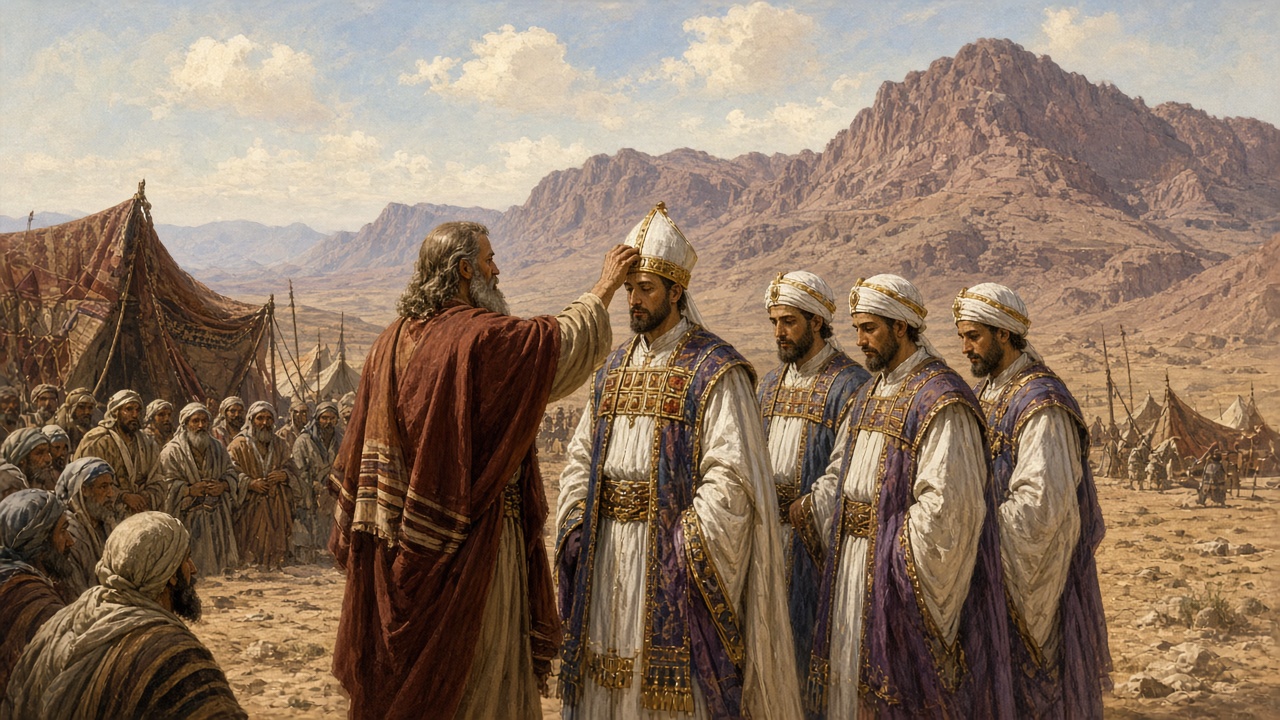
- Chapters 1–7 give laws for burnt offerings, meat offerings, and thank offerings, then for sin offerings and trespass offerings, and for the priests' duties in offering sacrifice. Chapters 8–10 recount the consecration of Aaron and his sons, Aaron's first offering for himself and the people, and the death of Nadab and Abihu, who were struck dead and buried outside the camp after offering strange, or common, fire not taken from the great brazen altar. Chapters 11–16 concern purity and the sacrifices and ordinances for putting impurity away.Sources: Easton: Leviticus · Nadab · Abihu
- Easton describes chapters 17–20 as laws marking the separation between Israel and other peoples. Further laws concern the priests' personal purity and their eating of holy things, offerings without blemish, and the due celebration of the great festivals in chapters 23 and 25. Promises and warnings about obedience follow, the book closes with a section on vows, and Easton notes that God is the direct speaker through almost the whole of it.Sources: Easton: Leviticus
- In the rites of chapter 16, one goat is associated with Azazel, which the Authorized Version renders scapegoat and the Revised Version leaves as Azazel. Easton reports that some Jewish interpreters take it as a place in the wilderness about twelve miles east of Jerusalem, while others take it as an evil spirit or even Satan, and he also notes a root meaning of separation.Sources: Azazel
Notes written with AI assistance from open sources (Theographic Bible Metadata, CC BY-SA 4.0; Easton’s Bible Dictionary, public domain) and reviewed before publishing.
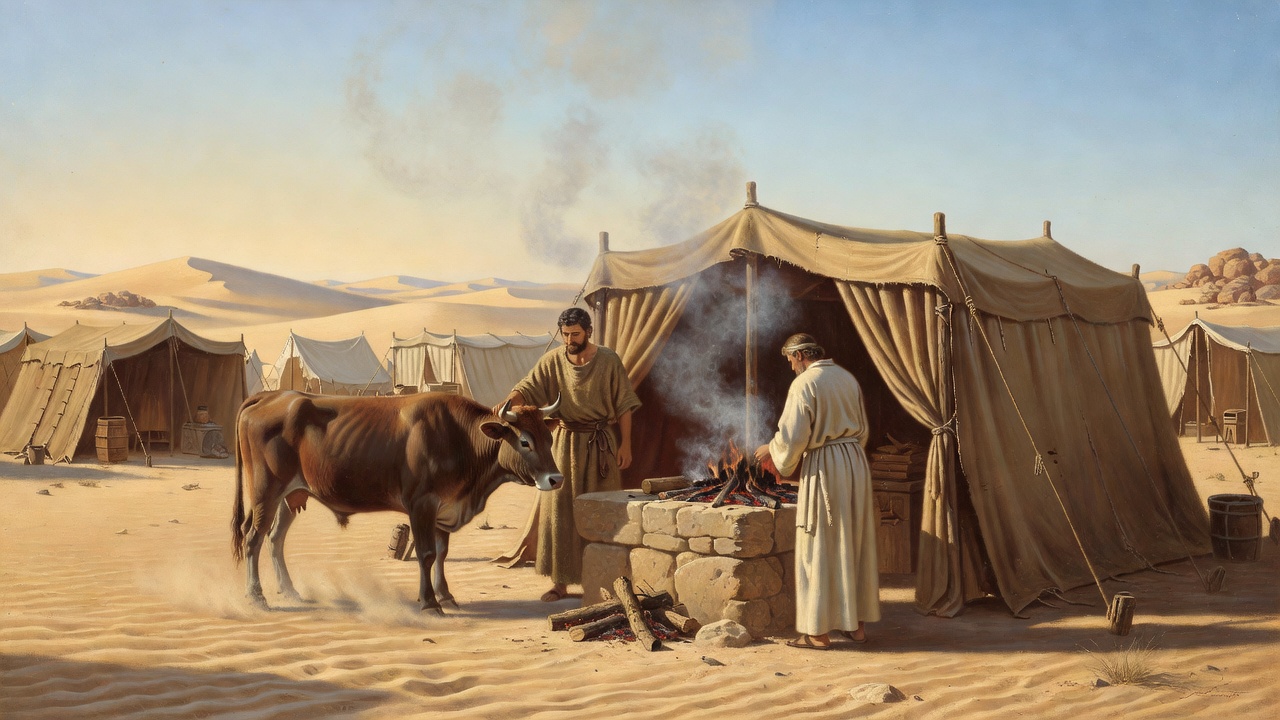
1Gitawag ni Yahweh si Moises ug nakigsulti kaniya gikan sa tolda nga tigomanan, nga nag-ingon, 2“Pagpakigsulti ngadto sa katawhan sa Israel ug sultihi sila, 'Si bisan kinsa diha kaninyo nga magdala ug halad ngadto kang Yahweh, dad-a ingon nga halad ang usa sa inyong mga mananap, gikan sa panon sa baka o gikan sa panon sa mga karnero. 3Kung gikan sa panon sa baka ang iyang halad sinunog, kinahanglan nga ihalad niya ang laking baka nga walay tatsa. Ihalad niya kini ngadto sa pultahan sa tolda nga tigomanan, aron nga dawaton kini ni Yahweh. 4Itapion niya ang iyang kamot ngadto sa ulo sa halad sinunog, ug unya dawaton kini isip puli alang kaniya aron sa pagpasaylo sa iyang sala. 5Unya kinahanglan nga ihawon niya ang torong baka sa atubangan ni Yahweh. Ihalad sa mga anak nga lalaki ni Aaron, nga mga pari ang dugo ug iwisikwisik kini ngadto sa halaran nga anaa sa pultahan sa tolda nga tigomanan. 6Unya kinahanglan nga panitan niya ang halad sinunog ug hiwahiwaon kini. 7Unya ang mga anak nga lalaki ni Aaron nga pari mao ang maghaling ngadto sa halaran ug magbutang ug kahoy aron nga sugnoran kini. 8Ang mga anak nga lalaki ni Aaron, nga mga pari, ang magpahimutang sa mga gihiwahiwa, nga ulo ug sa tambok ngadto sa gisugnoran nga kalayo sa halaran. 9Apan kinahanglan nga hinloan niya ug tubig ang ginhawaang bahin ug ang mga tiil niini. Unya sunogon sa pari ang tanan diha sa halaran ingon nga halad sinunog. Makahatag kini ug humot nga makapahimuot alang kanako; Mahimo kining halad alang kanako pinaagi sa kalayo. 10Kung ang iyang halad alang sa halad sinunog gikan sa panon sa mga mananap, usa sa mga karnero o usa sa mga kanding, kinahanglan ihalad niya ang laki nga walay tatsa. 11Ihawon niya kini ngadto sa amihanang bahin sa halaran sa atubangan ni Yahweh. Iwisikwisik sa mga anak nga lalaki ni Aaron, nga mga pari, ang dugo niini sa matag kilid sa halaran. 12Unya kinahanglan nga hiwahiwaon niya kini, ang ulo ug ang tambok, unya ipahimutang kini sa pari ngadto sa gisugnoran nga kalayo, nga anaa sa halaran, 13apan kinahanglan nga hinloan ug tubig ang ginhawaang bahin ug ang mga tiil niini. Unya ihalad sa pari ang tibuok nga halad, ug sunogon kini ngadto sa halaran. Mao kini ang halad sinunog, ug makahatag kini ug humot nga makapahimuot alang kang Yahweh; mahimo kining halad alang kaniya pinaagi sa kalayo. 14Kung ang iyang halad ngadto kang Yahweh mao ang halad sinunog nga mga langgam, nan kinahanglan nga magdala siya ug salampati o pispis nga tukmo ingon nga iyang halad. 15Kinahanglan nga dad-on kini sa pari ngadto sa halaran, lubagon ang ulo niini, ug sunogon kini ngadto sa halaran. Unya kinahanglan nga ipaagas ang dugo niini ngadto sa kilid sa halaran. 16Kinahanglan nga kuhaon niya ang ubol-ubol lakip na ang mga kinaon niini, ug iitsa kini ngadto sa kilid sa halaran sa sidlakang bahin, sa dapit diin gibutang ang abo. 17Kinahanglan nga pikason niya kini pinaagi sa pagbitad sa mga pako niini, apan kinahanglan nga dili niya kini tungaon sa duha ka bahin. Unya pagasunogon kini sa pari ngadto sa halaran, nga gisugnoran ug kahoy. Mahimo kining halad sinunog, ug makahatag kini ug humot nga makapahimuot alang kang Yahweh; mahimo kining halad alang kaniya pinaagi sa kalayo.
Did you know?
The Burnt Offering
- The instructions for the burnt offering accommodate different economic means by allowing offerings from the herd, the flock (sheep or goats), or birds (turtledoves or young pigeons). For livestock, the animal was required to be a male without blemish.Sources: the Bible text itself
- The ritual required a clear division of roles between the worshiper and the priests. The worshiper brought the animal, laid a hand on its head for atonement, slaughtered it, skinned it, and washed its inner parts, while the sons of Aaron sprinkled the blood and burned the entire offering on the altar.Sources: the Bible text itself · Aaron
Notes written with AI assistance from open sources (Theographic Bible Metadata, CC BY-SA 4.0; Easton’s Bible Dictionary, public domain) and reviewed before publishing.
Credits and license for this translation
Balaan nga Bibliya
Unlocked Literal Bible in the Cebuano language of the Republic of the Philippines
copyright © 2019 Door43 World Missions Community
Language: Cebuano
Translation by: Door43 World Missions Community
Contributor: Aida Espelita, Aira Amaran, Alma Mae Llorca, Amelina Emboc, Analine Tanog, Bernaly Mansiwagan, Carwelene Amper, Chally Lou Lacaran, Charity Guinita, Dan Bongcalas, Darryl Lasquite, Divine Grace Leparto, Elsie Lacubay, Ernilyn Balindong, Gem Lalaan, Helen Thundas, Jerome Resomadero, Jeryl Tumundog, Johnny Ray Lumawan, Loreto Socias Jr., Luthero Pulao Jr., Lymae Belle Ednalgan, Marilyn Lay-um, Mark Kevin Atab, Marth Anthony Atab, Miracle Marcojos, Molly, Noel Dalumatao, Rico Barrios, Ricky Mansabid, Romeo Lumasay, Roselle Lay-um, Steven Lubosan, Jeffrey, Johanna, Junette, Benny, and Racquel
This translation is made available to you under the terms of the
Creative Commons Attribution Share-Alike license 4.0.
You have permission to share and redistribute this Bible translation in any format and to make reasonable revisions and adaptations of this translation, provided that:
You include the above copyright and source information.
If you make any changes to the text, you must indicate that you did so in a way that makes it clear that the original licensor is not necessarily endorsing your changes.
If you redistribute this text, you must distribute your contributions under the same license as the original.
Pictures included with Scriptures and other documents on this site are licensed just for use with those Scriptures and documents.
For other uses, please contact the respective copyright owners.
Note that in addition to the rules above, revising and adapting God's Word involves a great responsibility to be true to God's Word. See Revelation 22:18-19.
2020-06-08
Source: http://ebible.org/cebulb/ · eBible.org