Deuteronomy 24
Biblica® Open Ang Pulong sa Dios · Tap a verse to see its cross-references.
1“Pananglit, nangasawa ang usa ka lalaki, ug sa kaulahian nawala ang iyang gana sa iyang asawa kay aduna siyay nadiskobrehan nga wala niya magustohi, unya naghimo siya ug kasulatan sa pagpakigbulag ug gihatag niya ngadto sa iyang asawa, ug gipapahawa niya kini sa iyang balay. 2Kon mamana pag-usab ang maong babaye, 3ug bulagan na usab siya sa iyang ikaduhang bana o mamatay ang iyang ikaduhang bana, 4dili na siya mahimong pangasaw-on pag-usab sa una niyang bana kay nahugawan na siya. Mangil-ad kini atubangan sa Ginoo. Kinahanglan nga dili ninyo himuon kining salaa didto sa yuta nga ginahatag kaninyo sa Ginoo nga inyong Dios ingon nga panulondon.
5“Kon ang usa ka tawo bag-o lang nakasal, kinahanglan nga dili siya paapilon sa gira o hatagan sa bisan unsang responsibilidad sa lungsod sulod sa usa ka tuig, aron makapundo siya sa iyang balay ug mahatagan niya ug kalipay ang iyang asawa.
6“Ayaw kuhaang garantiya sa utang ang galingan sa nangutang kanimo, kay sama lang nga gikuhaan mo siya sa iyang panginabuhian.
7“Kon madakpan ang usa ka tawo nga nangidnap sa iyang isigka-Israelinhon ug gihimo niya kining ulipon o iya kining gibaligya, kinahanglan nga patyon ang nangidnap. Kinahanglan nga wad-on ninyo kining daotang buhat diha kaninyo.
8“Kon bahin sa ngilngig nga sakit sa panit, sunda ninyo pag-ayo ang mga tulomanon nga ipahimo kaninyo sa mga pari nga kaliwat ni Levi. Tumana ninyo ang akong mga sugo kanila. 9Hinumdomi ninyo kon unsa ang gihimo sa Ginoo nga inyong Dios kang Miriam niadtong naglakaw pa kamo gikan sa Ehipto.
10“Kon magpahulam kamo ug bisan unsa sa inyong isigka-Israelinhon, ayaw kamo pagsulod sa ilang balay sa pagkuha sa bisan unsa nga iyang igarantiya. 11Paghulat lang kamo nga dad-on niya kini kanimo sa gawas. 12Kon kabos ang tawo ug ang iyang pang-ibabaw nga bisti ang iyang gigarantiya kaninyo, ayaw kini pabuntagi sa inyo. Iuli kini kaniya sa dili pa mosalop ang adlaw aron magamit niya kini sa pagkatulog, ug pasalamatan ka pa niya. Isipon kini sa Ginoo nga inyong Dios nga matarong nga buhat.
14“Ayaw bintahai ang kabos nga trabahante, Israelinhon man siya o langyaw nga nagpuyo sa usa sa inyong mga lungsod. 15Bayri siya sa iyang inadlawan nga sweldo sa dili pa mosalop ang adlaw tungod kay kabos siya ug nagsalig siya niini. Kay kon dili, basig modangop siya sa Ginoo ug isipon kini nga sala batok kanimo.
16“Ang mga ginikanan dili angayng patyon tungod sa sala sa ilang mga anak, o ang mga anak tungod sa sala sa ilang mga ginikanan; ang matag-usa patyon tungod sa iyang kaugalingong sala.
17“Ayaw ninyo hikawi sa hustisya ang mga ilo ug ang mga langyaw nga nagpuyo uban kaninyo. Ayaw ninyo kuhaa ang pang-ibabaw nga bisti sa balo ingon nga garantiya sa iyang utang. 18Hinumdomi ninyo nga mga ulipon kamo kaniadto sa Ehipto ug giluwas kamo sa Ginoo nga inyong Dios, mao nga gisugo ko kamo sa paghimo niini.
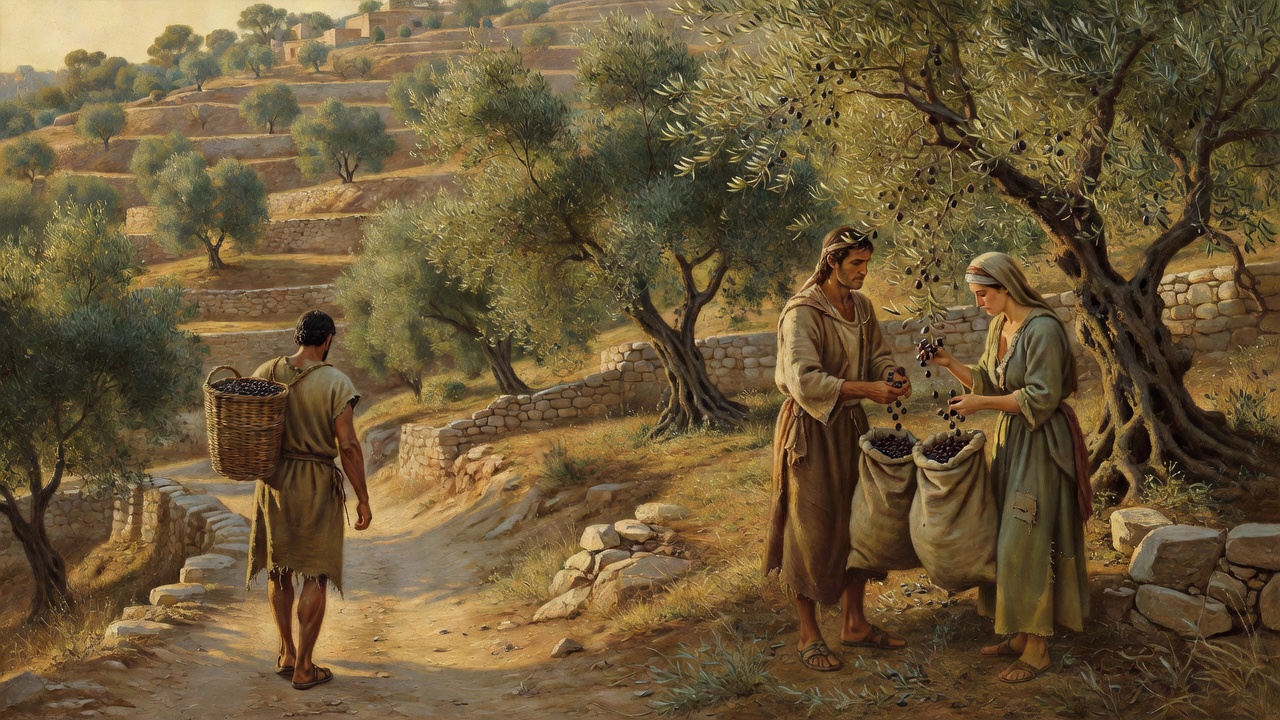
19“Kon nangani kamo ug adunay nabiyaan kamong usa ka bugkos nga ginalab sa uma, ayaw na ninyo kini baliki ug kuhaa. Biyai na lang kini alang sa mga langyaw, sa mga ilo, ug mga biyuda, aron panalanginan kamo sa Ginoo nga inyong Dios sa tanan ninyong buhaton. 20Kon mamupo kamo sa inyong mga olibo, ayaw na ninyo baliki ang nahibilin. Ibilin na lang kini alang sa mga langyaw, sa mga ilo, ug sa mga biyuda. 21Kon mamupo kamo sa inyong mga ubas, ayaw na ninyo baliki ang nahibilin. Ibilin na lang kini alang sa mga langyaw, sa mga ilo, ug sa mga biyuda. 22Hinumdomi ninyo nga mga ulipon kamo kaniadto sa Ehipto, mao kana nga gisugo ko kamo sa paghimo niini.
Did you know?
Laws of Compassion, Justice, and Social Protection
- Israelite harvesting laws required landowners to leave behind forgotten sheaves of grain, leftover olives, and grape gleanings for vulnerable groups: the resident foreigner, the orphan, and the widow. This social welfare system was grounded in the collective memory that the Israelites had once been oppressed slaves in Egypt.Sources: the Bible text itself · Egypt
- Debtors and hired workers were protected by explicit legal limits. Creditors were forbidden from entering a debtor's house to seize a pledge, taking essential millstones that provided a household's daily bread, or keeping an impoverished person's sleeping cloak past sunset, and day laborers had to be paid before nightfall.Sources: the Bible text itself
- When giving instructions concerning infectious skin diseases and the guidance of Levitical priests, the text points back to the affliction of Miriam, the sister of Moses and Aaron, during the wilderness journey following the Exodus from Egypt.Sources: the Bible text itself · Miriam · Egypt
Notes written with AI assistance from open sources (Theographic Bible Metadata, CC BY-SA 4.0; Easton’s Bible Dictionary, public domain) and reviewed before publishing.
Places in this chapter
Only places identified with high confidence are shown (90% or more according to the scholarly sources compiled by OpenBible). Period map: DARE (Digital Atlas of the Roman Empire), CC BY 4.0; modern map: © OpenStreetMap contributors; places: OpenBible.info (CC BY 4.0).
Credits and license for this translation
Biblica® Open Ang Pulong sa Dios
Cebuano: Biblica® Open Ang Pulong sa Dios (Bible)
copyright © 2009,2010,2014,2024 Biblica, Inc.
Language: Cebuano
Contributor: Biblica, Inc.
Biblica® Open Ang Pulong sa Dios™
Katungod sa pagmantala © 2009, 2010, 2014, 2024 Biblica, Inc.
Biblica® Open Cebuano Contemporary Bible™
Copyright © 2009, 2010, 2014, 2024 by Biblica, Inc.
Trademark Statement
“Biblica” narehistro kini nga tatak sa United States Patent ug Trademark Office sa Biblica, Inc.
Gigamit pinaagi sa pagtugot.
“Biblica” is a trademark registered in the United States Patent and Trademark Office by Biblica, Inc.
Used with permission.
Creative Commons license
This work is made available under the Creative Commons Attribution-ShareAlike 4.0 International License (CC BY-SA). To view a copy of this license, visit https://creativecommons.org/licenses/by-sa/4.0 or send a letter to Creative Commons, PO Box 1866, Mountain View, CA 94042, USA.
You have permission to copy and distribute this Work, as long as you do not change it and you keep the title as it is. Changing or translating this Work will create a derivative work. When you publish this derivative work, you must list what changes you have made where people can see them, such as on a website. You must also show where the original Work is from: “The original Work by its copyright holders is available for free at www.biblica.com and open.bible .”
Notice of copyright must appear on the title or copyright page of the work as follows:
Biblica® Open Ang Pulong sa Dios™
Katungod sa pagmantala © 2009, 2010, 2014, 2024 Biblica, Inc.
Biblica® Open Cebuano Contemporary Bible™
Copyright © 2009, 2010, 2014, 2024 by Biblica, Inc.
“Biblica” narehistro kini nga tatak sa United States Patent ug Trademark Office sa Biblica, Inc.
Gigamit pinaagi sa pagtugot.
“Biblica” is a trademark registered in the United States Patent and Trademark Office by Biblica, Inc.
Used with permission.
You must also make your derivative work available under the same license (CC BY-SA).
If you would like to notify Biblica, Inc. regarding your translation of this work, please contact us at https://open.bible/#feedback .
This translation is made available to you under the terms of the
Creative Commons Attribution Share-Alike license 4.0.
You have permission to share and redistribute this Bible translation in any format and to make reasonable revisions and adaptations of this translation, provided that:
You include the above copyright and source information.
If you make any changes to the text, you must indicate that you did so in a way that makes it clear that the original licensor is not necessarily endorsing your changes.
If you redistribute this text, you must distribute your contributions under the same license as the original.
Pictures included with Scriptures and other documents on this site are licensed just for use with those Scriptures and documents.
For other uses, please contact the respective copyright owners.
Note that in addition to the rules above, revising and adapting God's Word involves a great responsibility to be true to God's Word. See Revelation 22:18-19.
2025-04-30
Source: http://ebible.org/cebocb/ · eBible.org