Revelation 6
Dios ã jáap naáwát tólih · Tap a verse to see its cross-references.
Daác pinni quiítdih Oveja Wʉ̃ʉ́h ã jwíih watat
1Tʉ́ttimah, caán daác pinni quiítdih Dios ã jwíih néeh tewatjidih Oveja Wʉ̃ʉ́h ã watap be. Páant ã watat tʉ́ttimah, biíc dawá quíibna jʉmniboó, bʉ́dí énoh yáaat pah bóo “Ma jʉ̃ʉ́wʉ́”, ã niíj ejep be. 2Páant ã niíj ejat tʉ́ttimah, tʉ́i baabní caballodih wã enep be. Caán caballojih chʉ́ʉdni ñʉ́ʉpat tʉʉ bíbohnidih maáta ĩ dʉwát jʉ́dʉdih Dios ã wʉ̃hʉp be. Páant ã wʉ̃hat tʉ́ttimah, caánboó caandíh en jʉ̃ihnitdih míic mao yap yohodih ã bejep be.
Segundo ã néeh tewatjidih ã watat
3Tʉ́ttimah, Oveja Wʉ̃ʉ́h biíh néeh tewatjidih ã jwʉ́ʉb watap be, páant mʉntih. Páant ã watat tʉ́ttimah, biíh dawá quíibna jʉmni “Ma jʉ̃ʉ́wʉ́”, ã niíj ejep be. 4Páant ã niíj ejat tʉ́ttimah, biíh caballo tʉ́i dʉʉni ã jʉ̃ʉ́wʉ́chah, wã enep be. Caán dʉʉni caballojih chʉ́ʉdnidih nin baácdih moondíh míic mawat tʉ́ʉtat pínah wẽpatdih, bʉ́dí íibat naadíhbʉt Dios ã wʉ̃hʉp be.
Tercero ã néeh tewatjidih ã watat
5Tʉ́ttimah, chénedih wat péaniji biíhdih ã jwʉ́ʉb watap be, páant mʉntih. Páant ã watachah, biíh dawá quíibna jʉmni “Ma jʉ̃ʉ́wʉ́”, ã niíj ejep be. Páant ã niíj ejat tʉ́ttimah, biíh caballo einidih wã enep be. Caán einijih chʉ́ʉdni chodat ĩ jenah enatdih ã bíbohop be. 6Caandíh wã enechah, dawá quíibna jʉmnit cãtíh chʉ́ʉdniboó nin pah ã niijíp be: “Nʉʉgʉ́p láa biíc yeó jáap ĩ tewat jíibjĩh biíc kilobitjeh trigodih, tres kilosbitjeh cebadadih ĩ jéih jíib chãjbipna caá. Obohjeéhtih, chénat pahdih ĩ jéih jíib chãj bʉʉjácan niít. Trigo, cebadabʉt bainí jíib jʉmni yʉhna, bʉ́dí ã jíib jʉmbipna caá. Obohjeéhtih, jeémát chãjat yíi, jiwá iguíh mac biícdih páantjeh ã jʉmʉ naáh”, ã niijíp be.
Cuarto ã néeh tewatjidih ã watat
7Tʉ́ttimah, biíc peihcannidih wat péaniji biíhdih ã jwʉ́ʉb watap be, páant mʉntih. Páant ã watachah, péeni dawá quíibna jʉmni, “Ma jʉ̃ʉ́wʉ́”, ã niíj ejep be. 8Páant ã niíj ejat tʉ́ttimah, biíh caballo wʉnnitíh bácah pah jígohnidih wã enep be. Caanjíh chʉ́ʉdni “Wʉnat tʉ́ʉtni”, wʉ̃t jʉmni ã jʉmʉp be. Caán tʉ́ttimah jʉ̃óhni “Iiguípna bejat tʉ́ʉtni”, ã wʉ̃t jʉmʉp be. Pánihna, queétdih nin baácdih moondíh mao yohat wẽpat pínahdih Dios ã wʉ̃hʉp be. Míic mawat tʉ́ʉtnit, nʉʉgʉ́pjĩh wʉnat tʉ́ʉtnit, jiadih moón nʉñʉ́pwãdih tac behanit, tʉ́i daocá bʉʉgnítjeh cã́acwãdih Dios ã mao yohat tʉ́ʉtʉp be.
Quinto ã néeh tewatjidih ã watat
9Tʉ́ttimah, chénena míic ã néeh tewatjidih wat péaniji biíh biúhdih ã watap be, páant mʉntih. Páant ã watachah, Diosdih cáo wʉ̃h cáagat naa nʉ́mp Jesúíhwãdih ĩ maonit caolihjidih wã enep be. Dios naáwátdih naóhna, “Weém Jesúíh caá”, ĩ niijátji jíib queétdih ĩt mawap tajĩ. 10Diosdih nin pah queét ĩ niíj ejep be: “Maá, yéejat wihcanni, yeeatbʉt wihcanni, ma niiját pah yoobópdih chãjni caá. ¿Nin baácdih moón jwiítdih maonitjidih débólih tigaá ma peéh chãjbi?” ĩ niijíp be. 11Páant ĩ niijíchah joinít, Dios queétdih tʉ́i baabní yégueh chóodih wʉ̃hnit, nin pah ã niíj jepahap be: “Ñi choo jwʉ́hʉʉ́. Bita ñi déewã panihnit Jesúíhwã, ĩ mao yohnit pínah, yeéb tʉ́ini doonádih ñi naáwátji pah queétbʉt bohé jwʉhna caá ĩ chãjap. Yeebdíh ĩ mawatji pah queétdihbʉt ĩ mao beedáát pínah ã jʉdh jwʉhna caá. Pánihna, queétdih ĩ mawat pínah jã́tih, bainí ñi choo jwʉ́hʉʉ́”, ã niijíp be.
Sexto ã néeh tewatjidih ã watat
12Tʉ́ttimah, biícjĩh bóo téihya ã néeh tewatjidih wat péaniji, biíhdih ã watap be, páant mʉntih. Caandíh ã watachah, bʉ́dí baác méméat ã jʉmʉp be. Pánihichah, yeó ã dʉpʉ́áh bejep be. Widhbʉt meép panihni ã dʉʉah bejep be. 13Máa cã́ca máa quehedih ã boloh yoh jéena bojat pah cʉ́iwãbʉt ĩ yʉ́ʉg jéen bejep be. 14Pánihichah, jeábʉt ã bʉʉdáh bejep be. Nin baácboobʉ́t nihat jeená, nihat quewanabʉt ã tʉ́ʉt nʉʉmʉ́p be. 15Páant ã yapachah ennit, nin baácdih moón ĩ maáta jeé íit diítna ĩ jweí waadáp be. Soldadowã ĩ maáta, bʉ́dí bií dée bíbohnit, wẽpnit, nihat queétdih teo wʉ̃hnit, teo wʉ̃hnit nihcannitbʉt caanná míic ĩ jweí waadáp yʉh be. Bitabʉt jeé cãtíh ĩ jweyép be. 16Pánih jweinít, jap bóo jeenádih, jee dáhnadihbʉt nin pah ĩ niijíp be: “Jwiítdih ma jãh jʉ̃ʉ́wʉ́. Con Maáh chʉ́ʉdnidih, Oveja Wʉ̃ʉ́hdihbʉt bʉ́dí jwĩ ʉ́ʉmna caá. Pánihna, jwiítdih ma jãhaá, Oveja Wʉ̃ʉ́hdih jwĩ yap yohatji jíib ã peéh chãjcat pínah niijná. 17Caandíh yap yohnitdih ã peéh chãjat pínah yeó jáap wãát jʉmna caá. Caán ã peéh chãjat pínahdih ded pah jwĩ jéih jweicán niít”, ĩ niijíp be.
Did you know?
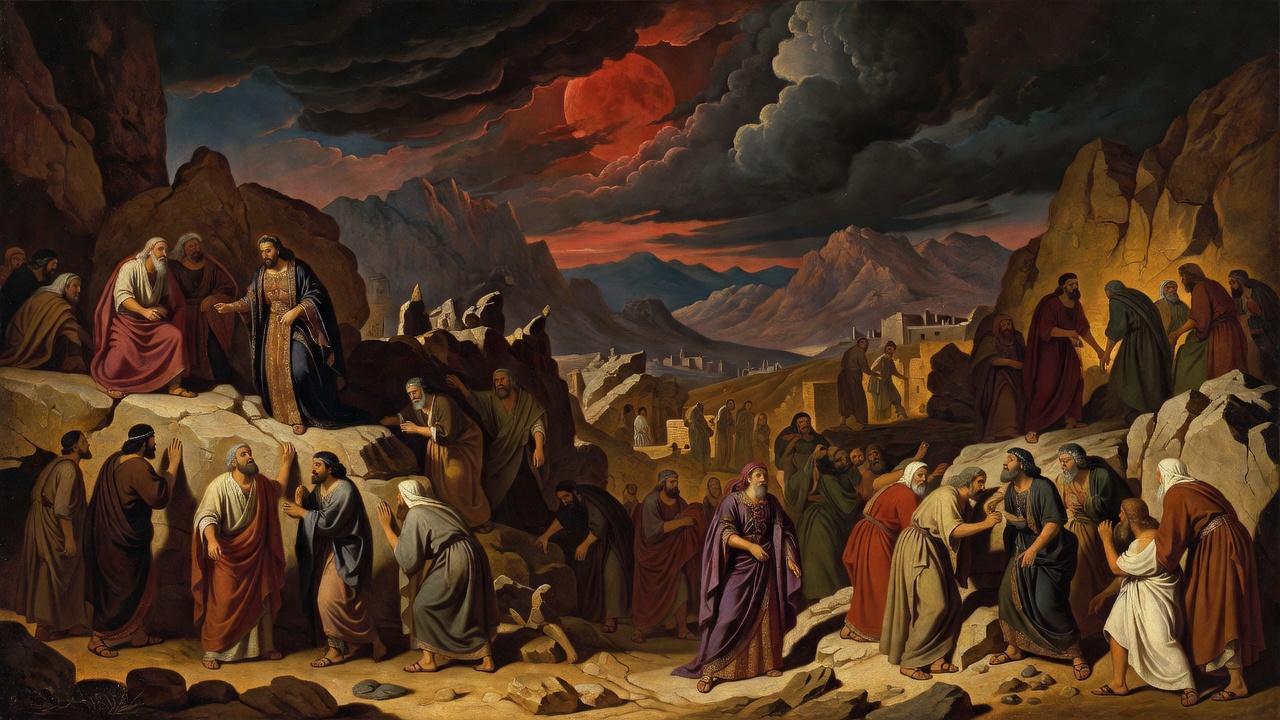
The Opening of the Six Seals
- The first four seals reveal four riders on white, bright red, black, and pale green horses, summoned one by one by the four living creatures. Each horseman brings a distinct affliction across the earth, ranging from conquest and the loss of peace to widespread famine, plague, and death.Sources: the Bible text itself
- The third horseman holds a pair of scales, accompanied by a proclamation setting the price of a quart of wheat or three quarts of barley at a denarius, reflecting severe inflation and food rationing while oil and wine are preserved.Sources: the Bible text itself
- When the fifth and sixth seals are opened, the focus shifts to the souls of slain believers waiting under the altar, followed by immense cosmic and earthly upheavals that lead people of every social station to hide in mountain caves.Sources: the Bible text itself
Notes written with AI assistance from open sources (Theographic Bible Metadata, CC BY-SA 4.0; Easton’s Bible Dictionary, public domain) and reviewed before publishing.
Credits and license for this translation
Dios ã jáap naáwát tólih
New Testament in Cacua
copyright © 2008 Wycliffe Bible Translators, Inc.
Language: Cacua
Translation by: Wycliffe Bible Translators, Inc.
Copyright Information
© 2008, Wycliffe Bible Translators, Inc. All rights reserved.
This translation text is made available to you under the
terms of the Creative Commons License: Attribution-Noncommercial-No Derivative Works.
( http://creativecommons.org/licenses/by-nc-nd/3.0/ )
In addition, you have permission to port the text to different file formats, as long as you
do not change any of the text or punctuation of the Bible.
You may share, copy, distribute, transmit, and extract portions
or quotations from this work, provided that you include the above copyright
information:
You must give Attribution to the work.
You do not sell this work for a profit.
You do not make any derivative works that change any of the actual words or punctuation of the Scriptures.
Permissions beyond the scope of this license may be
available if you contact
us with your request.
The New Testament
in Cacua
© 2008, Wycliffe Bible Translators, Inc. All rights reserved.
This translation is made available to you under the terms of the
Creative Commons Attribution-Noncommercial-No Derivatives license 4.0.
You may share and redistribute this Bible translation or extracts from it in any format, provided that:
You include the above copyright and source information.
You do not sell this work for a profit.
You do not change any of the words or punctuation of the Scriptures.
Pictures included with Scriptures and other documents on this site are licensed just for use with those Scriptures and documents.
For other uses, please contact the respective copyright owners.
2014-08-06
Source: http://ebible.org/cbv/ · eBible.org