Joshua 1
Candoshi-Shapra · Tap a verse to see its cross-references.
About this book
About Joshua
- Easton's Bible Dictionary (1897) explains Joshua's name as "Jehovah is his help" or "Jehovah the Saviour." He was the son of Nun, of the tribe of Ephraim, born in Egypt, and Moses' successor as leader of Israel; the wars of conquest he carried on are recorded in the book that bears his name. That entry does not name the book's author or give a date for its writing.Sources: Easton: Joshua · Joshua
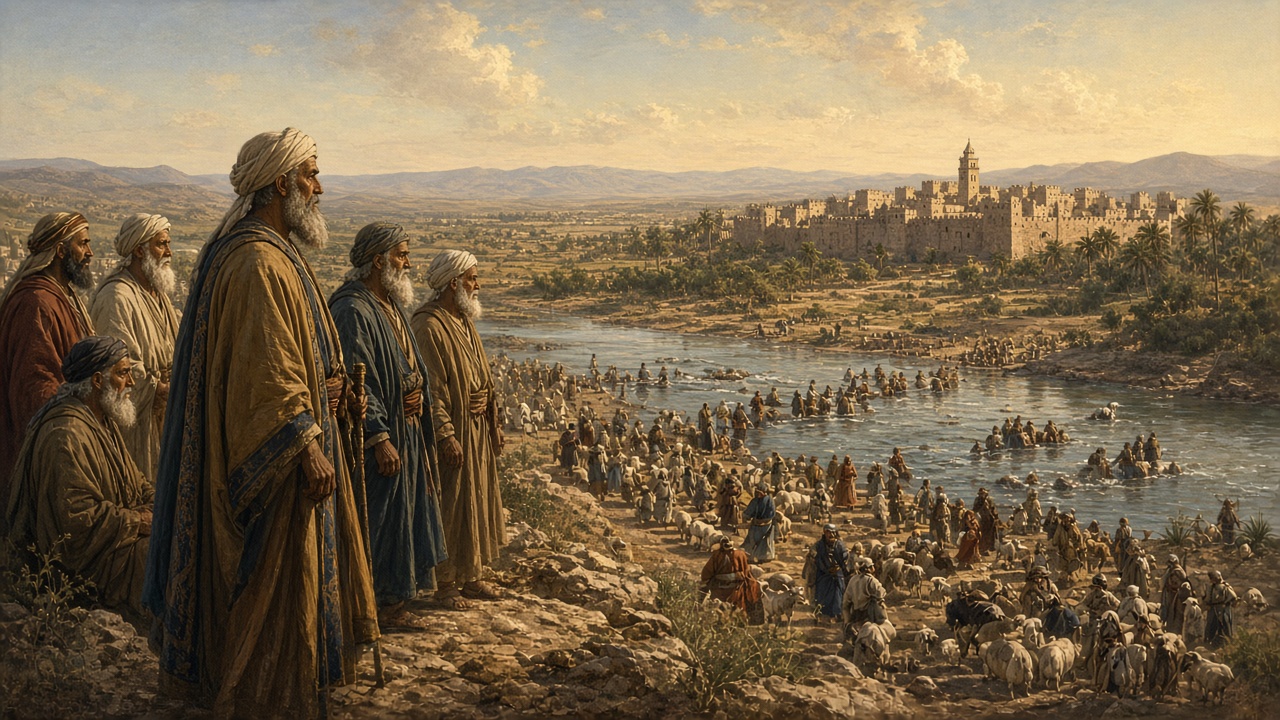
- When Joshua took command, the people were encamped at Shittim. They crossed the Jordan and camped at Gilgal, where, Easton says, he circumcised the people and kept the Passover. Jericho, a fortified city among palm trees about five miles west of the Jordan, is described as Canaan's strongest fortress and the key to western Palestine; Ai, east of Bethel, was the second Canaanite city taken, after an initial defeat.Sources: Easton: Joshua · Jericho · Ai
- Easton's Bible Dictionary (1897) says Joshua conquered six nations and thirty-one kings, then divided the land among the tribes, with Timnath-serah in Mount Ephraim assigned to himself. East of the Jordan, Gilead is described as a mountainous region held by the tribes of Gad and Reuben and the southern part of Manasseh.Sources: Easton: Joshua · Gilead
- Quoting Edersheim, the dictionary says Joshua's name was changed from Oshea, "help," to Jehoshua, "Jehovah is help," and notes that he is called Jesus in Acts 7:45 and Hebrews 4:8. It states that he died at the age of one hundred and ten, twenty-five years after crossing the Jordan, and was buried in his own city of Timnath-serah; of his father Nun, nothing more is recorded than that he was Joshua's father.Sources: Easton: Joshua · Joshua · Nun
- Before leading the conquest, Joshua commanded Israel's host against the Amalekites at Rephidim, served as Moses' minister, and was one of twelve sent to explore Canaan; only he and Caleb brought back an encouraging report. As Easton sketches the book, it runs from the crossing of the Jordan and the taking of Jericho through years of war to the division of the land and Joshua's last address.Sources: Easton: Joshua
Notes written with AI assistance from open sources (Theographic Bible Metadata, CC BY-SA 4.0; Easton’s Bible Dictionary, public domain) and reviewed before publishing.
Móysisarini tsiparamchu, Apanll Josueyaatssha kurakaam ínarangu anootssha na kamanchintspa
1Apanll wamachtash Móysisarini tsiparamchu, anush Apanll Nomarineetssha wip Josueyaa, Móysisarineetsi tiptsir tsiyatarangiya. 2Na nuwaana tputsiri Móysisarini tsipayanlliya. Ashiriya, na shiyshat kurakaam kinangcha, sheerush tputsiriptish Israelchichpat, arachich kung Ortagaa kiteerus naangtsa, anoo tsap siyaamsha panachintspa. 3Yuwaa sirútama Móysisarinee tsiyatarangi, anoo nuw k'keetsi tatsamchima. Siyaam tsapunis yap kungoo Ortaga arachich kitkachis anoo panachintspa. 4Siyaam tsapunis tashtap apusap mach Libanu anumand yaru, mus Eufratis kapungumash taaru, anumun panachintspa. Ichingaru Hititshuchpatari watsapuni, mishat maramuntam wing, yap zar puku ambi. 5Ashkachuri, shiyaa ayamtaati tputs anoo patatchazinllinaja. Nuw shiyaam ksuchinllpa. Móysisarineetsi kapung nuw ksutarangi, shiyaamsha ashtachtamana, Ayamtaati shiyaa kasacheezi. 6Itaru, shiysha kizpurtangcha. Shiyshat tputsireemish ichingaru Israelchicheem tsapu ipuseerush panangcha, Nuwshat yuwaa sirútama zitaminarneetsis tsiyatarangi anoo izuuru tatsamchima. 7Nuw shiyaa minumari kamachtakina. Shiyshat kizpurtangcha. Nuwaa tputsiri, Móysisarinee wamachtash kukoo tatsamooru payungcha. Amb ashkush wanasir naatsha, yuwaa kamachtarangu anoo tuminuchsha. 8Mishat, nuwaa kuki natstayarush, tputseem kamanimantar shingcha. Ichingaru zari, kaschiritam, psaantam kamaningcha. Shiyshat nuwaa kamachtashi yasamaamtamta. Amb ashkachinaareesha, uru shiy wanasir taachsha. 9Anoom nuw shiyaa kamachtakina. Putiteem kinayarush, tsiyatangcha; kizpurtangcha. Punirinllpa. Mishat, sambaytarinllpa. Watam nuw shiyaam kuraki Apanlli ksutarinawa. Yaptam naakish ambtam nuw uru shiyaa ksutchima, tárangiya.
Na kamaneena yuwaa Apanll Josueyaa kamachtarangu anootsi.
Josuey kurakaam kinakchu, Josueysha Rubenarinchichee tsiyatarangu anootsshat na kamanchintspa
10Josueysha yaktashchee ksutamapaneewa kamachtarangiya. 11Naayarus, ashpari yaktash tputsee kamachtashini, maachi ichingaru washunand, katungtsitam xanatamaama. Watam nimand tuchpash zar nee tsap shitungeeruch, kung Ortagaa arachichsha kiteeruch naatchiwa. Yap Apanll iyaam tsapoo panachu ambi. 12Tárangu, Josueyarini Rubenchichee, mishat Gadchicheetstam, mishat Manaseschicheetstam chawap tputsee tsiyatarangiya. 13Yuwari Apanll tiptsir Móysisarini tsiyatarangu anuri chinangtsa. Iyaa tsiyatku amaranga: Watatanda iyaam nee tsapu panayanllu, yuwash iy mapiyruni taachini anooma, táranguwa. 14Ashiri izanllis, ipartamtis, mishat chinitamtis nishuri Ortaganungiri kung, Móysisarini tsapoo panarangu anshuri kamingangtsa. Itaru, siyaana ichingarus kamuzanuris kizpurtayarus, k'chirpunguris yáyarus, Ortagaa kung kiteerus, yap zuwanllis naayaranllina amb tachitayarus, zuwanlleemis istashinints, nda tputs kasimaama. 15Tputs siyaa kasimaam zandkitaatiya, ashtaa kizpurtayarus, yuwaa Apanll tsapuneemis, Yuwash taachis anoom panachintspa, tárangu anoo, tpachindashinints, waani zuwanllis watsapuneemaritamsin yapana. Napa, siyaam tsapuneemis panarangu, anoo na payukis, uwshtisin ashtaptamsina. Ashiramchus, siyaana yusur tsapunpitamtis, yaptam Apanll tiptsir Móysisarini siyaam tsapunis kunguchich wing panarangu ambitam taakamchus kanaputssa, Josueyarini tárangiya.
16Uwshtisin, Zurkush átsha yuwaa kamachtakish anoo ngatkeezini. Ashiriya, yap átish amb naachinipa. 17Shiyaa kukish payukaniya yuwaa kamachtakish anootsi. Sirútama Móysisarinee kuk payutarini ashiritam shiyaatssha kukish ashkitamaniya. Mishat, Móysisarineemi Apanll kapung ksutarangu, shiyaamsha Apanll ashtachtampa atiniya. 18Mishat, wandaya yuwaa kamachtakish anoo, k'keetsish tputs nda payuksin, shiyshat tputsee pachayarus ksangtsa, tángcha. Mishat, nuw minumari atina shiyshat Josueyaa, kizpurtangcha; sambaytarinllpa, Rubenarinchich táranganaya.
Ashiriya, na kamaneena yuwaa Josueyarini Rubenarinchichee tsiyatarangu anootsi.
Did you know?
Joshua Assumes Leadership
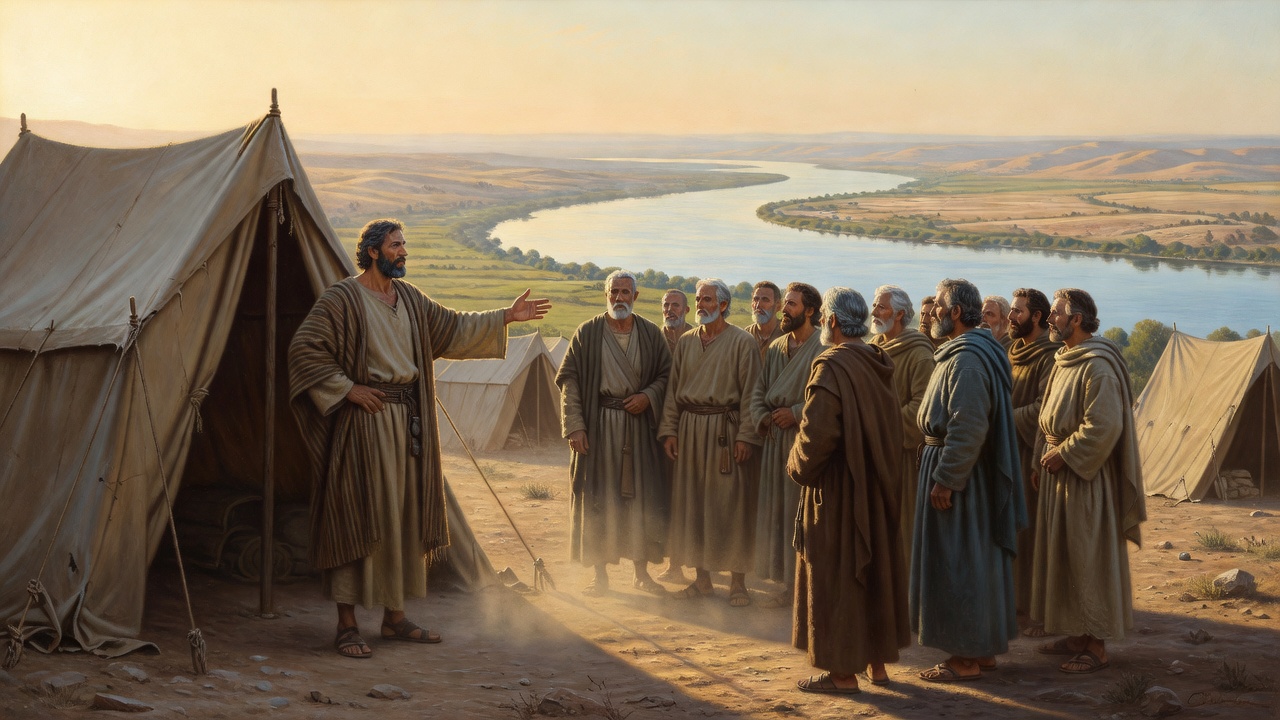
- Joshua, the son of Nun from the tribe of Ephraim, served as Moses' assistant and military commander before being commissioned to succeed him as leader of Israel. His name means "Jehovah is his help" or "Jehovah the Saviour."Sources: Joshua · the Bible text itself
- The territory outlined in God's commission to Joshua stretches from the southern wilderness and the Lebanon mountain range in the north to the Euphrates (called "the great river") in the east and the Mediterranean ("the Great Sea") to the west.Sources: the Bible text itself · Lebanon · Euphrates · Great Sea
- The tribes of Reuben, Gad, and the half-tribe of Manasseh had already received territory east of the Jordan River under Moses. However, their armed warriors were required to cross over ahead of the other tribes to assist them until the entire land was secured.Sources: the Bible text itself · Manasseh (son of Joseph)
Notes written with AI assistance from open sources (Theographic Bible Metadata, CC BY-SA 4.0; Easton’s Bible Dictionary, public domain) and reviewed before publishing.
Places in this chapter
- Jordan · Today: Jordan River · 31.761, 35.558 · verses 2, 11, 14, 15
- Euphrates · Today: Euphrates River · 31.004, 47.442 · verse 4
- Great Sea · Today: Mediterranean Sea · 31.805, 34.170 · verse 4
- Lebanon · 33.540, 35.584 · verse 4
- Negeb · 31.245, 34.841 · verse 4
- Syria · Today: Aram · 33.511, 36.306 · verse 4
Only places identified with high confidence are shown (90% or more according to the scholarly sources compiled by OpenBible). Period map: DARE (Digital Atlas of the Roman Empire), CC BY 4.0; modern map: © OpenStreetMap contributors; places: OpenBible.info (CC BY 4.0).
Credits and license for this translation
Candoshi-Shapra
New Testament in Candoshi-Shapra (PE:cbu:Candoshi-Shapra)
copyright © 2010 Wycliffe Bible Translators, Inc.
Language: Candoshi-Shapra
Translation by: Wycliffe Bible Translators, Inc.
Candoshi-Shapra
cbu
Peru
Copyright Information
© 2010, Wycliffe Bible Translators, Inc. All rights reserved.
This translation text is made available to you under the
terms of the Creative Commons License: Attribution-Noncommercial-No Derivative Works.
( http://creativecommons.org/licenses/by-nc-nd/3.0/ )
In addition, you have permission to port the text to different file formats, as long as you
do not change any of the text or punctuation of the Bible.
You may share, copy, distribute, transmit, and extract portions
or quotations from this work, provided that you include the above copyright
information:
You must give Attribution to the work.
You do not sell this work for a profit.
You do not make any derivative works that change any of the actual words or punctuation of the Scriptures.
Permissions beyond the scope of this license may be
available if you contact
us with your request.
The New Testament
in Candoshi-Shapra
© 2010, Wycliffe Bible Translators, Inc. All rights reserved.
This translation is made available to you under the terms of the
Creative Commons Attribution-Noncommercial-No Derivatives license 4.0.
You may share and redistribute this Bible translation or extracts from it in any format, provided that:
You include the above copyright and source information.
You do not sell this work for a profit.
You do not change any of the words or punctuation of the Scriptures.
Pictures included with Scriptures and other documents on this site are licensed just for use with those Scriptures and documents.
For other uses, please contact the respective copyright owners.
2025-04-30
Source: http://ebible.org/cbuNT/ · eBible.org