Exodus 2
Candoshi-Shapra · Tap a verse to see its cross-references.
Ashiriya, na kamanchintspa yuwaa Móysis nllurtarangu anootsi
1Yuwapur kurak yutarit waneerangu anpur, Leviyarinchich tputs waanpatatin kizaa yamarangiya. Kizsha mireerangu iparinarangiya. Wipaa napku, kizpur wanasir parangiya. Ashirucha, wanirsha wipaa kapung chinaku, tuchip tsup pishurangiya. Itaru, tambashitaranllu paru, pishumaam pinasaku, 3Ipareetsi kurak wasundurur pachatpa átu, tsumb ashiru wanasir tap wanind k'tayaru, pingartayaru, wanasir nda kung pshtumaam átu, tamireeru, anush wipaa wanasir pshtayaru, yuwash nduynduy tapuru anush, kung Nilomun wing tumuzirangiya. 4Ashiriya, nllursha wizar arapeetari xiyeeru, wayuchee ksutku, napanapaw ashirangu, 5zar pukamachsha, Ijiptoshuch kurak wip muchchurpa chumakatu, kungumun wing naantatssin, tsumb kungush muziztaru parangu, muchchureetssha: 6Tsumb yashini. Napani, tárangu, muchchursha tsumboo yáyashinu, panarangiya. Kuraksha wip anush tawateeru napku, nllur taaru tanutu anoo parangu, nayanirangiya. Nllur kiyung kachiyakparee. Israelchich wipaya, tárangiya. 7Ashiriya, nllursha wizar tapishuru, shitungta sheeshinu, kurakaa wip: Shiy nlluraa zandkeesha, nuw Israelchichee wizanur yamatama tumintamaama, tárangu, kuraksha wip: Ayu, ashiri yamashinsi, tárangiya. 8Nllursha wizar waniree yamayashinu, wanirsha kusarangu, 9anoo kuraksha wip: Nee nlluraa shiy nuwaam ipari yanungangcha. Wanasir ksutangcha. Yuwamand shiy wanasir ksutkachish anumand nuwsha shiyaam tuwapachinllpa, tárangiya. Ashiri nllursha wanir wipaa yamayaranllu, waanpeetam pang' machirangiya. 10Nllursha kanungaramchu, waniree mimir kasaramchu, kurakaamsha wip kizaam nlluraa panarangiya. Kuraksha wip nlluraa yamayaru, waanaatsi wip tamapari ashiru wanasir ksutarangiya. Ashirucha, kungushuch yamaama átu, nlluraatssha sur Móysis ísamarangiya.
Ashiri na kamaneena yuwaa Móysisi nllurtarangu anootsi.
Ashiriya, na kamanchintspa yuwaa Móysis Ijiptoshchee kurak pang' shitungeeranllu naatarangu anootsi
11Ashiriya, zapish Móysis wachinarangu, yap maachirit tarawaztakana amb pakatu naatarangu, anushsha kuseeru, yuwaa Ijiptoshuch tputs Israelchichee kiyung yachaksin, pzkookataru anoo parangiya. 12Móysissha anoo parangu, kapung tsiyantayaru, tputseem nllitaritaam napku, ndunar parangu, Ijiptoshcheetssha tputs pzkoompanee putayaru pacharangiya. Sheeru, mazacheetssha tawangeeru, anush mapeeranllu, ndunpaz tputsee pacharu ashiru, mapiyru, yusur waanpeetam kanapurangiya.
13Putamsha zar yusur Móysis wapitam maachiritap pakatu naantachu, anush yusur waanpatatshitisin waratatangatssin anoo parangu, ¿Mayaamsha saanpata warataksa? waratamapanee tárangu, 14waratamapansha: ¿Chaksha shiyaa kurakaam ínayara? ¿Antaati iy shiyaa kurakarini? Ngutpasha nuwaa pachapi átush átsha. Watam shiy sing zar Ijiptoshchee tputs pacharangshawa, tárangiya. Móysissha anoo mazinayaru, kapung punirangiya. Nuwaa tputs yasayanllpasinaya, yuwaa Ijiptoshchee tputs pacharangi anootsiya, tárangiya. 15Móysis wasina yasarangiya yuwaa Ijiptoshuch kurak waanamuna tsiyatssee mazinarangu anootsi. Ashiriya, kuraksha wasundururee: Móysisee pakchus, putayarus, pchangtsa, tárangiya. Móysissha anoo tsiyatsis mazinayaru, Madiyanap tsap arap suwarangiya.
Anushsha tsap kuseeramchu, kanusku, posonung kuxinxinawmach ashirangiya. 16Anushsha Madiyanash tsap apanllpan tputs sur Jetrona taarangiya. Wipsha kamasinanand tsimbun matayaru taarangu, uwshtisin waparee chin opeejaa ksutkusin, Pososh kung tipayaruni opeejaam yaseeni, táyarandsin, anush kusaranganaya. 17Tputssha nllitarit kamuzaw chinuzpantam ksutamapan anshutam kusarangsin, kizaatssha: Siy musápa. Iyma chineemani yaschinipa, táranganaya. Itaru, Móysissha kizaa nayanirangu, minoo tputsee: Nduni. Siy musámachi. Kizamasin chinoom yáspana, tárangu, uwsha kungoo pososh tipayaru, kizaam opeejarini yásirangiya. 18Ashirucha, kizshitisin anuritam mikeersin pangup kanapuranganaya. Anootssha wapar parangu, wipaa: ¿Tamasha mikeerus kanapeeshinsa? tárangu, 19wipsha: Ijiptoshuch tputs iyaa kapung istarangiya; kamuzpatatin: Siy musápa, tárangu, pososh kungoo tipayaru, iyaama opeejarini yásirangiya. Ashirucha, mikeeruni kanapeeshinini, waparee táranganaya.
20Ashiriya, waparsha: ¿Mayaamsha kamingeerandsa? Natu saantatam mikeerus yamashinints. Anpa washunand katungpani, tárangu, wipshitisin anuritam naayarusin, Móysisee yamayashinusin, yushindaranganaya. 21Ashiriya, Jetronsha Móysisee: Kayun taapani, tárangu, Móysissha anshuri taarataraw ashku, zapish Jetron wipaa Seforaa sur Móysiseem wizanll izuuru panarangiya. 22Anushsha kiz Móysis wip wanindarangiya. Anootssha nlluraa: Nuw arapichtana tputsi átu, sur Guersonaa ísamarangiya.
Ashiriya, na kamaneena yuwaa Móysis nllitaritapsha tsap naayaru taararangu anootsi.
Ashiriya, na kamanchintspa yuwaa Apanll Israelchichee kapung chinarangu anootsi
23Ashiriya, Móysis kapung ungsirish taar ashku, zapan masach tushiyramchu, Ijiptoshuch kurak tsiparangiya. Itaru ashiritaa, Israelchichee wandari muchchurtarangusin, kiyung kachiyaranganaya. Ijiptoshuch tputs kapung kiyung yacharanganaya. 24Ashiriya, Israelchich Apanllee mashkusin; Apaa, istanda, tanuksin, átangat ashiranganaya. Apanllsha anoo mazinayaru; Ashiri na siyaa istachintspa. Watam Aprahamarineetsi, misha Isaakarineetsi, misha Akoparineetsi, istachintspa, táranginawa. Ashiri na siyaa izuuru istachintspa, Apanll tárangiya.
Ashiriya, na kamaneena yuwaa Apanll Israelchichee kapung istachintspa, tárangu anootsi.
Did you know?
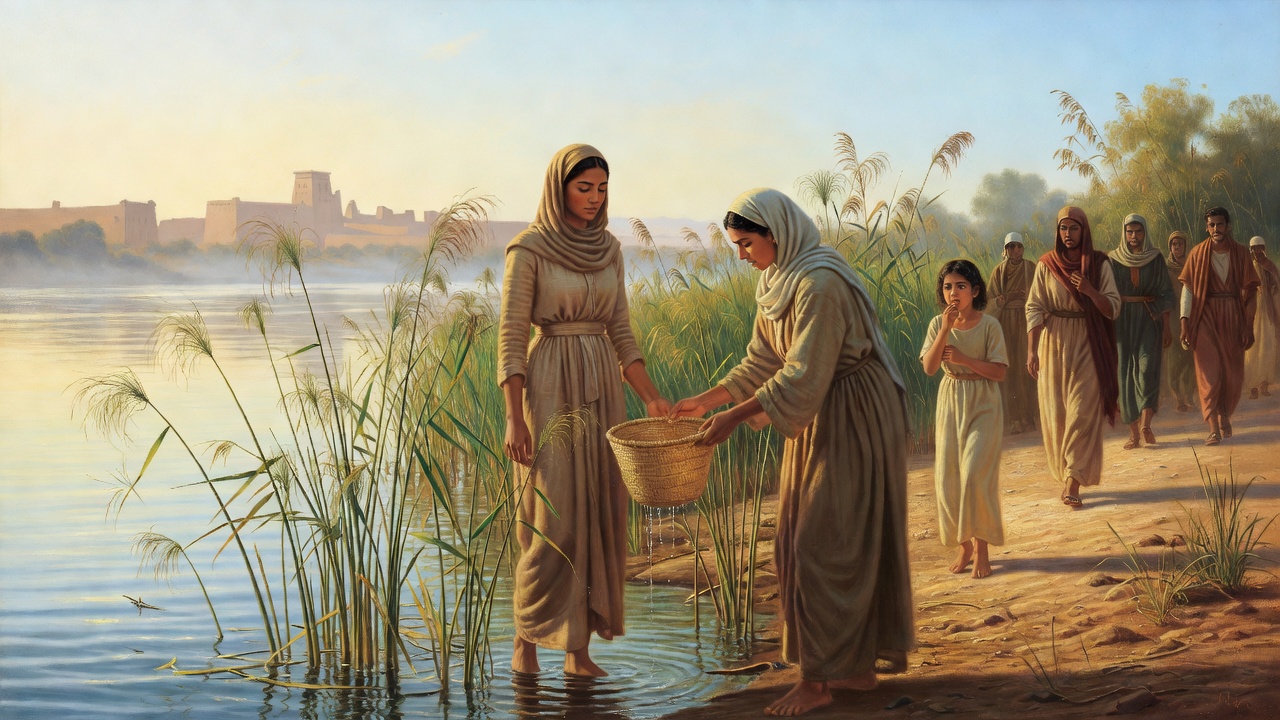
The birth and flight of Moses
- Pharaoh’s daughter named the child Moses, explaining that she had drawn him out of the water. Easton's Bible Dictionary (1897) links his name with “drawn,” or with the Egyptian word mesu, “son”—the element from which the dictionary also explains Rameses as “royal son.”Sources: the Bible text itself · Moses
- In Exodus 2 a daughter of Levi hides her son for three months, and Pharaoh’s daughter, finding him among the Nile reeds, recognizes a Hebrew child. Easton's Bible Dictionary (1897) links the Israelites’ affliction to “the new king who knew not Joseph,” long supposed to be Aahmes I, called Amosis by Josephus, though the dictionary, citing discoveries then recent, names Seti instead. Their hardship, it says, began after the Hyksos, masters of Egypt for some five centuries, were driven out and the old dynasty restored.Sources: the Bible text itself · Pharaoh
- After Pharaoh sought to kill him, Moses fled to Midian and sat down beside a well; he later married Zipporah, one of the seven daughters of the priest of Midian. The Midianites were nomadic Arabians descended from Midian, Abraham’s fourth son by Keturah, and they pastured their flocks in the Sinai peninsula and in the desert north of the Arabian peninsula. This chapter calls the priest Reuel, whom Easton's Bible Dictionary (1897) names Raguel, regarding that form as his personal name and Jethro—“excellency”—as an official title if the two are identified.Sources: the Bible text itself · Midian · Midian · Jethro
Notes written with AI assistance from open sources (Theographic Bible Metadata, CC BY-SA 4.0; Easton’s Bible Dictionary, public domain) and reviewed before publishing.
Places in this chapter
- Nile · Today: Nile River · 31.465, 30.367 · verses 3, 5
- Midian · 28.495, 35.012 · verses 15, 16
- Egypt · 30.129, 31.308 · verse 23
Only places identified with high confidence are shown (90% or more according to the scholarly sources compiled by OpenBible). Period map: DARE (Digital Atlas of the Roman Empire), CC BY 4.0; modern map: © OpenStreetMap contributors; places: OpenBible.info (CC BY 4.0).
Credits and license for this translation
Candoshi-Shapra
New Testament in Candoshi-Shapra (PE:cbu:Candoshi-Shapra)
copyright © 2010 Wycliffe Bible Translators, Inc.
Language: Candoshi-Shapra
Translation by: Wycliffe Bible Translators, Inc.
Candoshi-Shapra
cbu
Peru
Copyright Information
© 2010, Wycliffe Bible Translators, Inc. All rights reserved.
This translation text is made available to you under the
terms of the Creative Commons License: Attribution-Noncommercial-No Derivative Works.
( http://creativecommons.org/licenses/by-nc-nd/3.0/ )
In addition, you have permission to port the text to different file formats, as long as you
do not change any of the text or punctuation of the Bible.
You may share, copy, distribute, transmit, and extract portions
or quotations from this work, provided that you include the above copyright
information:
You must give Attribution to the work.
You do not sell this work for a profit.
You do not make any derivative works that change any of the actual words or punctuation of the Scriptures.
Permissions beyond the scope of this license may be
available if you contact
us with your request.
The New Testament
in Candoshi-Shapra
© 2010, Wycliffe Bible Translators, Inc. All rights reserved.
This translation is made available to you under the terms of the
Creative Commons Attribution-Noncommercial-No Derivatives license 4.0.
You may share and redistribute this Bible translation or extracts from it in any format, provided that:
You include the above copyright and source information.
You do not sell this work for a profit.
You do not change any of the words or punctuation of the Scriptures.
Pictures included with Scriptures and other documents on this site are licensed just for use with those Scriptures and documents.
For other uses, please contact the respective copyright owners.
2025-04-30
Source: http://ebible.org/cbuNT/ · eBible.org