Genesis 32
Yosë nanamën · Tap a verse to see its cross-references.
Cacopo, Isaorë' niquënanpiso'
1Napano piyapinënpitarë chachin pa'mantahuachina, Cacoponta piyapinënpitarë chachin paantarin. Paasoi Cacoposo', Yosë anquëninënpitari nacapirin. Inapita quënanahuaton, tapon: “Isopitaso', Yosë sontaronënpita huënton. Catahuainacoso marë' a'paimarinso',” tënin. Napoaton ina ro'tëso': Maanain, itërin.
3Naporo' Cacoposo', comisiono'sa Isao sha'huitacaiso marë' Sëir no'paquë a'parin: “Iya'hua huënantárin ni'ton, iso pochin nanan a'patiarinquën: ‘Ca iya masho huënantárahuë. Ma'sona quëma camaitëranso nisarahuë. Cato shonca pi'ipi api Napano ya'huërinquë yacapatërahuë. 5Na'a ohuacaro'sa', moraro'sa', ohuicaro'sa', inapita ya'huëtërinco. Piyapinëhuëpitanta', quëmapi'sa', sanapi'sa', ya'huëtërinco. Iso nanan, a'pataranquën noya ninicatë ya'huëantacaso marë' tënin,’ itoco',” itërin. Napotahuaton a'parin.
6Comisiono'sa huënantahuachinara, Cacopo sha'huitiintapi:
—Iya masho Isao nicapoi a'parancoi ni'toi, pa'nai. Huë'saranso nitotaton, inaora chachin nacapiinquënso marë' huë'sarin. Catapini pasa quëmapi'sari imaquiarin, itiipi. 7Ina natanahuaton, Cacoposo pa'pi pa'yanin. Pa'yanaton yonquirárin. Yonquirárin quëran, piyapinënpita, ohuicanënpita, ohuacanënpita, camiyonënpita, inapita cato huënton acorin. “Iya mashori, a'na huënton ahuëhuachina', a'na huëntonso ta'ararin,” ta'ton naporin.
9Ina quëran iin të'huataton, iso pochin Yosë nontërin: “Sinioro, quëmaso Yosënquën. Tata masho Apraan chinotërinquën. Tata Isaconta chinotërinquën. Quëma sha'huitëranco ni'ton, ya'huërahuëquë huë'sarahuë. Quëmopinëhuëpita ya'huërinquë huë'sarahuë. Naporahuaton: ‘Ca nohuanton noya pa'saran,’ itëranco. 10Tëhuënchachin co noyacohuë' ni'to, co nosoroancoso' ya'huërinhuë'. Co no'tëquënáchin catahuaancoso ya'huëpirinhuë'. Iráca ya'huërahuë quëran pipipo, Cortaniiquë pëntoitërahuë. Naporo' co ma'sha tëranta quëparahuë. Pitananëhuëro'coáchin pa'nahuë. Napopirahuë', iporaso' cato huënton pochin hua'anëntërahuë. 11¡Nosoroatonco Sinioro iya masho Isao quëran, nicha'ëco! Nani huë'sarin ni'ton, ahuërahuatonco, sa'ahuëpita, hui'nahuëpitarë'co chachin niquitohuachinco. 12Nani quëma chachin, catahuancoso marë' a'ninquëchin sha'huitëranco. Naporahuaton, shihuëpitanta caquëran pipipisopita, inotëra'huaya pochin na'acaiso' sha'huitëranco. Marë yonsanquë inotërahuaya ya'huërinso', co pichicasohuë'. Ina pochin na'acaiso' nani sha'huitëranco,” itërin.
13Naporo tashi inaquë Cacopo huë'ërin. Tahuëririnquë capayatahuaton, ya'cariya ya'huërinsopita quëran, pëtahuaro'sa huayonin. Iin masho Isao nicanacaso marë' huayonin: 14Cato pasa chipo sanapi, cato shonca chipo, cato pasa ohuica, cato shonca carniro, cara shonca camiyo paya nasha huaipiso hua'huinpitarë chachin, catapini shonca ohuaca', shonca toroa'hua, cato shonca mora sanapi nininso', shonca mora quëmapi, inapita.
16Inapita huayonahuaton, piyapinënpita quëtërin a'na huënton a'na huënton quëpacaiso marë'. Co'huara pa'shátërasoihuë', ma'sona nicacaisonta sha'huitërin:
—Canpitaso quëchitoco'. A'na huënton'ton pa'in. Amasha aquëmiachin nipachin a'na ya'huërë', paanta'in. Ama napopináchin pacosohuë', itërin. 17Quëchinamën huënton quëpana'pi sha'huitërin:
—Iya masho Isao nacapiatënquën natanpachinquën: “¿Inta quëmaso' hua'anën? ¿Intohuata pa'saran? ¿Inquënta pë'tahuaro'sa quëpaaranso'?” itohuachinquën, quëmari iso pochin sha'huitëquë': “Isopita pë'tahuaro'saso', quëma marë' quësarahuë. Cacopo a'patiarinquën. Inaso', quëma piyapinën pochin cancantërin. Nani inanta piquëran huë'sarin,” itëquë', itërin. 19A'napita huënton quëpana'piro'santa', sha'huitërin:
—Canpitanta iya masho Isao quënanpatama', inachachin sha'huitoco'. 20Nani sha'huitohuatama', napotaantaco': “Inaora chachinso', piquëran huë'sarin,” itoco', itërin.
Isopochin yonquiaton Cacopo naporin: “Isopita pë'tahuaro'sa quëtato no'huirincoso asanoarahuë. Ina piquëran caora chachin ni'sarahuë. Tapona inapotërahuëso marë' inanta noya nontaantarinco,” tënin yonquinënquë. 21Inapoaton Isao quëtacaso'ton, aquëchitërin. Inaoraso nipirinhuë', huë'ëcaso marë' ya'huëarinquëranchin quëparitërin.
Cacopo anquënirë nipanirinso'
22Napoaponahuë', naporo tashi chachin co'huara huë'ëshátërasoihuë', Cacoposo' huanirin. Huanirahuaton, cato sa'inpita, cato cosonanënpita, inapita ayontonin. Shonca a'na hui'ninpitanta inaquë chachin ayontonin. Ayontonahuaton Capocoi' pëntoinantaquëchin, apëntoitërin. Ya'ipi pë'tahuanënpita, ya'ipi ma'shanënpita, inapitarë chachin aquëtëran a'parin.
24Cacoposo' inaora quëparitohuachina, a'nara quëmapi ya'norin. Inarë tahuërianpitaquë huarë' nohuantaso' nipanipi. 25Napoaponahuë quëmapi ya'norinsoso', co Cacopo minsëcaso nanitërinhuë'. Co nanitatonhuë', Cacopo tonaransën, ahuëtërin. Catantën nipaquëtërintaquëchin ahuërin ni'ton, notohuëtërin. Nipanisoi napotërin. 26Quëmapi ya'norinsoso', Cacopo itapon:
—A'poco huachi, nani tahuëririarin, itërin.
—Co'so' noya ya'huëca'huaso marë' sha'huitohuatancohuë', co a'poaranquënhuë', itërin inarinta'.
27—¿Ma'ninquënta quëmaso'? itaantarin quëmapiri.
—Cacopo itërinaco, taantarin inanta'. 28Naporo' ina quëmapiriso' itapon:
—Co huachi Cacopo itarinënhuë'. Ipora quëran huarë' Israiro itarinën. Yosë chinitëran, piyapi'santa chinitëran. Chinitaton canatëran ni'ton, ina pochin nohuitarinën, itërin.
29—Iporaso' quëmanta' nininën sha'huitoco, itërin Cacopori. Napotopirinhuë', inariso itapon:
—Co quëmaso' nininëhuë natanancoso ya'huërinhuë', itërin. Ina quëran inaquë chachin Cacopo noya ya'huëcaso marë' sha'huitërin. 30Napoaton Cacoposo' ina ro'të aninihuanin: “Pinoiro,” itërin. “Isëquë chachin, Yosë nirayarahuë. Ina niponahuë' co chiminahuë',” ta'ton, ina pochin ina ro'të nohuitërin.
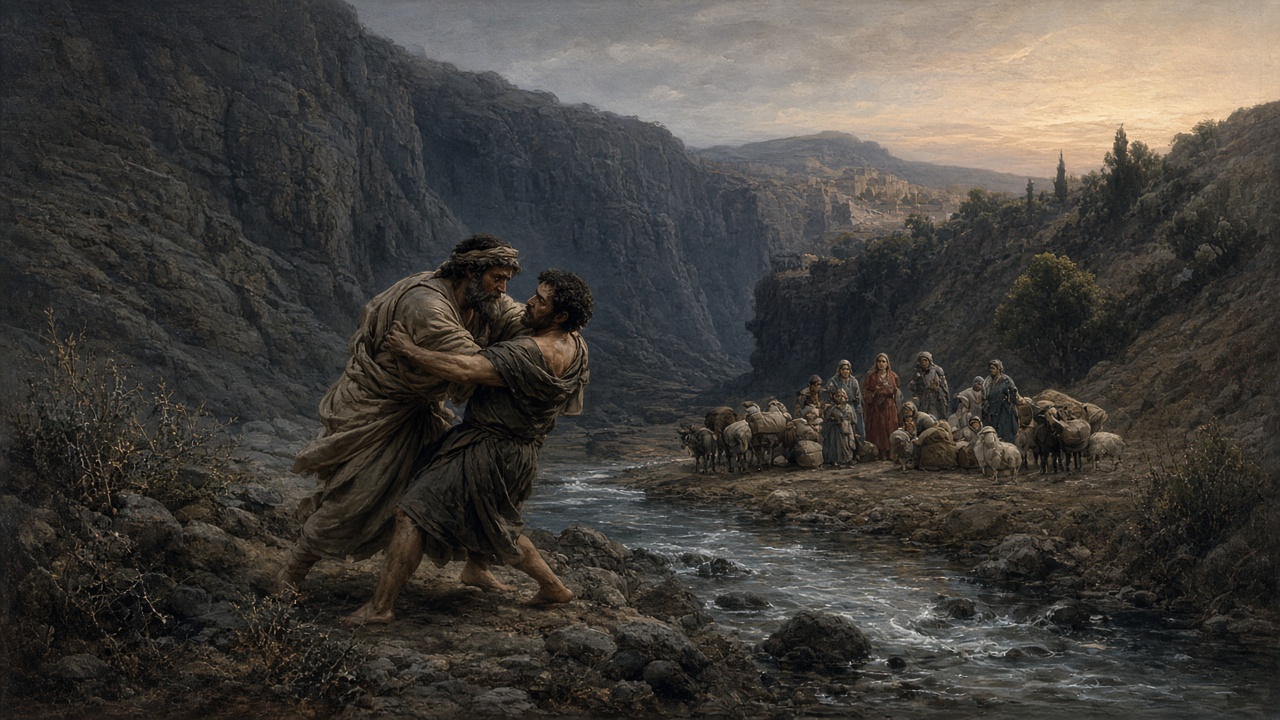
31Pi'i pipiriahuaso', Pinoiro quëran huë'sarin huachi. Catantëntaquëchin, tonaransë notohuëtërin ni'ton, sonpariarin. 32Napoaton iso quirica ninshitasoco huarënta Israiro shinpitaso', ma'sharo'sa catantënquë pancarin ipatë ya'huëtërinso', co ca'pihuë'. Inaquë Cacopo ahuëpi ni'ton, co ca'pihuë'.
Did you know?
At the Jabbok, on the Way to Esau
- Mahanaim means “two camps.” Jacob gave that name to the place near the Jabbok, beyond the Jordan, when the angels of God met him and he said, “This is the camp of God.” There he also divided his people, flocks, herds, and camels into two camps, hoping one might escape if Esau attacked the other.Sources: Mahanaim · the Bible text itself
- The Jabbok, whose name is explained as “a pouring out, or a wrestling,” is a stream east of the Jordan. It joins the Jordan about midway between the Sea of Galilee and the Dead Sea, after a course of about 65 miles through a wild, deep ravine. At its ford Jacob sent his two wives, two maidservants, eleven sons, and all he owned across, then remained alone and wrestled with a man until daybreak.Sources: Jabbok · the Bible text itself
- Jacob sent messengers to Esau in the land of Seir, the country of Edom, calling him lord and himself a servant. Seir is a mountainous region along the east side of the Arabah, from the southeastern end of the Dead Sea toward Akabah, the eastern branch of the Red Sea; the Edomites occupied it, and it was allotted to Esau’s descendants. Esau, the firstborn twin and a hunter, had sold his birthright for red lentil stew and was also called Edom, “red,” while Jacob—whose name means “one who follows on another’s heels,” or “supplanter”—had conspired with his mother to deceive Isaac.Sources: the Bible text itself · Seir · Esau (Edom) · Jacob (Israel)
Notes written with AI assistance from open sources (Theographic Bible Metadata, CC BY-SA 4.0; Easton’s Bible Dictionary, public domain) and reviewed before publishing.
Places in this chapter
- Edom · 30.746, 35.604 · verse 3
- Jordan · Today: Jordan River · 31.761, 35.558 · verse 10
- Jabbok · Today: Zarqa River · 32.115, 35.543 · verse 22
Only places identified with high confidence are shown (90% or more according to the scholarly sources compiled by OpenBible). Period map: DARE (Digital Atlas of the Roman Empire), CC BY 4.0; modern map: © OpenStreetMap contributors; places: OpenBible.info (CC BY 4.0).
Credits and license for this translation
Yosë nanamën
New Testament in Chayahuita (PE:cbt:Chayahuita)
copyright © 2011 Wycliffe Bible Translators, Inc.
Language: Chayahuita
Translation by: Wycliffe Bible Translators, Inc.
Chayahuita
cbt
Peru
Copyright Information
© 2011, Wycliffe Bible Translators, Inc. All rights reserved.
This translation text is made available to you under the
terms of the Creative Commons License: Attribution-Noncommercial-No Derivative Works.
( http://creativecommons.org/licenses/by-nc-nd/3.0/ )
In addition, you have permission to port the text to different file formats, as long as you
do not change any of the text or punctuation of the Bible.
You may share, copy, distribute, transmit, and extract portions
or quotations from this work, provided that you include the above copyright
information:
You must give Attribution to the work.
You do not sell this work for a profit.
You do not make any derivative works that change any of the actual words or punctuation of the Scriptures.
Permissions beyond the scope of this license may be
available if you contact
us with your request.
The New Testament
in Chayahuita
© 2011, Wycliffe Bible Translators, Inc. All rights reserved.
This translation is made available to you under the terms of the
Creative Commons Attribution-Noncommercial-No Derivatives license 4.0.
You may share and redistribute this Bible translation or extracts from it in any format, provided that:
You include the above copyright and source information.
You do not sell this work for a profit.
You do not change any of the words or punctuation of the Scriptures.
Pictures included with Scriptures and other documents on this site are licensed just for use with those Scriptures and documents.
For other uses, please contact the respective copyright owners.
2014-04-22
Source: http://ebible.org/cbtNTpo/ · eBible.org