Genesis 28
Yosë nanamën · Tap a verse to see its cross-references.
1Nipicari napotohuachina, Isacori, Cacopo amatahuaton, noya nontërin. Co no'huirinhuë'. Noya ya'huëcaso marë' sha'huitaton itapon: “Yosë noya catahuainquën conpa,” itërin. Napotahuaton pënënin: “Ama iso Canaan no'paquë sanapi máquësohuë'. 2Patan-aran parti tëhuënchinso' paquë'. Tata masho Pitoiro ya'huërinquë pa'sahuaton, api Napano hui'ninpita a'nara maquë'. 3Yosë ya'ipi nanitaparinso' catahuainquën. Na'a hui'nanpita quëchinquën. Quëmá quëran na'a naciono'sa pipicaso marë' inapochinquën. 4Yosëri Apraan noya ya'huëcaso marë' sha'huitërinso chachin, quëmanta quëchinquën. Quëma shiparinpitanta', inachachin quëchin. Iso no'pa' ipora yacapatërëhuaso', quëchinquëma'. Yosëri nani Apraan sha'huitërin ni'ton, quëtarinquëma',” itërin. 5Ina pochin Isacori Patan-aran parti Cacopo a'parin. Cacoposo' pa'sahuaton, Napano ya'huërinquë canconin. Nani sha'huirahuëso chachin inaso', Pitoiro hui'nin. Pitoiroso' Aran piyapi. Napanoso', Nipica yo'in miáchin. Nipicanta', Cacopo, Isao, inapita a'shina'.
Isao sa'antarinso'
6Isaoso', pa'pini, Cacopo noya ya'huëcaso marë' sha'huitërinso' ni'nin. Patan-aranquë sa'acaso marë' a'parinsonta', ni'nin. Naporahuaton, pa'pini noya ya'huëcaso marë' sha'huitapon pochin: “Ama Canaan sanapi máquësohuë',” itërinsonta natanin. 7Pa'pini, a'shini, sha'huitërinso chachin Cacoponta', Patan-aranquë pa'ninso' ni'nin. 8Pa'pin inaporin ni'ton, Isaoso': “Canaan sanapiso', co tatahuë costarinhuë',” tënin. 9Napoaton, Ismairo nicapon pa'nin. Inaso', Apraan hui'nin. Inatohua paaton, Ismairo hui'nin Maarata itopiso' maantarin. Inaso', Nipayo oshia'huain. Nani cato Canaan sanapi macaponahuë', inanta maantarin.
Yosëri Cacopo ya'notërinso'
10Cacopo Piirsipa quëran pipirahuaton, Aran ira pa'tërin. I'huatohuachina, quëparitërin huë'ëton pacacaso marë'. A'nara na'pi masahuaton, motoantacaso marë' acorin. Ina motoantaton huë'ërin. 12Naporo tashi huë'ëton, hua'narin: A'nara nanpënan no'paquë paquërahuaton, Yosë ya'huërinquë huarë' nincanin ni'nin. Ina nanpënanquë chachin, pancatë ni'ton, Yosë anquëninënpita a'naquën pantarapi, a'naquënso o'marapi. 13Naporahuaton, Sinioro chachionta', ina pirayan huaniarin ni'nin. Inari nontaton, itapon: “Caso Sinioroco. Quëmaquën Tata masho, Apraan itopiso' chinotërinco. Tata parionta chinotërinco. Quëhuëntëranso' no'pa' quëtaranquën. Shiparinpitanta', iso no'pa chachin hua'anëntapona'. Isoso no'pa', Canaan itopi. 14Ca nohuanto shiparinpita na'amiatapona'. Mo'shi pochin na'apona'. Norti parti, sor parti, pi'i pipirinso parti, pi'i ya'coniniso parti, ya'ipi inapita parti hua'anëntapona'. Quëmá quëran, ya'ipi piyapi'sa nisha nisha nipisopita catahuararahuë. Shiparinpita quëraonta inapotarahuë. 15Ni'quë'. Carinquën ca'tanaranquën. Intópanta pa'patan, carinquën a'paiaranquën. Carinquën chachin iso no'paquë quënantaranquën. Co onporonta pataranquënhuë', ya'ipi sha'huitëranquënso' naniquë huarë' catahuararanquën,” itërin.
16Cacoposo' capayatahuaton, yonquirin: “Tëhuënchachin Sinioro isëquë ya'huëapirinhuë', co caso nitotërahuë',” tënin. 17Napoaton, pa'pi pa'yanin. Pa'yanaton tapon: “Iso ro'tëso', Yosë chinotacaso marë' nóya. Isëquë chachin, Yosë pëinën ya'huërin. Naporahuaton ¡Yosë ya'huërinso ya'coananën!” tënin.
18Tahuëririnquë Cacoposo', tashíramiachin capayatahuaton na'pi motoantërinso manin. Masahuaton, nohuitacaso marë' onë pochin ahuanirin. Naporahuaton ina aipi toma opotërin. Inapotahuaton, Yosë marë' acorin. 19Inaquë chachin iráca a'na ninano ya'huërin. Noso itopiso'. Ina pochin nohuitopirinahuë', Cacopori nisha nininën acotaton, Pitiri itërin. 20Inaquë Cacopori Yosë sha'huitaton itapon: “Quëma chachin ipora iratërahuëquë ca'tanco. Quëma nohuanton cosharo', a'moca'huaso', inapitanta ya'huëchinco. Naporahuaton quëma nohuanton tatahuë ya'huërinquë, noya huënanta'i. Inapo catahuahuatanco: ‘Sinioroíchin Yosënëhuë,’ ta'to, chinotaranquën. 22Iso na'pi onë pochin ahuanirahuësonta', quëma pëinën nisarin. Naporahuaton, ya'ipi quëtëranco quëran, pi'pian quëtáponquën. Shonca canahuato a'nara quëchinquën,” itërin.
Did you know?
Jacob's Journey and Dream at Bethel
- Isaac sent Jacob from Beersheba to Paddan-aram to take a wife from the daughters of Laban, his mother Rebekah's brother, rather than from the Canaanite women. Paddan-aram, called the plain of Aram, is commonly regarded as the Mesopotamian district around Haran, where Laban lived; Haran, also called the city of Nahor, was where Abraham stayed after leaving Ur until his father Terah died.Sources: the Bible text itself · Paddan-aram · Haran · Laban
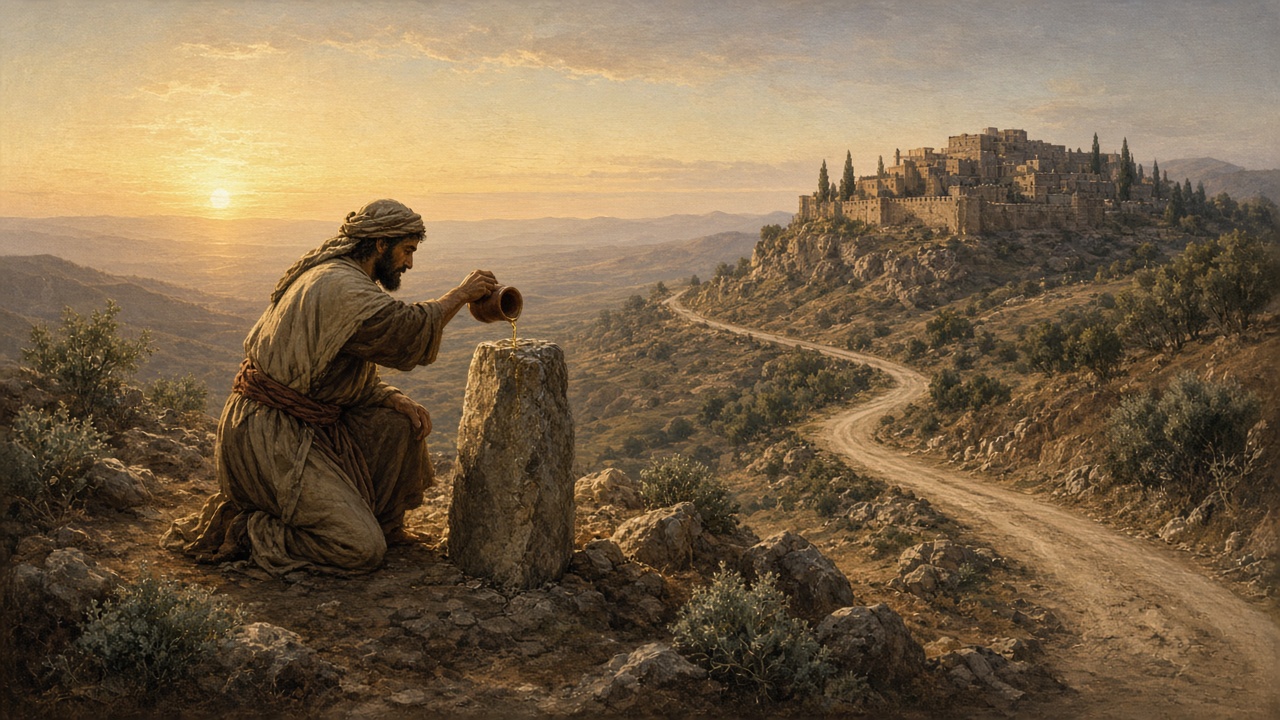
- The place where Jacob dreamed, set up as a pillar the stone he had put under his head, and poured oil on it was the royal Canaanite city of Luz; he renamed it Bethel. Easton's Bible Dictionary (1897) locates Bethel in central Palestine, about ten miles north of Jerusalem, and notes that the name was at first apparently given to a sanctuary in the neighborhood of Luz, and was not given to the city itself until after the tribe of Ephraim conquered it.Sources: the Bible text itself · Luz · Bethel (of Palestine)
- When Esau learned that Isaac had blessed Jacob and ordered him not to marry a Canaanite woman, he went to Ishmael and married Mahalath, sister of Nebaioth and daughter of Abraham's son Ishmael, in addition to the wives he already had. Easton's Bible Dictionary (1897) also calls her Bashemath and notes that Esau's three wives receive different names in the Edomite genealogy of Genesis 36 from those given in the narrative of Genesis 26 and 28.Sources: the Bible text itself · Bashemath
Notes written with AI assistance from open sources (Theographic Bible Metadata, CC BY-SA 4.0; Easton’s Bible Dictionary, public domain) and reviewed before publishing.
Places in this chapter
- Canaan · 32.767, 35.333 · verses 1, 6, 8
- Haran · Today: Harran · 36.864, 39.033 · verse 10
- Luz · Today: Beitin · 31.923, 35.241 · verse 19
Only places identified with high confidence are shown (90% or more according to the scholarly sources compiled by OpenBible). Period map: DARE (Digital Atlas of the Roman Empire), CC BY 4.0; modern map: © OpenStreetMap contributors; places: OpenBible.info (CC BY 4.0).
Credits and license for this translation
Yosë nanamën
New Testament in Chayahuita (PE:cbt:Chayahuita)
copyright © 2011 Wycliffe Bible Translators, Inc.
Language: Chayahuita
Translation by: Wycliffe Bible Translators, Inc.
Chayahuita
cbt
Peru
Copyright Information
© 2011, Wycliffe Bible Translators, Inc. All rights reserved.
This translation text is made available to you under the
terms of the Creative Commons License: Attribution-Noncommercial-No Derivative Works.
( http://creativecommons.org/licenses/by-nc-nd/3.0/ )
In addition, you have permission to port the text to different file formats, as long as you
do not change any of the text or punctuation of the Bible.
You may share, copy, distribute, transmit, and extract portions
or quotations from this work, provided that you include the above copyright
information:
You must give Attribution to the work.
You do not sell this work for a profit.
You do not make any derivative works that change any of the actual words or punctuation of the Scriptures.
Permissions beyond the scope of this license may be
available if you contact
us with your request.
The New Testament
in Chayahuita
© 2011, Wycliffe Bible Translators, Inc. All rights reserved.
This translation is made available to you under the terms of the
Creative Commons Attribution-Noncommercial-No Derivatives license 4.0.
You may share and redistribute this Bible translation or extracts from it in any format, provided that:
You include the above copyright and source information.
You do not sell this work for a profit.
You do not change any of the words or punctuation of the Scriptures.
Pictures included with Scriptures and other documents on this site are licensed just for use with those Scriptures and documents.
For other uses, please contact the respective copyright owners.
2014-04-22
Source: http://ebible.org/cbtNTpo/ · eBible.org