Genesis 18
Yosë nanamën · Tap a verse to see its cross-references.
Sara hua'huanacaso sha'huitërinso'
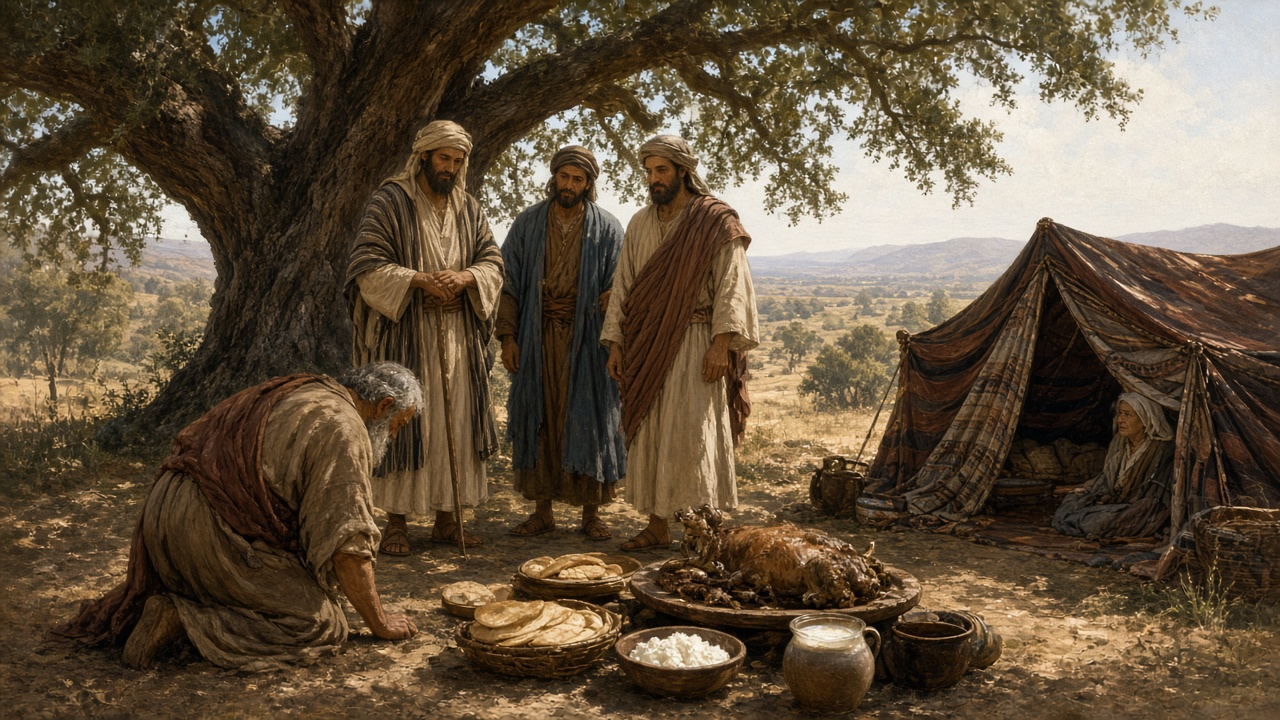
1Insina nararo', Mamiriri hua'anëntërinquë Apraan ya'huëarin. Inaquë niso', Siniorori, ya'notaantarin. Camotëchin pochin nisapaso' ya'notërin. Në'mëtë pëinën ya'coananënquë huënsaso', napoarin. 2Apraanso ni'pirinhuë', cara quëmapi ina notënanquë huaniapi quënanin. Quënanahuaton, a'naroáchin paaparin nontacaso marë'. Isonin quëran no'paquë huarë' monshorahuaton, itapon:
—Sinioro, pi'pian yanontëranquën. Ama na'huëtocosohuë'. 4Canpita topatama', nipa'morantëcamaso marë' piyapinëhuë i'sha quëshiinquëma'. Inapoatoma', nara tashinantërinquë, na'yapoma pochin, chinototaco'. 5Ya'huërahuëtaquëchin na'huëarama ni'quëhuarë', ma'sha tëranta capamaso quëshiinquëma'. Ina quëran chiníquën cancantatoma', paantamaso marë', itërin.
—Naporan ni'quëhuarë', inta nipachin, itopi.
6Napotohuachinara, Apraanso në'mëtë pëinënquë ya'conahuaton, Sara itapon:
—Manorahuaton, cato shonca quiro pochin, noya noya tricoro'mo nininso' maquë'. Ina masahuaton, pan niquë', itërin. 7Sa'in sha'huitahuaton, ta'arë'nachin ohuacaro'sa ya'huarinquë pa'nin. Noya noya nininso' toroa'hua huayonin. Huayonahuaton, a'nara piyapinën quëtërin. Quëtohuachina, inaso' tëparahuaton a'naroáchin capacaiso marë' anpirin. 8Ina a'capon pochin, ohuaca sho'shoi' atachirotopisonta', acotërin. Naporahuaton ohuaca sho'shoi' o'shitërin. Inapoaton, a'capon pochin ninararin pahuantohuachina acotacaso marë'. Ni'toro'sa nara tashinantërinquë coshatasoi naporin.
9Nani coshatohuachinara, ni'toro'sari Apraan natanpi:
—¿Sa'anpo huachi? itopi.
—Ma'tana në'mëtë pëi acoana ya'huëarin, itërin. 10Naporo' a'nari itapon:
—A'na pi'i quëran, nicaponquën huëantarahuë. Naporo' Sara hua'huanaton, hua'huin ipoarin huachi, itërin.
Napoasoi Saraso', ya'ipi nonpiso' natanárin. Apraan pinën quëran, në'mëtë pëi acoana, ya'coana pirayan natanárin. 11Apraan, Sara, inapitaso nani mashotopi. Saraso yaniton, co huachi onpo hua'huanchináchinhuë', ninin. 12Ina yonquiaton, co huachi huina cacotatonhuë', tëhuarin huachi. Tëhuapon pochin, yonquirin: “Inaporahuë naporini, noya cancanchitohuë'. Napoaponahuë', catocoi chachin nani mashotërai ni'ton, co quiyaso inapoasocoihuë' ayapoi,” tënin yonquinënquë.
13Siniororiso nipirinhuë', Apraan itapon:
—¡Sara co tëhuacasohuë nipirinhuë', tëhuarin! “Nani paiyaco” ta'ton, ¿co natëtërinhuë' hua'huanacaso ti? 14¡Caso Sinioroco ni'to, ya'ipi nohuantërahuëso' nanitaparahuë nica'huaso'! A'na pi'i quëran, nicaponquën huëantarahuë. Naporo' Sara hua'huanaton, hua'huin ipoarin huachi, itërin. 15Sinioro naporinso natanaton, të'huanënquë Saraso tapon:
—Co tëhuarahuë', tënin. Napoaponahuë', Siniorori itapon:
—Napopiranhuë', tëhuaranso' nitotërahuë, itërin.
Sotomaro'sa marë' Yosë nontërinso'
16Nani coshatohuachinara, paantacaiso marë' ni'toro'saso' huanipi huachi. Sotoma ninanotaquëchin pa'sahuachinara, Apraani chi'yarin. Nontaton patacaso marë' chi'yarin. 17Papon pochin, Sinioroso' yonquiraarin. “Apraan quëran a'na tahuëri panca nacion pipiarin. Naporahuaton ina nacionso', chiníquën nanantarin. Napoaton ma'sona yaninahuëso', sha'huita'huaso ya'huërin. Nani sha'huitërahuë ya'ipi naciono'sa isoro'paquë ya'huërinsopita, ina quëran catahua'huaso marë'. 19Nani ina huayonahuë hui'ninpita, shinpita, inapita noya pënënacaso marë'. A'chintërahuësopita natëtona', noya nicacaiso marë' pënënarin. Inapohuachin, sha'huitërahuëso chachin quëtarahuë huachi,” tënin yonquiaton. 20Napoaton, Siniorori itapon:
—Sotomaquë, Comoraquë, inaquëpita ya'huëpisopita, panca oshahuanpi. Inapoatona pa'pi co noyahuë' nahuinpi. 21Napoaton inatohua pa'sarahuë. ¿Sha'huitërinacoso chachin ta'ma nisapi? ta'to, nitota'huaso marë' pa'sarahuë.
22Cato ya'piso quëchitahuatona', Sotoma ninanoquë pa'pi. Apraanso nipirinhuë', Siniororë' ninontacaso marë' quëparitërin. 23Napoaton ya'carirahuaton, natanin:
—Tëhuëpisopitaso' no'tëquën chachin ata'huantamaso ya'huërin. Co tëhuëpisopitasohuë' nipirinhuë', co inapotamaso ya'huërinhuë'. 24Tapona a'natërápo shonca ya'pi', co tëhuëpisopitasohuë' ninanoquë ya'huëpi. Ina nápo ya'huëpiso yonquiaton: ¿Co ninano nicha'ësaranhuë'? 25¡Ama Sinioro napoquësohuë'! ¡Tëhuëpisopita, co tëhuëpisopitahuë' co napopináchin oshahuanpiso pochin ana'intamaso ya'huërinhuë'! ¡Ama napoquësohuë'! ¡Quëmaso', noya noya coisë ya'ipi isoro'pa' marë' ninan ni'ton, no'tëquënáchin ana'intamaso ya'huërin! itërin. 26Napotohuachina, Siniorori itapon:
—A'natërápo shonca co tëhuëpisopitahuë', Sotoma ninanoquë ya'huëhuachin, inapita nosoroato ya'ipi ina ninanoquë ya'huëpisopita nicha'ësarahuë, itërin. 27Apraaniso nipirinhuë', naquëranchin nontaantarin:
—Quëmaso Yosënquën, caso topinan piyapico niporahuë', naquëranchin nontaanta'inquën. Ama ina marë' no'huicosohuë'. 28Catapini shonca a'natërápora' co tëhuëpisopitahuë' nanihuachina', a'natërápo pahuaninso' marëáchin, ¿ya'ipi Sotomaquë ya'huëpisopita, ata'huantapon ti? itërin.
—Catapini shonca a'natërápo tëranta co tëhuëpisopitahuë' ya'huëhuachina', co ninano ata'huantarahuë', itërin.
29—Tapona catapini shoncara', co tëhuëpisopitahuë' ya'huëpi, taantarin Apraan.
—Ina napoya tëranta ya'huëhuachinaso', co ata'huantarahuë', tënin Yosë. 30Apraaniso nipirinhuë', naquëranchin Yosë nontaantarin:
—Inachin inachin nontápiranquënhuë', ama ina marë' no'huicosohuë' topirahuë. Tapona cara shoncara' ya'huëpi, itërin.
—Cara shoncaya tëranta ya'huëhuachina', co ata'huantarahuë', itërin.
31—Tëhuënchachin caso Sinioro co natantonhuë pochin nontáranquën. Cato shoncara', co tëhuëpisopitahuë' ya'huëhuachina': ¿Onpoaranta'? itaantarin.
—Cato shoncanta co tëhuëpisopitahuë' ya'huëhuachina', co ninano ata'huantarahuë', itërin Yosëri.
32Apraani naquëranchin nontaantarin:
—Iporaíchin Sinioro nontaantaranquën. Ina quëran co huachi apiponquënhuë ni'ton, ama no'huicosohuë'. Shoncaíchin co tëhuëpisopitahuë' quënanpatan: ¿Onpoaranta'? itërin. Napotohuachina, Siniorori itaantarin:
—Shoncaya tëranta co tëhuëpisopitahuë' ya'huëhuachina', co ninano ata'huantarahuë'. 33Apraan nontërinso toquitahuaton, Sinioroso pa'nin huachi. Apraaonta', në'mëtë pëinënquë'pa' panantarin.
Did you know?
Visitors at Mamre and a Plea for Sodom
- In Genesis 18, the LORD appeared to Abraham by the Oaks of Mamre in the heat of the day, while Abraham sat at the entrance of his tent. Mamre was an Amorite chief in alliance with Abraham. Abraham ran to meet three men, bowed to the ground, offered them water for their feet and rest under the tree, and then set before them bread, a tender and choice calf, curds, and milk.Sources: the Bible text itself · Mamre
- Sarah, Abraham’s wife, is given the sense “Princess” in Easton's Bible Dictionary (1897), which says the name was given when it was announced that she would be the mother of the promised child. In Genesis 18 the LORD said he would return in about a year and Sarah would have a son, though both were already old and she had passed the age of childbearing. She laughed to herself and, because she was afraid, denied that she had laughed.Sources: Sarah · the Bible text itself
- Sodom, a city in the vale of Siddim, and Gomorrah, one of the five cities of that plain, are named together in Genesis 18 because of the great outcry against their grievous sin. Easton's Bible Dictionary (1897) says the cities of that plain probably stood close together near the northern end of what is now the Dead Sea, and explains Sodom and Gomorrah as “Burning; the walled” and “Submersion.” Two of the men went toward Sodom, while Abraham stayed and asked the LORD to spare the city for the sake of the righteous, lowering the number from fifty to ten.Sources: Sodom · Gomorrah · the Bible text itself
Notes written with AI assistance from open sources (Theographic Bible Metadata, CC BY-SA 4.0; Easton’s Bible Dictionary, public domain) and reviewed before publishing.
Credits and license for this translation
Yosë nanamën
New Testament in Chayahuita (PE:cbt:Chayahuita)
copyright © 2011 Wycliffe Bible Translators, Inc.
Language: Chayahuita
Translation by: Wycliffe Bible Translators, Inc.
Chayahuita
cbt
Peru
Copyright Information
© 2011, Wycliffe Bible Translators, Inc. All rights reserved.
This translation text is made available to you under the
terms of the Creative Commons License: Attribution-Noncommercial-No Derivative Works.
( http://creativecommons.org/licenses/by-nc-nd/3.0/ )
In addition, you have permission to port the text to different file formats, as long as you
do not change any of the text or punctuation of the Bible.
You may share, copy, distribute, transmit, and extract portions
or quotations from this work, provided that you include the above copyright
information:
You must give Attribution to the work.
You do not sell this work for a profit.
You do not make any derivative works that change any of the actual words or punctuation of the Scriptures.
Permissions beyond the scope of this license may be
available if you contact
us with your request.
The New Testament
in Chayahuita
© 2011, Wycliffe Bible Translators, Inc. All rights reserved.
This translation is made available to you under the terms of the
Creative Commons Attribution-Noncommercial-No Derivatives license 4.0.
You may share and redistribute this Bible translation or extracts from it in any format, provided that:
You include the above copyright and source information.
You do not sell this work for a profit.
You do not change any of the words or punctuation of the Scriptures.
Pictures included with Scriptures and other documents on this site are licensed just for use with those Scriptures and documents.
For other uses, please contact the respective copyright owners.
2014-04-22
Source: http://ebible.org/cbtNTpo/ · eBible.org