Genesis 25
Nukën 'Ibu Diosan ain unikama 'inan ain bana · Tap a verse to see its cross-references.
Abraham 'imainun Queturánën rëbúnkikama 'ia bana
1Usa 'ain ka Abrahamnën bëtsi xanu biti sinánkin, Queturá kakin anëkë a biakëxa. 2Bitankëxun ka amiribi bëchipakëxa aín anë ka 'iakëxa Zimrán, Jocsán, Medán, Madián, Isbac 'imainun Súa. 3Jocsán ax ka Sebá 'imainun Dedán aín papa 'iakëxa. Ënë kamax ka Dedánën rëbúnkikama 'iakëxa, aín anëx ka 'ikë asureo, letuseo 'imainun leumeo akama. 4Ënë kamax ka Madiánën bëchikë 'iakëxa Efá, Éfer, Hanoc, Abidá 'imainun Eldaá. Ënë unikamax ka Queturánën rëbúnkikama 'iakëxa. 5Isaac an ka kamabi aín papa Abrahamnën ñukama biakëxa. 6Usakin 'anan ka bëtsi xanumia 'akë, aín bëchikëkama Abrahamnën aín ñu 'itsamashi 'inánkëxa, usokin 'inántankëxun ka ñukëmapain 'ixun aín bëchikë raíri amanu kuantanun kixun xuakëxa, xuanan ka Isaac axëshia anua 'ikë me anu 'inun kixun kakëxa.
Abraham ñukë 'ikë aín bëchikë Isaac 'imainun Ismaelnën maían
7Usa 'ain ka Abraham ciento sesenta 'imainun cinco baritia tsótankëx, 8ka uni 'ikësabi kaniakëtankëx ñuakëxa. Ñui ka 'ain chaitiokëkama ñua 'aísh anu bukukë abë 'i kuankëxa. 9Usa 'ain ka aín bëchikë Isaac 'imainun Ismaelnën Macpelá kakë kini anu maíankëxa, ax ka Mamré kakë me 'ukëmanan, Sóhar hitita uni aín bëchikë Efrón aín me 'iakëxa. 10A mex ka Abrahamnën hitita unikamanan 'ikëbia marua 'iakëxa. A menu ka Abraham ñukë aín xanu Sara rapasubi maíankëxa. 11Usaia Abraham ñua 'ain ka Nukën 'Ibu Diosan Isaac upíokin sinánxuankëxa, usa okían 'akëx ka anua 'umpax 'ikë a rapasubi tsóti bërúakëxa. “Ax ka 'iakëxa, axa tsókë 'imainun an 'ë iskë kakin anëkë anu.”
Ismaelnën rëbúnkikama 'iá bana
12Ënë kamax ka Ismaelnën bëchikë Abrahamnën bëchikë egipcia xanu Agar, an Sara ñu 'axunkë amia bëchikë 'iakëxa, 13ënëx ka aín rëkuë́n bëchikë a pain 'akëxa bakë́an a 'iakëxa: Nebaiot, ax ka aín bëchikë apan 'iakëxa; 'atankëxun ka bëtsiribi 'akëxa Quedar, Adbeel, Mibsam, 14Mismá, Dumá, Masá, 15Hadar, Temá, Jetur, Nafís 'imainun Quedmá. 16Ënëkamax ka Ismaelnën bëchikë mapai rabë́ 'imainun rabë́ akaman anë 'ikën, usa 'ain ka atun anënbi anënbi aín me anëanan ax anu 'ikë aribi anëakëxa. Usa 'ain ka akama achúshi achúshinëx ain menu menu atun 'apuñu 'iakëxa.
17Ismael ax ka ciento treinta 'imainun siete baritiañu 'aish ñuakëxa, ñui ka aín chaitiokëkama 'iasaribiti ñuia anu 'ain chaitiokëkama maían anubi maíankëxa. 18Usai ax ñua ain rëbúnki kamax anubi tsóti Havilá kakë me Egipto 'ukëmanan anun, Asirianu kuani kuanti anubi tsóti buküakëxa. Usai 'i ka anuax aín xukë́n kamabëbi 'atimonani nishanani anubi buküakëxa.
Esaúnën ain bëchikë apan usai 'iti 'ikëbi Jacob marua ñuikë bana
19Ënë banax ka usai kara Abrahamnën bëchikë Isaac ax 'iakëxa, kixun ñuikë bana 'ikën. 20Isaacnën ka cuarenta baritiañu 'ixun Rebeca aín xanu 'iti biakëxa, ax ka Betuelnën bëchikë Labánën chirabakë 'iakëxa, akamax ka Arameos unibu Padán-aram kakë me anu tsókë 'iakëxa. 21Usa 'ain ka Rebeca tuakëma xanu 'iakëxa, usa 'ain Isaac an ami bëchikaskin 'ain xanu 'itsaira ñukáxuankëxa. Usakian ñukákëxun ka Nukën 'Ibun an ñukákë a kuakin Rebeca tuuñu 'inun 'imiakëxa. 22Usai tui ka aín pukunu rabë́ tuá 'irukë 'aish, anuaxbi ubiti titikanania tankin an sinánkëxa: “Ënëxa ësai 'ikëbë karana 'ëx, ¿uisa 'aish basi tsóti 'ain?” Usakin sinánbiani ka Nukën 'Ibu uisa kupín kara usai 'ia kixun ñukati kuankëxa,
23usakian ñukákëxun an kakëxa:
“Min pukumëu ka tuá rabë́ 'ikën,
ax ka rabë́ ëma 'iti 'ikën,
usa 'aish bakënkëma 'aíshbi ubionania. Achúshinëx ka kushiira 'aish bëtsisama 'iti 'ikën, aín apan ax ka aín 'anáka meu 'iti 'ikën, usa 'ain ka 'anáka ax kushiira 'inuxun 'aia.”
24Ësokian kakë basirama 'aínbi ka Rebeca aín nëtë sënë́nkëbë, rabë́ tuá bakë́ankëxa. 25A paian Rebeca bakënkë ax ka ranshin 'aish raninbaë 'iakëxa, usa 'ikë ka a tuá Esaú kakin anëakëxa. 26Usai 'ikin aín apan Esaú aín taë tsiputu tuinbëtsini aín 'anáka chikíakëxa, usaía 'ikë a ka Jacob kakin anëakëxa. Usaia aín xanu Rebeca a tuá rabë́ bakënkë 'ain ka Isaac ax setenta baritiañu 'iakëxa.
Esaú 'imainun Jacob 'ia bana
27Usa 'ain ka a tuá rabë́ kaniakëxa. Usai kanitankëx ka aín rëkuë́n bëchikë Esaú ax ninua ñuira okë uni 'iakëxa; 'imainun ka aín 'anáka Jacob mënin sinaínshi uni 'iakëxa, usa 'ain ka aín xubunuashi ñu mëi tsóti kuëëni 'iakëxa. 28Usa 'ain ka Isaacnën aín bëchikë Esaú a 'itsaira nuibakëxa, aín ñuakë pikin, usakian aín papan aín rëkuë́n bëchikë a nuibamainun ka Rebecanën aín tuá Jacob aribi 'itsaira nuibakëxa.
29Nëtë itsin ka Jacobnën purutusa piti ñu nëish okin 'aruanbi ka Esaú uran ninu ñu bari nibaiti pananx. 30Ukin kakëxa:
—'Ë karamina min piti panshionkinmi 'akë tëxëra 'inántima 'ain, kana numin bamatisa tanin. (Usa 'aish ka Esaú ax aín kuai anë Edom kakin anëkë 'iakëxa.) 31Min kamina —'Ëx min apansa 'ixun min biti ñukama 'ën binun 'ë 'imiti 'ain, —kixun ka Jacobnën kakëxa.
32Kakëxun ka Esaúnën kakëxa:
—Uisa 'ixun kaina, 'ëx panax numin bamatisa taniabi isëshiti 'ain, minmi min xukën apan 'ikëbi 'akinkëxma kana min apan 'ëx 'itima 'ain.
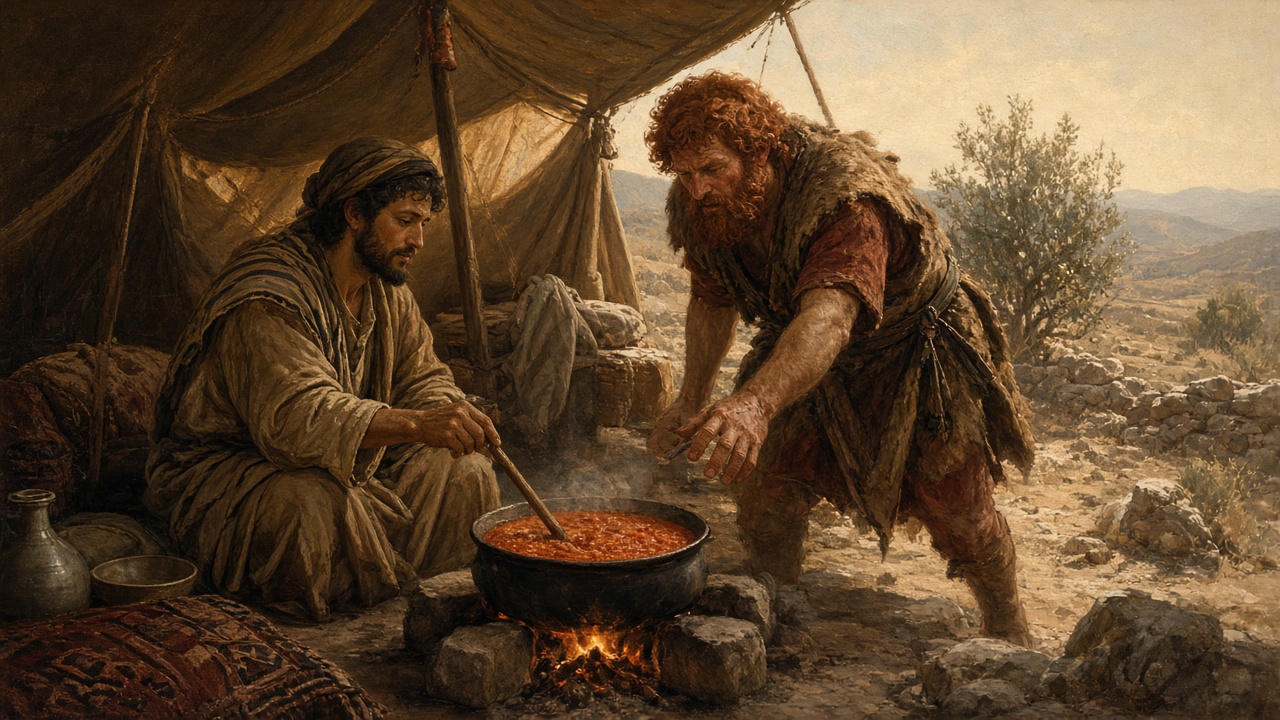
33—Kia ka bëríbi kamina Nukën 'Ibu Diosan ismainunbi asérabi sinanatëkëntima okin 'ë kati 'ain —kixun Jacobnën aín xukë́n karaishiakëxa. Usokian kakëxun ka Esaúnën sinanatëkëntima okin kakëxa, usakin ka Jacob axa 'ain apan 'inun kakëxa. 34Usakian kakëxun ka Jacobnën aín piti purutusa nëish okían 'arukë a këñun pán pinun kixun aín xukë́n Esaú 'inánkëxa, usakian 'inánkëxun pianan xëatankëx ka nirukiani a kaimashi 'ën kana apan 'ixun ñukama biti 'ai kixun sinanima kuankëxa.
Did you know?
Abraham’s heirs and the twin brothers
- Keturah, whose name Easton's Bible Dictionary (1897) explains as “incense,” is introduced here as another wife of Abraham. That dictionary says he probably married her after Sarah’s death, though her nationality is unknown, and notes that 1 Chronicles calls her a concubine. She bore him six sons, including Jokshan and Midian, the father of the Midianites; while Abraham was still alive he gave gifts to the sons of his concubines and sent them away from Isaac to the land of the east.Sources: Keturah · Midian · the Bible text itself
- Isaac and Ishmael together buried Abraham in the cave of Machpelah near Mamre, in the field Abraham had bought from Ephron the Hittite, where Sarah already lay. Easton's Bible Dictionary (1897) explains Machpelah as “portion” or “double cave,” set on a hillside east of Hebron and facing Mamre, a place called the oaks—or, in a margin, the terebinths—of Mamre.Sources: Machpelah · Mamre · the Bible text itself
- Esau, Rebekah’s firstborn twin, was born red and covered with hair like a fur coat. Easton's Bible Dictionary (1897) links the further name Edom, “red,” to the red lentil stew for which he sold his birthright, and explains Jacob as “one who follows on another’s heels” or “supplanter,” matching the report that Jacob was born grasping Esau’s heel. Esau grew up as a skillful hunter and a man of the field, while Jacob was a quiet man who stayed at home.Sources: Esau (Edom) · Jacob (Israel) · the Bible text itself
Notes written with AI assistance from open sources (Theographic Bible Metadata, CC BY-SA 4.0; Easton’s Bible Dictionary, public domain) and reviewed before publishing.
Places in this chapter
- East · Today: region around Amman · 31.955, 35.934 · verse 6
- Machpelah · Today: Cave of the Patriarchs · 31.525, 35.111 · verse 9
- Negeb · 31.245, 34.841 · verse 11
- Assyria · 36.359, 43.153 · verse 18
- Egypt · 30.129, 31.308 · verse 18
Only places identified with high confidence are shown (90% or more according to the scholarly sources compiled by OpenBible). Period map: DARE (Digital Atlas of the Roman Empire), CC BY 4.0; modern map: © OpenStreetMap contributors; places: OpenBible.info (CC BY 4.0).
Credits and license for this translation
Nukën 'Ibu Diosan ain unikama 'inan ain bana
New Testament in Cashibo-Cacataibo (PE:cbr:Cashibo-Cacataibo)
copyright © 2011 Wycliffe Bible Translators, Inc.
Language: Cashibo-Cacataibo
Translation by: Wycliffe Bible Translators, Inc.
Cashibo-Cacataibo
cbr
Peru
Copyright Information
© 2011, Wycliffe Bible Translators, Inc. All rights reserved.
This translation text is made available to you under the
terms of the Creative Commons License: Attribution-Noncommercial-No Derivative Works.
( http://creativecommons.org/licenses/by-nc-nd/3.0/ )
In addition, you have permission to port the text to different file formats, as long as you
do not change any of the text or punctuation of the Bible.
You may share, copy, distribute, transmit, and extract portions
or quotations from this work, provided that you include the above copyright
information:
You must give Attribution to the work.
You do not sell this work for a profit.
You do not make any derivative works that change any of the actual words or punctuation of the Scriptures.
Permissions beyond the scope of this license may be
available if you contact
us with your request.
The New Testament
in Cashibo-Cacataibo
© 2011, Wycliffe Bible Translators, Inc. All rights reserved.
This translation is made available to you under the terms of the
Creative Commons Attribution-Noncommercial-No Derivatives license 4.0.
You may share and redistribute this Bible translation or extracts from it in any format, provided that:
You include the above copyright and source information.
You do not sell this work for a profit.
You do not change any of the words or punctuation of the Scriptures.
Pictures included with Scriptures and other documents on this site are licensed just for use with those Scriptures and documents.
For other uses, please contact the respective copyright owners.
2014-04-22
Source: http://ebible.org/cbrNT/ · eBible.org