Genesis 2
Nukën 'Ibu Diosan ain unikama 'inan ain bana · Tap a verse to see its cross-references.
1Usokin 'atankëxun ka Nukën 'Ibu Diosan naí 'imainun me, anua 'ikë ñukama këñunbi 'akin kamabi sënëonkëxa. 2Mapai achúshi 'imainun achúshi nëtën ka Nukën 'Ibu Diosan an 'akë ñukama sënëonkëxa, usokin 'atankëx ka tantiakëxa. 3Usa 'ain ka mapai achúshi 'imainun rabë́ nëtë a upíokin sinánxuni a nëtëx ka upíira 'iti 'ikë kiax kiakëxa, a nëtën ka kamabi ñukama uniotankëx tantiakëxa. 4Ënë banax ka usakin ka Nukën 'Ibu Diosan naí 'imainun me uniokëxa kixun ñuikë bana 'ikën.
Uni Edén kakë naësa menu 'iá
Usakin Nukën 'Ibu Diosan naíkamë 'ëo këñun me uniokin sënë́onkë 'aínbi ka, 5anu añu ñubi 'aima pain 'iakëxa, añu ñubi ka me mëuküax 'irukëma pain 'iakëxa, uñeribi ka Nukën 'Ibu Diosan 'ibumiama pain 'ikën an me chabóti, 'imainun ka an naë mëníoti uni 'aima pain 'iakëxa. 6Usa 'aínbi ka menuax mekama chabói 'umpax shióbuakëxa. 7Usa 'ain ka Nukën 'Ibu Diosan mebi unisa 'inun 'atankëxun aín rëkinu rëxúnkakëxa, rëxúnkakëxëshi ka uíni uni 'iakëxa. Usai 'ika uni uniakëxa.
8Usokin 'atankëxun ka Nukën 'Ibu Diosan Edén kakë naësa me, auküaxa bari urukë, anu achúshi naësa okin 'axun anuxun kamabi ñu bëruánti anubi ëankëxa. 9A naësa me anu ka Nukën 'Ibu Diosan bëtsi bëtsi i upíbu 'ixuan aín bimi upíbu pisabi 'inun tuati a koónun 'imiakëxa. Imianan ka naësa me a nëbëtsi a pia uni upiti tsóti 'imainun, a pikin uisa ñux kara upí 'ikë a 'unánan uisa ñux kara 'atima 'ikë a 'unánti aribi kónun 'imiakëxa.
10Usa 'ain ka Edén kakë naësa me anuax achúshi baka an naësa a chabóti shióbukë, anuax ka amo rabë́ 'imainun amorabë́ 'inun baka saëakëxa. 11A baka achúshinëx ka Pisón kakin anëkë 'iakëxa, an ka Havilá kakë mekama bëararakë 'iakëxa. A menu ka 'itsaira kuri 'iakëxa. 12A menu ka kuri upíira 'imainun i bëpín sanuira 'ianan ka ónice kakë maxáxribi anu 'iakëxa. 13Bëtsi baka ka Guihón kakin anëkë 'iakëxa, an ka Cus kakë me bëararakë 'iakëxa. 14Bëtsi baka ka Tigris kakin anëkëribi 'iakëxa, ax ka Asiria amiaxa bari urukë ami kikiani kuankëxa. 'Imainun ka Bëtsi bakaribi ax Éufrate kakë 'iakëxa.
15Edén kakë me anu naësa achúshi 'atankëxun ka Nukën 'Ibu Diosan an uniokë uni kakëxa: ënë bërúanan mënioi kamina ënu tsóti 'ain, 16katankëxun ka ësokinribi kakëxa: Min kamina piti 'ain kamabi i bimi naësa ënua 'ikë ënë, 17'ën kana mi kain, anun upí 'imainun 'aisama ñu 'unánti a i ain bimi kamina pitima 'ain. Uisaran karamina a bimi pin a nëtënbi kamina bamakë 'iti 'ain. 18Katankëxun ka Nukën 'Ibu Diosan kakëxa: uníxa ashira 'iti ka 'aisama 'ikën. Usa 'ain kana an 'akinti bëtsi 'axúnti 'ain.
19Usakin 'atankëxun ka Diosan menua uniokë ñuinakama 'imainun ñuina pëchiñukama unin anënun uninu uankëxa. A unían anëkë 'aish ka kamabi ñuinakama a piti a pitima 'imainun kamabi ñuina pëchiukama 'imainun raëkëmakama anëñu 'iakëxa, 20anëkëx ka aín anë ax anubi bërúakëxa. Usa 'aínbi ka a ñuinakama achúshinëxi a uni 'akinsama 'iakëxa.
21Usa aín ka Nukën 'Ibu Diosan a uni 'aímai upiti 'uxtanun 'uxmiakëxa, 'uxmikëxa 'aímai upiti uxan ka aín putu achúshi bitankëxun aín naminbi amiribishi bëtasakëxa. 22A putúbi ka Nukën 'Ibu Diosan achúshi xanu 'inun uniokëxa, uniotankëxun ka a uninu bëakëxa, 23bëia isi, ka uni kiakëxa: ¡Ënëx ka 'ën namibi 'anan 'ën xobi 'akë 'ikën! Aín anëx ka xanu 'iti 'ikën, ax ka Diosan unin putúbi bixun 'akë 'ikën. 24Usa 'ain ka unin aín xanu bikin aín papa aín tita ënti 'ikën, usa 'aish ka a rabëtaxbi achúshi unisashi 'iti 'ikën.
25Usakin 'akëx ka uni 'imainun xanu chupañuma 'iakëxa, 'aínbi ka usa 'ixunbi a rabëxun rabinti sinánma 'ikën, sinanima ka usabi 'iakëxa.
Did you know?
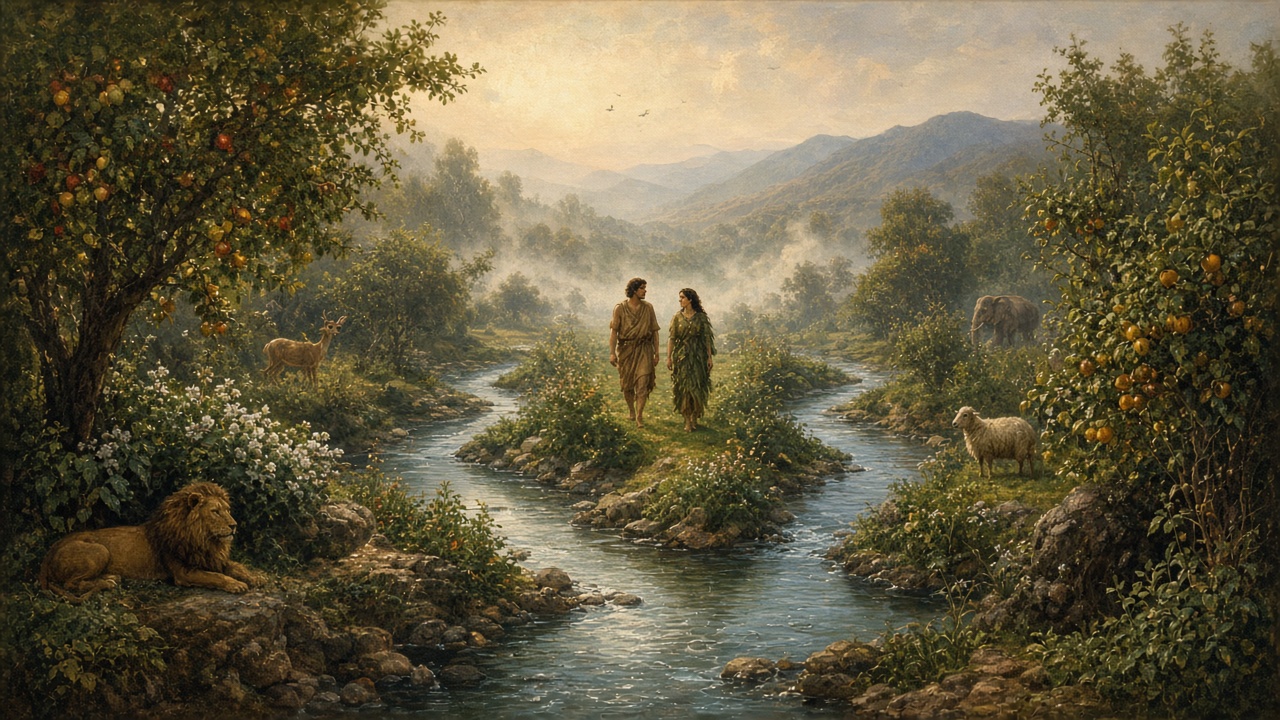
Adam, Eden, and the Four Rivers
- Adam, meaning “red,” is a Babylonian word and the ordinary name for a human being, with the same sense in Hebrew and in Assyrian. It was given to the first man. He was formed from the dust of the ground—hence the name—and God breathed into his nostrils the breath of life.Sources: Adam · the Bible text itself
- A river flowed out of Eden and divided into four headwaters: the Pishon, the Gihon, the Hiddekel, and the Euphrates. Some identify the Pishon with the Phasis or the Halys, others with the Indus, the Ganges, or still other rivers; the Gihon has been identified with the Nile, and others regard it as the Oxus, the Araxes, or the Ganges. The Hiddekel is the Tigris, called by the Accadians the river of Idikla; Gesenius understood the name as “the rapid Tigris.”Sources: the Bible text itself · Pison · Gihon · Hiddekel
- The site of Eden, the garden in which the first parents lived, has been discussed more than almost any other geographical question. It has been placed in Armenia, in the region west of the Caspian Sea, in Media, near Damascus, in Palestine, in southern Arabia, and in Babylonia. Easton's Bible Dictionary (1897) seeks it along the Tigris and the Euphrates of western Asia, in the land of Shinar, or Babylonia.Sources: Eden
Notes written with AI assistance from open sources (Theographic Bible Metadata, CC BY-SA 4.0; Easton’s Bible Dictionary, public domain) and reviewed before publishing.
Places in this chapter
- Assyria · 36.359, 43.153 · verse 14
- Euphrates · Today: Euphrates River · 31.004, 47.442 · verse 14
- Tigris · Today: Tigris River · 31.004, 47.442 · verse 14
Only places identified with high confidence are shown (90% or more according to the scholarly sources compiled by OpenBible). Period map: DARE (Digital Atlas of the Roman Empire), CC BY 4.0; modern map: © OpenStreetMap contributors; places: OpenBible.info (CC BY 4.0).
Credits and license for this translation
Nukën 'Ibu Diosan ain unikama 'inan ain bana
New Testament in Cashibo-Cacataibo (PE:cbr:Cashibo-Cacataibo)
copyright © 2011 Wycliffe Bible Translators, Inc.
Language: Cashibo-Cacataibo
Translation by: Wycliffe Bible Translators, Inc.
Cashibo-Cacataibo
cbr
Peru
Copyright Information
© 2011, Wycliffe Bible Translators, Inc. All rights reserved.
This translation text is made available to you under the
terms of the Creative Commons License: Attribution-Noncommercial-No Derivative Works.
( http://creativecommons.org/licenses/by-nc-nd/3.0/ )
In addition, you have permission to port the text to different file formats, as long as you
do not change any of the text or punctuation of the Bible.
You may share, copy, distribute, transmit, and extract portions
or quotations from this work, provided that you include the above copyright
information:
You must give Attribution to the work.
You do not sell this work for a profit.
You do not make any derivative works that change any of the actual words or punctuation of the Scriptures.
Permissions beyond the scope of this license may be
available if you contact
us with your request.
The New Testament
in Cashibo-Cacataibo
© 2011, Wycliffe Bible Translators, Inc. All rights reserved.
This translation is made available to you under the terms of the
Creative Commons Attribution-Noncommercial-No Derivatives license 4.0.
You may share and redistribute this Bible translation or extracts from it in any format, provided that:
You include the above copyright and source information.
You do not sell this work for a profit.
You do not change any of the words or punctuation of the Scriptures.
Pictures included with Scriptures and other documents on this site are licensed just for use with those Scriptures and documents.
For other uses, please contact the respective copyright owners.
2014-04-22
Source: http://ebible.org/cbrNT/ · eBible.org