Genesis 32
Diosa' kiika; Génesis, Éxodo y El Nuevo Testamento · Tap a verse to see its cross-references.
Jacob Esaúba mangatawami.
1Tsenñu Jacobya kayu ajkesha miintsuñu, Diosa' anjeela fale' katawala. 2Tsenñu Jacob yalanu katatu, entsandimi: Enuya Diosa' kajdi' chununuve, timi. Tsejtu junu Mahanaim mumu pumi (hebreo palaachiya “kajdi' pai bulu wa'na' chunu tena” titu).
3Tsejtu bene Jacob, ya' naatala Esaúnu ya maantsuyu, ti' wainnu, Edom tu Seírsha kuinda eemi. 4Tsejtu: In bale ruku Esaúnu entsandidei: Ñuchi tiba kiikemu, ñu' benna Jacob lalanu entsandinu eeve: Kumuinchi entsa tinbutala Labánba chuyu. 5Tsejtu naa wagaa juula bain, naa buru juula bain, naa uveja juula bain, naa tiba kiikemu chachilla unbee rukula bain, naa supula bain taantsuyu. Tsejtu entsa kuinda iya ñuchi taawasha kemu ruku ñunu mijakaanu eentsuyu, ñuchi firu' katawan jutyu, tive, tila.
6Tsejtu wainnu jimula miitu, Jacobnu tsandila: Ñu' naatalanu kuinda kenu dejiyu, tsenñu ya bain ñuba mangatanu titu, 400 unberelaba yumaa engu jantsuve, tila.
7Tsa detiñu meetu, Jacob yuj jeetyatu, ti ken tsandya', mika pensa shuwami. Tsejtu yaba bulu jimu chachillanu pai bulu ma velekemi, naa uvejalanu bain, naa wagaalanu bain, naa kameyulanu bain, 8matyu entsangue pensanguetu: “Esaú ja' manbaate jimulanu vinguiñu bain, vejanlaya nepinu dejuve”, tyatu. 9Tsejtu bene Diosba entsandi kuinda kemi: Yavé, in aa-apa Abraham' Dios, naa in apa Isaacchi bain Dios, ñuya inu in tusha in paandela' junga miide, ti', jungaa tiba ura' dema-ikaanu tsuyu, tiwa. 10Naa tsandimuwaañu bain, iya ñuchi tiba ura' iinuu chachi jutyuyu; tsaanuren ñuya iya ñuchi tiba kiikemu chachinu tsamantsangue ura' washke', naakenu ti'ba tsanguive. Tsejtu iya entsa Jordán pi pulla' jinu uwanuya ka tiba tajtu, in tyutyan cha'liren taaya dapuimuwaayu, tsaaren challaya pai bulu chachi velekenuuya tiyayu. 11¡Tsa' mitya, tsantsaya inu in naatala Esaú' tyaapanu livee kika! Matyu engu ja', naa inu bain, naa supulanu bain, naa kaillanu bain detutekichuve tendu yuj jeetenve. 12Ñuya entsandimuwaave: Ñunu tiba ura' de-ikare', bene ñunu sera' jimulanu bain lamaa ñiipe tsun tsangue seeware', naake' miken tsangue tiwaanu juyu timuwaave, timi.
13Tsejtu juntsa kepe Jacob junu kastu, ya kumuinchi ti ta'ba mekikenuu jumu demi'ke' kakemi ya' naatala Esaúnu me'nu. 14Tsejtu supu chibu 200 kamin, llupu chibu 20 kamin, supu uveja 200 kamin, llupu uveja 20 kamin, 1530 supu kameyu challan nakakemu ya' kaillaba kamin, supu wagara 40 kamin, llupu wagaa paitya kamin, supu buru 20 kamin, tsenmin llupu buru bain paitya kaminguemi, me'nu. 16Tsejtu bene yachi tiba kiikemu chachillanu, ma bulu animaameemee devele' kuwatu entsandimi: Ñulla ajkesha jidei, tsejtu ma bulu animaamee jayu jayu baka' tajiidei, timi.
17Tsejtu ajke' jimunu eendu tsandimi: In naatala Esaúba katatu, ya ñunu: ¿Maa ñunu uudenguemu ruku jun? ti' pake'meetu; ¿Nukaa jindu iyu? titu: ¿Ñu' tajiintsushu juntsa animaala bain muchiden? ti' pake'meenmala, 18entsandi pakade: Ñuchi tiba kiikemu Jacobchive, tsejtu inu mandanguemu ruku Esaúchi erentsuve. Tsaaren naa ya bain lala' bendala jantsuve, tide, timi.
19Tsejtu juntsa kelunu bendaa jimunu bain, naa kayu ya' benesha jimulanu bain, tsenmin kumuinchi juntsa animaa ta'mulanu bain Esaúnu katatu, tsaandene padei, timi. 20Tsenmin: Ñuchi tiba kiikemu Jacob bain, lala' bendala jantsuve, tidei, timi.
Jacobya entsangue pensanguetaa tsanguentsumi: “Naa ya ajarañuba, i yanu ajkesha me'nu eekentsaashu juntsachi ma ishpuitekare', benee i bain yaba mangatawanmalaa inu ura' mamika'ba kenuumeete”, tyataa tsanguemi. 21Tsejtu mekikenuu jumulaya ajkesha de-eetu, yaa ya' kajdi' tsununu tsana shuwami, junu kepe puinu.
Jacob ma anjeeba vinguemi.
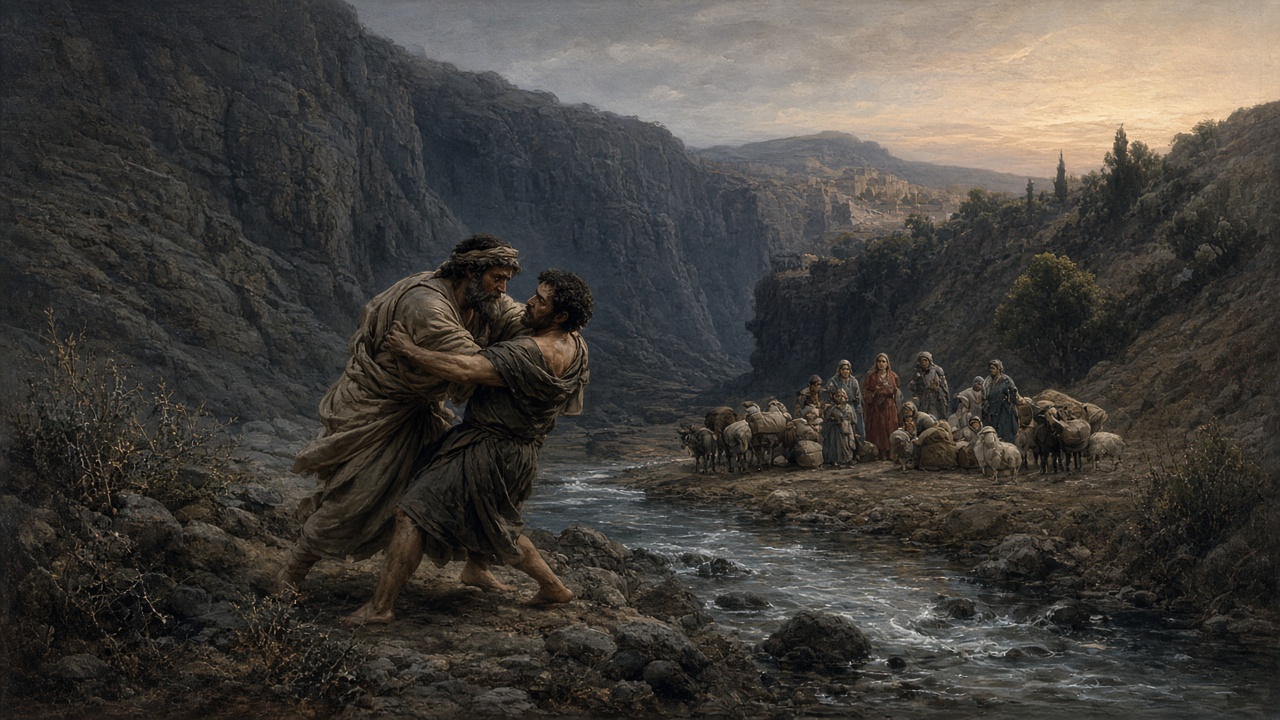
22Juntsa keperen Jacob mangujpa', tsaa ya' pai shinbulanu, naa ya' shinbulachi manda-imu pai shinbulanu bain, naa ya' 11 kailla jumulanu bain dekake', Jaboc pijulanu dapuimishtikemi, 23tsenmin kumuinchi ya ti ta'ba demanbuitekemi.
24Tsejtu Jacob maali shuwaiñu, ma unbere fale' yaba vinguenanan tsaa chayaimi. 25Tsejtu juntsa ruku Jacobnu puityuumiren, tsaa Jacob' peja'chinu jayu ma daran ta'kikemi. Tsenñu juntsa rukuba vinguentsuren junu Jacobnu mujkiijiimi. 26Tsenñu juntsa ruku tsandimi: Mandyallakika, yumaa ma dechayaintsuve, timi.
Tsenñu Jacob tsandimi: Inu Dioschi ura' ikarendyuya mandyaiken jutyuyu, timi.
27Tsenñu juntsa ruku: ¿Ti mumuyu? ti' pake'meemi.
Tsenñu: Iya Jacob mumuyu, timi.
28Tsenñu juntsa ruku tsandimi: Umaa Jacob mumu majun jutyuve. Ñu' mumuya Israelya ma junu tsuve, Diosba vinguemin, naa cha' rukulanu bain vingueturen puiñu' mitya, timi.
29Tsenñu Jacob bain: Umaa ñu bain ti mumu'ba wainka, ti' pake'meemi.
Tsenñu juntsa ruku pakatu: ¿Tyeenguenaa in mumu mijanu tenguen? timi.
Tsejtu bene juntsa ruku junuren Jacobnu Dioschi ura' isa ti' pami. 30Tsenñu Jacob juntsa tenanu Penuel mumu pumi (hebreo palaachiya, “Diosa' kajuru” titu), matyu entsanditu: Diosba kaju'talake katayu, tsejturen peyaiba indyuyu, ti' mitya.
31Tsejtu Jacob Penuel tenanu demanbullaintsunu uwanu pajta faami; tsejturen Jacob janga' terai miintsumi, ya' peja'chi kitya' mitya. 32Tsa' mityaa naa chai bain, Israelnu sera' jimulaya peja'chi allanu chitya chityanguemu wa'chuwaya fityu deeve, juntsa tenanaa Jacob daran imuwaañu' mitya.
Did you know?
At the Jabbok, on the Way to Esau
- Mahanaim means “two camps.” Jacob gave that name to the place near the Jabbok, beyond the Jordan, when the angels of God met him and he said, “This is the camp of God.” There he also divided his people, flocks, herds, and camels into two camps, hoping one might escape if Esau attacked the other.Sources: Mahanaim · the Bible text itself
- The Jabbok, whose name is explained as “a pouring out, or a wrestling,” is a stream east of the Jordan. It joins the Jordan about midway between the Sea of Galilee and the Dead Sea, after a course of about 65 miles through a wild, deep ravine. At its ford Jacob sent his two wives, two maidservants, eleven sons, and all he owned across, then remained alone and wrestled with a man until daybreak.Sources: Jabbok · the Bible text itself
- Jacob sent messengers to Esau in the land of Seir, the country of Edom, calling him lord and himself a servant. Seir is a mountainous region along the east side of the Arabah, from the southeastern end of the Dead Sea toward Akabah, the eastern branch of the Red Sea; the Edomites occupied it, and it was allotted to Esau’s descendants. Esau, the firstborn twin and a hunter, had sold his birthright for red lentil stew and was also called Edom, “red,” while Jacob—whose name means “one who follows on another’s heels,” or “supplanter”—had conspired with his mother to deceive Isaac.Sources: the Bible text itself · Seir · Esau (Edom) · Jacob (Israel)
Notes written with AI assistance from open sources (Theographic Bible Metadata, CC BY-SA 4.0; Easton’s Bible Dictionary, public domain) and reviewed before publishing.
Places in this chapter
- Edom · 30.746, 35.604 · verse 3
- Jordan · Today: Jordan River · 31.761, 35.558 · verse 10
- Jabbok · Today: Zarqa River · 32.115, 35.543 · verse 22
Only places identified with high confidence are shown (90% or more according to the scholarly sources compiled by OpenBible). Period map: DARE (Digital Atlas of the Roman Empire), CC BY 4.0; modern map: © OpenStreetMap contributors; places: OpenBible.info (CC BY 4.0).
Credits and license for this translation
Diosa' kiika; Génesis, Éxodo y El Nuevo Testamento
New Testament + Genesis and Exodus in Chachi (EC:cbi:Chachi)
Génesis, Éxodo y El Nuevo Testamento en Chachi
copyright © 2008 Wycliffe Bible Translators, Inc.
Language: Chachi
Translation by: Wycliffe Bible Translators, Inc.
Chachi
cbi
Ecuador
Copyright Information
© 2008, Wycliffe Bible Translators, Inc. All rights reserved.
This translation text is made available to you under the
terms of the Creative Commons License: Attribution-Noncommercial-No Derivative Works.
( http://creativecommons.org/licenses/by-nc-nd/3.0/ )
In addition, you have permission to port the text to different file formats, as long as you
do not change any of the text or punctuation of the Bible.
You may share, copy, distribute, transmit, and extract portions
or quotations from this work, provided that you include the above copyright
information:
You must give Attribution to the work.
You do not sell this work for a profit.
You do not make any derivative works that change any of the actual words or punctuation of the Scriptures.
Permissions beyond the scope of this license may be
available if you contact
us with your request.
The New Testament
in Chachi
© 2008, Wycliffe Bible Translators, Inc. All rights reserved.
This translation is made available to you under the terms of the
Creative Commons Attribution-Noncommercial-No Derivatives license 4.0.
You may share and redistribute this Bible translation or extracts from it in any format, provided that:
You include the above copyright and source information.
You do not sell this work for a profit.
You do not change any of the words or punctuation of the Scriptures.
Pictures included with Scriptures and other documents on this site are licensed just for use with those Scriptures and documents.
For other uses, please contact the respective copyright owners.
2014-12-03
Source: http://ebible.org/cbiNTpo/ · eBible.org