Genesis 2
Diosa' kiika; Génesis, Éxodo y El Nuevo Testamento · Tap a verse to see its cross-references.
1Entsaitaa naa selu bain, naa tu bain, tsenmin naa selusha tiba katawamula bain, naa tusha tiba katawamula bain millai ila. 2Dios entsangue taawasha deke' dyatu, umaa mandishpai malusha lekami. 3Tsejtu Dios entsa mandishpai malunu mika ura' isa titu, bale malu kure' shuikemi, matyu juntsa malunaa tiba deke' faawaatu leka' mitya. 4Entsa kuindaa, naa-itaa selu bain, naa tu bain de-i' faamu deeñuba juntsa kuindave.
Naa naake deke'ba mawandya
Yavé Dios naa selu bain, naa tu bain dekiñu, 5kayu naa ti kiya juuba chutyumi, tsenmin naa ti tape juu bain kayu falendyumi, matyu Yavé Dios kayu shuwa jakaakaindyuñu' mitya, tsenmin muba taawasha kikenuu dejutyuñu' mitya. 6Tsaanun tu tainshaa pi fale' kumuinchi tu ajta ajtakemi.
7Yavé Dios chachi ketu tu llujpepechiren ke', ya' kijkapanu juipu', aama pu' kujtemuwaami. Tsenñaa umaa chachi tiya' chumi.
8Tsejtu bene Yavé Dios pajlanu pasha Edén mumu puu vijtya main ke' chujtitu, jungaa ya' keñu chachinu pumi. 9Tsejtu naaju chi'baasa awakare', uukerai katawamu tire', famu puka imu tene awakaami. Tsejtu juntsa vijtya kejtala naa chuwaanu tiremu chi bain, naa main main tyee keñu urañu bain, tyee keñu urajtuñu bain mijakaakaa kemu chi bain awakaami.
10Edénnu pijula main fale' jitu, juntsa vijpala pi ajkemu jumi, ma pijularen taapai pala ma velaa pijula. 11Ajke' pala jumuya Pisón mumumi; entsa pi uru tsunu Havilá tusha yatemu jumi. 12Entsa tenatalaa naa kayu ura uru bain, naa chi pillu aindyayaa bain, naa unise mumu shupuka bain kataamumi. 13Tsenmala kama pijuu palaya Guihón mumumi, Cus tinu tusha yatemu pijula. 14Tsenmala kama pijuu palaya Tigris pi mumumi, Asur pebulu pajlanu pasha pumu pi. Tsenmala entsaba kumuinchibi taapai pijuu pala jumuya Éufrates mumumi. |src="CO00604b.tif" size="Span" loc="Genesis 2.8-14" copy="por cortesía de Cook Communications Ministries International © 1978 David C. Cook Publishing Co." ref="Génesis 2.14"
15Tsejtu Yavé Dios, cha' rukunu Edén vijpaasha pu', tiba dewajke' washkisa tyatu, 16Yavé Dios entsangue uudenguemi cha' rukunu: Vijtyasha naaju chinu puka ka' findenñuba ka' finuu juve, 17tsaaren main main tyee keñu urañu bain, tyee keñu urajtuñu bain mijakaamu chinu namu pukaya ka' fityude; ñu naama juntsa puka ka' fi' bain, uwain peyanbera inu tsuve, timi.
Supu shinbunu bain kemi.
18Tsejtu bene Yavé Dios tsandimi: Unbee rukun maali juu tsanashu juntsaa urajtuve. Tsa' mitya main ti bain yaba bulu ura' kivetekenuunu kenu tsuyu, timi. 19Tsejtu Yavé Dios tu llujpenuren kumuinchi animaa juula bain, naa pishku juula bain dekemuwaatu, umaa cha' ruku' junga deta'mi, mumu pukaanu. Tsenñu cha' ruku naajulanuba mumu depukemi, naa cha' miyanuu animaalanu bain, naa pishkulanu bain, naa jeendaa chumu ajara animaalanu bain. Tsejtu naake mumu puñuba juntsai shuwala. Tsaaren juntsa animaala, maliiba cha' rukunu bulu ura' kivetekenuu faatyula. 21Tsenñu Yavé Dios cha' rukunu tengan jutyungue kaskare', ya kasu'tsunu uwanu ma vi'chi kalaami. Tsanguetu ya' allachiren junu vi'chi kalaanunu mandu'kaami.
22Tsejtu juntsa vi'chinun Yavé Dios ma shinbu ketu, cha' rukunu taji' keewaami. 23Tsenñu cha' ruku katatu tsandimi: ¡Entsaya uwain in allaren jumin, in taku bain jumin juve! “Supu shinbu” mumu junu tsuve, matyu Dios unbee rukunaa kalaañu' mitya, timi.
24Tsa' mityaa unbee rukuya ya' apanu bain, ya' amanu bain shuike' ji', ya' shinbuba buudi' chunu tsuve; tsai' yala main juuñuu tiyainu detsuve.
25Tsejtu naa unbee ruku bain, naa ya' shinbu bain cha'tene juularen, ne tsa deeyu tya' yujtyatyu jula.
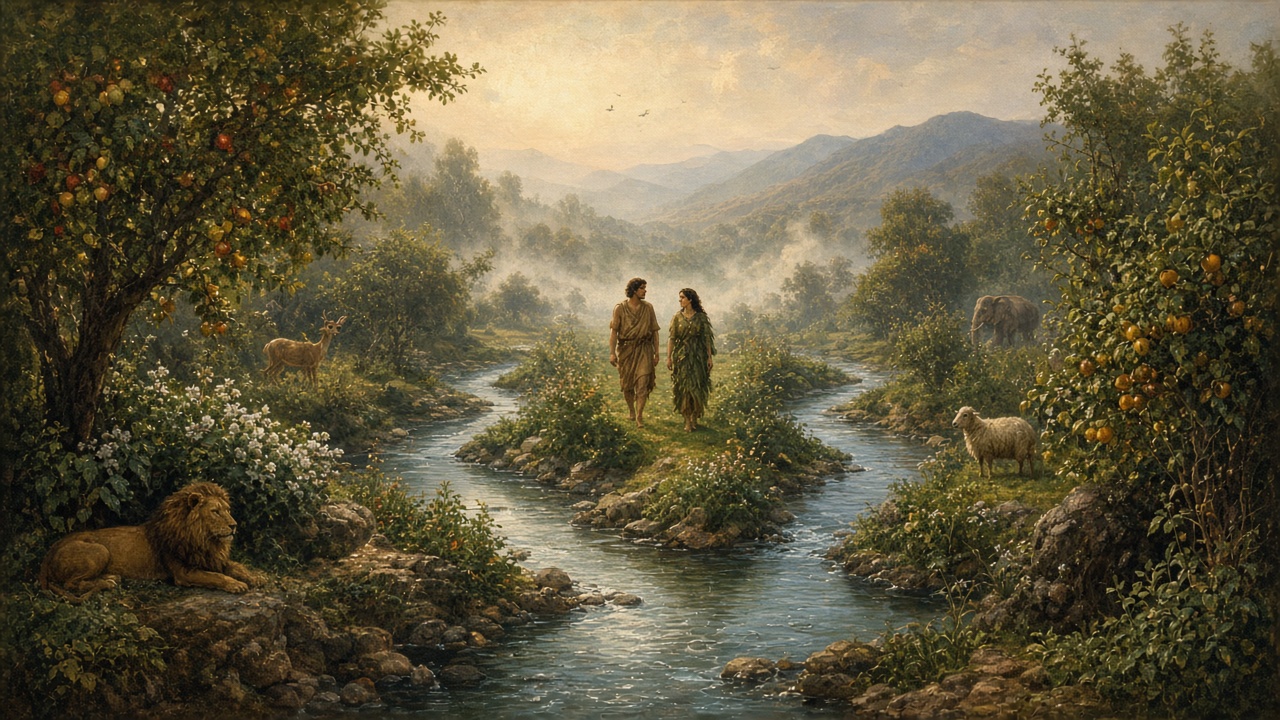
Did you know?
Adam, Eden, and the Four Rivers
- Adam, meaning “red,” is a Babylonian word and the ordinary name for a human being, with the same sense in Hebrew and in Assyrian. It was given to the first man. He was formed from the dust of the ground—hence the name—and God breathed into his nostrils the breath of life.Sources: Adam · the Bible text itself
- A river flowed out of Eden and divided into four headwaters: the Pishon, the Gihon, the Hiddekel, and the Euphrates. Some identify the Pishon with the Phasis or the Halys, others with the Indus, the Ganges, or still other rivers; the Gihon has been identified with the Nile, and others regard it as the Oxus, the Araxes, or the Ganges. The Hiddekel is the Tigris, called by the Accadians the river of Idikla; Gesenius understood the name as “the rapid Tigris.”Sources: the Bible text itself · Pison · Gihon · Hiddekel
- The site of Eden, the garden in which the first parents lived, has been discussed more than almost any other geographical question. It has been placed in Armenia, in the region west of the Caspian Sea, in Media, near Damascus, in Palestine, in southern Arabia, and in Babylonia. Easton's Bible Dictionary (1897) seeks it along the Tigris and the Euphrates of western Asia, in the land of Shinar, or Babylonia.Sources: Eden
Notes written with AI assistance from open sources (Theographic Bible Metadata, CC BY-SA 4.0; Easton’s Bible Dictionary, public domain) and reviewed before publishing.
Places in this chapter
- Assyria · 36.359, 43.153 · verse 14
- Euphrates · Today: Euphrates River · 31.004, 47.442 · verse 14
- Tigris · Today: Tigris River · 31.004, 47.442 · verse 14
Only places identified with high confidence are shown (90% or more according to the scholarly sources compiled by OpenBible). Period map: DARE (Digital Atlas of the Roman Empire), CC BY 4.0; modern map: © OpenStreetMap contributors; places: OpenBible.info (CC BY 4.0).
Credits and license for this translation
Diosa' kiika; Génesis, Éxodo y El Nuevo Testamento
New Testament + Genesis and Exodus in Chachi (EC:cbi:Chachi)
Génesis, Éxodo y El Nuevo Testamento en Chachi
copyright © 2008 Wycliffe Bible Translators, Inc.
Language: Chachi
Translation by: Wycliffe Bible Translators, Inc.
Chachi
cbi
Ecuador
Copyright Information
© 2008, Wycliffe Bible Translators, Inc. All rights reserved.
This translation text is made available to you under the
terms of the Creative Commons License: Attribution-Noncommercial-No Derivative Works.
( http://creativecommons.org/licenses/by-nc-nd/3.0/ )
In addition, you have permission to port the text to different file formats, as long as you
do not change any of the text or punctuation of the Bible.
You may share, copy, distribute, transmit, and extract portions
or quotations from this work, provided that you include the above copyright
information:
You must give Attribution to the work.
You do not sell this work for a profit.
You do not make any derivative works that change any of the actual words or punctuation of the Scriptures.
Permissions beyond the scope of this license may be
available if you contact
us with your request.
The New Testament
in Chachi
© 2008, Wycliffe Bible Translators, Inc. All rights reserved.
This translation is made available to you under the terms of the
Creative Commons Attribution-Noncommercial-No Derivatives license 4.0.
You may share and redistribute this Bible translation or extracts from it in any format, provided that:
You include the above copyright and source information.
You do not sell this work for a profit.
You do not change any of the words or punctuation of the Scriptures.
Pictures included with Scriptures and other documents on this site are licensed just for use with those Scriptures and documents.
For other uses, please contact the respective copyright owners.
2014-12-03
Source: http://ebible.org/cbiNTpo/ · eBible.org