Matthew 2
Manitanati Tuparrü · Tap a verse to see its cross-references.
Yapaseaca bama estudiaboma ñome nostoñeca
1Arrti Jesús anati icu cürrü au manu pueblurrü nürirri Belén, au manu cürrü nürirri Judea, au na cauta nacarrti yüriaburrü Herodes.
Au manu tiemporrü iñataimia au Jerusalén manuma mañoñünca cuamatü auqui tauna ümo tansürü. Arrüma estudiaboma ñome arrüba nostoñeca abe icu napese. 2Ñanquitioma pünanaqui macrirrtianuca cauta nacarrti maniqui üriatu bama israelitarrü maniqui aübo anati icu cürrü. Namatü:
—Sumarrtai taha arrüna auquiche sobetü arrümanu nocoborese nibiasarurrti. Uirri nauquiche sobetü supanaun ümoti.
3Nauquiche ipiatenti yüriaburrü Herodes arrüna sane, chümarrtacarrüpatai ümoti. Namanaiña macrirrtianuca au Jerusalén, chümarrtacarrüpataito ümoma. 4Auqui oberabarama uiti Herodes arrübama üriatu bama sacerdoterrü y arrübama manunecana nüriacarrü nauqui anquirioti pünanaquimia. Cauta ñana anati icu cürrü maniqui Cristo. 5Arrüma namatü:
—Anati ñana icu cürrü au pueblurrü Belén, auna cürrü Judea, itopiqui ane corobo tücañe uiti maniqui taman profetarrü sane:
6Nanti Tuparrü:
Arraño bama pohoso au Belén yarusürürrü año eanaqui bama auqui piquiataca puebluca au na cürrü Judea,
itopiqui auqui naubesa pueblurrü anati ñana taman yüriaburrü naqui bacuirarabo itacu niyesa genterrü Isarel.
7Auqui arrti Herodes anecanatai yatasucurrti ümo manuma mañoñünca cuamatü auqui tauna ümo tansürü nauqui anquirioti pünanaquimia, isane nanenese tücañe arrtaimia manu nocoborese. 8Nanti ümoma:
—¡Amecosi au Belén apanquisio nurria arrtü tanati icu cürrü maniqui ñaüma! Arrtü tütabücoti aboi, aburasoi isucarüñü nauqui yerotito rranaun ümoti.
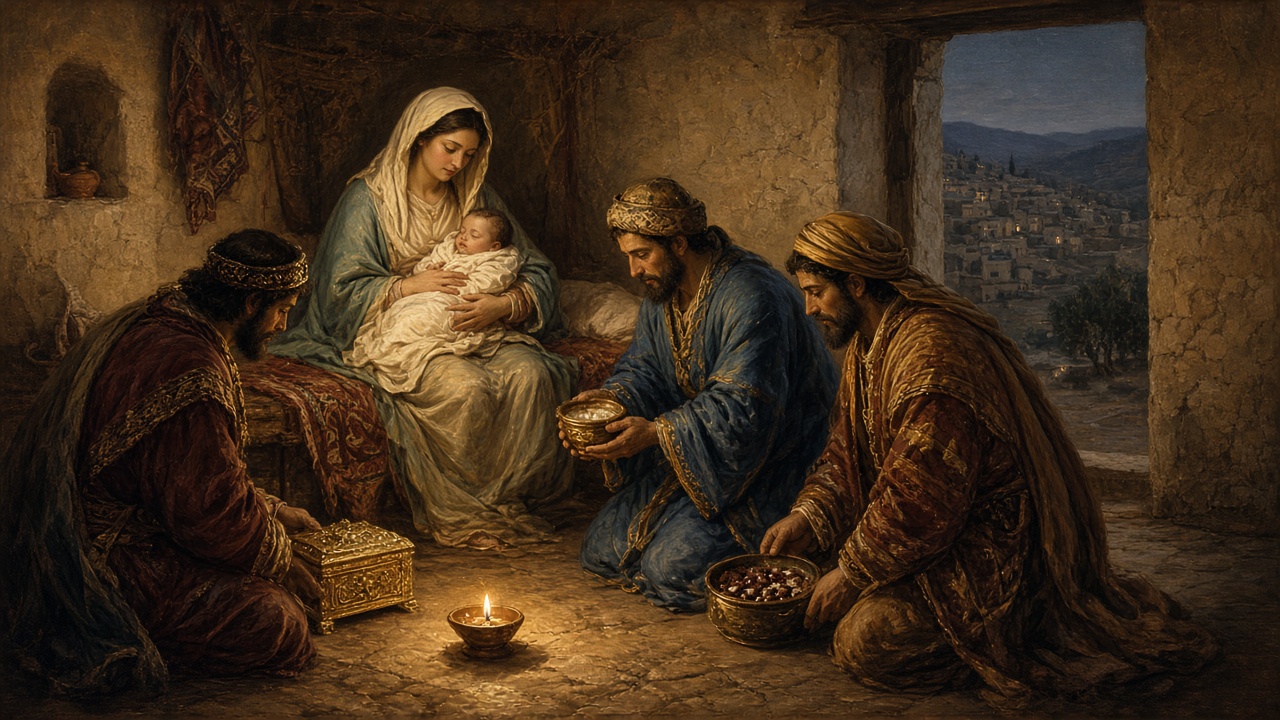
9Arrümanu nocoborese arrtaimia auqui niporrüma, cusürübo aübuma, tochenco onü taman porrü arrümanu cauta anati maniqui ñaüma. 10Arrümanuma mañoñünca pucünuñama nurria, nauquiche tarrtaimia manu nocoborese ane onü manu taman porrü. 11Numo süromampo besüro narrtarrüma ümoti maniqui ñaüma, anati ichepe nipiacütoti. Auqui bachesoiyoma esati y manaunuma ümoti. Yaübutama nibiaurirrimia, auqui macumananama ümoti, oro, rroriocorrü y mirra. La visita de los magos|src="CN01632b.tif" size="span" copy="© 1978 David C. Cook Publishing Co." ref="MAT 2.11" 12Au manu tobirri arrti Tuparrü nanti ümoma au niposiquirrimia:
—Champürrtü urria arrtü apasücübüca tato au niporrti yüriaburrü Herodes. Sane nauquiche basücübücoma tato besüro uimia au niporrüma auqui quiatarrü cutubiurrü.
Niyesüburrti Jesús au Egipto
13Nauquiche tüsüroma tato manuma mañoñünca, tamanti ángel itusiancanatiyü isucarüti José auqui niposiquirrti, nanti sane:
—¡Atüsai aiquiarrti maniqui ñaüma aübu nipiacütoti. Acosi au Egipto. Acamanu asiquia cheperrtü surapoi tatito asucarücü! Itopiqui arrti yüriaburrü Herodes rranrrti apacheriuruti naqui ñaüma, nauqui aitabairotiti.
14Auqui arrti José atüraiti, iquianatiti maniqui ñaüma aübu nipiacütoti au manu tobirri. Besüburuti aübuma au manu cürrü nürirri Egipto. 15Taha süsioma chepe numo coiñoti maniqui yüriaburrü Herodes. Arrüna sane pasao nauqui acoco arrümanu turapoiticaü Tuparrü tücañe turuquiti taman profetarrü. Nanti sane: “Rraemenca iyoti isaü na ayeti tato auqui Egipto”.
Bacüpuruti yüriaburrü Herodes nauqui ataborimia masiomanca
16Nauquiche tütusio ümoti yüriaburrü que arrümanuma mañoñünca encañaoma ümoti, chümarrtacarrüpatai ümoti ui nitüborirrti. Sane nauquiche bacüpuruti nauqui ataborimia namanaiña bama mañaümanca au manu pueblurrü Belén y au manu cürrü saimia. Taborioma uimia arrübama aübo aboma icu cürrü, hasta bama tütabe torrü añorrü ümoma. Itopiqui ta tütabe torrü añorrü nipiasaca manu nanenese auche tücañe arrtaimia nocoborese manuma mañoñünca cuamatü auqui tauna ümo tansürü. 17Sane cocono caüma arrüna corobo uiti profetarrü Jeremías tücañe. Nanti sane:
18Rabotü taman tosibirri au manu pueblurrü Ramá y fuerte nareocorrü y suchequirri.
Arrümanu areoro ta Raquel, areoro ui nisuchequirri isiu bama aürrü itopiqui chauqui tücoiñoma, chirranrrüpü nauqui anati naqui ipucünumucuta.
19Nauquiche tücoiñoti yüriaburrü Herodes, tamanti ángel esaquiti Tuparrü itusiancanatiyü isucarüti José au niposiquirrti nauquiche anancatiqui au Egipto, nanti sane ümoti:
20—Atüsai, aiquiarrti maniqui ñaüma aübu nipiacütoti y acosi tato au cürrü Israel, itopiqui chauqui tücoiñoma manuma rranrrüma aitabairomati naqui ñaüma.
21Auqui arrti José atüraiti, iquianatiti maniqui ñaüma aübu nipiacütoti. Basücübücoma tato au manu cürrü Israel. 22Nauquiche tipiatenti José que arrti Arquelao matoconoti itoboti Herodes naqui yaütoti, birrubuti José aüroti tato au Judea. Arrti ángel manitanati ümoti au niposiquirrti, nauqui aürotitü au manu cürrü nürirri Galilea. 23Nauquiche tiñataimia au Galilea, süromatü avivimia au manu pueblurrü nürirri Nazaret. Arrüna sane pasao nauqui acoco arrüna turapoimia bama profetarrü tücañe, que arrti Jesús tiene que nürirrtito uimia Nazareno.
Did you know?
Magi, Herod, and Nazareth
- The King Herod of this chapter is Herod the Great. His son Archelaus, by Malthace, a Samaritan woman, inherited a third of the kingdom: Idumea, Judea, and Samaria. Until a few days before Herod's death another son, Antipas, had been named successor, but in his last moments Herod named Archelaus; for fear of him, Joseph turned aside from Judea and withdrew to Galilee.Sources: Archelaus · the Bible text itself
- Matthew links the deaths of the boys in Bethlehem to words spoken through the prophet Jeremiah: a voice in Ramah, Rachel weeping for her children. Rachel, one of Jacob's wives, died giving birth to Benjamin and was buried by the wayside on the road to Ephrath, that is Bethlehem, directly north of the town. Her sepulchre is regarded with great veneration by the Jews.Sources: the Bible text itself · Rachel · Bethlehem
- Bethlehem, in the hill country of Judah, was earlier called Ephrath and was also known as the city of David; under the Romans it lay in Judea, the southernmost of the three divisions of Palestine. Joseph and Mary went instead to Nazareth in Galilee, their home, a town not mentioned in the Old Testament. The name Nazareth is generally supposed to come from the Hebrew netser, a shoot or sprout, though some connect it with a word for guarding or watching.Sources: Bethlehem · Judea · Nazareth · the Bible text itself
Notes written with AI assistance from open sources (Theographic Bible Metadata, CC BY-SA 4.0; Easton’s Bible Dictionary, public domain) and reviewed before publishing.
Places in this chapter
- Bethlehem · 31.704, 35.208 · verses 1, 5, 6, 8, 9, 16
- East · Today: region around Amman · 31.955, 35.934 · verses 1, 2, 9
- Jerusalem · 31.777, 35.234 · verses 1, 3
- Judea · Today: Judea 1 · 31.777, 35.234 · verses 1, 5, 22
- Egypt · 30.129, 31.308 · verses 13, 14, 15, 19
- Galilee · 32.760, 35.527 · verse 22
- Nazareth · 32.702, 35.298 · verse 23
Only places identified with high confidence are shown (90% or more according to the scholarly sources compiled by OpenBible). Period map: DARE (Digital Atlas of the Roman Empire), CC BY 4.0; modern map: © OpenStreetMap contributors; places: OpenBible.info (CC BY 4.0).
Credits and license for this translation
Manitanati Tuparrü
New Testament in Chiquitano (BL:cax:Chiquitano)
copyright © 2012 Wycliffe Bible Translators, Inc.
Language: Chiquitano
Translation by: Wycliffe Bible Translators, Inc.
Chiquitano[cax], Bolivia
Copyright Information
© 2012, Wycliffe Bible Translators, Inc. All rights reserved.
This translation text is made available to you under the
terms of the Creative Commons License: Attribution-Noncommercial-No Derivative Works.
( http://creativecommons.org/licenses/by-nc-nd/3.0/ )
In addition, you have permission to port the text to different file formats, as long as you
do not change any of the text or punctuation of the Bible.
You may share, copy, distribute, transmit, and extract portions
or quotations from this work, provided that you include the above copyright
information:
You must give Attribution to the work.
You do not sell this work for a profit.
You do not make any derivative works that change any of the actual words or punctuation of the Scriptures.
Permissions beyond the scope of this license may be
available if you contact
us with your request.
The New Testament
in Chiquitano
© 2012, Wycliffe Bible Translators, Inc. All rights reserved.
This translation is made available to you under the terms of the
Creative Commons Attribution-Noncommercial-No Derivatives license 4.0.
You may share and redistribute this Bible translation or extracts from it in any format, provided that:
You include the above copyright and source information.
You do not sell this work for a profit.
You do not change any of the words or punctuation of the Scriptures.
Pictures included with Scriptures and other documents on this site are licensed just for use with those Scriptures and documents.
For other uses, please contact the respective copyright owners.
2014-04-22
Source: http://ebible.org/caxNT/ · eBible.org