Matthew 11
Manitanati Tuparrü · Tap a verse to see its cross-references.
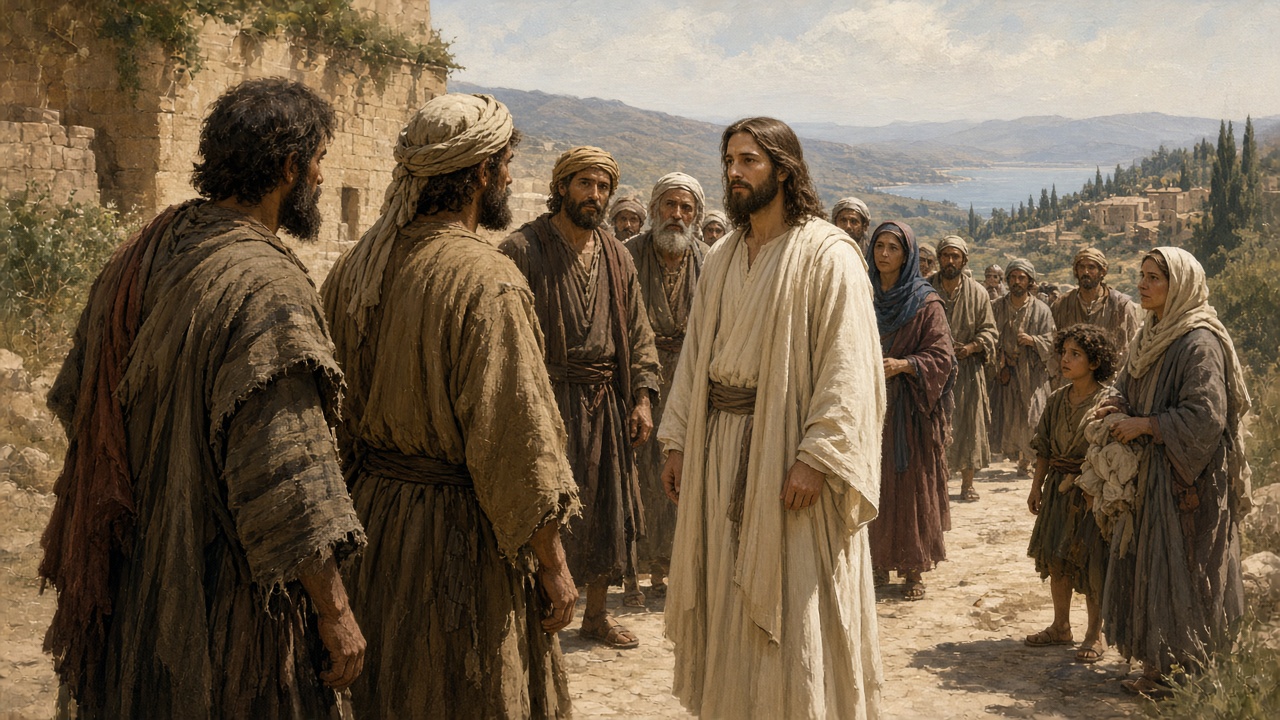
Arrübama yacüpusurrti Juan Bautista
1Nauquiche tüchauqui ñanunecacarrti Jesús ümo bama doce ñanunecasarrti, sürotitü auqui manu anunecati ubau ba piquiataca puebluca y poca.
2Arrti Juan Bautista anancati au preso. Ipiatenti nanaiña arrüna isamutenti Cristo. Auqui bacüpuruti ümo bama torrü ñanunecasarrti, nauqui ariorrüma esati Jesús 3anquirioma anquirioma pünanaquiti:
—¿Arrücü Cristo, naqui yebobotü, o tiene que suparrüpera cümenutiqui?
4Aiñumuti Jesús:
—Amecosi aburaboi isucarüti Juan enterurrü arrüna amarrtai y arrüna amoncoi. 5Aburasoi isucarüti que arrübama supuso asarama tato. Arrübama chamencopü amencoma tato. Arrübama maunrrocono ui lepra urriancama tato. Arrübama chonaunpüma onauma tato. Arrübama tücoiño süboricoma tato. Arrübama taquisürü, abe omirria manitacaca isucarüma, arrüba uiche ataesübuma eanaqui nomünantü. 6Aburasoi ito isucarüti arrüna sane: Urriampae nacarrüma bama oncomatü nurria iñemo.
7Nauquiche tüsüroma tato manuma ñanunecasarrti Juan, arrti Jesús manitanati icütüpüti Juan isucarü manuma macrirrtianuca, nanti:
—¿Isane nümoche abacatü aucutanu au rroense numo apapaseacati Juan? ¿Taqui abacatü amasaraiti ñoñünrrü naqui tacana taman nihi tutairri arrüna ane mapetonono ui maquiütürrü? No, champürrtü sane nacarrti Juan. 8¿O abacatü amasarati taman ñoñünrrü, naqui champü tacanache naibiquirrti? Arraño tusio aume que arrübama champü tacanache naibiquirrimia aboma au nipo bama mayüriabuca. 9¡Isanempü nümoche abacatü! ¿Taqui abacatü amasarati taman profetarrü? Bien ñemanauntu, arrti te profetarrti. Manrrüqui nüriacarrti pünanaquiti profetarrü. 10Arrti Juan tonenti maniqui coreorrü uiti Tuparrü. Ane te corobo icütüpüti Juan arrüna sane nurarrti Tuparrü ümoti Cristo:
Rracüpuca ümoti taman coreorrü nauqui acusürüti, aicoñocoti cutubiurrü acümenucu.
11Ñemanauncurratoe sucanañü aume —nanti Jesús ümo genterrü—, icu na cürrü champü tanati naqui manrrü nüriacarrti pünanaquiti Juan Bautista. Pero auna cauta üriabucati Tuparrü, arrti naqui chitonempatai ane manrrü nüriacarrti pünanaquiti Juan.
12‛Auqui numo aübo ayeti Juan Bautista anunecati, tanancatai nüriacarrti Tuparrü hasta caümainqui. Pero aboma bama churriampatai ümoma, sane nauquiche rranrrümampae aitochenacama. 13Itopiqui arrti Moisés y namanaiña bama profetarrü urapoimiacaü arrünarrtü üriabucati Tuparrü. Numo cuati Juan, chauqui tirranrrü acoco nurarrüma tücañe. 14Arrtü aurrianca apicoco arrüna sane, entonces apicoco. Arrti Juan tonenti profetarrü Elías, naqui yebobotü. 15Arraño ane namumasu, amonsapesio.
16Nantito Jesús:
—¿Aübuchepü ichepecanama bama macrirrtianuca arrüna tiemporrü? Arrübama macrirrtianuca caüma tacana masiomanca. Cupiusuma au plaza y tosibicoma ümo bama icumpañeruturrüma: 17“Supapunuca burrirri aume, pero chautococapü. Supasoniquia aume arrüna orronenatai, pero chabareocapü”. 18Itopiqui numo cuati Juan, amucanaño que anati choborese auti ui arrüna amarrtai charucupatai niyacarrti y chichabotipü vinorrü. 19Auqui isecatito arrüñü naqui Ñemanauncurratoe Ñoñünrrü. Irraca, ichaca y aburapoi iñemo que arrüñü chaborrüñü y tarucu nirraca. Amucanaño ito que arrüñü amigorrüñü ümo bama tarucu nomünantü uimia y arrübama mayacobraca impuestorrü. Pero tusiatai arrüna ñapanauncurrti Tuparrü ui arrüna urria isamutenti auna icu na cürrü.
Sane ñanunecacarrti Jesús.
Arrüba puebluca auna cauta chicocoromatipü Jesús
20Auqui arrti Jesús macuansomoconoti ümo bama pohoso ubau manio puebluca auna cauta manrrtai ñasamucurrti milagrorrü tücañe. Itopiqui arrüma champürrtü iñorronconomacü. 21Nanti sane ümoma:
—Autaquisürücatai bama auqui manio puebluca Corazín y Betsaida. Arrübama pohoso au manio puebluca Tiro y Sidón tarucu nomünantü uimia tucañe. Pero arrtü nampü omirriante arrüba milagrorrü taha tücañe, coboipü aiñorronconomacü, aibioma luto y manrrü tübütürrü itama, na atusi orronene ümoma. 22Bien sucanañü aume. Arrtü iñatai manu nanenese nesa bacurrtacarrü, tiene que atorri aume manrrü fuerte carrticurrü pünanaqui arrüna torriobo ümo bama auqui Tiro y Sidón. 23Y arraño bama auqui Capernaum, napaquioncopü tarucu manauncurrü aume. Pero arraño tiene que autapeneca au nusutu cürrü. Arrtü nampü omirriante arrüba milagrorrü au manu pueblurrü malorrü Sodoma tücañe, aninquipü caüma, itopiqui iñorronconomacüpü, y chiñarriopü. 24Ñemanauncurratoe sucanañü aume —nanti Jesús, —au manu nanenese ñana nesa bacurrtacarrü, arraño tiene que atorri aume carrticurrü manrrü fuerte pünanaqui arrüna carrticurrü torriobo ümo bama pohoso auqui Sodoma.
Ausiapata yesañü apacansa
25Au manu tiemporrü arrti Jesús meaboti sane:
—Arrücü Iyaü ane nüriaca ümo napese y ümo cürrü ito. Ñachampiencaca aemo, itopiqui aiñanecaquio arrüba sane pünanaqui bama namatü que tarucu ñapanauncurrüma y aitusiancaquio isucarü bama masiomanca. 26Sane te Iyaü. Itopiqui sane arrüna narrianca.
27Auqui nanti Jesús ümo manuma amoncoma acamanu:
—Arrti Iyaü itorrimiatati isüriacabo ümo nanaiñantai icu na cürrü. Arrüñü Aütorrti Tuparrü. Champüti naqui isuputaratiñü nurria, arrtiatai Iyaü. Y champüti naqui isuputaratiti nurria Iyaü, arrüñüantai ichepe bama itusiancacati isucarüma. 28Ausiapata tauna yesañü namanaiña bama batachebo ui tarucu penarrü aboi, y ui napacoconauncu ümo bacüpucuca. Apacansa. 29Apacoconaun iñemo, amonsoi nisura, apiña isiuquiñü, arrüñü champü causane sobi au nisüboriqui. Tarucu nibuenucu, sobi macansara nabausüpü. 30Arrüna nirracüpucu aume champürrtü cuerrtarrü naqui apicoco. Puerurrtai año apisamune.
Did you know?
John's question and the cities that did not repent
- From prison, John sent his disciples to ask whether Jesus was the one who was to come. Jesus told the crowds that John was more than a prophet—the messenger sent ahead to prepare the way—and, if they were willing to accept it, the Elijah who was to come. A Bible dictionary calls John the forerunner and says his mission was already the subject of prophecy, citing Isaiah 40:3 and Malachi 3:1; it also introduces Elijah as the Elias of the New Testament.Sources: the Bible text itself · John the Baptist · Elijah
- Jesus then denounced Chorazin, Bethsaida, and Capernaum, where most of his miracles had been performed, because they did not repent. A dictionary identifies Chorazin with modern Kerazeh, about two and a half miles up the Wady Kerazeh from Capernaum, and says that Capernaum, absent from the Old Testament, became Jesus' own city after he left Nazareth. It places Bethsaida on the east side of the lake, two miles up the Jordan in Gaulonitis, enlarged by Philip the tetrarch and named Julias after the emperor's daughter, though some have supposed there was only one Bethsaida, near where the Jordan enters the lake.Sources: the Bible text itself · Chorazin · Capernaum · Bethsaida
- He set those cities against Tyre and Sidon, which he said would have repented long ago in sackcloth and ashes, and against Sodom, which he said would have remained to this day. Sidon, on the Mediterranean coast about twenty-five miles north of Tyre, was the oldest Phoenician city there and the mother city of Tyre. A dictionary says the commerce of the whole world was gathered into Tyre's warehouses, and that Sodom, in the vale of Siddim, was destroyed by fire from heaven so completely that no trace of it has been found.Sources: the Bible text itself · Sidon · Tyre · Sodom
Notes written with AI assistance from open sources (Theographic Bible Metadata, CC BY-SA 4.0; Easton’s Bible Dictionary, public domain) and reviewed before publishing.
Places in this chapter
- Galilee · 32.760, 35.527 · verse 1
- Sidon · Today: Sandikli archaeological site in Sidon · 33.561, 35.372 · verses 21, 22
- Tyre · 33.271, 35.196 · verses 21, 22
Only places identified with high confidence are shown (90% or more according to the scholarly sources compiled by OpenBible). Period map: DARE (Digital Atlas of the Roman Empire), CC BY 4.0; modern map: © OpenStreetMap contributors; places: OpenBible.info (CC BY 4.0).
Credits and license for this translation
Manitanati Tuparrü
New Testament in Chiquitano (BL:cax:Chiquitano)
copyright © 2012 Wycliffe Bible Translators, Inc.
Language: Chiquitano
Translation by: Wycliffe Bible Translators, Inc.
Chiquitano[cax], Bolivia
Copyright Information
© 2012, Wycliffe Bible Translators, Inc. All rights reserved.
This translation text is made available to you under the
terms of the Creative Commons License: Attribution-Noncommercial-No Derivative Works.
( http://creativecommons.org/licenses/by-nc-nd/3.0/ )
In addition, you have permission to port the text to different file formats, as long as you
do not change any of the text or punctuation of the Bible.
You may share, copy, distribute, transmit, and extract portions
or quotations from this work, provided that you include the above copyright
information:
You must give Attribution to the work.
You do not sell this work for a profit.
You do not make any derivative works that change any of the actual words or punctuation of the Scriptures.
Permissions beyond the scope of this license may be
available if you contact
us with your request.
The New Testament
in Chiquitano
© 2012, Wycliffe Bible Translators, Inc. All rights reserved.
This translation is made available to you under the terms of the
Creative Commons Attribution-Noncommercial-No Derivatives license 4.0.
You may share and redistribute this Bible translation or extracts from it in any format, provided that:
You include the above copyright and source information.
You do not sell this work for a profit.
You do not change any of the words or punctuation of the Scriptures.
Pictures included with Scriptures and other documents on this site are licensed just for use with those Scriptures and documents.
For other uses, please contact the respective copyright owners.
2014-04-22
Source: http://ebible.org/caxNT/ · eBible.org