John 10
Dios Chani · Tap a verse to see its cross-references.
Oveja panë chani
1—Mato parayamaquia —i Jesu niquë—. Oveja yomaxëni ca tsi xo toa oveja panë caiti qui jicoyamahai cato. Iti huëtsá tsi matarahi quiha pë. 2Jama, panë caiti qui jicohi quiha oveja ototi ibo. 3Ja jono tsi quiha ja bax caiti japëcahi quiha panë obëso cato. Jicoxo tsi jato janë́ tsi jahuë oveja bo quënahi quiha. Jabi iboba joi cahëhi quiha oveja bo. Quënaxo tsi cacha jato rëquëninihi quiha. 4Paquëmahax jato bëbo cahi quiha ibo. Jatsi, banahuacani quiha jahuë oveja, jahuë joi cahëquí na. 5Joni huëtsa banahuayamacani quiha. Ja quima jabacaxëcani quiha jahuë joi cahëyamahi na —nëa tsi Jesu nëcaniquë.
6Naa chani pistia Jesú yoaniquë nohiria bo mëbixëna. Jama, ja yoani ca nohiria bá cahëyamani quiha.
Ototi Ibo jiaxëni cato
7Jatsi quiha jahuë chani Jesú bërohuaniquë ja cahëyoicano. Ja nëcani quiha:
—Mato parayamaquia. Oveja panë Caiti ca ëa xo naa ra. 8Yomaxëni cabo jascaria tsi xo ëa bëbo bëcanish cabo, naa mahitsa ca tiisimacanaibo. Jato qui nicayamahi quiha noho oveja yoi bo. 9Jabi Caiti xo ëa ra. Xabahamahacaxëti xo toa tsohuëcara ë noho jicoti cato. Jahá bësoxëquia. Toa shomahuaxëhi quiha Dios. Yamaxëhi quiha toa ja naris-haina iquia.
10‘Jama, oveja yomahi johi quiha yomaxëni cato. Joxo tsi oveja namëhi quiha. Quëyohi johi quiha rë. Jabi tocahi quiha mahitsa ca tiisimacanaibo pë. Jama, ëa ti tsi xo toa nohiria bësomahi johaina, oquë tsi ja bësocano iquish na. 11Jabi oveja ototi ibo jiaxëni ca ëa xo naa. Emë aapiquia oveja bax nati. 12Jama, oveja jisbëriahi quiha yonati, johai ca cama jisi na. Jishopë, jato obëso ca ma xo toa. Oveja ibo ma quiha. Ja jabano tsi oveja pihi quiha camano. Jatsi jato pacanamahi quiha rë. 13Jasca, parata quëshpi roha yonocohi quiha yonati. Oveja noiyamahi quiha rë. Jabi ja tsi xo toa jabahi quiha yonati, cama joquë no. 14Jama, oveja ó bësoti jiaxëni ca ëa xo naa. Noho oveja cahëquia, naa ëa noho Jahëpá cahëhai jascaria. Jascaria, ëa cahëcani quiha noho oveja, naa noho Jahëpa ë cahëhai jascaria. Oveja bax ëmë aapiquia nati. 16Jasca, oveja huëtsa bo jaya xo ëa ra. Carayana ca nohiria bo ca xo. Jato ri rëquëninixëquia. Noho joi qui nicacaxëcani quiha jato ri. Jatsi huësti ca nohiria maxo icaxëcani quiha jodiobo, carayanabo tëquë. Huësti ca ototi ibo jayacaxëcani quiha.
17‘Jabi ëa noihi quiha noho Jahëpa, oveja bax nati ëmë ë acai iqui na. Rësohax bësotëquëxëquia. 18Jabi yama tsi xo toa jahuë chamá tsi ëa namëti mëtsa cato. Jama, caxacanaibo qui ëmë aquia nati. Noho chamá tsi ëmë aquia nati. Jasca, noho chamá tsi bësotëquëxëquia. Jabi noho Jahëpá ëa raaniquë nohiria bo bax nati —nëa tsi quiha nohiria bo qui Jesu nëcaniquë.
19Jatsi Jesú yoani ca iqui tsi jodiobo mapëxënaniquë. Rabë ca shinahai ca ja jayacani quiha Jesu tahëxo na. Jatsi,
20—Yoshi jaya xo naa joni ra. Yoyoxëni quiha. ¿Jëniriaxo raca ja qui nicacanai pë? —i jodio huëstima cabo niquë.
21Jama,
—Nëca tsi chaniti mëtsama xo yoshi jaya cato ra. ¿Jënahuariaxo raca yoyoxëni cató joni bo taismana? —i jodiobo tëxë bo niquë ja yoati na.
Jodiobá Jesu chahahuayamanina
22Jabi Jerusalén tsi quiha jodiobo mani iniquë. Dios qui jamë aquëquëti fiesta ja ini quiha. Jatiroha ca xënipá tsi quiha naa fiesta ja i-ipaocani quiha, matsitiyá no. 23Toatiyá tsi quiha arati xobó tsi co-cohi Jesu iniquë, naa Salomón Portal icanai cató no. 24Co-cojano tsi quiha jodioba chama bo ja qui quëtsoniquë ja qui chanicatsi na.
—¿Jaha no pasohai ca Xabahamati Ibo ni mia sa? Bëro tsi noqui yoahuë. Yosanaqui noa ra. ¿Jënino noqui yoahai sa? —i Jesu qui jaca niquë.
25Jatsi Jesú jato quëbiniquë:
—Mato ë yoahitaquë ra. E yoaquë tsi ëa chahahuayamahitaquë mato pë. Ea yoati tsi jabija ca chanihi quiha ë acai ca jisti bo. Jabi naa jisti bo aquia noho Jahëpa chamá no. 26Jama, ëa chahahuayamaqui mato rë, noho oveja ma nomari iqui na. 27Noho joi nicahi quiha noho oveja yoi bo. Jasca, noho oveja bo cahëquia. Ea banahuacani quiha. 28Jasca, jato bëso-bësopaomaxëquia. Bënotimaxëni ca xo. Jabi yama tsi xo toa ë quima jato tsëcati mëtsa cato ra. 29Jabi ë qui jato noho Jahëpá aniquë, jato ó ë bësono. Jatiroha cabo oquë tsi xo noho Jahëpa ra. Jabi yama tsi xo toa noho Jahëpa quima jato tsëcati mëtsa cato iquia. 30Jasca, ëa, noho Jahëpa, tihi ca tsi xo huësti roha cato —nëa tsi Jesu nëcaniquë.
31Jatsi pë jodiobá maxax bo topitëquëniquë axëna.
32Jatsi Jesú jato quëbiniquë:
—Jisti huëstima cabo ë aquë mato bax na jisti. Ja acacaniquë noho Jahëpa chamá no. ¿Jëni ca jisti jiaxëni ca quëshpi tsi ëa acascanai pë? —iquiina.
33Jatsi quiha jodiobá quëbiniquë:
—Mi acai ca yonoco jia ca quëshpi tsi mia acasyamaxo noa; jama Dios mi ocahuahai quëshpi ja nori. Yoi tsi xo toa mi chanihaina ra. Jasca, Dios manëcasqui mia pë, joni roha mi nori —i jaca niquë.
34Jatsi Jesú quëbiniquë:
—Yoi ma xo ë chanihana ra. Quënëhacanish cabo ó tsi “dios bo” mato rëquëyamabo quënahacani quiha, “Dios bo xo mato” i jato qui Dios quë no. 35Quiayamahi quiha Dios Chani ra. “Dios bo” ja quënahacani quiha, naa Dios Chani bicanish cabo. Dios bo xo nohiria tëquë; jahuë jabi ja jayacanai iqui na. 36Japi “Dios baquë xo ëa” iti mëtsa xo ëa ri ra. Jabi noho Jahëpa Diós ëa biha ca tsi mai qui ëa ja raaniquë. Jatsi, ¿jënahuariahax raca “Dios ocahuaqui mia pë” i ë qui ma na, “Dios Baquë xo ëa” i ë quë no? 37Noho Jahëpa yonoco pi ë ayamano tsi ëa chahahuayamacana. 38Jama, jahuë yonoco pi ë ano tsi ë acai ca jisti bo chahahuacana, ë qui ma chitimiquë mari. Noho jisti bo chahahuapiquí tsi ë nohó Jahëpa iquiina, jahá ë iquiina, tihi cabo cahëxëqui mato tia —nëa tsi Jesu nëcaniquë.
39Jatsi Jesu qui ja tsamitëquëcascaniquë namëxëna. Jama, jato quima ja paxaniquë ra. 40Paxahax tsi quiha ani Jordán Jesú shitaniquë. Shitahax toa tsi quiha, naa jariapari ca Juán nohiria bo ashimani cató tsi ja chitëniquë. 41Toatiyá tsi quiha Jesu qui huëstima cabo bëcaniquë.
—Jisti bo Juán ayamaniquë. Jama xo naa joni ra. Ariahi quiha ra. Naa joni yoati tsi jabija ca Juán yoani quiha —i nohiria bo niquë.
42Toá tsi quiha huëstima cabo ja qui chitiminiquë.
Did you know?
The Good Shepherd
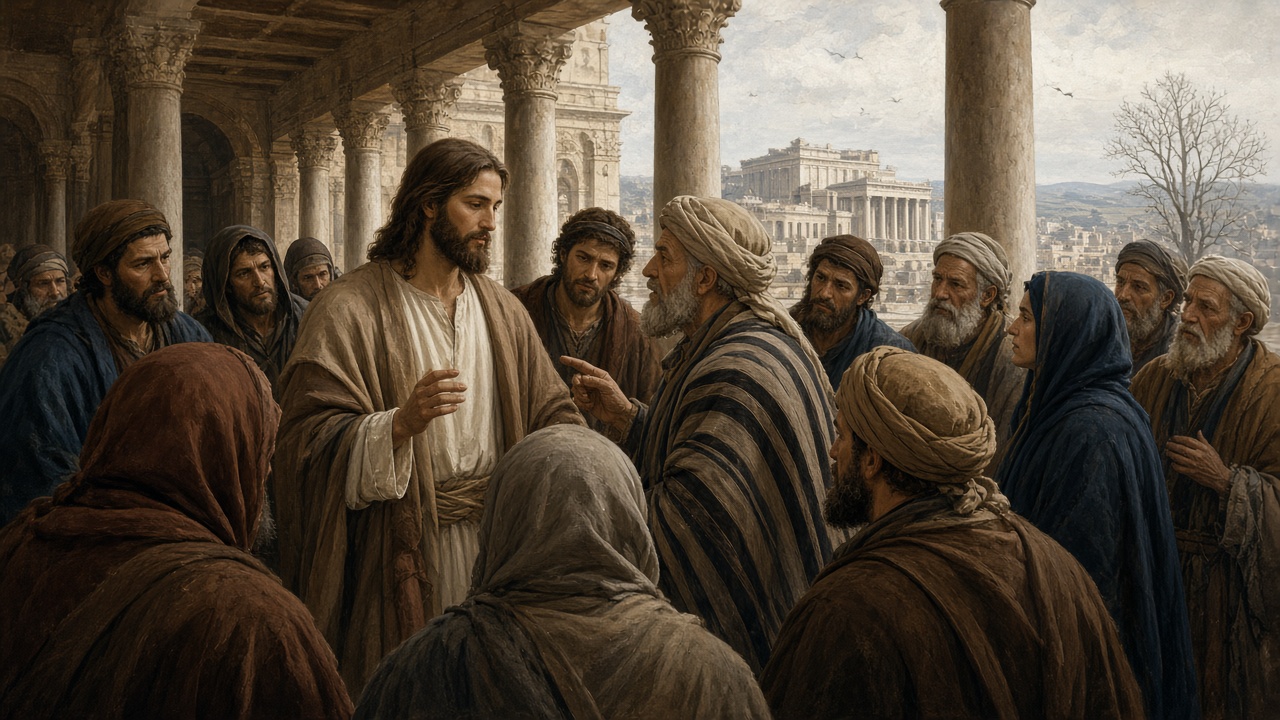
- During the Feast of Dedication in Jerusalem it was winter, and Jesus was walking in the temple courts in Solomon's Colonnade. The name Jerusalem, in a dual form, means "possession of peace" or "foundation of peace"; that form probably refers to the mountains of Zion and Moriah, or, as some suppose, to the upper and lower city. Solomon's Hebrew name, Shelomoh, means "peaceful."Sources: the Bible text itself · Jerusalem · Solomon
- A chronology of Gospel events dates the Good Shepherd teaching to AD 29, and dates a time of teaching and healing from Perea to Jerusalem to AD 30.Sources: The Good Shepherd Teaching · Teaching and Healing in Perea to Jerusalem
- Jesus then went back across the Jordan to the place where John had first been baptizing, and many people there believed in him. John was of priestly descent: his father, Zacharias, was a priest of the course of Abia, and his mother, Elisabeth, was of the daughters of Aaron. His birth, six months before that of Jesus, was foretold by an angel; those who came said that John never performed a sign, yet everything he had said about Jesus was true.Sources: the Bible text itself · John the Baptist
Notes written with AI assistance from open sources (Theographic Bible Metadata, CC BY-SA 4.0; Easton’s Bible Dictionary, public domain) and reviewed before publishing.
Places in this chapter
- Jerusalem · 31.777, 35.234 · verse 22
- Solomon’s Portico · Today: in Jerusalem · 31.777, 35.234 · verse 23
- Jordan · Today: Jordan River · 31.761, 35.558 · verse 40
Only places identified with high confidence are shown (90% or more according to the scholarly sources compiled by OpenBible). Period map: DARE (Digital Atlas of the Roman Empire), CC BY 4.0; modern map: © OpenStreetMap contributors; places: OpenBible.info (CC BY 4.0).
Credits and license for this translation
Dios Chani
New Testament in Chácobo (BL:cao:Chácobo)
copyright © 2010 Wycliffe Bible Translators, Inc.
Language: Chácobo
Translation by: Wycliffe Bible Translators, Inc.
Chácobo [cao], Bolivia
Copyright Information
© 2010, Wycliffe Bible Translators, Inc. All rights reserved.
This translation text is made available to you under the
terms of the Creative Commons License: Attribution-Noncommercial-No Derivative Works.
( http://creativecommons.org/licenses/by-nc-nd/3.0/ )
In addition, you have permission to port the text to different file formats, as long as you
do not change any of the text or punctuation of the Bible.
You may share, copy, distribute, transmit, and extract portions
or quotations from this work, provided that you include the above copyright
information:
You must give Attribution to the work.
You do not sell this work for a profit.
You do not make any derivative works that change any of the actual words or punctuation of the Scriptures.
Permissions beyond the scope of this license may be
available if you contact
us with your request.
The New Testament
in Chácobo
© 2010, Wycliffe Bible Translators, Inc. All rights reserved.
This translation is made available to you under the terms of the
Creative Commons Attribution-Noncommercial-No Derivatives license 4.0.
You may share and redistribute this Bible translation or extracts from it in any format, provided that:
You include the above copyright and source information.
You do not sell this work for a profit.
You do not change any of the words or punctuation of the Scriptures.
Pictures included with Scriptures and other documents on this site are licensed just for use with those Scriptures and documents.
For other uses, please contact the respective copyright owners.
2014-04-22
Source: http://ebible.org/caoNT/ · eBible.org