Matthew 11
Yakʼusda bughunek: k’andit khunek neba lhaidinla · Tap a verse to see its cross-references.
Nanah John yugha hoodul'eh, 'en John Sizi ts'un whebalh'a John dune too be 'ulhen, 'en nanah yugha hoodul'eh, 'en Sizi ts'un wheóobalh'a
1'Aw 'et Sizi lanezi 'o 'at nanah yugha hoodul'eh, 'en ts'iyaintsuk ndo budáni 'ustl'e' 'udeja, 'et bughu whénya. 'Uts'un keyah ts'un whenya dune hodutelh'eh 'ink'ez hubulh yatelhtuk wheni. 2'Aw 'et John ndalts'ut 'et Christ be 'ut'en k'ah whulh uduzts'ai. 'Et huwa nanah yugha hoodul'eh, 'en John Sizi ts'un wheóobalh'a. 3'Et hiyoodulhkut, “Nyun ih whusatéyalh inli, k'us 'uyoon tulih ka ts'itóo'en?” 4'Et Sizi njan ndo búlhni, “John bugha nanaht'az t'eh, ndet whunélh'en 'ink'ez ndet whudáhts'o, 'et ts'iyawh ndudóohni. 5'Et chawhés'en chah 'et honilh'en nasdli. Dzuh nuhudelh, 'en soo nahudelh nahúsdli. Hubuka whulhjut chah leprosy hiyúlhni, butsun hoolah nasdli, 'ink'ez cha'hudusts'uk chah 'ahudits'o nasdli. Yaidla chah dináhudidel 'ink'ez tel'en chah khunek unzoo, 'i be hubulh yaintuk ho' hint'ah. 6'Et ndunnah si sugha 'aw buba dzuh chailel t'eh, 'en degha nus hoonzoo bughá whults'ut.” 7'Et ndunnah nanah whehá'az, Sizi ndunnah 'ilhunahuwésdel, 'en njan John bugha hubulh yawhenilhtuk hoh ndo búlhni, “Di teh'ilh ka dune chahóot'ih ts'ih whéhdel? Tl'o ghazilh nonulhts'i, 'i tulih teh'ilh nahzun ih? 8Ndet simba hukwa tsi hoohli whuteh'ilh? Dune naih duchut, 'i be soo naduja, 'en tulih teh'ilh nahzun ih? Sih soo zelhts'ai, ndunnah naih duchut, 'i be dune unli, 'aw 'en zeh hubudayi cho bukoo hudelhts'i. 9'Et ndet whuteh'ilh hukwa tsi hóohli? Nus whunilh'en tulih? A, 'alha' hoont'ah. 'Et 'unhwhudúsni, nus whunilh'en degha nus hoonzoo whunalh'en! 10Ndun 'en bugha 'uk'une'úsduguz, 'i 'et ndutni,
‘Sih soo zelhts'ai 'uyoon khunek suba na'a, 'en ntsuh telh'alh.
Nts'oh lhutéyalh mba lhaoodutelilh ka.’
11Ts'ah'un na'a 'ún whudusni, ts'iyannah whuzdli, 'aw John dune too be 'ulh'en degha nus dezti hoolah. 'Et whunts'ih nts'e yak'uz k'úne' whul'en, ndan degha nus dezti chailah, 'en degha nus uncha ho' 'int'ah. 12'Et hoh da John dune too be 'ulh'en be whe' whudit'en, 'et k'an dzin whuts'un, yak'uz nts'e k'úne' whul'en, 'et yak'uz huhoolhdel, 'ink'ez huhoolhdel, 'en ts'iyawh yak'uz da'hudutóoyis hukwa' hut'en. 13John whusateyalh whuts'un, nus whunilh'en hube' dustl'us, 'ink'ez Moses be' dustl'us chah, ndet daóotenilh hubudani, 'et 'uwhulhni. 14'Et daja nuhwhudúsni, soo nuhwhuba 'alha' whutet'ilh t'eh, ndun nus whunilh'en Elijah whusateyalh, John 'en 'int'ah, 'et huwa. 15Ndan budzo hooni, 'en 'ahoozólhts'a huba' hoont'ah. 16'Et yuk'edíndeh nts'e na'a simba nuhwhuba lhuzih neooboosdlelh? Ndez na'a njan duhínt'ah hoh 'uskehyaz nduhúlt'ah 'ink'ez nts'e ts'uyi, 'i be 'ooket 'et hudelhts'i. 'en dudulh dunekah buts'u hahuyih hoh ndó buhútni,
17‘Be ts'ujun, 'i nuhwhuba be ts'ujun,
'et whunts'ih neba chanuzahdak.
'Ink'ez nuhwheni nuhwhuba tso ts'inli,
'et whunts'ih 'aw wáhtso ghaít'ah!’
18'Et John dune taninya hoh 'aw cha'us'al 'ink'ez 'aw tachasnai. 'Et highu yalhtuk ho' hutni, ‘Nududeh, 'i ntsi' buyudínda,’ dahni. 19'Et yinkak dune ye', 'en dune hubutaninya hoh hubula whé'ni'al 'ink'ez hubula tawhénitnai, 'et 'uhutni, ‘Ndun 'en bucha hooncha 'ink'ez mai too chah 'utnai. Sooneya nalhdzooh 'ink'ez lubeshi 'ulh'en, 'en hubulh dunekah 'int'ah,’ dáhni. 'Et whunts'ih ndunnah Yak'usda bugha whunih suli, 'en ts'iyawh ndi hiye whunih, 'i be ts'ah'un 'uhint'ah suli.”
Ndunnah hubeni lht'anahádunoolelh hukwa cha'hunízun, 'en dawhultsi' hubugha óotelts'ulh
20'Et hukw'elh'az nts'e keyah whuti totsuk 'ut'en ncha, 'i ba' yílya, 'i ndut'en hukwa' budáni. 'Aw hubeni lht'anahádunoolelh hukwa cha'hunízun. 21'Et huwa 'utni, “Nuhwheni Chorazin whut'en, 'ink'ez nuhwheni Bethsaida whut'en chah, dawhultsi' 'et nuhts'u whélts'ulh! Soo cho soozélhts'ai 'uda ndet nduhóolcho hoolhtus nuhnat ne'whust'en, ndunnah Tyre 'ink'ez Sidon whut'en, 'en chah bunat 'et ndúhooja t'eh, 'uda da hubeni lht'anahádunoolelh, 'ink'ez doso naih be húdelhts'i 'ink'ez lhez tsi la hidudzih wule da. 22'Et whunts'ih ndun whudusni, ndet dzin nuhwhuba whusawhutelts'ulh nts'e na'a nuhwhuba nahutedeh ka, 'et ndunnah hubulh dawhutenilh, 'et nuhwheni 'o nus 'uwhultsi' 'et nuhts'u whelts'ulh. 23'Ink'ez nuhwheni Capernaum whut'en nduk yak'uz huba soo áht'ah nahzun ih? 'Awundooh! 'Et kwuncho yuh ts'ih nuhotelhdulh! 'Alha 'uda ndet hoolhtus nuhnat ne'whust'en, ndunnah Sodom whut'en, 'en chah bunat 'et ndúhooja t'eh, 'awhuz da bukeyah 'et whuz'ai wule da. 24'Et whunts'ih ts'ah'un 'un whudúsni, dahoont'ah nuhwhuba whusawhutelts'ulh, nts'e na'a nuhwhuba nahutedeh ka, 'et ndunnah Sodom whut'en hubulh dawhutenilh, 'et nuhwheni 'o nus 'uwhultsi' 'et nuhts'u whélts'ulh.”
Sizi ndo búlhni, “Nuhwheni ts'iyawh dez ahdulh 'ink'ez natelhuyis nuhgha óotes'alh”
25Sizi 'awhuz hubulh yalhtuk 'et ndutni, “'ABá nyun nyudélhti. Yak'uz 'ink'ez yun k'ut huMoodihti inli. Whunih 'ink'ez hoodul'eh, 'en ndi 'i ts'iyawh buch'a whunte'i. 'Et whunts'ih 'uskiyaz li'int'ah, 'en bunalhts'et hahó'ai. 26'Et whunts'ih 'aBá ndet 'uhóonla hoonínt'i. Ndoh honeh. 27Se'aBá ts'iyawh stl'ahónla, 'ink'ez 'en buYe' ndan unli ts'iyannah t'ehonízun. Ba'aBá 'aw 'en zeh t'eininzun. 'Ink'ez ndan be'aBá unli, buYe' 'aw 'en zeh t'eininzun. 'Ink'ez ndan buYe' 'onghun ts'iyawh wheoobuntelhtun hukwa' ninzun t'eh, 'en zeh huba' hoont'ah. 28Nuhwheni ts'iyawh ndan 'ut'en ulhtus, 'i 'ulh'en 'ink'ez ndan ndaz, 'i nuhle li'aht'ah, nuhwheni ts'iyawh dez ahdulh 'ink'ez nats'ulyis nuhgha óotes'alh. 29Ndai se' 'ut'en, 'i ulhchoot 'ink'ez nedúht'aih li'ahleh 'ink'ez si sugha hoodulhú'eh. 'Aw dune ch'a nucha'zust'en 'ink'ez ts'iyannah tah te'dudulhú'en 'et huwa. 'Et whuz na'a nuhzul nátelyis huba nahóh'alh. 30Ndi úlhchoot, 'i 'aw nuhwhuba hubugha chahóolnah tele, 'ink'ez se'ut'en k'ah chah hoondzak tele.”
Did you know?
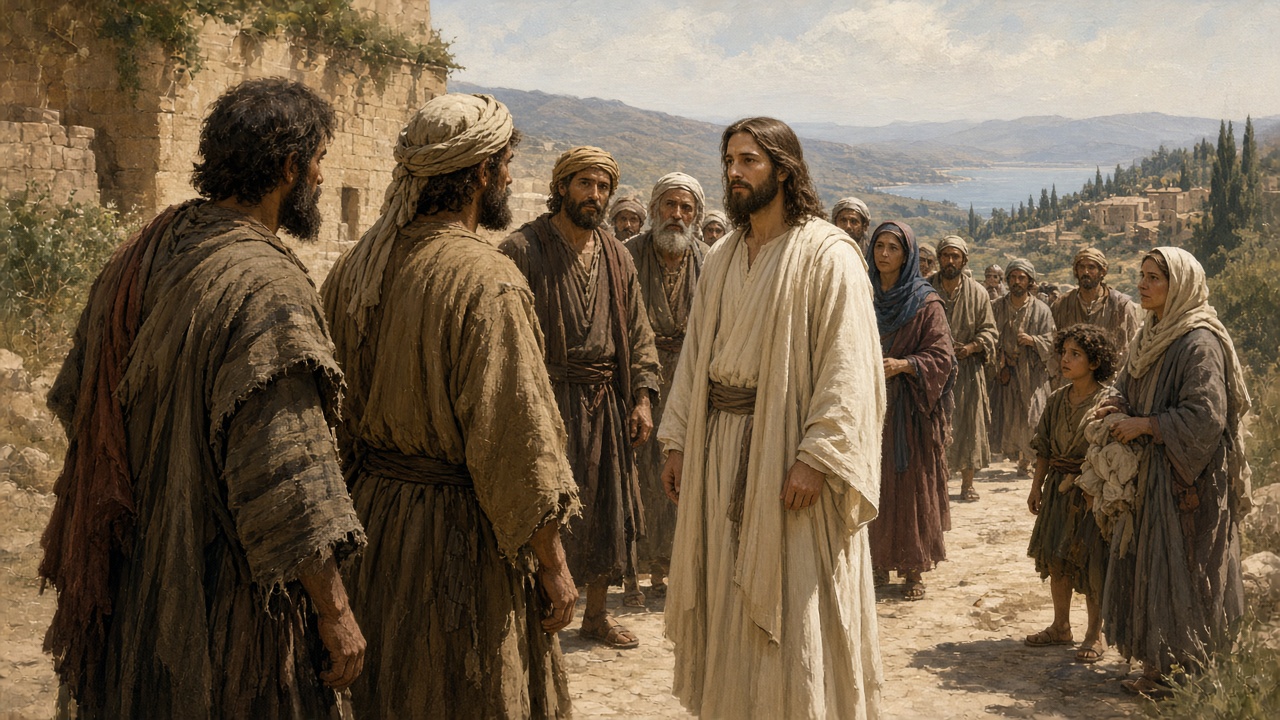
John's question and the cities that did not repent
- From prison, John sent his disciples to ask whether Jesus was the one who was to come. Jesus told the crowds that John was more than a prophet—the messenger sent ahead to prepare the way—and, if they were willing to accept it, the Elijah who was to come. A Bible dictionary calls John the forerunner and says his mission was already the subject of prophecy, citing Isaiah 40:3 and Malachi 3:1; it also introduces Elijah as the Elias of the New Testament.Sources: the Bible text itself · John the Baptist · Elijah
- Jesus then denounced Chorazin, Bethsaida, and Capernaum, where most of his miracles had been performed, because they did not repent. A dictionary identifies Chorazin with modern Kerazeh, about two and a half miles up the Wady Kerazeh from Capernaum, and says that Capernaum, absent from the Old Testament, became Jesus' own city after he left Nazareth. It places Bethsaida on the east side of the lake, two miles up the Jordan in Gaulonitis, enlarged by Philip the tetrarch and named Julias after the emperor's daughter, though some have supposed there was only one Bethsaida, near where the Jordan enters the lake.Sources: the Bible text itself · Chorazin · Capernaum · Bethsaida
- He set those cities against Tyre and Sidon, which he said would have repented long ago in sackcloth and ashes, and against Sodom, which he said would have remained to this day. Sidon, on the Mediterranean coast about twenty-five miles north of Tyre, was the oldest Phoenician city there and the mother city of Tyre. A dictionary says the commerce of the whole world was gathered into Tyre's warehouses, and that Sodom, in the vale of Siddim, was destroyed by fire from heaven so completely that no trace of it has been found.Sources: the Bible text itself · Sidon · Tyre · Sodom
Notes written with AI assistance from open sources (Theographic Bible Metadata, CC BY-SA 4.0; Easton’s Bible Dictionary, public domain) and reviewed before publishing.
Places in this chapter
- Galilee · 32.760, 35.527 · verse 1
- Sidon · Today: Sandikli archaeological site in Sidon · 33.561, 35.372 · verses 21, 22
- Tyre · 33.271, 35.196 · verses 21, 22
Only places identified with high confidence are shown (90% or more according to the scholarly sources compiled by OpenBible). Period map: DARE (Digital Atlas of the Roman Empire), CC BY 4.0; modern map: © OpenStreetMap contributors; places: OpenBible.info (CC BY 4.0).
Credits and license for this translation
Yakʼusda bughunek: k’andit khunek neba lhaidinla
New Testament in Carrier, Southern (CA:caf:Carrier, Southern)
copyright © 2002 Wycliffe Bible Translators, Inc.
Language: Carrier, Southern
Translation by: Wycliffe Bible Translators, Inc.
Carrier, Southern [caf], Canada
Copyright Information
© 2002, Wycliffe Bible Translators, Inc. All rights reserved.
This translation text is made available to you under the
terms of the Creative Commons License: Attribution-Noncommercial-No Derivative Works.
( http://creativecommons.org/licenses/by-nc-nd/3.0/ )
In addition, you have permission to port the text to different file formats, as long as you
do not change any of the text or punctuation of the Bible.
You may share, copy, distribute, transmit, and extract portions
or quotations from this work, provided that you include the above copyright
information:
You must give Attribution to the work.
You do not sell this work for a profit.
You do not make any derivative works that change any of the actual words or punctuation of the Scriptures.
Permissions beyond the scope of this license may be
available if you contact
us with your request.
The New Testament
in Carrier, Southern
© 2002, Wycliffe Bible Translators, Inc. All rights reserved.
This translation is made available to you under the terms of the
Creative Commons Attribution-Noncommercial-No Derivatives license 4.0.
You may share and redistribute this Bible translation or extracts from it in any format, provided that:
You include the above copyright and source information.
You do not sell this work for a profit.
You do not change any of the words or punctuation of the Scriptures.
Pictures included with Scriptures and other documents on this site are licensed just for use with those Scriptures and documents.
For other uses, please contact the respective copyright owners.
2014-04-22
Source: http://ebible.org/cafNT/ · eBible.org