John 10
Yakʼusda bughunek: k’andit khunek neba lhaidinla · Tap a verse to see its cross-references.
Sizi hubodulh'eh hoh 'utni, “Si susheep ghunli 'ust'ah. Ndunnah soo sulh 'út'en, 'en se'usheep hinli.”
1'Et Sizi ndo búlhni, “Soo ts'ah'un na'a 'un whudúsni, ndan sheep ba nanestl'oo 'aw dáti k'et dáchayal 'ink'ez 'ants'ih nanestl'oo tus telhget t'eh, 'en dune 'undunut'ih 'int'ah. 2'Et ndan dáti ts'ih dayih, 'en sheep ghunli 'int'ah. 3'En dáti ghunli yuba da'dututih. 'Et t'eh sheep buboozi be hubuka hunih t'eh, hidits'o huwa t'ehinínzun 'ink'ez 'az hiyuntulh'us. 4Tinaóobulih hukw'elh'az, 'et hubutsuh teyih 'ink'ez sheep ts'iyawh hiyunelh'us, highunek t'ehinínzun 'et huwa. 5'Et 'ants'ih hoh neya, 'en 'aw hiyuntoolh'as ghaít'ah. 'Ants'ih hoh núya 'int'ah 'aw bughunek t'ehinízun 'et huwa hich'a nutsilhdelh,” hubúlhni. 6'Et Sizi ndi higha hódool'eh ka hubulh náwhulnuk, 'et whunts'ih daja ni hoh 'utni 'aw t'ehonízun. 7'Et huwa doo chah zeh Sizi ndo búlhni, “Soo ts'ah'un na'a 'un whudúsni, Si susheep ba dáti usdli ho 'ust'ah. 8Ndunnah sutsuh whusahándel, 'en 'undunut'ih 'uhint'ah, 'et huwa 'aw sheep chaboozílhts'ai. 9Si datí 'ust'ah. Ndunnah si sugha dahúnindel, 'en ts'iyawh hudutejih. Dahúnindel 'ink'ez whuz 'az whehándel t'eh, tl'o k'ut nahuhóote'alh. 10'Undunut'ih, 'en 'uduntet'ih 'ink'ez dune tuzelhghelh 'ink'ez tinta óobutélhlilh 'et wheni dayih. 'Et si whusáya hoh 'ilhuz wheni hiye khúna 'i 'utet'ilh 'ink'ez ndi 'ilhuz hiye khúna, 'i hiyit'i t'eh, 'aw hoonli whe ndunoodzit ghaít'ah. 11Si nuszoo sheep ghusdli 'en 'ust'ah. Sheep ghunli unzoo, 'en ye khúna 'i dude'usheep ba yuladutetnih. 12'Et lhuhul'a, 'en 'aw sheep ghunli ilah 'int'ah. 'Ants'ih sheep yughole ka 'ul'a. Sheep 'aw busheep ilah 'uhint'ah, 'et huwa yus whuz de úlgwulh yunilh'en t'eh, sheep hubula dutnih 'ink'ez whetsílhyih. 'Et yus bulunah huboogooh 'et 'onghun chah hich'a wheyálwus. 13Ndan lhúhul'a, 'en 'ants'ih 'ul'a 'int'ah, 'et huwa sheep 'ants'ih hiba unli 'ink'ez didut bugho whetsílhyih. 14Si nuszoo sheep ghunli 'en 'ust'ah, 'et huwa ndunnah sudune t'ebunúszun 'ink'ez didut chah t'ésanínzun. 15'Et whuz na'a zeh se'aBá 'en t'ésunínzun 'ink'ez si chah t'enuszun. 'Ink'ez se'usheep be khúsna 'i huba hubula dutesnih. 16'Uyoo sheep chah 'i 'ust'i. Ndi tah, 'en chahoonli. 'Aw ndi tah ilah. 'En chah whusáboosdlelh huba 'uhoont'ah. Sughunek hidóots'o, 'ink'ez 'ilho 'ulh'us zeh hutele 'ink'ez 'ilhunuh zeh sheep ghunli hutéle. 17Se'usheep ba be khúsna 'i bula dutesnih 'et huwa be khúsna 'i doo chah naoolhúchoot. 'Et huwa se'aBá tube sk'entsi'. 18'Aw be khúsna 'i dune sughu yóolhchoot hoolah. Sich'oh zeh huwa tés'alh. Ndi be khúsna 'i huwa tés'alh 'ink'ez naitélcholh, 'et sughá whunt'ai hoh 'ust'ah. Se'aBá 'en 'uja ndi khunek stl'aída'ai ndi 'ut'en 'oolh'en ka,” hubúlhni. 19Ndi khunek 'i bugha doo chah Lizwif dich'oh dutah lhch'a nínahudéndel. 20Tube lhanah, 'en 'uhutni, “Ntsi' nudúdeh 'i yudínda! Whusnik ho' 'utni, di ka oozélhts'ai?” 21'Et 'onghunnah chah 'uhutni, “Aw ntsi' nudúdeh 'i yughudínda, 'en bughunek ilah 'utni. Nts'e na'a ntsi' nudúdeh, 'i dune chawhés'en 'en chah whe'en yutelhtsilh?”
Lizwif, 'en Sizi 'aw hika cha'nizun
22'Aw 'et khi suli. Jerusalem keyah 'et nowhújeh nihoní'ai. 'Et whunahulnih k'ahoondit nahuwhulhtsi huwhútni. 23'Et luglez whucho bun 'un hayalbun buyah, 'et Solomon bubun 'un hayalbun buyah huwhútni, hoh whéghah Sizi uyalh, 24'ink'ez Lizwif higha wézdel hoh hiyoodulhkut, “Dahooldzah 'et nech'a nontalh'i. 'Alha hoh Christ 'en 'int'ah t'eh, k'an 'et ts'ah'un na'a nedíni.” 25'Et Sizi ndo búlhni, “Uda ndun whudúsni 'et whunts'ih 'aw nuhwhuba 'alha' cha'duzusnih. Ndi se'aBá boozi bugha 'ut'en 'ulh'en, 'i bugha si sugha chah t'éwhunóohzin huba 'uhoont'ah. 26'Et whunts'ih nuhwheni 'un whudúsni hukw'un'a 'aw se'usheep ilah 'aht'ah. 'Et huwa ndi 'ut'en 'ulh'en 'i 'aw nuhwhuba 'alha' cha'ít'ah. 27Si se'usheep t'ébunúszun. Sughunek hidits'o 'ink'ez nusáhunudelh. 28'Ilhuz hiye khúna, 'i bugha iní'ai. 'Aw yachahutésdlah 'ink'ez 'aw dune sula k'éhaboolelh hoolah. 29Se'aBá, ndan sughá buninla, ts'iyannah sugha ndoh 'int'ah, 'ink'ez ndunnah sudune suli, 'en 'ilhuz sulh 'átet'ilh. 'Aw dune soo 'últus hoolah se'aBá yula k'éhanabutelelh wheni. 30Si 'ink'ez se'aBá bulh 'ilho zeh nidudli,” hubúlhni. 31'Et doo chah Lizwif tse hiye tuzelhghelh 'i hidílhchoot. 32'Et Sizi ndo búlhni, “Se'aBá be 'ut'en k'ah hoonzoo lhat si sugha whunulh'en. 'Ink'ez k'us dant'i ka 'usutelhlilh tse be suzoolhghelh hukwa' nuhzun?” 33'Et Lizwif 'uhiyúlhni, “Aw 'ut'en unzoo, 'i ka ilah tse be nts'utuzelhghelh! Nyun 'ants'ih hoh dune inli 'ink'ez Yak'usda ch'a yaílhtuk. Nyunch'oh Yak'usda na'dudil'i, 'et hukwa tse be nts'útuzelhghelh.” 34'Et Sizi ndo búlhni, “Soo cho whunalhúnih hoh Yak'usda bughunek k'une'úsduguz 'i nuhtlaida'ai hoh ndutni, ‘Nuhwheni yak'usda ahli?’ 35T'éts'onínzun 'aw Yak'usda bughunek 'uk'une'úsduguz, 'i k'uyooyis ghaít'ah, 'ink'ez ndunnah Yak'usda bughunek bughi delts'ut, 'en yak'usda hubulhni. 36'Et Yak'usda buYe' usdli 'un whudúsni, 'et huwa Yak'usda ch'a yalhtuk dahni hoh sk'ehóoh'aih. Se'aBá 'en 'udun nésunilhti hoh ndi yun k'ut ts'ih sutelh'a. 37Se'aBá be 'ut'en cha'zúlh'en t'eh, whute, nuhwhuba 'alha' cha'úst'ah. 38'Et whunts'ih se'aBá be 'ut'en 'ulh'en t'eh, si nuhwhuba 'alha' cha'ust'ah, 'et whunts'ih ndi 'ut'en 'ulh'en, 'i bugha nuhwhuba 'alha 'uhot'e. 'I bugha nuhwheni be t'éwhunóhzin 'ink'ez nuhwhuba 'alha 'uhót'e se'aBá 'en syudínda 'ink'ez si chah buyudúsda,” hubúlhni. 39'Et doo chah zeh hiyóolhchoot hukwa 'uhuja hoh Sizi butáhanája 'ink'ez hubula k'ah hanaja. 40Jordan took'oh nyaz ts'ih ndet da John 'udechoo dune too be 'ulh'en inle, whuz whenaja 'ink'ez 'et inda. 41Lhanah dune highu nindel 'ink'ez 'ulhódutni, “John 'aw huwa 'ét'en teh nucha'it'il, 'et whunts'ih ndun dune 'en bugha daja dani, ts'ah'un 'udani.” 42'Ink'ez nyoh 'et tube lhanah huba 'álha' yint'ah suli.
Did you know?
The Good Shepherd
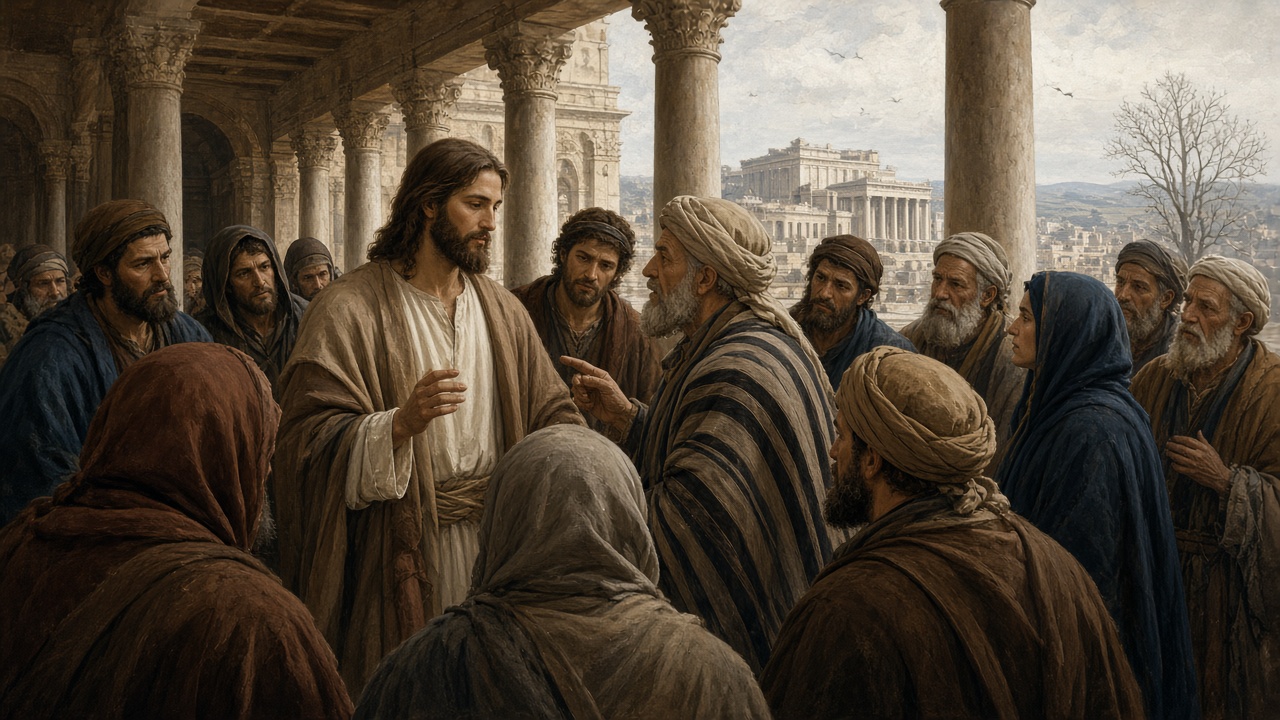
- During the Feast of Dedication in Jerusalem it was winter, and Jesus was walking in the temple courts in Solomon's Colonnade. The name Jerusalem, in a dual form, means "possession of peace" or "foundation of peace"; that form probably refers to the mountains of Zion and Moriah, or, as some suppose, to the upper and lower city. Solomon's Hebrew name, Shelomoh, means "peaceful."Sources: the Bible text itself · Jerusalem · Solomon
- A chronology of Gospel events dates the Good Shepherd teaching to AD 29, and dates a time of teaching and healing from Perea to Jerusalem to AD 30.Sources: The Good Shepherd Teaching · Teaching and Healing in Perea to Jerusalem
- Jesus then went back across the Jordan to the place where John had first been baptizing, and many people there believed in him. John was of priestly descent: his father, Zacharias, was a priest of the course of Abia, and his mother, Elisabeth, was of the daughters of Aaron. His birth, six months before that of Jesus, was foretold by an angel; those who came said that John never performed a sign, yet everything he had said about Jesus was true.Sources: the Bible text itself · John the Baptist
Notes written with AI assistance from open sources (Theographic Bible Metadata, CC BY-SA 4.0; Easton’s Bible Dictionary, public domain) and reviewed before publishing.
Places in this chapter
- Jerusalem · 31.777, 35.234 · verse 22
- Solomon’s Portico · Today: in Jerusalem · 31.777, 35.234 · verse 23
- Jordan · Today: Jordan River · 31.761, 35.558 · verse 40
Only places identified with high confidence are shown (90% or more according to the scholarly sources compiled by OpenBible). Period map: DARE (Digital Atlas of the Roman Empire), CC BY 4.0; modern map: © OpenStreetMap contributors; places: OpenBible.info (CC BY 4.0).
Credits and license for this translation
Yakʼusda bughunek: k’andit khunek neba lhaidinla
New Testament in Carrier, Southern (CA:caf:Carrier, Southern)
copyright © 2002 Wycliffe Bible Translators, Inc.
Language: Carrier, Southern
Translation by: Wycliffe Bible Translators, Inc.
Carrier, Southern [caf], Canada
Copyright Information
© 2002, Wycliffe Bible Translators, Inc. All rights reserved.
This translation text is made available to you under the
terms of the Creative Commons License: Attribution-Noncommercial-No Derivative Works.
( http://creativecommons.org/licenses/by-nc-nd/3.0/ )
In addition, you have permission to port the text to different file formats, as long as you
do not change any of the text or punctuation of the Bible.
You may share, copy, distribute, transmit, and extract portions
or quotations from this work, provided that you include the above copyright
information:
You must give Attribution to the work.
You do not sell this work for a profit.
You do not make any derivative works that change any of the actual words or punctuation of the Scriptures.
Permissions beyond the scope of this license may be
available if you contact
us with your request.
The New Testament
in Carrier, Southern
© 2002, Wycliffe Bible Translators, Inc. All rights reserved.
This translation is made available to you under the terms of the
Creative Commons Attribution-Noncommercial-No Derivatives license 4.0.
You may share and redistribute this Bible translation or extracts from it in any format, provided that:
You include the above copyright and source information.
You do not sell this work for a profit.
You do not change any of the words or punctuation of the Scriptures.
Pictures included with Scriptures and other documents on this site are licensed just for use with those Scriptures and documents.
For other uses, please contact the respective copyright owners.
2014-04-22
Source: http://ebible.org/cafNT/ · eBible.org