2 Corinthians 4
Yakʼusda bughunek: k’andit khunek neba lhaidinla · Tap a verse to see its cross-references.
Christ bughunek unzoo, 'i neba be whét'en, 'i unli
1'Et huwa ndi Yak'usda ba be ne'ts'út'en, 'et whuz na'a Yak'usda ye te'ninzun. Nts'e na'a neghalts'ut, 'et hoh 'aw 'ustl'e' 'uts'ooneh ghait'ah. 2'Et whunts'ih dune nunúl'i tube hukwaya hoonli tune'hut'en, 'et huwa nuwheni ts'iyawh 'et whuch'a dah ts'utni. Dune ts'una'ah, 'et nuwheni 'aw nduchá'ts'ust'en. 'Ink'ez Yak'usda bughunek 'aw whuts'it bulh chats'úsdloh. 'Et whunts'ih khunek 'alha 'int'ah, hubúznulhtun. 'Et whuz na'a Yak'usda nalh ts'iyanah hubuyuh ts'ih bugha t'ets'oninzun, 'i ts'un huba nats'oodútedzi. 3'Et ndi khunek unzoo, 'i be yats'ulhtuk, 'i bugha' weznik t'eh, ndunnah kwuncho yuh ts'ih hutédulh, 'en bugha' weznik ho' 'int'ah. 4Ndunnah 'en ndi yun k'ut whuyak'usda dudeni be chawhes'en ubulhtsi. 'Et huwa Christ bughunek unzoo ye dézti, Christ, 'en Yak'usda yunduwhut'en, ndai buts'un háyanduz, 'i ndunnah dudeni be chahuwhés'en 'aw hube yudoodi ghaít'ah. 5'Aw nuwhenich'oh khuyanats'ultuk ilah. 'Et k'us Christ, 'en Sizi neMoodihti, 'en bugha 'un whuts'útni. 'Ink'ez nuwheni, Sizi 'en ba 'ulhna ts'inli. 6'Et Yak'usda tsahólhgus hoh be whét'en, 'i yuka' dani ibulh 'aho whét'en suli, 'et whuz na'a 'uhóoja. 'En zeh 'int'ah 'et huwa nedzi bé dendi li'uja. Ndi Yak'usda ye dézti, 'i bugha t'ezninzun, 'i neba be whét'en, 'i ho' 'int'ah. 'Et 'i nedzi be dendi. 'Ink'ez ndi ye dézti, 'i Sizi Gri bunen buts'un hayánduz ho' 'int'ah.
Ts'iyaintsuk hoonli hoontsi' nets'ó tukat, 'et whunts'ih 'aw nech'a 'oodeh ghait'ah
7Neyust'e 'i whutl'us be 'ulya, 'i li'tsint'ah. 'Ink'ez ndi ye soode'a be' 'uts'intah, 'i Yak'usda negha ininla. 'Et huwa ts'iyanah t'ehonóozin ndi degha nus ye úlhtus, 'i Yak'usda buts'un haíyankat, 'aw nuwheni nets'u haínkat ilah. 8Ts'iyaintsuk hoonli whe yuk neznílht'uk, 'et whunts'ih 'aw nech'a 'oodeh ghait'ah. Tube whets'íntsaz 'et whunts'ih 'awhuz uznint'uk ze' ts'int'ah. 9Whulah teh nech'a ne'whut'en 'et whunts'ih Yak'usda 'en 'aw nela dootnih ghait'ah. Khunek be nena'hulhdeh t'eh, 'et whunts'ih 'aw nech'a 'oodeh ghait'ah. 10Nts'e na'a Sizi neMoodihti neba dazsai, 'et 'ilhuz neyuh whudez'ai. 'Et 'i be ts'iyanah t'ewhuntezeh Sizi ye khuna, 'i neyust'e hubutah 'uyint'ah. 11Nuwheni ndi 'ilhuz be ts'ukhuna 'i ts'it'i, nuwheni ts'iyawh Sizi 'en buba daztétsah, 'et wheni butl'a'úzdudelya 'et huwa. 'Et ndi yun k'ut neyust'e, 'i be Sizi ye khúna, 'i ts'iyanah t'ehontezeh. 12'Et njan nuwheni be daztétsah, 'i neyust'e ghu hoonli. 'Et whunts'i nuhwheni njan 'ilhuz be ts'ukhuna, 'i nuhwheni nuhghu hoonli. 13'Ink'ez nuhwheni nts'e na'a be nuhwhuba 'alha 'uhoont'ah 'ink'ez nuwheni chah nts'e na'a be neba 'alha 'uhoont'ah 'i bulh lhulhugha zeh 'int'ah. 'Et huwa nts'e na'a 'uda 'uk'e'éduguz, 'i ndet 'uwhulhni, 'et ndez na'a njan ndutni hoh ndutni, “Et suba 'alha 'int'ah 'et huwa 'i khunek be yalhtuk.” 'Et nuwheni chah 'i ts'iyawh neba 'alha 'int'ah, 'et huwa 'i khunek be yats'ulhtuk. 14'Et huwa njan t'ets'oninzun, ndun Sizi neMoodihti dinaidilhti, 'en zeh nuwheni chah Sizi 'en bulh dinánedutélelh. 'Et whuz na'a nuwheni 'ink'ez nuhwheni chah ts'iyawh 'ilhunaneoowezdla hoh dubut neninatelelh. 15Nduhoolcho nelh ne'whut'en nuhwhuba whútezoo 'et huwa. 'Et whuz na'a ndi degha nus ye únzoo, 'i, nuhtah hoonli, 'et nuhwheni nuhgha 'o nus Yak'usda ts'un chanailya ts'utni wule. 'Et huwa hiba whudelhti.
Ndai chats'es'en, 'i whunts'i be 'alha 'uhoont'ah 'i be uznilh'en
16'Ants'i doo ka 'uts'ut'en ts'unoozin gunih. Neyust'e whénilhjut 'et whunts'ih ndai neyéghah unli, 'i dzin totsuk ts'iyawh k'andit nadleh. 17'Et ndet hóontsi' neghá honkat, 'et 'astl'iyaz zeh neba 'uwhut'ih 'et huwa. 'Et neba 'ants'i li'uhoont'ah. 'Et k'us njan be hóontsi' neghá honkat, 'i be 'o nus neba be whudezti, 'i neba yulhtsi. 'Ink'ez ndi be whudezti, 'i, 'ilhuz nuwheni 'uyínla. 'Et neba hooncha k'et 'aw uzdooni ghait'ah. 18Ndai ts'a'en, 'i neba 'ants'i unli. Ndai 'aw chats'és'en, 'i zeh neba ts'ah'un 'int'ah. Ndai ts'a'en, 'i, 'et 'astl'iyaz neba whutét'ilh 'et huwa. 'Et whunts'ih ndai chast'en, 'i 'ilhuz wheni 'int'ah.
Did you know?
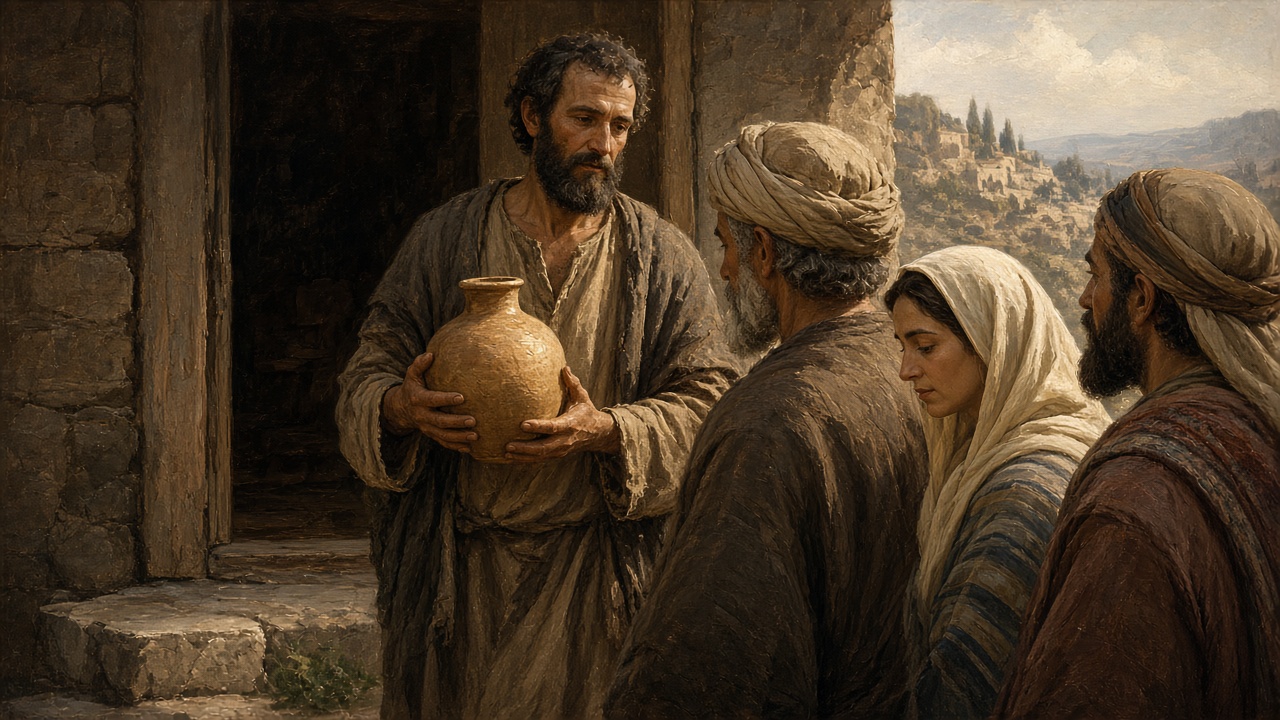
Treasure in Jars of Clay
- In this chapter the speakers say that, because God in his mercy has given them this ministry, they do not lose heart. They have renounced secret and shameful ways: they do not practice deceit or distort the word of God, but by the open proclamation of the truth they commend themselves to every person's conscience in the sight of God.Sources: the Bible text itself
- Their message is pictured as a treasure held in jars of clay, so that this surpassingly great power is shown to be from God and not from them. The same contrast runs through their hardships: hard pressed on all sides but not crushed, perplexed but not in despair, persecuted but not forsaken, struck down but not destroyed.Sources: the Bible text itself
- Light is the chapter's other central image. God, who said, "Let light shine out of darkness," is said to have shone his light in their hearts to give the light of the knowledge of the glory of God in the face of Jesus Christ. They proclaim not themselves but Jesus Christ as Lord, and themselves as servants of those they address, for Jesus' sake; if the gospel is veiled, the text says it is veiled to those who are perishing, whose minds "the god of this age" has blinded.Sources: the Bible text itself
Notes written with AI assistance from open sources (Theographic Bible Metadata, CC BY-SA 4.0; Easton’s Bible Dictionary, public domain) and reviewed before publishing.
Credits and license for this translation
Yakʼusda bughunek: k’andit khunek neba lhaidinla
New Testament in Carrier, Southern (CA:caf:Carrier, Southern)
copyright © 2002 Wycliffe Bible Translators, Inc.
Language: Carrier, Southern
Translation by: Wycliffe Bible Translators, Inc.
Carrier, Southern [caf], Canada
Copyright Information
© 2002, Wycliffe Bible Translators, Inc. All rights reserved.
This translation text is made available to you under the
terms of the Creative Commons License: Attribution-Noncommercial-No Derivative Works.
( http://creativecommons.org/licenses/by-nc-nd/3.0/ )
In addition, you have permission to port the text to different file formats, as long as you
do not change any of the text or punctuation of the Bible.
You may share, copy, distribute, transmit, and extract portions
or quotations from this work, provided that you include the above copyright
information:
You must give Attribution to the work.
You do not sell this work for a profit.
You do not make any derivative works that change any of the actual words or punctuation of the Scriptures.
Permissions beyond the scope of this license may be
available if you contact
us with your request.
The New Testament
in Carrier, Southern
© 2002, Wycliffe Bible Translators, Inc. All rights reserved.
This translation is made available to you under the terms of the
Creative Commons Attribution-Noncommercial-No Derivatives license 4.0.
You may share and redistribute this Bible translation or extracts from it in any format, provided that:
You include the above copyright and source information.
You do not sell this work for a profit.
You do not change any of the words or punctuation of the Scriptures.
Pictures included with Scriptures and other documents on this site are licensed just for use with those Scriptures and documents.
For other uses, please contact the respective copyright owners.
2014-04-22
Source: http://ebible.org/cafNT/ · eBible.org