Malachi 1
A Ch'an Biblia D'a Chuj San Mateo · Tap a verse to see its cross-references.
About this book
About Malachi
- Easton's Bible Dictionary (1897) presents Malachi, a name meaning "messenger" or "angel," as the last of the minor prophets and the writer of the last book of the Old Testament canon. Nothing is known of him beyond what is contained in his book of prophecies.Sources: Easton: Malachi · Malachi
- Some have supposed that the name is simply a title for a messenger of Jehovah, not a proper name. Easton's Bible Dictionary (1897) concludes, however, that there is reason to regard Malachi as the prophet's ordinary name.Sources: Easton: Malachi · Malachi
- Easton's Bible Dictionary (1897) dates the prophecies to about 420 B.C., after Nehemiah's second return from Persia, or possibly before that return. Because Ezra does not mention him and he does not mention the restoration of the temple, the dictionary infers that he prophesied after Haggai and Zechariah.Sources: Easton: Malachi
- Easton's Bible Dictionary (1897) treats Malachi as a contemporary of Nehemiah, comparing Malachi 2:8 with Nehemiah 13:15 and Malachi 2:10-16 with Nehemiah 13:23. It also notes that the temple services were still in existence, citing Malachi 1:10, 3:1 and 3:10.Sources: Easton: Malachi
Notes written with AI assistance from open sources (Theographic Bible Metadata, CC BY-SA 4.0; Easton’s Bible Dictionary, public domain) and reviewed before publishing.
Xajan eb' israel yuj Dios
1A in Malaquías in tic, schecab' Dios vaj d'a eb' vetisraelal.
2A Jehová tz'alan icha tic: A in tic tzex in xajanej, palta a exxo tic, tzex tac'vi d'ayin icha tic: ¿Tas val scutej cojtacaneli tato tzon̈ a xajanej? xe chi. Palta a in Jehová in sval d'ayex icha tic: Vach'chom yuc'tac sb'a vin̈aj Esaú yed' vin̈aj Jacob, palta te xajan vilnac vin̈aj Jacob chi', aton vin̈ e mam eyicham, 3axo vin̈aj Esaú chi', maay. A lum tzalquixtac b'aj cajan eb' yin̈tilal vin̈aj Esaú chi', cuseltacxon̈ej ix ajcan lum vuuj, axon̈ej noc' caltacte'al noc' ay ta'.
4Q'uinaloc a eb' edomita yin̈tilalcan vin̈aj Esaú tz'alan icha tic: Vach'chom on̈ sateli, palta ol co b'oxiq'ue co chon̈ab' tic, ta xchi eb'. Vach'chom sb'oxiq'ue eb', palta a in ol in satxieli. Ol yal eb' anima d'a schon̈ab' eb' chi' icha tic: A jun nación tic, schon̈ab'il eb' chuc, ayn̈ejcot yoval sc'ol Jehová d'a yib'an̈ d'a masanil tiempo, xcham eb'. 5A ex israel ex tic, ol eyil val sic'lab'il, ol eyalan icha tic: A Jehová, yelxo val te nivan yelc'och d'a yolyib'an̈q'uinal tic, man̈ocn̈ej d'a yol co macb'en tic, xe chama, xchi Jehová.
Scachji eb' sacerdote yuj Jehová
6A Jehová Yajal d'a Smasanil tz'alan d'a eb' sacerdote icha tic: A eb' uninab'il, ay yelc'och smam snun eb' d'a sat. A eb' checab', ay pax yelc'och spatrón eb' d'a sat. Yuj chi' ex sacerdote, tato mamab'il vaj d'ayex eyalani, ¿tas pax yuj malaj velc'och d'ayex? Tato yajal vaj d'ayex eyalani, ¿tas yuj max in e c'anab'ajej? A ex tic tzin e patiquejeli, palta tzato val eyal icha tic: ¿Tas scutej ach co paticaneli? xe chi. 7Tzeyic'cot e silab' man̈ smojoc sjavi d'a valtar, tzato val e c'anb'ani: ¿B'ajtil tz'och co mul chi' d'ayach? xe chi. Tz'och e mul chi', yujto ichato malaj yelc'och valtar d'a e sat. 8¿Tom vach' tze na'a to a noc' noc' ay spaltail tzeyac' d'ayin silab'il, aton noc' malaj yol sat, noc' q'uiich yed' noc' penaay? Q'uinaloc tzeyic'b'at juntzan̈ noc' chi' e silab'oc d'a eb' eyajalil, ¿tom ol ex scha eb' yuj juntzan̈ e silab' chi' tze na'a? 9A eb' anima tz'alan d'ayex icha tic: Ex sacerdote, c'anec d'a Dios cuuj, yic tz'oc' sc'ol d'ayon̈, xchi eb'. Palta a in Jehová Yajal in d'a Smasanil sval icha tic: Tato a juntzan̈ noc' ix val tic ol eyac' e silab'oc d'ayin, ¿tocval ol in cha d'ayex d'a tzalajc'olal? 10Comonoc a junoc ex tic tze mac spuertail in templo, yic vach' man̈ nab'an̈ejoc scomon och c'ac' d'a valtar. Yujto a in Jehová Yajal in d'a Smasanil, max in tzalaj jab'oc eyed'oc, man̈xo ol in cha eyofrenda chi'. 11Palta te nivan velc'och d'a sat masanil anima d'a yolyib'an̈q'uinal tic. A val tas vach' sn̈ustz'a eb' silab'il d'ayin. Syac'an yofrenda eb' d'ayin icha val d'a smojalil, yujto nivan velc'och d'a yol sat eb'. 12Palta a exxo tic, malaj jab'oc velc'och d'a yol e sat. Tzeyalani to malaj yelc'och valtar yed' juntzan̈ silab' tz'ac'ji d'ayin. 13Tzeyalan icha tic: Tzon̈ tzactzajc'och yed' juntzan̈ tic, xe chi. Tzin e paticaneli. Slajvi chi' tzeyac'an juntzan̈ noc' e silab' d'ayin, aton noc' tzeyelq'uej, noc' q'uiich yed' noc' penaay. ¿Tom ol in cha juntzan̈ chi' d'ayex tze na'a? 14A in Rey in, nivan velc'ochi, xiv masanil chon̈ab' d'ayin, yuj chi' tzin catab'ej eb' stac'vej sti' yac'an junoc scalnel malaj spaltail silab'il d'ayin, slajvi chi' sq'uexan pax noc' eb', axo junoc noc' penaay syac' eb', xchi Jehová Yajal d'a Smasanil.
Did you know?
Honoring God and Defective Offerings
- The name Malachi means messenger or angel. While some have suggested it was a title rather than a proper name, scholars and traditions widely treat it as the prophet's personal name, placing his ministry during the period of Nehemiah, after Haggai and Zechariah.Sources: Malachi
- The opening dispute recalls the twin brothers Jacob and Esau, the ancestors of Israel and Edom. The text contrasts God's covenant love for Israel with the judgment and desolation coming upon the mountainous region of Edom.Sources: Esau (Edom) · Jacob (Israel) · Edom · the Bible text itself
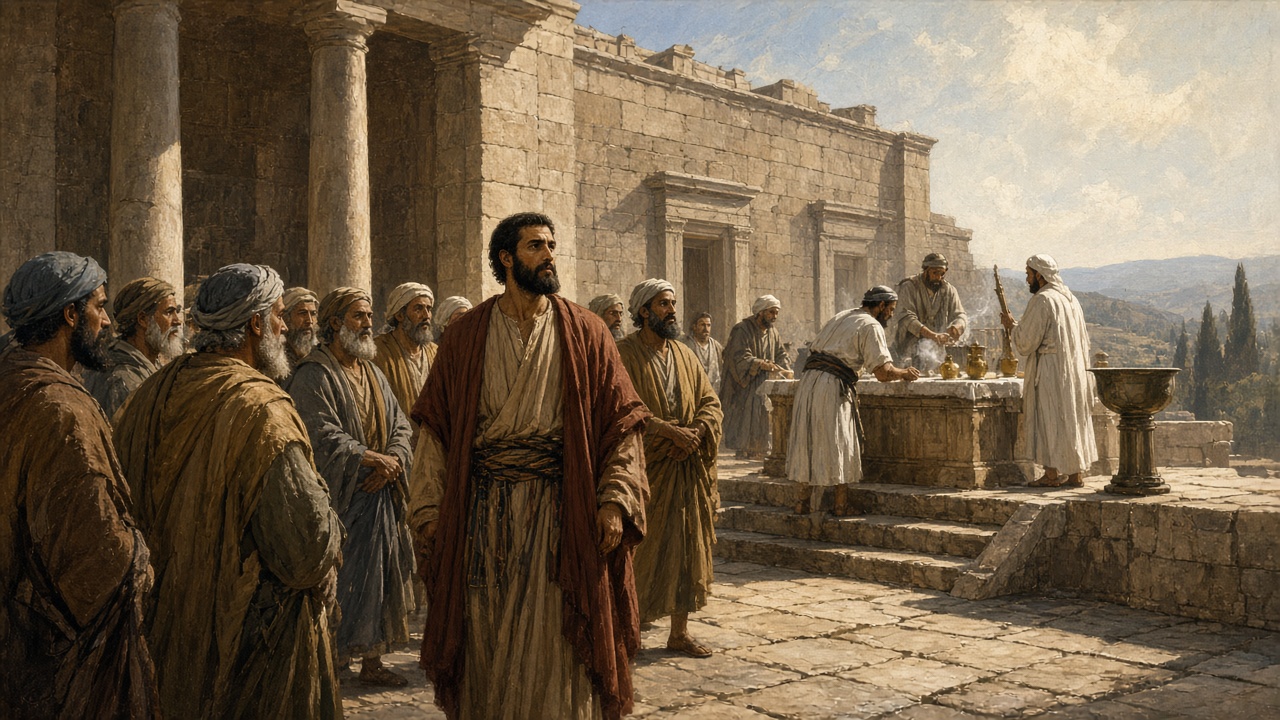
- The priests are rebuked for offering blind, lame, and diseased animals on the altar rather than unblemished livestock. Malachi exposes their disrespect by asking whether a civil governor would accept such inferior gifts.Sources: the Bible text itself
Notes written with AI assistance from open sources (Theographic Bible Metadata, CC BY-SA 4.0; Easton’s Bible Dictionary, public domain) and reviewed before publishing.
Places in this chapter
- Edom · 30.746, 35.604 · verse 4
Only places identified with high confidence are shown (90% or more according to the scholarly sources compiled by OpenBible). Period map: DARE (Digital Atlas of the Roman Empire), CC BY 4.0; modern map: © OpenStreetMap contributors; places: OpenBible.info (CC BY 4.0).
Credits and license for this translation
A Ch'an Biblia D'a Chuj San Mateo
The Holy Bible in the Chuj San Mateo language of Guatemala
La Santa Biblia en Chuj de San Mateo Ixtatán
copyright © 2007 Sociedad Bíblica de Guatemala
Language: Chuj de San Mateo Ixtatán (Chuj)
Dialect: Ixtatán
Translation by: Wycliffe Bible Translators
This translation is made available to you under the terms of the
Creative Commons Attribution-Noncommercial-No Derivatives license 4.0.
You may share and redistribute this Bible translation or extracts from it in any format, provided that:
You include the above copyright and source information.
You do not sell this work for a profit.
You do not change any of the words or punctuation of the Scriptures.
Pictures included with Scriptures and other documents on this site are licensed just for use with those Scriptures and documents.
For other uses, please contact the respective copyright owners.
2016-06-08
Source: http://ebible.org/cac/ · eBible.org