Matthew 11
Lerérun Búngiu To Lánina Iséri Darádu · Tap a verse to see its cross-references.
Ja loúnajabaña Juan le abásteragüdajabei adímureja lúma Jesúsu
1Dan le lásurunbei laríñaguni Jesúsu le lúnbei jadǘgüni láni disípulugu, ába lídin ñígiñe lun larúfudajan, apúrichija ligíame lídan buri fulásu geyégua láu ubúrugu le Capernaúm.
2Dan ligía, furísunruguñein Juan, ába lagáambun luágu sun le ladǘgübei Crístu. 3Ába loúnajan biáma jádaangiñe láni disípulugu aríjei Jesúsu lun jálügüdüni ítara.
—¿Amǘrü Crístubei le lúnbei liábin ódi lúnti wagúrabajan ámu?
4Ába laríñagun Jesúsu joun.
—Jeíba jaríñageime le jaríjubei lúma le jagáambubei lun Juan. 5Jabájüdaguáme lun luágu aríjaaña lan já meja maríjinbaña, eíbuga já meja meíbugunbaña, areídagua jagía já meja gawágubaña gumeín luágu jára, agáamba já meja magáambubaña, sará jagía jiláaña, apúrichijoúa luágu ugánu buíti le lánina asálbaruni joun gudémetiña. 6Áni fuleíseiwati le meféridirunbalin lafíñen nuágu.
7Dan le joúdin, ába lagúmeserun Jesúsu adímureja joun gürígia luágu Juan, ába laríñagun.
—¿Cásan jídinbei meja aríja lídan fulásu le mageírawati? ¿Ában wügǘri le medéraaguagüdünti larítagun queísi ában mabúru le lánjingichun garábali? 8Ánjein máma lubeí líña, ¿cáti jídinbei aríja? ¿Ában wügǘri wéndeti ladáüragun? Subúsiti jun luágu ja lan wéndebaña adáüragun, tídaañanu lan jában urúeigu. 9¿Cáteiti jídinbei aríja? ¿Ában proféta? Ánja, ligía, áni ában wügǘri weíriguti sügǘ láu ában proféta Juan. 10Ligía le uágubei taríñaga Lerérun Búngiu.
Noúnajañein noúnagüle bubáragiñe,
lun laráansejani ǘma bubá.
11Ninárün jáu, jádan sun gürígia, úagili ni ában weíriguti lueí Juan le abásteragüdajabei, láu sun líra, le ǘnabutimaabei lídan arúeijani le siélubei weíritimaati lueí le anǘgarügübalin ugánu luágu arúeijani ligía.
12‘Lúmagiñe dan le liábinbei Juan le abásteragüdajabei darí lúmoun dan le, murúgu jáña gürígia áluga jebélurun lídoun larúeijan Búngiu. Ja ebélurubaña, ragǘ jamuti jabára ñi queísi ában cátei le gebégiti sarágu. 13Lilúrudun Moisés jáma sun profétagu, adímurejatiñá meja luágu larúeijan Búngiu, láu liábin Juan, ába lagúmeserun jerérun profétagu jagía luágu larúeijan Búngiu agúnfulira. 14Ánjeinti busén jubeí jafíñerun, Juan ligía proféta Elías lé meja lúnbei liábin lubáragiñe liábin arúeijani ligía. 15Ja garígeirugubaña lun jagáambun, agáamba jamá.
16‘¿Cábasan úma núaradaguágüdaña gürígia ja lánina dan le? Magúndaatiña ni ca áu, ítara jáña quei irájüñü ja añúurubaña adíbirija mágidirugu, ába jagúarajan joun jíbirigu ítara. 17“Íñaajatiwa fídu jun, mabínajantün, erémuja wagía urému jírutu jun, mayájuntün.” 18Ladǘga liábin Juan meígin líña buídu quei leígin furúmieguarügü, mátun, ába jaríñagun luágu níjein lan espíritu wuríbati lídan. 19Lárigiñe, ába niábin, áu le Wügǘri Garaǘwarügüti, jou áu quei leígin furúmieguarügü, gurá, ába jaríñagun luágu geígadi nan, gátadi, jamáda áu gafígountiña jáma agúburajatiña liseínsuna gumádi. Wel, ja chúbaña áu, subúdi jamúti luágu buídu lan le ladǘgübei Búngiu láu lichú láu.
Lílana buri fulásu ja magáambadibaña
20Ábati lagúmeserun Jesúsu adeínja joun gürígia lídan fulásu buri le ñi lubeí meja ladǘgei líbe-ágei láni miláguru, ladǘga masáansirun jamágili lan joúserun. Ába laríñagun.
21—¡Fugiábu jugúya Corazínna! ¡Fugiábu jugúya Betsáidana! Lun jamúga lídan lan ubúrugu le gíribei Tíro lúma Sidón ladügǘwa miláguru buri le adügǘbei jagánagua, binárü jamúga lasáansiragua jagáburi lílana, ába jamúga jarúfuduni láu jadáüragun lúdu lúma balígi. 22Naríñajare jun luágu dánme lan lachǘlürün wéyu lánina agúseraguni, weíritimaabei jabeichún sügǘ jáu ja Tírobaña jáma ja Sidónbaña. 23Amǘrüti ubúrugu le Capernaúm, ¿jarítaguatibu luágu weírigubadibu lan queísi siélu? Maweírigúnbadibu ítara quei maweírigun lan máfiougati. Ladǘga lun jamúga lídan lan ubúrugu Sodóma ladügǘwa miláguru le adügǘbei bídan, níjeingua jamúga fulásu ligía lúmoun dan le. 24Naríñajare jun luágu lídan lánme wéyu lánina agúseraguni, weíritimaabei jabeichún sügǘ jáu Sodómana.
Jigoúgu lun Jesúsu, eméraagua jumámuga
25Lídan dan ligía, ába laríñagun Jesúsu lun Búngiu.
—Adímurejatina buíti buágu, Núguchi le Labúremebei siélu lúma uboú, ladǘga barámuduni buri cátei le jaweí chu táu jáma gunfaráandatiña, ába barúfuduni joun ja mafúnrendeirungiñábaña queísi irájüñü. 26Ánja, Núguchi, ladǘga ítara líña lan babúseeruni.
27‘Derége láali Núguchi sun cátei nun. Ibídiñeti Búngiu Irájü ni ca un buídu buídu lueídügüya lun Búngiu Úguchili, ibídiñeti gíñe Búngiu Úguchili ni ca un buídu buídu lueídügüya lun Búngiu Irájü jáma ja únbaña labúseera Búngiu Irájü lasúbudiragüdüni. 28Jigoúgu númoun, sun jugúya ja bucháañabaña uágu lárigi juwádigimari lúma lijǘrü janǘgün, eméraaguagüda námugaün. 29Resíbi jumeí narúfudajan, furéndei jugúyame númagiñe, láu gagúraasun nan, ñulú tugúya nanígi, ábame jadárirun eméraaguni tun juwáni. 30Ménreengunti lun jesériwidun nun, juáliti gíñe anǘgüni le níchugubei jun lun janǘgüni.
Did you know?
John's question and the cities that did not repent
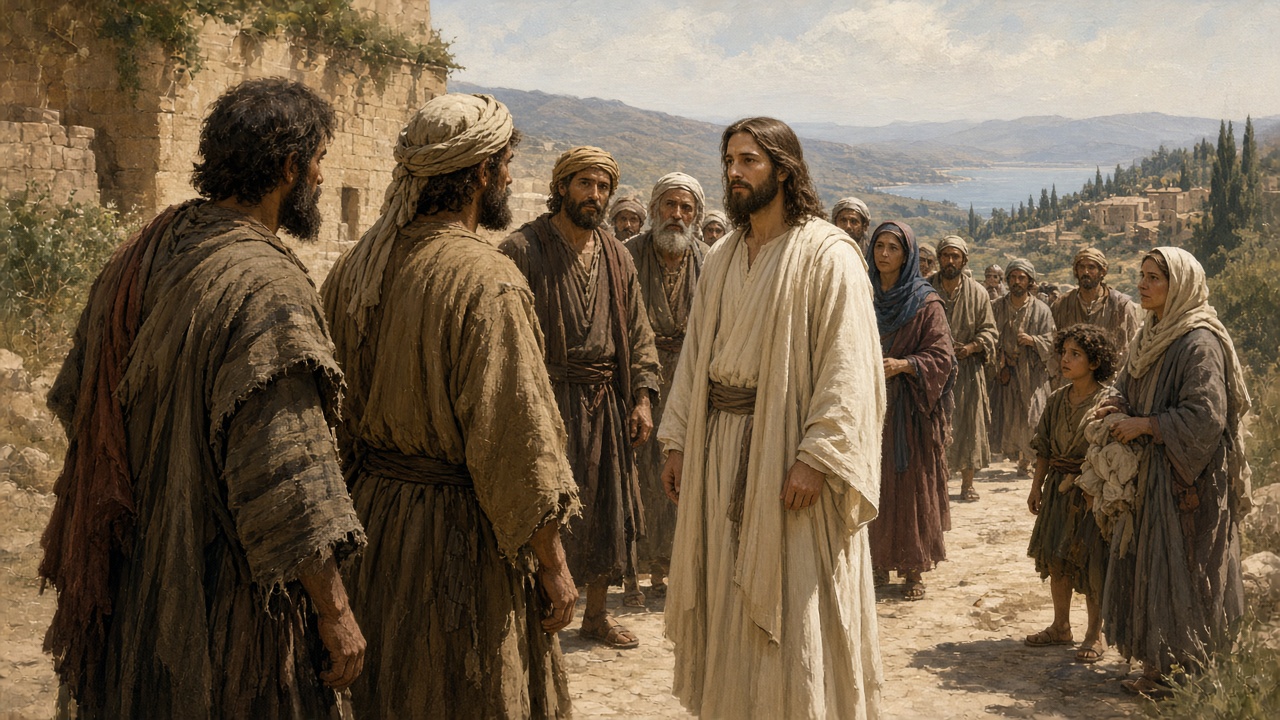
- From prison, John sent his disciples to ask whether Jesus was the one who was to come. Jesus told the crowds that John was more than a prophet—the messenger sent ahead to prepare the way—and, if they were willing to accept it, the Elijah who was to come. A Bible dictionary calls John the forerunner and says his mission was already the subject of prophecy, citing Isaiah 40:3 and Malachi 3:1; it also introduces Elijah as the Elias of the New Testament.Sources: the Bible text itself · John the Baptist · Elijah
- Jesus then denounced Chorazin, Bethsaida, and Capernaum, where most of his miracles had been performed, because they did not repent. A dictionary identifies Chorazin with modern Kerazeh, about two and a half miles up the Wady Kerazeh from Capernaum, and says that Capernaum, absent from the Old Testament, became Jesus' own city after he left Nazareth. It places Bethsaida on the east side of the lake, two miles up the Jordan in Gaulonitis, enlarged by Philip the tetrarch and named Julias after the emperor's daughter, though some have supposed there was only one Bethsaida, near where the Jordan enters the lake.Sources: the Bible text itself · Chorazin · Capernaum · Bethsaida
- He set those cities against Tyre and Sidon, which he said would have repented long ago in sackcloth and ashes, and against Sodom, which he said would have remained to this day. Sidon, on the Mediterranean coast about twenty-five miles north of Tyre, was the oldest Phoenician city there and the mother city of Tyre. A dictionary says the commerce of the whole world was gathered into Tyre's warehouses, and that Sodom, in the vale of Siddim, was destroyed by fire from heaven so completely that no trace of it has been found.Sources: the Bible text itself · Sidon · Tyre · Sodom
Notes written with AI assistance from open sources (Theographic Bible Metadata, CC BY-SA 4.0; Easton’s Bible Dictionary, public domain) and reviewed before publishing.
Places in this chapter
- Galilee · 32.760, 35.527 · verse 1
- Sidon · Today: Sandikli archaeological site in Sidon · 33.561, 35.372 · verses 21, 22
- Tyre · 33.271, 35.196 · verses 21, 22
Only places identified with high confidence are shown (90% or more according to the scholarly sources compiled by OpenBible). Period map: DARE (Digital Atlas of the Roman Empire), CC BY 4.0; modern map: © OpenStreetMap contributors; places: OpenBible.info (CC BY 4.0).
Credits and license for this translation
Lerérun Búngiu To Lánina Iséri Darádu
New Testament in Garifuna (HO:cab:Garifuna)
copyright © 2012 Wycliffe Bible Translators, Inc.
Language: Garifuna
Translation by: Wycliffe Bible Translators, Inc.
Garifuna [cab], Honduras
Copyright Information
© 2012, Wycliffe Bible Translators, Inc. All rights reserved.
This translation text is made available to you under the
terms of the Creative Commons License: Attribution-Noncommercial-No Derivative Works.
( http://creativecommons.org/licenses/by-nc-nd/3.0/ )
In addition, you have permission to port the text to different file formats, as long as you
do not change any of the text or punctuation of the Bible.
You may share, copy, distribute, transmit, and extract portions
or quotations from this work, provided that you include the above copyright
information:
You must give Attribution to the work.
You do not sell this work for a profit.
You do not make any derivative works that change any of the actual words or punctuation of the Scriptures.
Permissions beyond the scope of this license may be
available if you contact
us with your request.
The New Testament
in Garifuna
© 2012, Wycliffe Bible Translators, Inc. All rights reserved.
This translation is made available to you under the terms of the
Creative Commons Attribution-Noncommercial-No Derivatives license 4.0.
You may share and redistribute this Bible translation or extracts from it in any format, provided that:
You include the above copyright and source information.
You do not sell this work for a profit.
You do not change any of the words or punctuation of the Scriptures.
Pictures included with Scriptures and other documents on this site are licensed just for use with those Scriptures and documents.
For other uses, please contact the respective copyright owners.
2014-04-25
Source: http://png.bible/cabNT/ · eBible.org