Genesis 50
Uyojroner e Dios xeꞌ Tzꞌijbꞌabꞌir Tama e Onian Tiempo · Tap a verse to see its cross-references.
1Pues entonces e José umori umeqꞌue ucuerpo utata y war aꞌru utzꞌujtzꞌi ucajram. 2Y de allí uyare e ajtzꞌaconerobꞌ xeꞌ apatnobꞌ tacar tuaꞌ uyustesobꞌ ucuerpo utata tuaꞌ machi atujran este que axin acꞌotoy e día tuaꞌ amujca. Y uchiobꞌ bꞌan taca cocha arobꞌnobꞌ. 3Y qꞌuejchiobꞌ cuarenta día tuaꞌ uyustesobꞌ ucuerpo e Jacob ani, porque jax e tiempo xeꞌ uwajpi tuaꞌ oꞌstana ucuerpo inteꞌ chamen.
Pues e gente tama e lugar Egipto quetpobꞌ tzajtaca utobꞌ setenta día tama uchamer e Jacob. 4Y conda numuy e setenta día tama e tzꞌintzꞌar, ojron e José taca e ajcꞌamparobꞌ tuaꞌ e rey y che:
—Jay nox xeꞌ ajcꞌamparox tuaꞌ e rey cꞌayoxix tacaren, quisinic incꞌajti tibꞌa tuaꞌ iware e rey cocha era y che: 5‘Pues conda nitata cꞌanix achamay, uyubꞌi tanibꞌa tuaꞌ inware tama ucꞌabꞌa e Dios que san tuaꞌ inxin inmuqui ucuerpo tama e mujr lo que ustabꞌir umener tama e lugar Canaán. Y tamar era cꞌani incꞌajti tabꞌa tuaꞌ awacten inxin inmuqui ucuerpo nitata, y conda acꞌapa inmuqui cꞌani insutpa waten otronyajr.’ Bꞌan tuaꞌ iware e rey, che e José. Entonces bꞌan ixin uche e ajcꞌampar.
6Entonces sutpa ixin e ajcꞌampar tuaꞌ e rey y uchecsu tut e José lo que arobꞌna umen e rey y che:
—Quiqui mucu atata bꞌan cocha cay aware que san tuaꞌ ache, xeꞌ arobꞌna umen e rey.
7Entonces ixin e José esto tama e lugar Canaán tuaꞌ umuqui utata, y ixiobꞌ ubꞌan meyra sian ajcꞌamparobꞌ tuaꞌ e rey taca tunor e nuquir winicobꞌ tama e lugar Egipto. 8Y ixiobꞌ ubꞌan tunor ufamilia e Jacob taca ufamilia e José y tunor usacunobꞌ y uwijtzꞌin. Y ajrer taca e bꞌiqꞌuit maxtac y e aracꞌobꞌ xeꞌ machi ixiobꞌ, sino que quetpobꞌ tama e lugar Gosén. 9Y ayan meyra gente xeꞌ ixiobꞌ taca e José. Y ayan tin e ayan ucarruaje y ayan tin e ayan uchij, y bꞌan cocha era bꞌoro meyra e gente xeꞌ ixiobꞌ tacar. 10Y conda cꞌotoyobꞌ tama e lugar xeꞌ ucꞌabꞌa Hatad tiaꞌ ajajtzꞌa e trigo xeꞌ aquetpa tama inxejr lado tiaꞌ atobꞌoy watar e qꞌuin tama e xucur Jordán, e José taca e inmojr quetpobꞌ yajaꞌ taca y cay aruobꞌ tama inteꞌ tiempo de siete día tama uchamer e Jacob.
11Pues conda e gente xeꞌ ajlugarobꞌ Canaán cay uwirobꞌ cobꞌa war aruobꞌ e sian gente tiaꞌ turobꞌ tama e lugar Hatad, cay ojronobꞌ y chenobꞌ: “Jax era e lugar tiaꞌ war aquetpobꞌ tzajtaca utobꞌ tin e ajlugarobꞌ Egipto war amucmayanobꞌ”, chenobꞌ tin e ajlugarobꞌ Canaán. Y tamar era turbꞌana ucꞌabꞌa e lugar era Abel-misraim xeꞌ war che “E lugar tiaꞌ amucmayanobꞌ tin e tuobꞌ e Egipto”.
12Entonces tamar era uyunenobꞌ e Jacob cꞌapa uchiobꞌ tunor lo que arobꞌna umener. 13Y uqꞌuechiobꞌ ixin ucuerpo e Jacob teinxejr lado e xucur Jordán esto tama e lugar Canaán tuaꞌ umuquiobꞌ tama e chꞌen xeꞌ aquetpa tama e lugar Macpelá, xeꞌ mambꞌir umen e Abraham tuaꞌ e Efrón xeꞌ tuaꞌ uchꞌajnarir e Het, tuaꞌ acꞌampesna bꞌan cocha inteꞌ mujr tama tunor ufamilia. Pues e rum era y e chꞌen xeꞌ turu tamar aquetpa tuyejtzꞌer e lugar Mamré. 14Entonces conda cꞌapa umuqui utata, e José sutpa ixin esto tama e lugar Egipto taca usacunobꞌ y uwijtzꞌin y tunor tin e cay xanobꞌ tacar.
Conda e José cꞌanix achamay
15Pues entonces cocha cꞌapa chamay utatobꞌ, usacunobꞌ e José cay ubꞌijnuobꞌ cocha era y chenobꞌ: “Bꞌajcꞌat warto aqꞌuijna e José tamar lo que cay cache upater ixnix, y bꞌajcꞌat axin ubꞌijnu tuaꞌ uchion catoyi uyeror”, che usacunobꞌ e José. 16Entonces uyebꞌtobꞌ ixin inteꞌ ojroner tut e José y che: “Conda merato achamay catata uyareon 17tuaꞌ cawaret e ojroner era: ‘Cꞌani inwaret tuaꞌ icꞌumpa taca asacunobꞌ tama tunor e mabꞌambꞌanir lo que cay uchiobꞌ apater’, bꞌan e ojroner xeꞌ actana umen catata tuaꞌ cawaret. Y tamar era quisinic que icꞌumpa tacaron tama tunor e nuxi mabꞌambꞌanir lo que cay cache apater, cocha non manon tuaꞌ Udiosir atata ubꞌan”, xeꞌ ebꞌtana ixin tut e José umen usacunobꞌ.
Pero conda cꞌapa arobꞌna tunor e ojroner era tut e José umen tin e ucꞌotes, jaxir cay aru. 18Y de allí cꞌotoyobꞌ usacunobꞌ e José y cotuanobꞌ tut este que utacbꞌu ut ujorobꞌ tut e rum, y chenobꞌ:
—Non manon tabꞌa, chenobꞌ usacunobꞌ e José.
19Entonces ojron e José y che:
—Ira ixbꞌacta. Pues nen ma erer inquetpa bꞌan cocha e Dios xeꞌ ubꞌijnu uwira tamar lo que iche. 20Pues nox cay ibꞌijnu tuaꞌ iche inteꞌ nuxi mabꞌambꞌanir nipater, pero e Dios uche tuaꞌ alocꞌoy imbꞌutz lo que cay iche nipater xeꞌ mabꞌambꞌan. Y tamar era cꞌotoy corpesna ucuxtar meyra gente tuaꞌ machi achamayobꞌ tama e winar. 21Y tamar era inwareox que ira ixbꞌacta porque nen cꞌani inwajcꞌox tunor lo que ucꞌani tuaꞌ icꞌuxi taca tunor imaxtac, che e José.
Y bꞌan cocha era e José usisijres uyalmobꞌ usacunobꞌ, cocha jaxir ojron taca meyra cꞌunersiaj.
Uchamer e José
22Pues entonces e José taca tunor ufamilia utata quetpobꞌ tuaꞌ aturuanobꞌ tama e lugar Egipto. Y e José cꞌotoy utzꞌacse 110 año. 23Y jaxir uwirato e chajr sitzꞌobꞌ tuaꞌ e Efraín. Y cꞌotoyto uwira ubꞌan conda cuxpobꞌ uyunenobꞌ e Maquir xeꞌ jax uyunen e Manasés. Y uyunenobꞌ e Maquir quetpobꞌ bꞌan cocha jay unembꞌirobꞌ tuaꞌ e José.
24Pues entonces tama inteꞌ día e José uyare usacunobꞌ cocha era y che: “Nen mix jax meyra día tuaꞌ inturuan, pero e Dios turix tuaꞌ utacriox, y tuaꞌ ulocsiox tama e lugar era, y tuaꞌ uqꞌueche axin ichꞌajnarir esto tama e lugar xeꞌ arobꞌna e Abraham y e Isaac y e Jacob que san tuaꞌ ajcꞌunobꞌ umen e Dios”, che e José uyare usacunobꞌ. 25Y de allí e José uyareobꞌ tuaꞌ uchiobꞌ inteꞌ acuerdo tacar y che: “Pues Cadiosir cꞌani ixto utacriox. Pero quisinic que iwaren coner era que san tuaꞌ iqꞌueche axin nibꞌaquer tuaꞌ amujca tuyejtzꞌer nitata conda achecta e día tuaꞌ alocꞌoyobꞌ ichꞌajnarir”, che e José uyare usacunobꞌ.
26Entonces e José chamay tama e lugar Egipto conda war ucojco 110 año. Y conda cꞌapa ustana ucuerpo, yajra tama inteꞌ caja tuaꞌ atꞌabꞌesna.
Did you know?
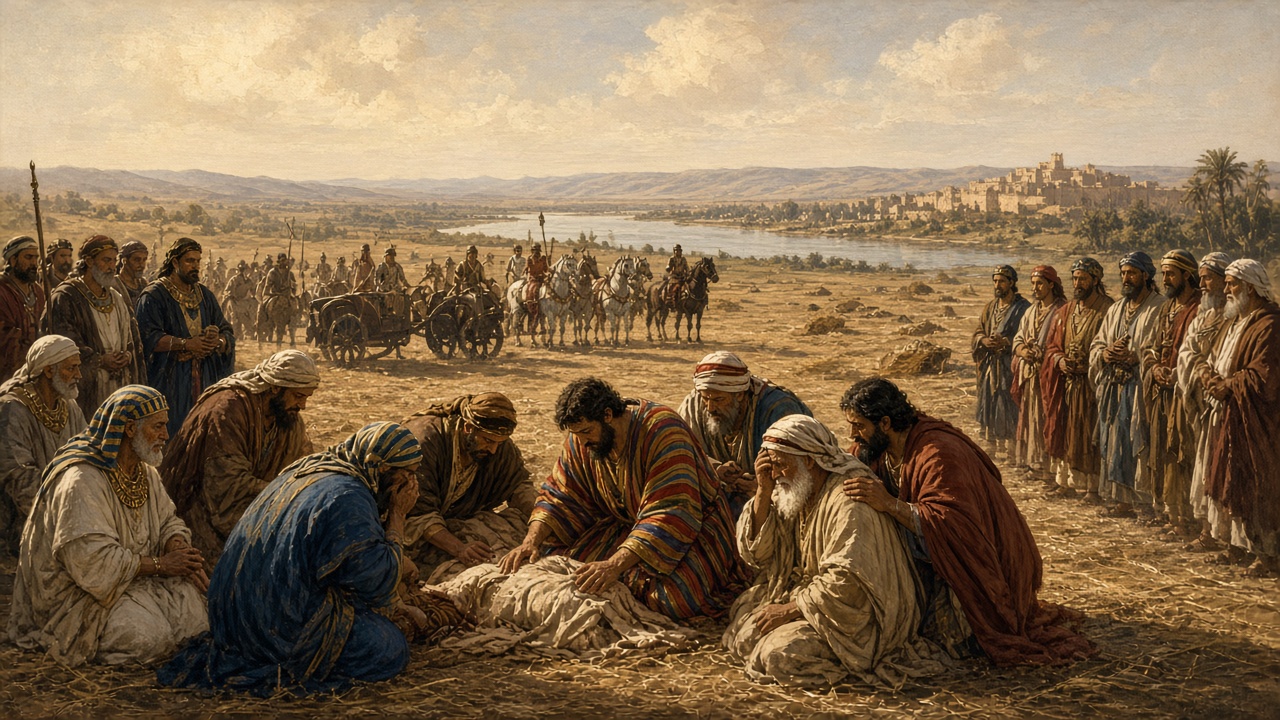
The Burial of Jacob and the Death of Joseph
- The threshing floor of Atad, where the company wailed loudly for seven days across the Jordan, takes its name from a word meaning buckthorn. The Canaanites who saw the mourning called the place Abel-mizraim, 'meadow of Egypt' or 'mourning of Egypt.' Easton's Bible Dictionary places Abel-mizraim west of the Jordan and says its site is unknown, while describing Atad as probably near Hebron.Sources: the Bible text itself
- Jacob's sons buried him in the cave of Machpelah, in the field near Mamre, the burial site Abraham had bought from Ephron the Hittite. Easton's Bible Dictionary identifies Ephron as the son of Zohar and records the price as four hundred shekels of silver.Sources: the Bible text itself
- Joseph remained in Egypt and lived to the age of one hundred and ten, long enough to see Ephraim's sons to the third generation. The sons of Machir, son of Manasseh, were brought up on Joseph's knees—a phrase the Revised Version renders 'born upon Joseph's knees,' which Easton's Bible Dictionary explains as adoption from birth. He told his brothers that God would bring them up to the land promised to Abraham, Isaac, and Jacob, and he made the sons of Israel swear to carry his bones up from Egypt; when he died, they embalmed him and placed him in a coffin there.Sources: the Bible text itself
Notes written with AI assistance from open sources (Theographic Bible Metadata, CC BY-SA 4.0; Easton’s Bible Dictionary, public domain) and reviewed before publishing.
Places in this chapter
- Canaan · 32.767, 35.333 · verses 5, 13
- Egypt · 30.129, 31.308 · verses 7, 14, 22, 24, 26
- Goshen · Today: Goshen 1 · 30.799, 31.834 · verse 8
- Atad · Today: near the mouth of the Jordan River · 31.915, 35.530 · verses 10, 11
- Jordan · Today: Jordan River · 31.761, 35.558 · verses 10, 11
- Machpelah · Today: Cave of the Patriarchs · 31.525, 35.111 · verse 13
Only places identified with high confidence are shown (90% or more according to the scholarly sources compiled by OpenBible). Period map: DARE (Digital Atlas of the Roman Empire), CC BY 4.0; modern map: © OpenStreetMap contributors; places: OpenBible.info (CC BY 4.0).
Credits and license for this translation
Uyojroner e Dios xeꞌ Tzꞌijbꞌabꞌir Tama e Onian Tiempo
The New Testament and Genesis, Ruth, Esther, and Jonah in the Chorti language of Guatemala
El Nuevo Testamento, Génesis, Rut, Ester y Jonás en Chortí, Guatemala
copyright © 1996, 2012, 2013, 2023 Wycliffe Bible Translators, Inc. and Evangel Bible Translators, International
Language: Chortí (Chorti)
Translation by: Evangel Bible Translators, International and Wycliffe Bible Translators
New Testament © 1996, 2012 Wycliffe Bible Translators, Inc.;
Old Testament © 2012, 2013, 2023 Evangel Bible Translators, International
This translation is made available to you under the terms of the
Creative Commons Attribution-Noncommercial-No Derivatives license 4.0.
You may share and redistribute this Bible translation or extracts from it in any format, provided that:
You include the above copyright and source information.
You do not sell this work for a profit.
You do not change any of the words or punctuation of the Scriptures.
Pictures included with Scriptures and other documents on this site are licensed just for use with those Scriptures and documents.
For other uses, please contact the respective copyright owners.
2023-08-23
Source: http://ebible.org/caa/ · eBible.org