Genesis 46
Uyojroner e Dios xeꞌ Tzꞌijbꞌabꞌir Tama e Onian Tiempo · Tap a verse to see its cross-references.
Conda e Jacob ixin esto tama e lugar Egipto
1Pues entonces e Jacob ucajyes uxambꞌar taca tunor lo que ayan tuaꞌ. Y conda cꞌotoy tama e lugar Beerseba, uchamse inteꞌ arac y cay uputa tut e Dios xeꞌ ujtzna ut umen utata Isaac. 2Y tama e acbꞌar yajaꞌ e Dios ojron taca e Jacob tama inteꞌ umayjut y che:
—Jacob, Jacob. Bꞌixqꞌuen, che e Dios. Entonces ojron e Jacob y che:
—Tara turen, che e Jacob.
3Entonces ojron e Dios y che:
—Nen jaxen Adiosiren xeꞌ cay uyujtzꞌi niut atata. Ira ibꞌacta tuaꞌ iꞌxin esto tama e lugar Egipto, porque nen cꞌani inche tuaꞌ anojran achꞌajnarir este que aquetpa inteꞌ nuxi chinam conda turobꞌ tama e lugar yajaꞌ. 4Y nen cꞌani incojcuet conda turet tama e lugar Egipto, y jax nen xeꞌ tuaꞌ inlocse achꞌajnarir tama e lugar yajaꞌ otronyajr, y conda iꞌxin ichamay cꞌani aquetpa tawejtzꞌer e José, che e Dios uyare e Jacob.
5Entonces e Jacob locꞌoy tama e lugar Beerseba. Y tacarna umen uyunenobꞌ tuaꞌ atꞌabꞌay tama e carruaje xeꞌ ebꞌtana tari umen e rey tuaꞌ uqꞌuechiobꞌ axin esto tama e lugar Egipto, y utꞌabꞌsiobꞌ ubꞌan umaxtacobꞌ y uwixcarobꞌ. 6Entonces morojsena tunor uwacax e Jacob y tunor uyoveja y tunor lo que cꞌotoy quetpa tuaꞌ tama e lugar Canaán y uqꞌueche ixin esto tama e lugar Egipto. 7Y uqꞌueche ixin tunor utejromtac y tunor uwijchꞌoctac y tunor usitzꞌobꞌ.
8Pues jax era ucꞌabꞌobꞌ uyunenobꞌ e Jacob xeꞌ arobꞌna Israel ubꞌan xeꞌ ixiobꞌ esto tama e lugar Egipto:
E Rubén xeꞌ jax e yaxar unembꞌir tuaꞌ e Jacob. 9Y uyunenobꞌ e Rubén jax e Hanoc y e Falú y e Hesrón y e Carmí.
10Y uyunenobꞌ e Simeón jax e Jemuel y e Jamín y e Óhad y e Jaquín y e Zohar y e Saúl xeꞌ jax uyar inteꞌ ixic tama e lugar Canaán.
11Y uyunenobꞌ e Leví jax e Guersón y e Quehat y e Merarí.
12Y uyunenobꞌ e Judá jax e Selá y e Fares y e Zérah. Pues ayan uyunenobꞌ xeꞌ chamayobꞌ conda turobꞌto tama e lugar Canaán xeꞌ jax e Er y e Onán. Y uyunenobꞌ e Fares jax e Hesrón y e Hamul.
13Y uyunenobꞌ e Isacar jaxobꞌ e Tolá y e Fúa y e Job y e Simrón.
14Y uyunenobꞌ e Zabulón jax e Séred y e Elón y e Jahleel.
15Pues jax era e maxtacobꞌ xeꞌ cay uchꞌijrse e Lea taca e Jacob conda turobꞌto tama e lugar Padán-aram, y uchꞌijrse incojt uwijchꞌoc ubꞌan xeꞌ jax e Dina. Pues tama tunor ayan treinta y tres maxtacobꞌ.
16Y uyunenobꞌ e Gad jax e Sefón y e Haguí y e Esbón y e Suní y e Erí y e Arodí y e Arelí. 17Y uyunenobꞌ e Aser jax e Imná y e Isvá y e Isví y e Beriá y e Sérah xeꞌ ijtambꞌir tuobꞌ. Y uyunenobꞌ e Beriá jax e Héber y e Malquiel. 18Pues jax era e maxtac xeꞌ uchꞌijrse e Zilpa taca e Jacob. Y jaxir jax e man tuaꞌ e Lea xeꞌ ajcꞌuna umen utata Labán, y ayan dieciséis maxtacobꞌ tama tunor.
19Y umaxtac e Raquel xeꞌ jax uwixcar e Jacob, jax e José y e Benjamín. 20Y uyunenobꞌ e José xeꞌ uchꞌijrse taca e Asenat, jax e Manasés y e Efraín. Pues jaxirobꞌ machi tariobꞌ tama lugar Canaán taca e inmojr era cocha cuxpobꞌ tama e lugar Egipto. Pues e Asenat jax uwijchꞌoc e Potifera, xeꞌ jax inteꞌ sacerdote tama e chinam On. 21Y uyunenobꞌ e Benjamín jax e Bela y e Béquer y e Asbel y e Guerá y e Naamán y e Ehi y e Ros y e Mupim y e Hupim y e Ard. 22Pues jax era e maxtac xeꞌ uchꞌijrse e Raquel taca e Jacob xeꞌ cꞌotoy quetpa catorce maxtac tama tunor.
23Y uyunen e Dan jax e Husim. 24Y uyunenobꞌ e Neftalí jax e Jahseel y e Guní y e Jezer y e Silem. 25Pues jax era e maxtac xeꞌ uchꞌijrse e Bilhá taca e Jacob. Pues jaxir man tuaꞌ e Raquel xeꞌ ajcꞌuna umen utata Labán, y ayan siete maxtacobꞌ tama tunor.
26Pues tunor e gente xeꞌ cꞌotoyobꞌ taca e Jacob esto tama e lugar Egipto intera taca chꞌajnarir, y ayan sesenta y seis tama tunor, y machi tzijca uwixcarobꞌ uyunenobꞌ. 27Y ayan chateꞌ uyunenobꞌ e José xeꞌ cuxpobꞌ tama e lugar Egipto. Y tama tunor ayan setenta gente xeꞌ familia tuaꞌ e Jacob xeꞌ turobꞌ tama e lugar Egipto.
28Pues e Jacob uyebꞌta ixin e Judá tuaꞌ acꞌotoy tiaꞌ turu e José tuaꞌ ucꞌajti utacarsiaj tuaꞌ abꞌijresnobꞌ esto tama e lugar Gosén. Y de allí sutpa ixin e Judá esto tiaꞌ turu utata y ixiobꞌ comon esto tama e lugar Gosén taca tunor tin e war axanobꞌ tacarobꞌ. 29Entonces conda e José cꞌotoy unata que cꞌotoyix utata uyare tuaꞌ oꞌstana ucarruaje y ixin esto tama e lugar Gosén tuaꞌ utajwi ubꞌa taca utata. Y conda cꞌotoy utajwi utata umori umeqꞌue y cay aru tor uquejrebꞌ. 30Entonces e Jacob uyare e José y che:
—Pues era que inwiretix y innata que turetto, uyubꞌi ixto inchamay yaꞌ, che e Jacob.
31Entonces e José uyare usacunobꞌ y e inmojr familia tuaꞌ utata y che:
—Cꞌani inxin inwira e rey tuaꞌ inchecsu tut jaxir que yopoxix tama e lugar era tuaꞌ ixquetpa tacaren y que intocto yopox tama e lugar Canaán. 32Y cꞌani inware que itares meyra iwoveja y meyra wacax y meyra lo que ayan tibꞌa y que ipatnar jax tuaꞌ icojco e oveja y tuaꞌ itꞌoxi e wacax. 33Entonces conda e rey axin upejcox tuaꞌ uyubꞌi tibꞌa que tucꞌa patnar iche, 34arenic que ipatnar nox jax taca tuaꞌ itꞌoxi e oveja desde que bꞌiqꞌuit maxtacox bꞌan cocha acay uchiobꞌ catata viejobꞌirobꞌ xeꞌ turuanobꞌ tama e onian tiempo. Pues jay bꞌan iware e rey entonces axin ixactana ixturuan tama e lugar Gosén cocha tut e gente xeꞌ turobꞌ tama e lugar Egipto jax inteꞌ mabꞌambꞌanir tuaꞌ unutꞌi ubꞌobꞌ taca tin e ajcojc oveja, che e José uyare usacunobꞌ.
Did you know?
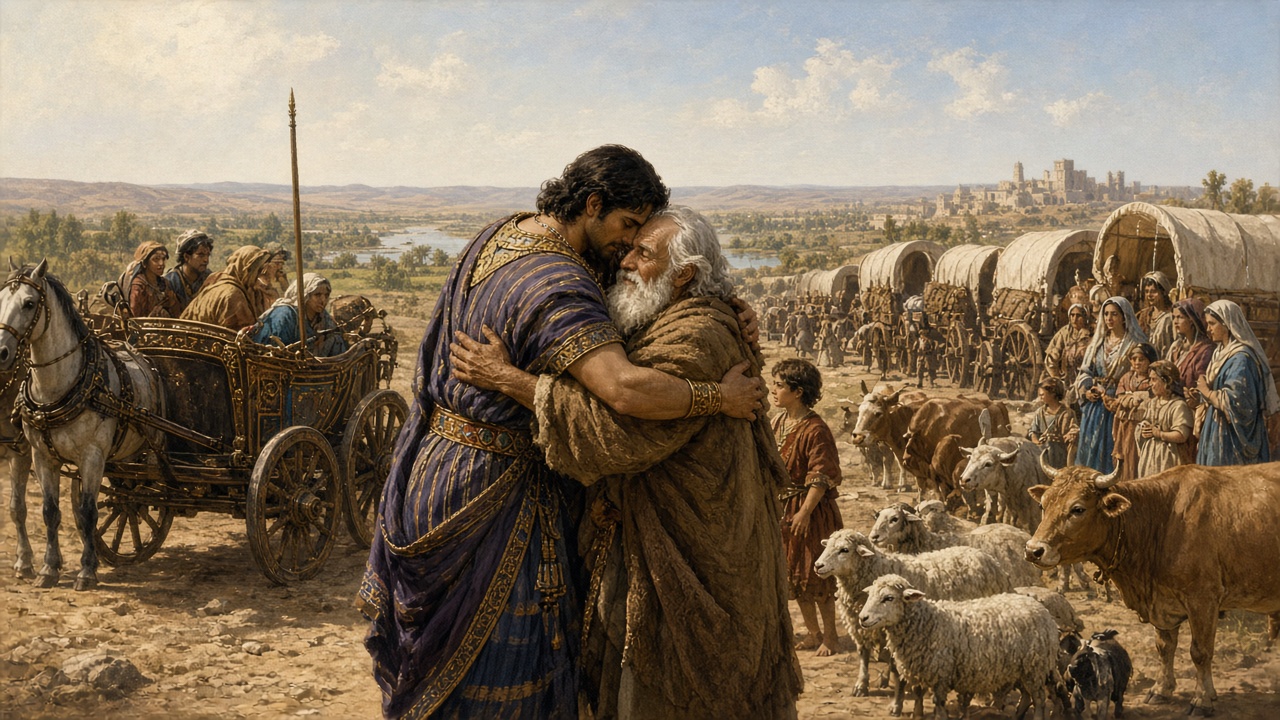
Israel Goes Down to Egypt
- As Israel set out for Egypt with all that he had, he stopped at Beersheba and offered sacrifices to the God of his father Isaac. Beersheba, meaning well of the oath or well of seven, was a well Abraham dug and named after a compact with Abimelech; when Isaac reopened it, he gave it the same name. It was a favorite dwelling of both patriarchs, and there that night God spoke to Jacob in a vision, telling him not to fear going down to Egypt, for he would make him a great nation there.Sources: the Bible text itself · Beersheba
- Jacob sent Judah ahead to Joseph for directions to Goshen, an Egyptian district east of the Nile, apparently near the royal residence, where the family remained until the Exodus. Easton's Bible Dictionary (1897) calls it the best of the land, now a desert, and also the land of Rameses. Joseph told his brothers to say they had raised livestock from youth, so they might settle there, because shepherds were detestable to the Egyptians; that dictionary suggests Pharaoh was probably Apopi, last of the Hyksos, who welcomed these Asiatic shepherds, while native Egyptians abhorred them, though some argue Joseph arrived later, under Thothmes III, after the Hyksos were expelled.Sources: the Bible text itself · Goshen · Pharaoh (of Joseph)
- The chapter counts sixty-six of Jacob's direct descendants who came to Egypt, not counting the wives of his sons, and seventy when Joseph's two sons already born in Egypt are included. Leah's sons and her daughter Dinah are named in that tally, although Easton's Bible Dictionary (1897) says Leah herself had died in Canaan before the journey and was buried in the cave of Machpelah; Rachel had died earlier giving birth to Benjamin and was buried on the way to Ephrath, that is, Bethlehem. Manasseh and Ephraim were born to Joseph in Egypt by Asenath, daughter of Potiphera, priest of On, a center of sun-worship that the Septuagint and Vulgate call Heliopolis.Sources: the Bible text itself · Leah · Rachel · On
Notes written with AI assistance from open sources (Theographic Bible Metadata, CC BY-SA 4.0; Easton’s Bible Dictionary, public domain) and reviewed before publishing.
Places in this chapter
- Egypt · 30.129, 31.308 · verses 1, 3, 4, 5, 6, 7, 8, 20, 26, 27
- Canaan · 32.767, 35.333 · verses 6, 12, 31
- Heliopolis · Today: Ain Shams · 30.129, 31.308 · verse 20
- Goshen · Today: Goshen 1 · 30.799, 31.834 · verses 28, 29, 34
Only places identified with high confidence are shown (90% or more according to the scholarly sources compiled by OpenBible). Period map: DARE (Digital Atlas of the Roman Empire), CC BY 4.0; modern map: © OpenStreetMap contributors; places: OpenBible.info (CC BY 4.0).
Credits and license for this translation
Uyojroner e Dios xeꞌ Tzꞌijbꞌabꞌir Tama e Onian Tiempo
The New Testament and Genesis, Ruth, Esther, and Jonah in the Chorti language of Guatemala
El Nuevo Testamento, Génesis, Rut, Ester y Jonás en Chortí, Guatemala
copyright © 1996, 2012, 2013, 2023 Wycliffe Bible Translators, Inc. and Evangel Bible Translators, International
Language: Chortí (Chorti)
Translation by: Evangel Bible Translators, International and Wycliffe Bible Translators
New Testament © 1996, 2012 Wycliffe Bible Translators, Inc.;
Old Testament © 2012, 2013, 2023 Evangel Bible Translators, International
This translation is made available to you under the terms of the
Creative Commons Attribution-Noncommercial-No Derivatives license 4.0.
You may share and redistribute this Bible translation or extracts from it in any format, provided that:
You include the above copyright and source information.
You do not sell this work for a profit.
You do not change any of the words or punctuation of the Scriptures.
Pictures included with Scriptures and other documents on this site are licensed just for use with those Scriptures and documents.
For other uses, please contact the respective copyright owners.
2023-08-23
Source: http://ebible.org/caa/ · eBible.org