Genesis 20
Uyojroner e Dios xeꞌ Tzꞌijbꞌabꞌir Tama e Onian Tiempo · Tap a verse to see its cross-references.
E Abraham y e Abimelec
1Entonces e Abraham locꞌoy tama e lugar Mamré y ixin esto tama e lugar Négueb tuaꞌ aturuan tama e chinam Guerar xeꞌ aquetpa tuyuxin e chinam Cadés y tuyuxin e chinam Sur. 2Y conda cꞌotoyobꞌ tama e lugar era, e Abraham uchecsu tut e gente que e Sara jax uwijtan y majax uwixcar. Y tamar era e Abimelec xeꞌ jax e rey tama e chinam era uyare tuaꞌ ataresna e Sara tuaꞌ aquetpa tama uyotot tuaꞌ anujbꞌi tacar watar e día. 3Pero tamar taca e acbꞌar era e Dios uchectes ubꞌa tut e Abimelec tama inteꞌ uwayac y che: “Cꞌani ichamay wacchetaca cocha e ixic xeꞌ aware tuaꞌ ataresna sajmi nujbꞌabꞌirix”, che e Dios uyare e Abimelec tama uwayac.
4Pues cocha e Abimelec merato uchꞌami ubꞌa tacar jaxir, ojron y che: “Niwinquiraret Dios, ¿O war ca abꞌijnu tuaꞌ achamse tin e matucꞌa war uche xeꞌ mabꞌambꞌan? 5Pues e Abraham uyaren que jax uwijtan y bꞌan che e Sara ubꞌan que jaxir ijtambꞌir tuaꞌ. Y tamar era matucꞌa innata jay mabꞌambꞌan lo que war inche”, che e Abimelec.
6Entonces e Dios ojron taca e Abimelec tama uwayac y che: “Pues nen innata que majax mabꞌambꞌan lo que ache. Pues jax nen xeꞌ machi inwactet tuaꞌ achꞌami abꞌa taca e Sara, porque machi war incꞌani tuaꞌ ache e mabꞌambꞌanir taniut. 7Pero ucꞌani tuaꞌ isutpa aqꞌueche axin e Sara tut e Abraham wacchetaca, porque jaxir jax inteꞌ profeta, y jay ache bꞌan cocha war inwaret era, jaxir tuaꞌ ucꞌajti tacaren tuaꞌ ichojbꞌesna y tuaꞌ ituruan meyra año tara tor e rum. Pero jay machi aqꞌueche axin e Sara tut e Abraham wacchetaca era, entonces net taca tunor tin e turobꞌ tama oꞌtot san tuaꞌ ixchamay”, che e Dios uyare e Abimelec tama uwayac.
8Entonces conda sacojpa tama inteꞌ día achpa e Abimelec y upejca uyajcꞌamparobꞌ y uchecsu tutobꞌ tunor lo que uwira tama uwayac. Y e ajcꞌamparobꞌ bꞌactobꞌ meyra que bꞌajcꞌat axin ajajtzꞌobꞌ umen e Dios umen que uqꞌuechiobꞌ ixin e Sara. 9Entonces e Abimelec upejca e Abraham y che:
—¿Tucꞌa tuaꞌ que war ache tunor era tacaron? O ¿ayan ca inteꞌ mabꞌambꞌanir lo que war inche apater? Porque net war ache acꞌaxi meyra jatzꞌuar tama nijor nen y tama ujorobꞌ tunor tin e turobꞌ tama niotot. Pues majax imbꞌutz tunor lo que ixiet ache tacaren. 10¿Tucꞌa tar war abꞌijnu que ixiet ache tunor era nipater? Pues bꞌan che e Abimelec uyare e Abraham.
11Entonces ojron e Abraham y che:
—Pues nen cay imbꞌijnu que e gente tama e lugar era machi tuaꞌ ubꞌijnuobꞌ oꞌbꞌianobꞌ tut e Dios, y tamar era cay imbꞌijnu que jay inware que jax niwijtan, bꞌajcꞌat axin utoyenobꞌ tuaꞌ uqꞌuechiobꞌ axin. Pero jay inware ani que jax niwixcar, bꞌajcꞌat axin uchamsenobꞌ tuaꞌ uyubꞌi uqꞌuechiobꞌ axin. 12Pero erach que e Sara jax niwijtan porque jax uwijchꞌoc nitata motor que majax intera catuꞌ, pero nen nujbꞌien ixto tacar. 13Pues conda arobꞌnen umen e Dios que ucꞌani tuaꞌ inlocꞌoy tama uyotot nitata, cay inware niwixcar, que jay erach que war uyajta niut, que ucꞌani tuaꞌ uchecsu tut e gente tic taca tiaꞌ cacꞌotoy que jaxir jax niwijtan, che e Abraham uyare Abimelec.
14Entonces e Abimelec uchꞌami cora oveja y cora wacax y uyajcꞌu e Abraham. Y uyajcꞌu cora winicobꞌ y cora ixictac xeꞌ tuaꞌ aquetpobꞌ manobꞌ xeꞌ mambꞌir inyajrer tuaꞌ e Abraham, y de allí sutpa uyajcꞌu e Sara e Abraham. 15Y de allí ojron y che:
—Ubꞌin lo que cꞌani inwaret era, tunor e lugar lo que erer awira tara jax tanibꞌa. Sicbꞌan e lugar xeꞌ más imbꞌutz toit tiaꞌ tuaꞌ ixturuan, che e Abimelec.
16Y de allí uyare e Sara y che:
—Pues inwajcꞌu e Abraham 1000 ut e tumin xeꞌ chembꞌir taca e plata tuaꞌ aquetpa najpesbꞌir inyajrer tunor lo que numuy era, y que ma tiaꞌ tuaꞌ aware que nen ixien inche lo que mabꞌambꞌan. Y tamar era mamajchi tuaꞌ axin oꞌjron apater, che e Abimelec uyare e Sara.
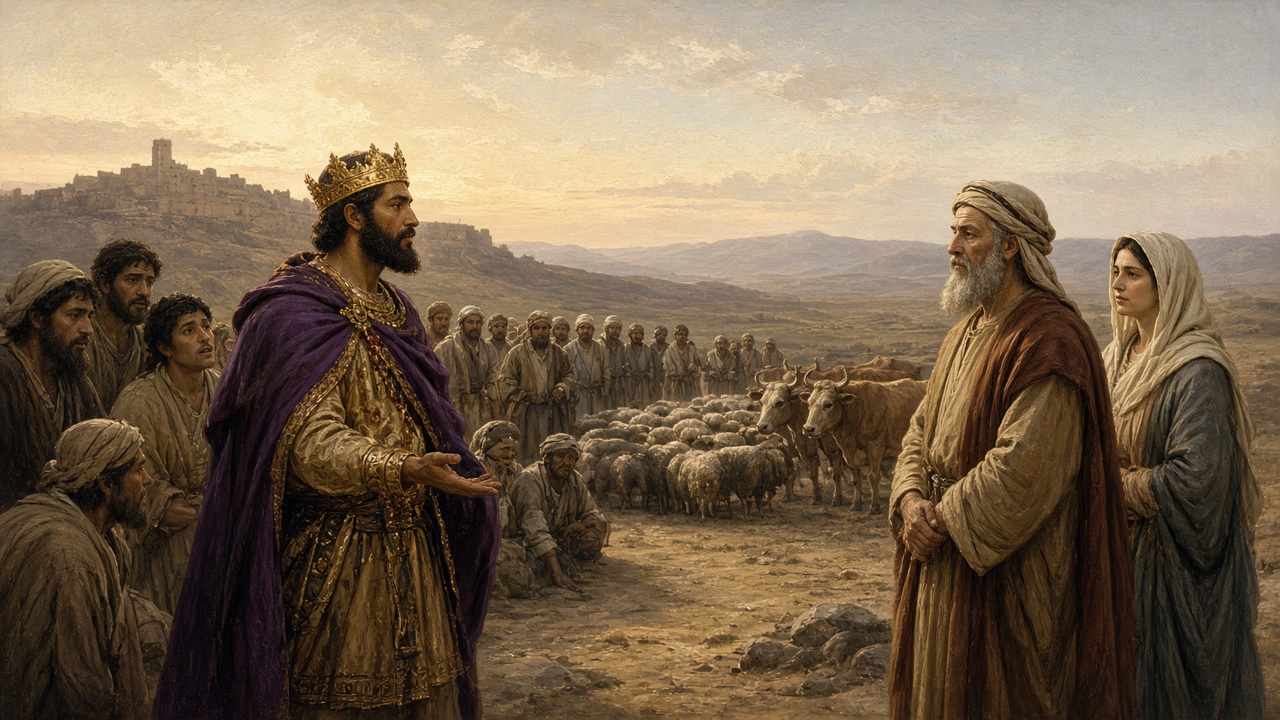
17Entonces e Abraham cay ucꞌajti taca e Dios tama e Abimelec, y Cadiosir utzꞌacpes e Abimelec y uwixcar. Y utzꞌacpes ubꞌan tunor umanobꞌ xeꞌ ixictac tuaꞌ oꞌbꞌna achꞌijrtesianobꞌ otronyajr. 18Pues conda qꞌuejcha ixin e Sara umen e Abimelec, Cawinquirar Dios uche que mamajchi tujam e ixictac tama uyotot e Abimelec tuaꞌ oꞌbꞌna achꞌijrseyan.
Did you know?
Sister and Wife in Gerar
- Abraham was staying in Gerar, a very ancient town and district on the southern border of Palestine, then ruled by a king named Abimelech. He had journeyed to the Negev, the arid district south of Palestine on the caravan route toward Egypt, and settled between Kadesh and Shur. Shur, a name meaning “wall,” was a desert region on Egypt’s northeastern edge, probably named for the frontier wall the Egyptians built there.Sources: the Bible text itself · Gerar · Negeb · Shur
- When Abraham said that Sarah was his sister, the kinship was not wholly invented: she was also his half-sister, the daughter of his father but not of his mother. Easton's Bible Dictionary (1897) gives the name Sarah as meaning “princess,” and says that name was given when it was announced that she would be the mother of the promised child.Sources: the Bible text itself · Sarah
- The name Abimelech appears again at Gerar in Isaac’s story. Easton's Bible Dictionary (1897) describes that later king as probably the son of the Abimelech Abraham met, and says he rebuked Isaac for a similar deception about his wife Rebekah, which the king discovered by accident. The same work says Gerar seems to have been a rich pastoral country.Sources: Abimelech (King of Gerar) · Gerar
Notes written with AI assistance from open sources (Theographic Bible Metadata, CC BY-SA 4.0; Easton’s Bible Dictionary, public domain) and reviewed before publishing.
Places in this chapter
- Negeb · 31.245, 34.841 · verse 1
Only places identified with high confidence are shown (90% or more according to the scholarly sources compiled by OpenBible). Period map: DARE (Digital Atlas of the Roman Empire), CC BY 4.0; modern map: © OpenStreetMap contributors; places: OpenBible.info (CC BY 4.0).
Credits and license for this translation
Uyojroner e Dios xeꞌ Tzꞌijbꞌabꞌir Tama e Onian Tiempo
The New Testament and Genesis, Ruth, Esther, and Jonah in the Chorti language of Guatemala
El Nuevo Testamento, Génesis, Rut, Ester y Jonás en Chortí, Guatemala
copyright © 1996, 2012, 2013, 2023 Wycliffe Bible Translators, Inc. and Evangel Bible Translators, International
Language: Chortí (Chorti)
Translation by: Evangel Bible Translators, International and Wycliffe Bible Translators
New Testament © 1996, 2012 Wycliffe Bible Translators, Inc.;
Old Testament © 2012, 2013, 2023 Evangel Bible Translators, International
This translation is made available to you under the terms of the
Creative Commons Attribution-Noncommercial-No Derivatives license 4.0.
You may share and redistribute this Bible translation or extracts from it in any format, provided that:
You include the above copyright and source information.
You do not sell this work for a profit.
You do not change any of the words or punctuation of the Scriptures.
Pictures included with Scriptures and other documents on this site are licensed just for use with those Scriptures and documents.
For other uses, please contact the respective copyright owners.
2023-08-23
Source: http://ebible.org/caa/ · eBible.org